Two events, unfolding thousands of miles apart, capture the new political reality better than any abstract theory.
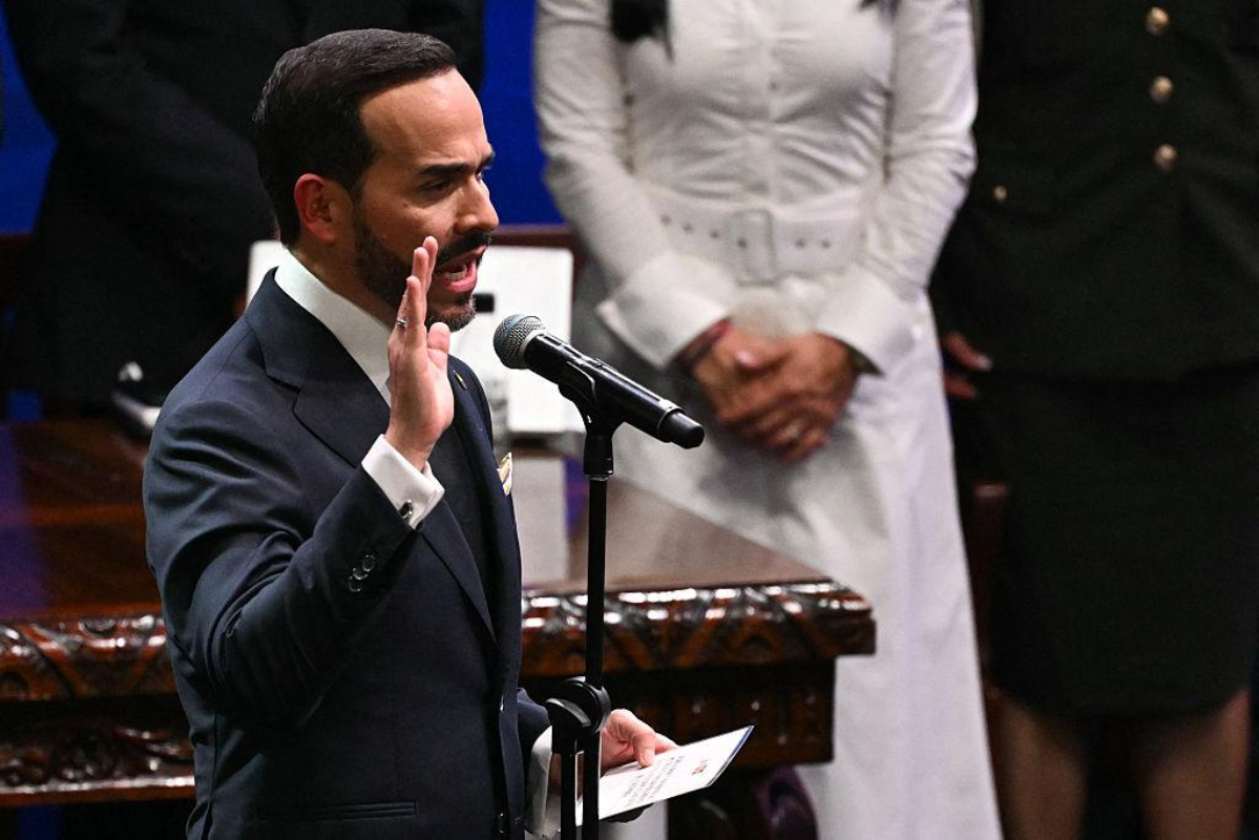
On August 7, Abelardo de la Espriella, the conservative outsider known as “El Tigre,” assumed the presidency of Colombia.
He had narrowly defeated Iván Cepeda, securing roughly 12.96 million votes against 12.71 million for his rival, in an election that confirmed a dramatic return of the right in Colombian politics.
And this was not merely a domestic Colombian shift.
De la Espriella had received public backing from Donald Trump, while his political platform — a harder line on organized crime, rejection of open-ended negotiations with armed groups and a closer strategic relationship with Washington — places him firmly within a broader political current already gaining ground across Latin America.
Just days earlier, on the other side of the Atlantic, another crisis revealed the same trend — and its limits.
Ceuta shook Europe
The mass arrival of tens of thousands of migrants in Ceuta, Spain’s enclave in North Africa, developed into one of Europe’s most serious migration emergencies in years.
Around 72,000 people reportedly attempted to enter Spanish territory, while dozens were killed, according to the latest estimates. Spanish and Moroccan authorities sharply reinforced border security to prevent further mass crossings.
But the crisis quickly moved from Ceuta into the political heart of the European Union.
The government of Giorgia Meloni in Italy reintroduced checks on travellers arriving from Spain, citing security concerns and migration pressure.
Pedro Sánchez’s government denounced the measures as unjustified and responded with reciprocal controls affecting Italian travellers.
The confrontation became one of the sharpest diplomatic clashes between two major EU states over migration in recent years.
And here lies the paradox.
The same political language that has helped unite conservative and right-wing forces across Europe and the Americas is now being used even against states that supposedly belong to the same Western strategic camp.


Is there really a “Right-wing International”?
The answer is: yes and no.
There is no global headquarters issuing instructions to Bogotá, Rome, Buenos Aires or Madrid.
What does exist, however, may be more effective: a dense ecosystem of political communication, ideas, think tanks, conferences and personal networks.
A key example is the Madrid Charter, launched by Fundación Disenso, the think tank linked to Spain’s Vox.
Its wider political orbit has included figures such as Javier Milei, José Antonio Kast, Eduardo Bolsonaro and Giorgia Meloni, alongside politicians from Latin America, the United States and Europe.
That does not prove coordination.
It does prove networking.
And the distinction matters.
Trump has changed the geopolitical game in Latin America
The most powerful force behind this shift is not based in Madrid or Rome.
It is in Washington.
Donald Trump’s second administration has elevated the Western Hemisphere to the top tier of U.S. strategic priorities.
The new U.S. National Security Strategy explicitly states that Washington will reassert and enforce the Monroe Doctrine, adding what it calls a “Trump Corollary.”
The objective is clear: restore U.S. primacy in the Western Hemisphere and restrict the ability of outside powers — above all China — to acquire strategic influence or control over critical infrastructure in the region.
This is therefore more than ideological affinity among conservative leaders.
There is now a formal U.S. state strategy behind it.
Washington wants governments that cooperate on narcotics, migration, security and the containment of Chinese influence.
In this sense, De la Espriella’s rise in Colombia is especially important.
Colombia is not just another Latin American state.
It is one of Washington’s most important military and geopolitical partners in South America.
And its new government has already sought deeper cooperation with the United States on anti-narcotics and so-called “narco-terrorism” operations.
From Milei to El Tigre
The broader picture becomes clearer when the Latin American political map is viewed as a whole.
Javier Milei in Argentina.
Daniel Noboa in Ecuador.
José Antonio Kast in Chile.
And now De la Espriella in Colombia.
Their policies are not identical.
Their economic agendas differ.
The societies they govern face different historical and institutional pressures.
But they share several recurring themes:
a harder line on crime, rejection of traditional political elites, intense anti-left or anti-communist language, close ties to Washington and a strong emphasis on state authority in matters of law and order.
That is why the Associated Press recently described the shift as the rise of a new wave of Trump-aligned conservatives in Latin America.


The political franchise
This is where the easy exaggeration should be resisted.
There is no single global right acting with military discipline.
What exists looks much more like a franchise.
The political product travels.
The language travels.
Advisers, think tanks, conferences and endorsements travel.
The terminology changes from country to country, but the pattern remains recognizable:
borders, security, sovereignty, war on elites, anti-communism, attacks on bureaucracy and distrust of traditional institutions.
Each party adapts the product to its domestic market.
And that can be more effective than a conventional international organization.
It does not require orders.
It requires imitation.
And then came Italy
The clash between Meloni and Spain is precisely where the idea of a unified global right begins to break down.
Italy applied the doctrine of sovereignty and border control against another member of the European Union.
Spain responded with its own national restrictions.
In other words, the political tool presented as protection against an external threat can easily be turned against a partner.
That is the permanent contradiction inside every nationalist international network:
nationalists can agree ideologically until their national interests collide.
Then unity ends.
Ceuta is more than a migration crisis
That is why Ceuta should be read at a second level.
It is not only about migration.
It is about whether the European Union can preserve free internal movement when member states interpret external migration pressure in fundamentally different ways.
Several Schengen countries already maintain temporary internal border controls for reasons linked to migration, terrorism or wider regional security concerns.
That does not mean Schengen is collapsing.
But it does show that the principle of open internal borders is no longer as politically untouchable as it appeared a decade ago.
The real conclusion
El Tigre’s rise in Colombia and the Italy–Spain crisis were not produced by a secret central command.
But neither are they completely unrelated.
They are both expressions of a wider political environment that has changed on both sides of the Atlantic.
Security is gradually replacing globalization as the dominant political concept.
Borders are returning.
National sovereignty is returning.
Military power is returning.
And Washington, through its new “Trump Corollary,” is openly declaring that it wants the Western Hemisphere to return to the center of U.S. strategic influence.
At the same time, a political network stretching from Europe to Latin America is making the same ideas easier to recognize, easier to transmit and easier to normalize.
But that does not make it a unified bloc.
The new Right is more network than alliance. More franchise than headquarters.
And the real test will not come when Trump, Milei, Meloni, Kast or Latin America’s emerging conservative leaders agree on the left, migration or security.
It will come when their interests collide.
Ceuta may have been the first serious warning.
Because it is easy to build an international movement around common enemies. It is much harder to preserve it when allies begin closing borders on one another.
Source: pagenews.gr