EU Calls Emergency Talks on Ceuta Crisis as Migration Tests Schengen and Europe’s Border Policy
 ΧΡΟΝΟΣ ΑΝΑΓΝΩΣΗΣ 4 '
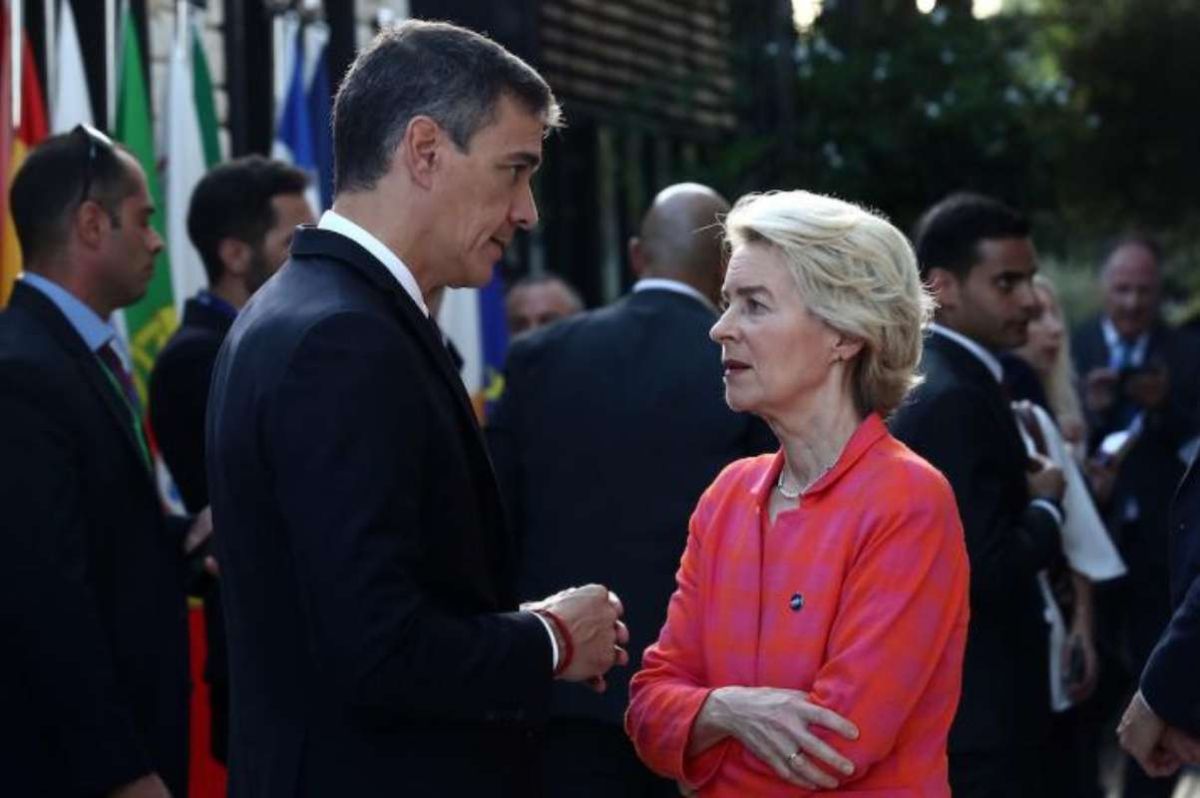
Πηγή Φωτογραφίας: AP Photo//EU Calls Emergency Talks on Ceuta Crisis as Migration Tests Schengen and Europe’s Border Policy



The European Union is preparing for one of its most significant migration policy discussions in recent years after an estimated 50,000 migrants crossed into the Spanish enclave of Ceuta from Morocco within hours, triggering an extraordinary meeting of EU Interior Ministers scheduled for Tuesday.
The emergency talks were requested by 22 EU member states, including Greece and Cyprus, which argue that the events in Ceuta are not merely a Spanish issue but a direct challenge to the security of the European Union’s external borders.
Twenty-two leaders demand a coordinated European response
According to diplomatic sources, the initiative—led by Italy and Denmark—calls for a common assessment of the situation and a coordinated EU response to prevent similar incidents in the future.
In their joint letter to European Commission President Ursula von der Leyen, European Council President António Costa, and Irish Prime Minister Micheál Martin, whose country currently holds the rotating Presidency of the Council of the European Union, the leaders warn:
“We cannot allow uncontrolled mass crossings, the instrumentalisation of migration, or other hybrid threats to create the impression that illegal entry into the European Union is possible.”
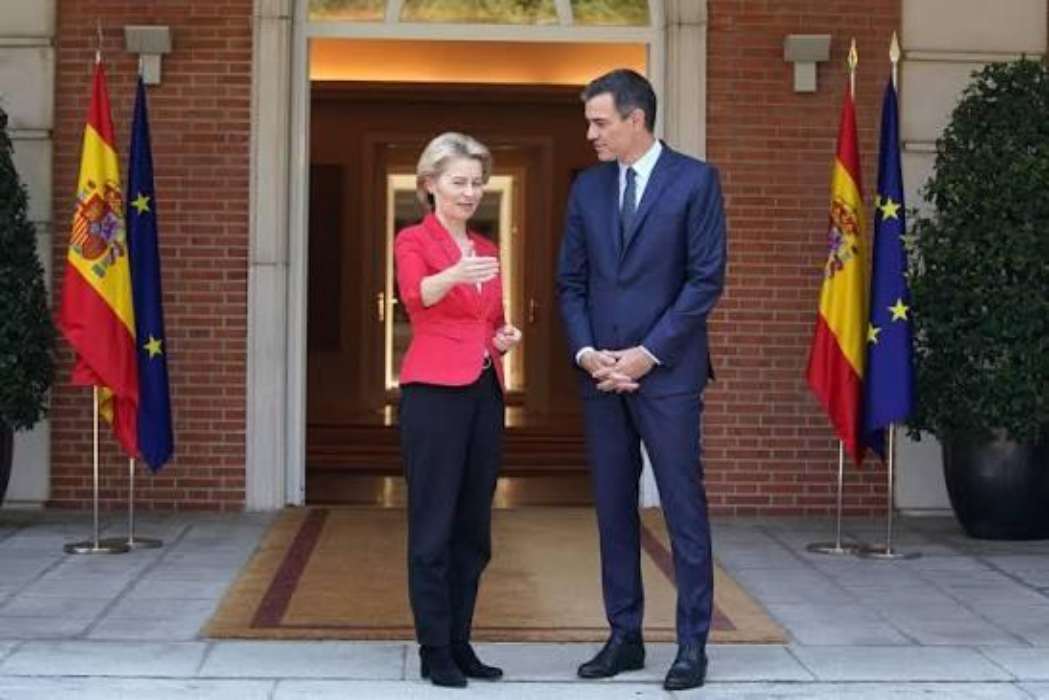
The signatories also state that the Union should be prepared to consider all necessary measures, including the temporary reinforcement—or, where justified, the reintroduction—of internal border controls if required to safeguard public security.
Von der Leyen: Europe must strengthen its resilience
European Commission President Ursula von der Leyen welcomed the decision to convene the emergency meeting, describing it as an opportunity to strengthen the Union’s preparedness.
“We need a lessons-learned process to improve our European resilience,” she said, while emphasizing that none of the migrants who entered Ceuta reached mainland Spain or any other part of the European Union.
Her remarks sought to underline that although the immediate crisis was contained, the scale of the incident exposed vulnerabilities that require a stronger common European response.
Sánchez criticises some EU partners
Spanish Prime Minister Pedro Sánchez responded with a letter of his own, expressing disappointment over the reaction of several European governments.
“Most partners showed solidarity and offered their support. Others chose instead to attack Spain,” Sánchez wrote.
His remarks were widely interpreted as a reference to the position adopted by the Italian government, which suggested temporarily suspending Schengen arrangements with Spain following the Ceuta crisis.
Madrid also rejected claims that Spain’s recent decision to regularise the legal status of certain undocumented migrants acted as a “pull factor,” insisting that the events in Ceuta resulted from an extraordinary and coordinated migration surge rather than domestic migration policy.
Divisions inside the European Union
The crisis has once again highlighted the political divide within the European Union over migration.
Notably, France, Portugal and Luxembourg did not sign the joint letter despite France and Portugal sharing land borders with Spain, illustrating the different national approaches to migration management and Schengen governance.
While all member states agree on the importance of protecting the Union’s external borders, significant differences remain over how migration pressures should be addressed without undermining the free movement principles at the heart of the Schengen Area.
A turning point for EU migration policy
The Ceuta crisis is increasingly being viewed in Brussels as more than a migration emergency. It represents a broader European security challenge, with several governments explicitly linking irregular migration to hybrid threats and the instrumentalisation of migration by third countries.
Tuesday’s emergency meeting is expected to shape the next phase of the EU’s migration and border policy. Discussions are likely to focus on strengthening Frontex, accelerating return procedures, enhancing cooperation with neighbouring countries, and developing a common crisis-response mechanism capable of addressing future mass migration events.
Beyond Ceuta, the debate now centres on a fundamental strategic question: Can the European Union preserve the Schengen Area while reinforcing the protection of its external borders in an increasingly volatile geopolitical environment?
Source: pagenews.gr
Διαβάστε όλες τις τελευταίες Ειδήσεις από την Ελλάδα και τον Κόσμο