Musk and Zuckerberg Are Back in the AI Race — And OpenAI and Anthropic Can No Longer Ignore Them
 ΧΡΟΝΟΣ ΑΝΑΓΝΩΣΗΣ 9 '
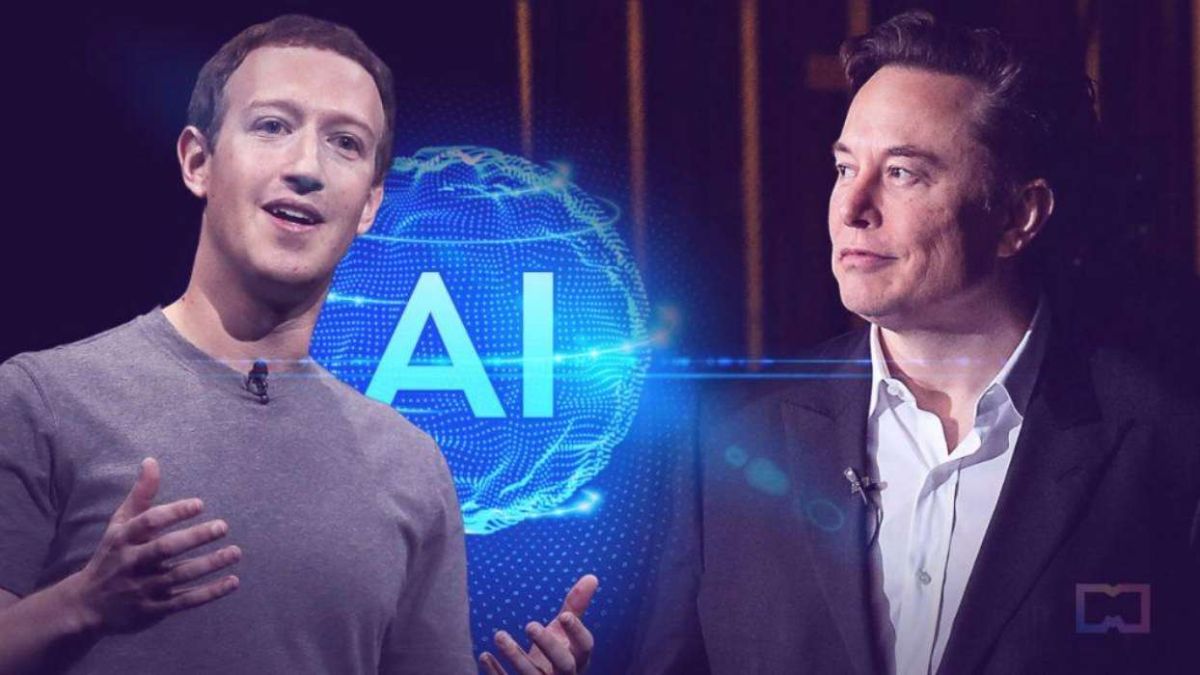



Silicon Valley has a rule that tends to survive every technological cycle:
Never write off a billionaire who already controls a technology empire.
During the first explosion of generative AI, Elon Musk and Mark Zuckerberg found themselves watching a new hierarchy emerge.
OpenAI and Anthropic pulled ahead. Google remained a formidable research power. A new generation of AI labs demonstrated that the future might not belong to the companies that dominated the previous internet era.
Now Musk and Zuckerberg are coming back.
And they are bringing something few AI startups can replicate:
scale.
Musk Is Back on the Benchmark Battlefield
The latest Grok 4.6 has dramatically narrowed the performance gap with the frontier.
According to data cited by Axios, Grok 4.6 is essentially level with OpenAI’s GPT-5.6 Sol Max on the closely watched Artificial Analysis Intelligence Index and sits just behind Anthropic’s Fable 5 Max.
The precise ranking matters less than the trajectory.
A year ago, Musk’s AI operation was struggling to establish itself among the genuine frontier labs.
Today, Grok is part of the conversation about the top tier.
And Musk is already promising more.
He says Grok 4.7 could arrive within weeks and has predicted that additional training could push it beyond all currently available models.
That remains a Musk prediction, not an independently demonstrated result.
But the pace of improvement is difficult to dismiss.
Grok is no longer fighting simply to remain relevant. It is fighting for the frontier.
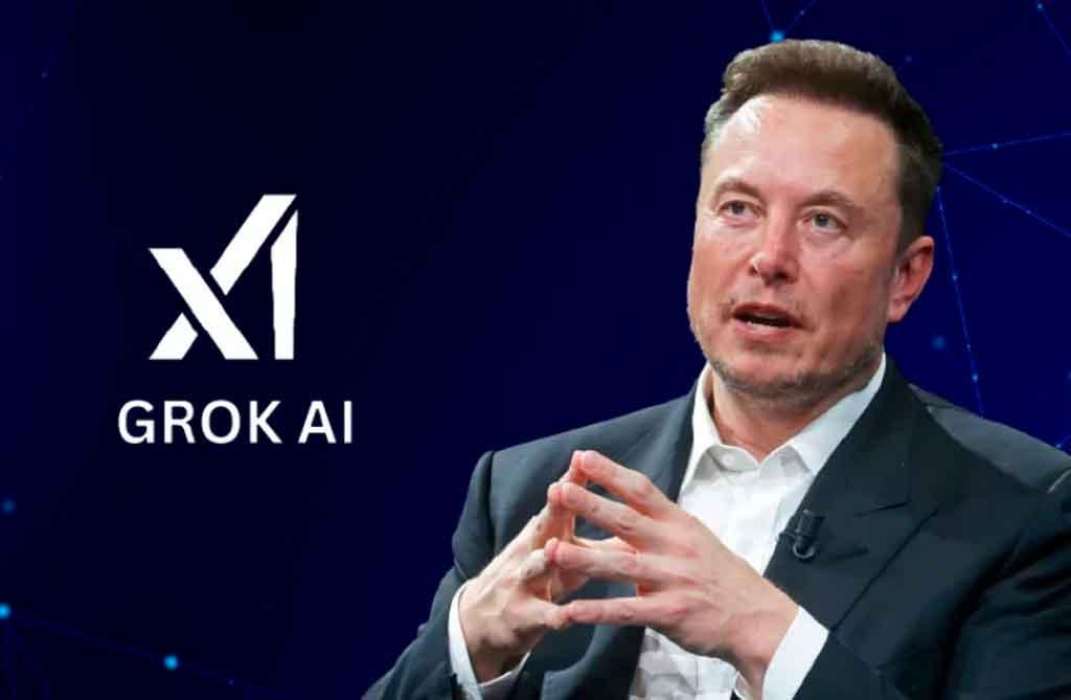
SpaceX + xAI + Cursor: Musk Is Building More Than a Chatbot
This is where Musk’s strategy becomes more interesting.
He is increasingly assembling assets that previously looked like separate businesses into one AI-industrial ecosystem.
xAI has been folded into SpaceX, while SpaceX agreed to acquire Cursor for $60 billion.
The combination is unusual:
AI models.
Coding agents.
Massive computing infrastructure.
Engineering expertise.
Proprietary technical data.
Satellite infrastructure.
And access to capital at a scale few independent AI laboratories could easily match.
Cursor may be particularly important because the AI battle is rapidly moving beyond one question:
Which chatbot gives the best answer?
The next question is:
Which AI can actually do the work?
Coding.
Engineering.
Research.
Scientific reasoning.
Autonomous agents.
Complex industrial workflows.
Musk does not merely want Grok to become something people talk to.
He wants AI to become part of a broader machine for building things.
Zuckerberg Chose a Different War
Meta does not necessarily need to beat OpenAI, Anthropic or Musk on every benchmark.
It can attack somewhere else.
Price.
Meta’s new generation of models is part of Zuckerberg’s attempt to rebuild the company’s AI position after the disappointing reception of Llama 4.
Its strategy increasingly suggests that Meta wants to make capable AI dramatically cheaper and more widely deployable — including through smaller open-weight systems capable of running locally.
That could prove enormously consequential.
Because the biggest AI is not necessarily the best AI for every customer.
The Next AI War May Not Be About Intelligence
For several years, the industry has obsessed over a single question:
What is the smartest model in the world?
The next phase could revolve around another:
How much intelligence can I buy for a dollar?
For companies processing millions or billions of inference calls, relatively small differences in model costs can translate into enormous sums.
And most commercial tasks do not necessarily require the most powerful frontier model available.
They need something that is:
fast,
reliable,
cheap,
easy to deploy,
and intelligent enough.
As iCapital chief investment strategist Sonali Basak told Axios, a model does not need to be the highest-performing and most expensive product on the market to become commercially successful.
That is where Meta could become particularly dangerous.
Zuckerberg Has a Weapon No AI Startup Can Replicate
Facebook.
Instagram.
WhatsApp.
Messenger.
Billions of users.
Meta does not have to convince the world to discover another AI website.
It can bring AI directly into products the world already uses.
That distribution advantage changes the economics of the race.
A frontier AI startup must build a model and then acquire users.
Meta can build a model and place it inside an existing global consumer infrastructure.
AI can become embedded in messaging.
Advertising.
Content creation.
Search.
Recommendations.
Commerce.
Business tools.
Wearables.
And eventually personal AI agents.
This is Zuckerberg’s real opportunity.
Not simply building a better model.
Turning AI into another layer of the Meta empire.
“Superintelligence for Everyone”
Zuckerberg has also given the strategy an ideological frame.
In a sweeping manifesto, he revived the idea of “superintelligence for everyone” — arguing against a future in which the most advanced AI is concentrated inside a small number of closed institutions.
It is both a philosophical position and an extremely useful competitive strategy.
If OpenAI and Anthropic seek to sell increasingly sophisticated premium intelligence, Meta can attempt something different:
commoditize intelligence.
Make capable AI cheaper.
Make more of it open.
Make it local.
Put it everywhere.
That could be far more disruptive than winning another benchmark.
The $14.3 Billion Reset
Zuckerberg’s comeback did not happen organically.
After Meta’s AI effort stumbled, he effectively rebuilt the operation.
Meta invested $14.3 billion in Scale AI and recruited its CEO, Alexandr Wang, to help lead the new push.
The logic was straightforward.
If Meta had fallen behind, Zuckerberg was not going to wait several years for the company to close the gap naturally.
He would buy time.
With money.
Talent.
Compute.
Infrastructure.
And acquisitions.
It is the same fundamental advantage Musk possesses.
Both men can use cash flows, infrastructure and businesses built during previous technological eras to finance their assault on the next one.
Two Comebacks, Two Different Strategies
That is what makes the new battle so interesting.
Musk’s strategy increasingly looks like:
Build one of the most capable AI systems on Earth and integrate it into an engineering and industrial empire.
Zuckerberg’s looks more like:
Make powerful AI cheaper, more open and available everywhere — then distribute it through products used by billions.
OpenAI and Anthropic therefore face competitors that do not need to copy their business models to threaten them.
And that makes defending the frontier considerably harder.
Reality Check: OpenAI and Anthropic Still Lead
None of this means Musk and Zuckerberg have already won.
They have not.
Even people inside Meta reportedly acknowledge that the company still feels behind the leading frontier laboratories in model performance and development.
And the publicly available frontier may not represent the true technological frontier anymore.
Some laboratories are already developing capabilities they are reluctant to release broadly because of security concerns.
OpenAI, for example, has delayed wider access to its Astra system amid concerns about advanced cybersecurity capabilities.
That distinction will become increasingly important:
The best publicly available AI model may no longer be the most capable AI model a laboratory actually possesses.
So claims that Musk or Zuckerberg have already “caught” OpenAI and Anthropic should be treated cautiously.
But they no longer need to catch them completely to reshape the market.
And Suddenly Google Looks Vulnerable
There is another player in this story.
Google.
For much of the AI boom, Google appeared to be the established technology giant best positioned to challenge the new frontier labs.
It had almost everything.
DeepMind.
TPUs.
Cloud infrastructure.
Search.
Capital.
Elite researchers.
Distribution.
But recent leadership changes and talent departures have introduced uncertainty around that position.
That does not mean Google is disappearing from the AI race — far from it.
But even temporary instability creates an opening.
And Musk and Zuckerberg have every incentive to exploit it.
AI Is Entering Its Second Phase
The first round of generative AI had a relatively simple scoreboard:
Who has the best model?
The second round will be much more complicated.
Who has the smartest model?
Who has the cheapest?
Who has the best coding agent?
Who controls enough compute?
Who owns proprietary data?
Who can put AI in billions of devices?
Who controls distribution?
Who can deploy autonomous agents at scale?
And ultimately:
Who can turn artificial intelligence from an extraordinary technology into an extraordinary economic machine?
That is where the old technology empires suddenly regain an advantage.
Musk and Zuck Are Back — Now They Have to Make AI Pay
This is the real test.
Musk can connect AI to coding, engineering, autonomous systems, aerospace and the wider SpaceX technology stack.
Zuckerberg can connect it to advertising, creators, messaging, commerce and billions of consumers.
The question is therefore no longer whether they can narrow the technical gap with OpenAI and Anthropic.
They have already demonstrated that they can move quickly.
The harder question is whether they can use AI to make their existing empires even more powerful.
OpenAI and Anthropic built their advantage through years of technical excellence.
Musk and Zuckerberg are counterattacking with a different arsenal:
capital, compute, proprietary data, infrastructure, distribution and decades of accumulated scale.
If the first phase of the AI revolution belonged to the new frontier labs, the second may look very different.
It may become the counterattack of the empires.
Διαβάστε όλες τις τελευταίες Ειδήσεις από την Ελλάδα και τον Κόσμο