The possibility that the conflict with Iran could break out of the Middle East and reach European territory is no longer being treated in Athens as a remote scenario.
Greek defense authorities are assessing both the level of the Iranian threat and the measures that could be required to protect Greece and provide assistance to neighboring countries, particularly Cyprus and Bulgaria.
The concern follows reports that Tehran has examined potential strikes against U.S. military facilities in southeastern Europe should Washington launch another major attack against Iran.
For Greece, the strategic question is becoming increasingly urgent:
How far can Iran actually strike — and what happens if the Middle East war reaches Europe’s southeastern frontier?


From the Middle East to Europe
The emerging threat does not mean that an Iranian attack on Europe is imminent.
It does, however, indicate that Tehran is considering a much wider geographical battlefield if the conflict escalates.
According to reports citing sources close to the Iranian establishment, potential targets could include U.S.-linked military facilities in Bulgaria and Cyprus.
That would represent a major change in the strategic geography of the conflict.
Until now, the principal theaters have been the Persian Gulf, the Middle East and the surrounding maritime routes. An Iranian strike against a target on European territory would immediately raise much larger questions involving NATO, the European Union and collective defense.
For Athens, that possibility requires planning before such a scenario becomes reality.
Can Iran Really Strike Europe?
The answer is yes — but its ability to do so varies considerably depending on distance, weapon type and target.
Iran possesses a substantial arsenal of ballistic missiles and long-range drones, and the conflict has demonstrated Tehran’s willingness to use those capabilities well beyond its immediate borders.
Southern and southeastern Europe are naturally more exposed than northern or western Europe because of their geographical proximity to Iran.
The principal concern is therefore not that Tehran suddenly possesses the ability to conduct an unrestricted missile campaign across the entire European continent.
The more realistic threat involves selected military and strategic targets on Europe’s southeastern flank.
That distinction is important.
Iran would not need the capability to wage a conventional war against Europe to create a major security crisis. A successful strike against even one strategically important installation could fundamentally change the political character of the conflict.
Cyprus Moves to the Front Line
For Greece, Cyprus is the most immediate concern.
Its geographical position places the island much closer to the Middle Eastern theater than mainland Europe, while the presence of important Western military facilities makes it strategically significant.
Athens has already demonstrated that it is prepared to reinforce the island’s defensive posture when the security environment deteriorates.
Greek fighter aircraft and naval assets have previously been deployed to the area as part of defensive measures, underscoring the importance Greece attaches to the protection of Cyprus.
The distinction Athens wants to preserve, however, is critical:
supporting the defense of Cyprus does not mean joining offensive operations against Iran.
That is the narrow strategic line Greece is attempting to maintain.


Bulgaria Changes the Equation
The inclusion of Bulgaria among potential targets makes the situation considerably more serious.
Bulgaria is not simply another country geographically close to the conflict.
It is a member of both NATO and the European Union.
Reports that Iran has assessed U.S.-linked military infrastructure there therefore transform the issue from a Middle Eastern security crisis into a potential challenge to NATO’s southeastern flank.
For Greece, Bulgaria’s exposure also matters directly.
Athens and Sofia occupy the same wider southeastern European security space. Any serious missile threat against Bulgaria would inevitably raise questions about regional air and missile defense.
This is where Greece could become particularly important.
Greece Faces the Patriot Dilemma
One of the central questions for Greek defense planners concerns the country’s Patriot air-defense systems.
Modern missile defense is ultimately a problem of geography and limited resources.
Every Patriot battery deployed to protect one strategic location is a battery that cannot simultaneously protect another.
Greece therefore has to balance several priorities:
protecting its own territory and population, securing critical military installations, maintaining coverage of strategically important areas and retaining the ability to assist allies if necessary.
That calculation becomes significantly more complicated if Cyprus and Bulgaria simultaneously require additional protection.
The Iranian threat is consequently forcing Athens to think increasingly in terms of a regional air-defense architecture, rather than purely national territorial defense.


Souda Becomes Even More Strategic
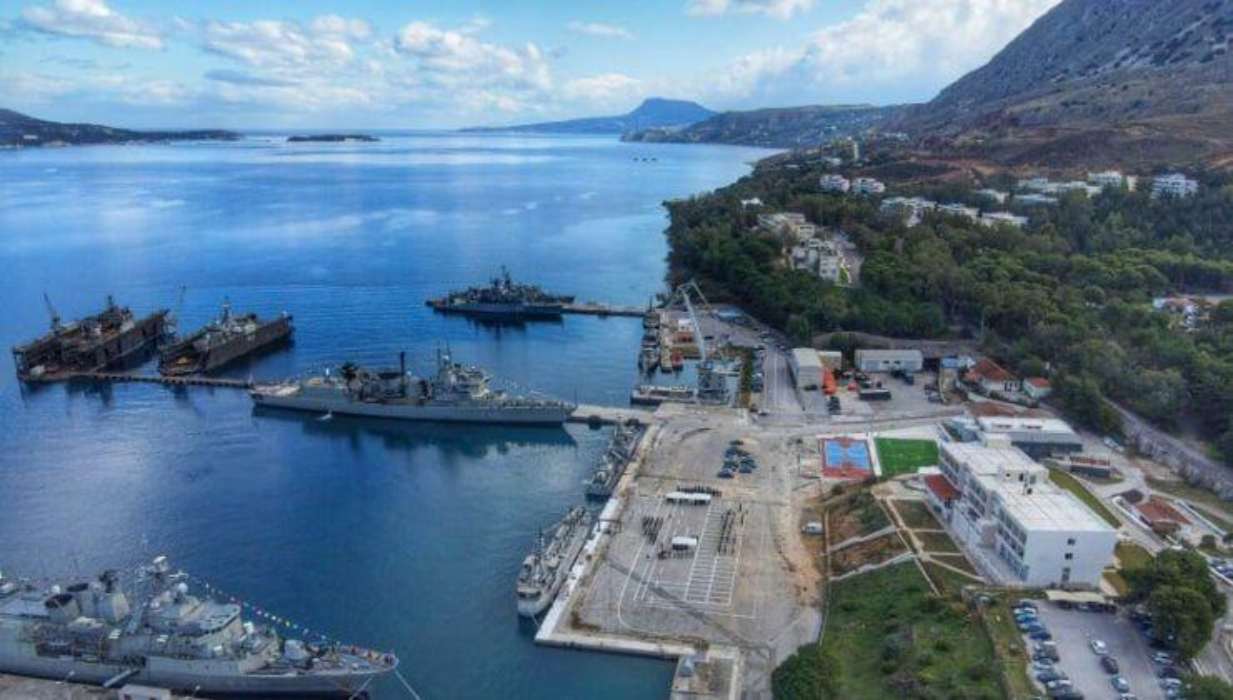
Another unavoidable part of the equation is Souda Bay in Crete.
Souda is one of the most strategically important military facilities in the Eastern Mediterranean and a crucial logistical hub for U.S. and allied operations.
Its importance increases whenever instability spreads across the Middle East.
But strategic importance also creates strategic exposure.
Greek planners therefore cannot limit their assessment to the question of whether Iranian ballistic missiles can reach Greek territory.
The threat spectrum is considerably broader.
Long-range drones, cyberattacks, sabotage, attacks against communications infrastructure and operations conducted through proxy networks all have to be considered.
The modern battlefield no longer begins only when a missile crosses a national border.
Israel Becomes a Critical Partner
This is also where Greece’s strategic relationship with Israel assumes greater importance.
Israel has accumulated extensive operational experience in detecting and intercepting Iranian ballistic missiles, cruise missiles and drones.
For Athens, that experience is highly valuable.
Intelligence sharing, early warning, integrated air-defense concepts and knowledge gained from real combat operations can all strengthen Greece’s ability to prepare for a rapidly changing threat environment.
The growing defense relationship between Athens and Jerusalem therefore has a significance that goes well beyond bilateral military cooperation.
It increasingly forms part of the security architecture of the Eastern Mediterranean.
Yet this relationship also requires political caution.
Greece wants close cooperation with Israel while avoiding the perception that Greek territory is being transformed into a platform for offensive operations against Tehran.
Athens Wants Defense — Not War With Iran
This distinction lies at the heart of Greek strategy.
Greece has no interest in becoming a belligerent against Iran.
But Athens also cannot remain indifferent if Iranian military planning begins to include targets in Cyprus, Bulgaria or other parts of southeastern Europe.
The challenge is therefore to strengthen deterrence without creating unnecessary escalation.
That means improving missile and drone defenses, strengthening intelligence cooperation, protecting critical infrastructure and maintaining sufficient military readiness to respond quickly if the threat changes.
It also means coordinating closely with NATO and European partners.
A New Security Map Is Emerging
The wider significance of the Iranian threat goes beyond the immediate crisis.
For decades, Greek defense planning has been overwhelmingly shaped by security challenges in the Aegean and Eastern Mediterranean.
That strategic environment is now becoming more complicated.
Greece increasingly has to prepare simultaneously for conventional military threats, ballistic missiles, drones, cyber operations, attacks on energy and communications infrastructure and instability spreading northward from the Middle East.
The country also sits at the intersection of three increasingly important strategic spaces:
the Balkans, the Eastern Mediterranean and the Middle East.
That geography can increase Greece’s geopolitical importance — but it also increases its exposure.
Europe Could Become the Next Escalation Threshold
The most dangerous scenario is not necessarily a massive Iranian attack against Europe.
It is a limited strike that produces consequences far larger than the military damage itself.
A missile hitting a U.S. installation in Bulgaria, an attack affecting Cyprus or a strike against another allied facility could immediately confront NATO and European governments with difficult decisions over retaliation and collective defense.
That is precisely why Athens is taking the threat seriously before such an incident occurs.
The question is no longer simply whether Iran possesses missiles capable of reaching parts of Europe.
The real question is whether Tehran would be willing to cross the political threshold of using them there.
And if the confrontation with Washington escalates again, Greece may find itself much closer to that threshold than at any previous stage of the conflict.
For Athens, the objective is therefore clear: strengthen the shield around Greece and its immediate neighborhood, deepen cooperation with Cyprus, Bulgaria, Israel and NATO — and prevent a Middle Eastern war from turning southeastern Europe into its next battlefield.