Russia’s Quiet Win: How Two EU Roadblocks Are Undermining Europe’s Sanctions War
 ΧΡΟΝΟΣ ΑΝΑΓΝΩΣΗΣ 10 '
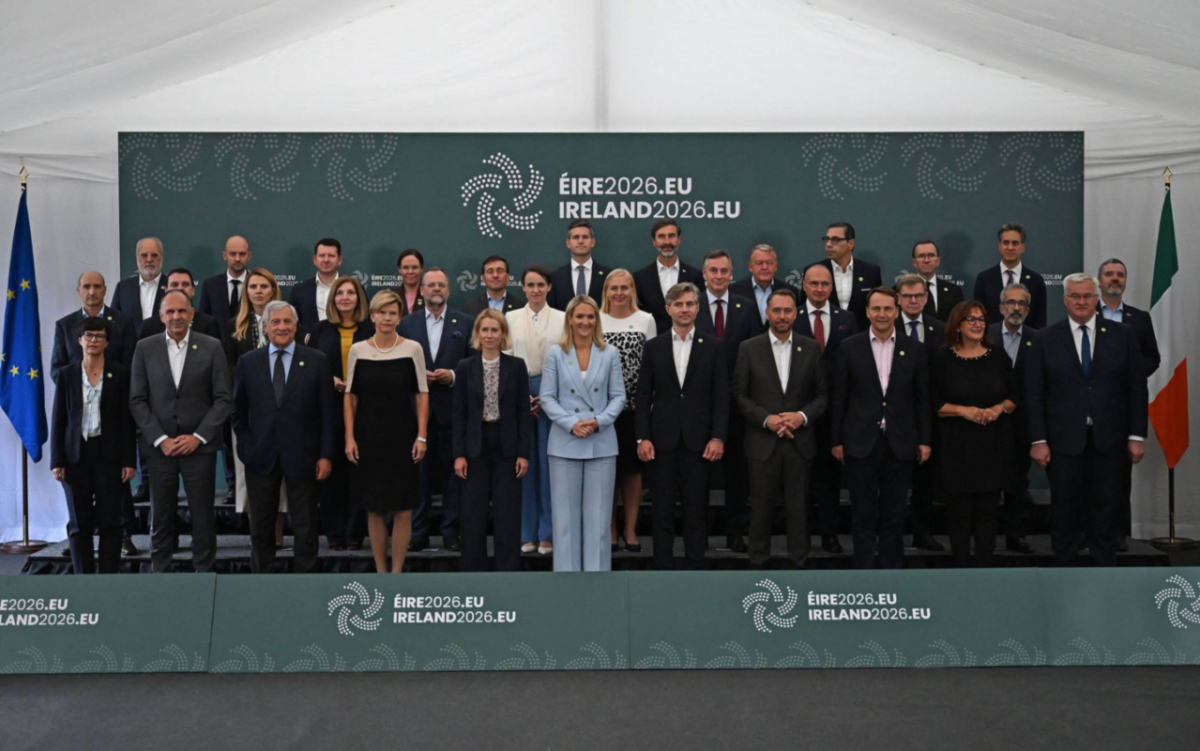
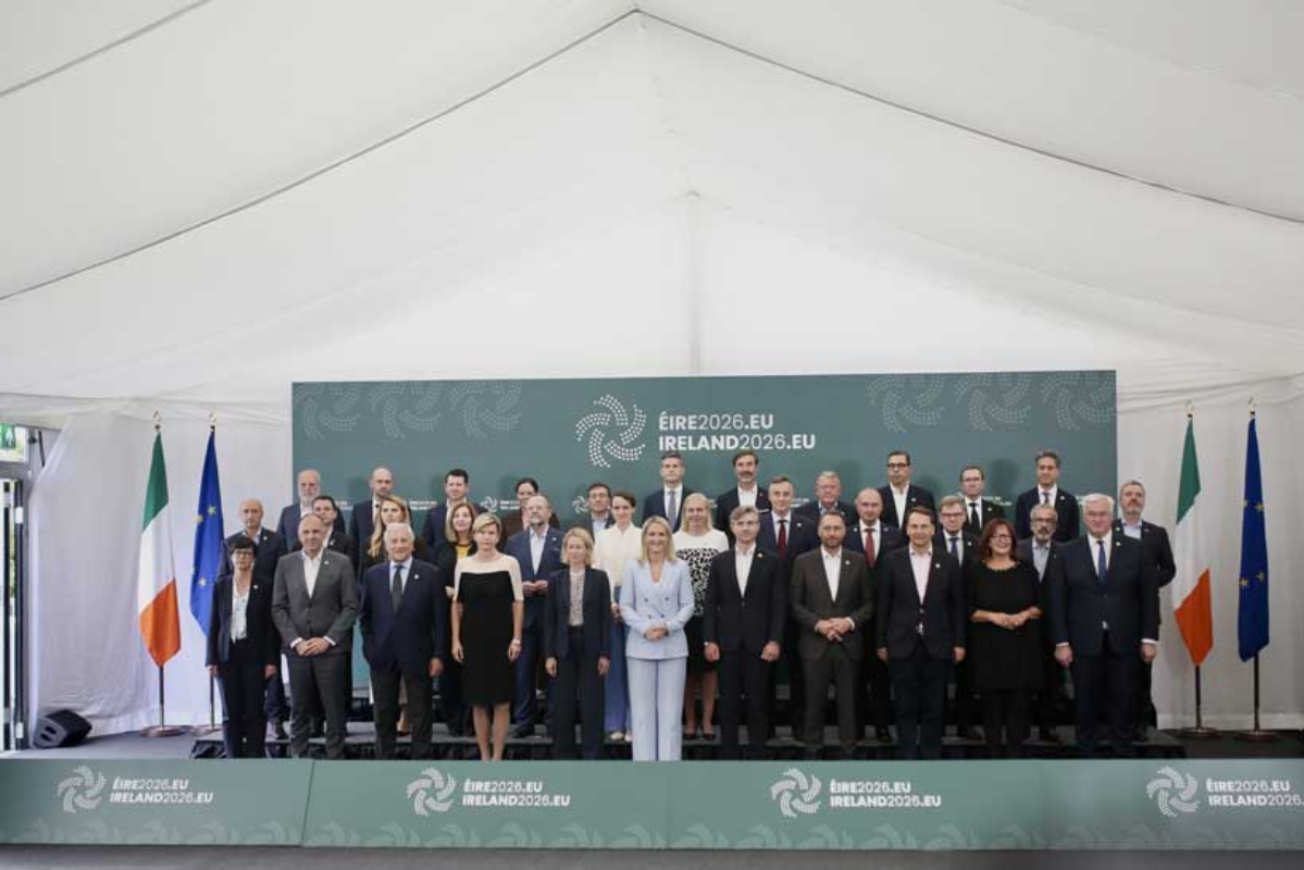
Πηγή Φωτογραφίας: Helen McEntee, Ireland’s Minister for Foreign Affairs and Trade, and Kaja Kallas, EU High Representative for Foreign Affairs and Security Policy, pose for a family photo with foreign ministers and other participants at an informal meeting of European Union (EU) Foreign Affairs Ministers (Gymnich), in Wicklow, Ireland on September 02, 2026. Mostafa Darwish / Anadolu via Reuters Connect


Two separate battles over Russia are unfolding inside the European Union. On the surface, they concern different issues. In reality, both expose the same structural weakness in Europe’s economic confrontation with Moscow: when political consensus is required, individual governments can acquire disproportionate leverage over the other member states.
The first dispute centres on Belgium and roughly €202bn in Russia-linked sanctioned assets held at Euroclear, the Brussels-based securities depository.
The second concerns the renewal of EU individual sanctions against Russia, which face their next critical deadline on September 15.
Together, the two disputes highlight an increasingly important question for Europe: not whether it has the financial power to pressure Russia, but whether the EU can maintain the political unity required to use that power effectively.
The €202bn Frozen in Europe’s Financial System
Following Russia’s full-scale invasion of Ukraine, Western governments immobilised vast amounts of Russian central bank reserves.
The largest concentration in Europe sits at Euroclear.
At the end of June 2026, Euroclear reported approximately €202bn of sanctioned Russian assets on its balance sheet.
Until now, Europe has largely concentrated on using the extraordinary revenues generated by those immobilised assets rather than confiscating the underlying principal itself.
But pressure is growing to go further.
Sweden, the Netherlands, Spain and Poland have revived calls for greater use of the frozen Russian assets to help finance Ukraine.
The issue returned to the agenda during the informal meeting of EU foreign ministers in Wicklow, Ireland, as European governments searched for ways to strengthen Ukraine’s financial position.
Belgium Says No — Again
Belgium remains the crucial obstacle.
Because Euroclear is headquartered in Brussels and holds such an enormous proportion of the Russian assets, the Belgian government fears that it could bear a disproportionate share of the legal and financial consequences if the money were redirected.
Belgian Foreign Minister Maxime Prévot made clear that his government’s position had not fundamentally changed.
“The reasons behind our opposition have not magically disappeared in the meantime,” he said.
Belgium argues that any mechanism effectively approaching confiscation would create “very significant risks.”
The core question from Brussels is straightforward:
If Europe redirects more than €200bn and Russia retaliates through courts or seizures of Western assets, who carries the liability?
Belgium does not want the answer to be Belgium alone.
Moscow Is Already Fighting Euroclear in Court
Those concerns are not entirely theoretical.
Euroclear has already faced legal action in Russian courts linked to the immobilisation of assets.
Russia’s central bank has pursued claims against the securities depository, while Moscow has repeatedly threatened retaliation if its sovereign reserves are confiscated or redirected.
Euroclear does not recognise Russian court rulings against it as enforceable within the EU.
But the dispute demonstrates why Belgium is demanding a European risk-sharing mechanism before accepting any more aggressive use of the assets.
In effect, Brussels is telling its partners: if this becomes a €200bn legal confrontation with Moscow, the risk must be Europeanised as well.
Brussels Searches for a Way Around the Euroclear Problem
That has pushed European policymakers towards increasingly creative options.
One idea under discussion is to move the immobilised Russian assets from Euroclear into a dedicated EU-level vehicle or mechanism.
Such a structure could potentially distribute the legal and financial exposure more broadly across Europe instead of concentrating it in Belgium.
No final decision has been taken.
But the fact that such options are being explored demonstrates how important the Russian reserves have become to the wider debate over financing Ukraine.
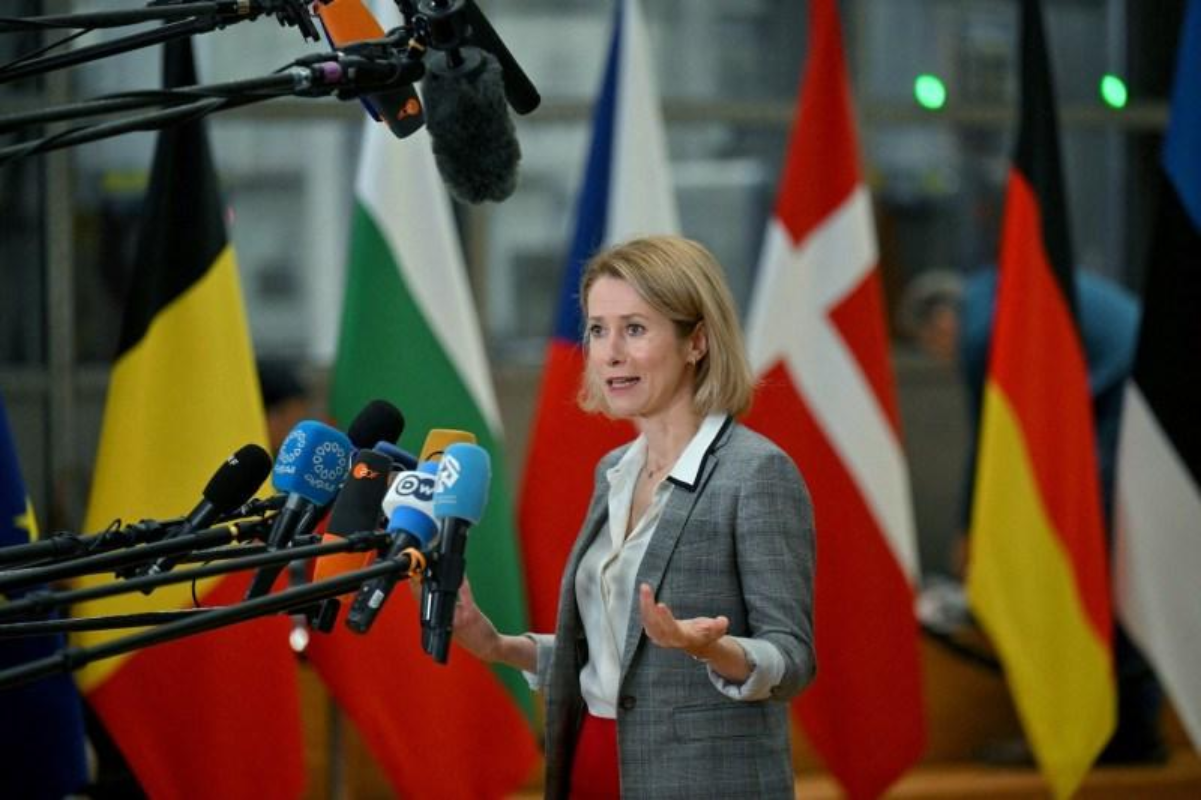
EU foreign policy chief Kaja Kallas confirmed that the issue remains alive.
“Some ministers raised again the issue of using the immobilised Russian assets. This discussion will continue,” she said.
Her political argument was equally clear:
“Russia must pay for the destruction it has caused.”
The Second Clock Is Ticking: September 15
At the same time, Europe faces another sanctions deadline.
EU restrictive measures targeting individuals and entities associated with Russia’s war against Ukraine must be periodically renewed.
The measures include asset freezes, travel bans on listed individuals and prohibitions on making funds or economic resources available to sanctioned targets.
The next deadline on September 15 is therefore more than an administrative exercise.
It is another test of whether European governments can maintain a common position when individual capitals have the ability to demand concessions over specific listings.
Slovakia has emerged as a key source of pressure in the latest negotiations, seeking changes before agreeing to the renewal.
That turns what appears to be a routine extension of sanctions into another bargaining round inside the EU.
Russia Does Not Need to Defeat the Sanctions Regime
This is where the two disputes converge.
Moscow does not necessarily need Europe to abandon sanctions.
It benefits whenever European decision-making becomes slower, more politically expensive and less predictable.
Every sanctions renewal can become leverage.
Every new package can trigger negotiations among the 27.
Every disagreement gives Moscow an opportunity to argue that Western unity is eroding.
The EU may possess enormous collective economic power, but its sanctions policy is ultimately only as strong as the political mechanism required to sustain it.
That is the vulnerability Russia can exploit.
Ukraine’s €90bn Lifeline Does Not End the Funding Problem
Europe has already adopted an interim answer to Ukraine’s financing needs.
The EU agreed on a €90bn support loan for Ukraine covering 2026 and 2027, financed through borrowing on European capital markets.
But the scale of Ukraine’s military and reconstruction requirements means the funding debate is far from resolved.
That is why the frozen Russian reserves continue to return to the centre of the conversation.
For governments advocating their greater use, the political argument is compelling: why should European taxpayers carry the burden when hundreds of billions belonging to the Russian state are already immobilised inside the Western financial system?
Belgium’s response is equally consequential: because using the principal rather than merely freezing it could fundamentally alter the legal nature of the measure.
And that leads to a much bigger geopolitical question.
From Freezing to Confiscation: The Global Precedent
The distinction between freezing sovereign reserves and using them is not merely technical.
Central banks hold foreign reserves on the assumption that their assets enjoy exceptionally strong legal protection.
If Western governments establish a mechanism through which another state’s immobilised central bank reserves can ultimately be redirected, it could create a precedent extending far beyond Russia.
And Moscow is not the only capital watching.
Central banks and sovereign wealth funds across China, India, the Gulf and the wider emerging world have a direct interest in the outcome.
Their question is simple:
How politically secure are sovereign reserves held inside Western financial infrastructure?
That question matters for the future composition of global reserves.
Countries seeking to reduce geopolitical exposure can diversify towards alternative currencies, domestic custody structures or assets that carry no foreign counterparty risk.
And one asset immediately stands out.
Why Gold Is Part of the Same Story
Gold’s strength near record levels reflects many forces, from monetary policy expectations to geopolitical instability.
But the debate over frozen Russian reserves adds another structural consideration.
Physical gold held domestically cannot be frozen by a foreign clearing house.
It carries no sovereign counterparty in the same way that foreign government securities or deposits held through overseas financial infrastructure do.
For central banks increasingly concerned about sanctions risk, that distinction has become strategically important.
The Russian asset dispute therefore touches something much larger than the financing of Ukraine.
It raises questions about the long-term financial architecture underpinning the dollar- and euro-centred international system.
Europe’s Financial Weapon Has a Political Weakness
Sanctions have become one of the West’s principal weapons against Russia precisely because the EU and United States sit at the centre of global finance.
Access to currencies, banks, payment systems, securities markets and reserve assets gives Western governments enormous economic leverage.
But financial power and political power are not identical.
The EU can freeze hundreds of billions of euros.
It can restrict Russian banks.
It can blacklist individuals and companies.
It can target trade, energy and financial flows.
Yet when major decisions require agreement among governments with different domestic priorities and different levels of exposure to Russia, that economic power encounters a political bottleneck.
Belgium illustrates the legal and financial side of the problem.
Slovakia illustrates the political side.
Moscow benefits from both.
Putin’s Most Valuable Ally May Be Time
For Russia, therefore, neither dispute needs to end in an outright victory.
Delay itself has value.
Every month that the frozen assets remain inaccessible to Ukraine preserves a financial resource that Kyiv cannot use.
Every sanctions renewal that turns into an intra-European confrontation gives Moscow another opportunity to test Western cohesion.
And every disagreement reinforces the Kremlin’s long-term calculation that democracies may struggle to maintain costly policies indefinitely.
Europe has repeatedly demonstrated since 2022 that it can overcome major internal differences and continue tightening pressure on Moscow.
But the next phase of the sanctions war presents a different challenge.
It is no longer simply about how much economic pain Europe can impose on Russia.
It is about whether the EU’s political machinery can keep pace with the financial weapon it has built.
The September 15 deadline will provide the next immediate test. The debate over Euroclear and the €202bn in Russian assets will be the much larger one.
Because behind both lies the same question:
Can 27 governments wield one financial weapon for long enough to make it decisive?
Source: pagenews.gr
Διαβάστε όλες τις τελευταίες Ειδήσεις από την Ελλάδα και τον Κόσμο