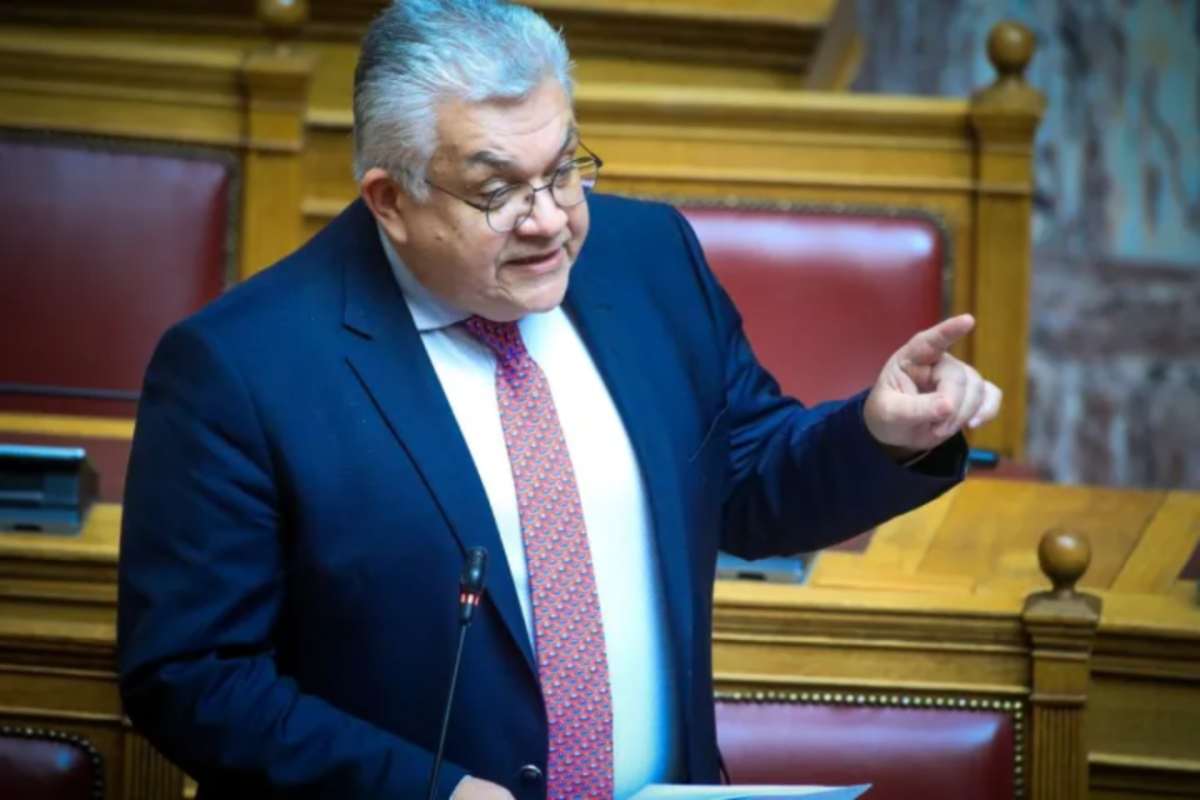
Greek Deputy Education Minister Nikos Papaioannou gave a categorical assurance that students will not lose the academic year, seeking to calm families following recent court developments surrounding the operation of foreign university branches in Greece.
Speaking on SKAI television on Thursday morning, Papaioannou defended one of the government’s flagship education reforms while outlining the next steps following the Council of State rulings and new legal challenges concerning additional foreign university branches.
“The academic year will not be lost. I am saying this clearly,” the deputy minister stressed, adding that the necessary procedures will be completed within the required timeframe and on a solid legal basis.
“These are not private universities”
Papaioannou began by drawing a distinction that the government considers politically and legally important.
He argued that the institutions should not simply be described as “private universities”, but rather as branches of foreign universities operating in Greece.
The deputy minister strongly defended the reform promoted by the government of Prime Minister Kyriakos Mitsotakis, describing it as a historic break with Greece’s previous higher-education model.
He argued that the change ended what he described as the country’s international isolation in this field.
“We were Greece and Cuba,” he said, adding pointedly that Greece has now “left Cuba alone”.
As for the latest legal appeals targeting another seven licences, Papaioannou sought to play down their immediate significance.
“We are at the stage of appeals. Anyone can file an appeal over anything,” he said, stressing that the judicial process must now run its course.


What happens after the Council of State ruling
The more immediate challenge concerns the corrective regulatory and administrative steps required following the court decisions.
According to Papaioannou, the competent higher-education authority will have to issue a new and more detailed regulatory framework, including more specific quantitative criteria, before proceeding again with the certification of academic programmes.
A new evaluation committee will also have to be established where necessary, while the relevant certification bodies must complete their procedures within the legally prescribed timeframe.
Papaioannou emphasised that the Education Ministry itself does not intervene in the independent evaluation process, arguing that the institutional separation is explicitly provided for under existing legislation.
At the same time, he said the government fully respects judicial decisions and suggested that the required adjustments could ultimately make the regulatory framework stronger.
“The Pierakakis law was ruled constitutional”
The deputy minister also hit back at opposition parties that have portrayed the latest developments as evidence that the government’s university reform is beginning to unravel.
His response was unequivocal.
“Who is celebrating and why? The Pierakakis law was ruled constitutional,” Papaioannou said.
He argued that the latest Council of State developments do not overturn the constitutional foundation of the reform and accused opposition parties of adopting contradictory positions.
According to Papaioannou, critics previously warned that non-state universities would offer degrees too easily, while simultaneously arguing that those same institutions could pose a serious competitive threat to Greece’s public universities.
He called on opposition parties to move beyond broad political criticism and identify precisely which provisions of the legislation they believe are problematic.
Greece continues purge of “eternal students”
Papaioannou also addressed another politically sensitive higher-education reform: the removal of long-term inactive students from university registers.
According to figures he cited during the interview, around 308,000 students were removed from university registers last year, with the process now continuing according to the duration of individual degree programmes.
The government argues that the objective is to clean up university records that in some cases still include people who enrolled several decades ago and have long since ceased to maintain any meaningful connection with their studies.
However, Papaioannou stressed that the system is not designed as an indiscriminate automatic expulsion mechanism.
Students who can demonstrate meaningful academic progress are given additional time under specific conditions. Further extensions can also apply where a student has reached the final stages of completing a thesis or degree requirement.
The government’s position is that genuinely active students should be protected while university registers cease to include hundreds of thousands of people who effectively abandoned their studies years or even decades ago.
More than €1 billion for student accommodation
The interview also turned to one of the biggest financial pressures facing Greek families: housing costs for students studying away from home.
Papaioannou outlined a large-scale investment programme intended to substantially expand university accommodation.
According to the figures presented by the deputy minister:
- €737 million is being mobilised through public-private partnership projects.
- €227 million is expected through the Social Climate Fund.
- A further €87 million comes through the Public Investment Programme.
- Greece currently has approximately 12,000–13,000 available student beds.
- Around 8,500 additional beds are planned.
- The expansion would push total capacity to more than 20,000 beds.
The investment programme comes as soaring rents in Athens, Thessaloniki and other university cities have turned accommodation into one of the largest costs confronting families whose children study away from home.
Student housing allowance spending has doubled
The second pillar of the government’s student-support strategy is the housing allowance.
Papaioannou said annual expenditure on the scheme has increased from approximately €45 million in 2019 to more than €90 million today.
Depending on eligibility conditions, support can reach:
- €2,000 for an eligible student.
- €2,500 where the relevant cohabitation requirements are met.
The deputy minister also highlighted subsidised student meals, arguing that both access and the quality of food provided through universities have improved considerably.
The government’s message to worried families
With the new academic year approaching, Athens is attempting to send two messages simultaneously.
The first is directed at students and parents: the legal complications surrounding foreign university branches will not be allowed to cost students an academic year.
The second is political. The government insists that the court developments do not represent the collapse of its higher-education reform, but rather a requirement for specific procedural and regulatory corrections before the system moves forward.
For families watching the legal battle with growing concern, however, Papaioannou’s most important statement was also his simplest:
“The academic year will not be lost. They should remain calm.”
Source: pagenews.gr