The US–Iran war is entering a new and potentially decisive phase.
Six months after the United States and Israel launched military operations on February 28, the confrontation is no longer being fought only with missiles, drones and airstrikes.
It is increasingly being fought through banks, oil exports, ports, sanctions, access to the dollar — and the purchasing power of ordinary Iranians.
For the first time, Iran’s leadership is openly acknowledging the scale of the economic damage.
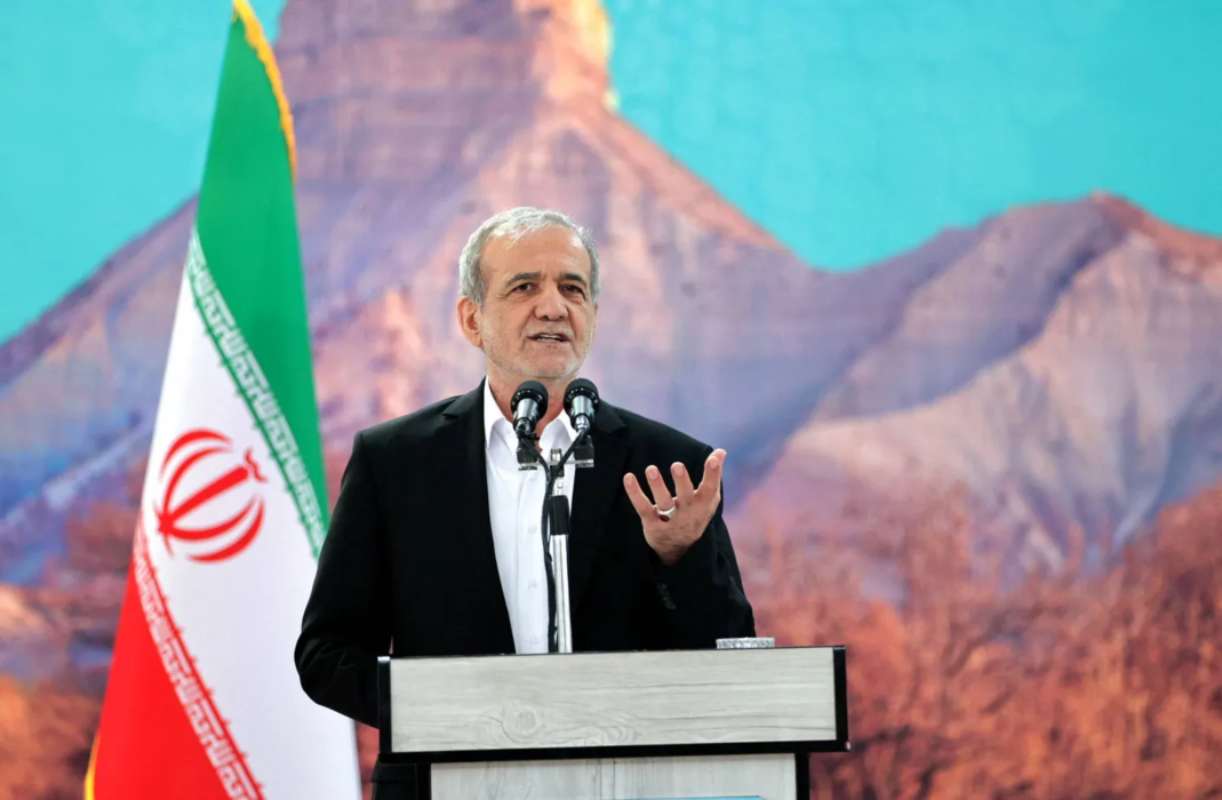
Annual inflation reached 66% last month, while President Masoud Pezeshkian says Iranian imports and exports have fallen by nearly 35% as a result of US sanctions and the naval blockade.
Yet Tehran is showing no sign of capitulation.
Its strategy increasingly rests on three pillars:
economic endurance, diplomacy and the Strait of Hormuz.
Iran’s Economic Front Becomes Central to the War
The Iranian government has acknowledged that managing the economic consequences of sanctions and war has become one of its highest priorities.
Its objectives include containing inflation, stabilising markets, creating jobs, directing investment towards domestic production and gradually reducing Iran’s dependence on the US dollar.
Supreme Leader Ayatollah Mojtaba Khamenei has also publicly acknowledged the severity of the situation.
“There is the need to seriously address the chain of economic and livelihood challenges, such as inflation, unemployment, management of prices and the market for goods and services,” according to a written statement attributed to Khamenei.
The political significance is considerable.
Economic deterioration is no longer being treated by Tehran simply as collateral damage from the war.
It is increasingly becoming a test of the regime’s domestic resilience.


Pezeshkian: Foreign Trade Has Fallen Nearly 35%
President Masoud Pezeshkian has provided one of the clearest indications yet of the economic toll.
He said Iranian imports and exports had fallen by almost 35% because of US sanctions and the blockade of Iranian ports.
For an economy dependent on energy exports, foreign currency and international trade channels, such a contraction represents a serious shock.
But Pezeshkian also revealed why Tehran still sees value in negotiations.
During the short-lived US-Iran memorandum of understanding in June, when Washington temporarily permitted Iranian oil sales, Iran was able to sell around 90 million barrels of oil, according to the president.
For Tehran, the lesson is obvious:
economic relief could come quickly if a political agreement reopened its oil-export channels.
Trump’s ‘Economic D-Day’
The Trump administration is moving in precisely the opposite direction.
Washington has intensified its campaign to financially isolate Iran, with the US Treasury presenting its latest measures under Operation Economic Outcast as an unprecedented effort to squeeze Tehran’s access to the international financial system.
The underlying message to banks, companies and governments is becoming increasingly stark:
choose between doing business with Iran and maintaining access to the US financial system.
This is where Washington possesses one of the most powerful non-military weapons in the world.
The dollar.
Washington Targets Banque Misr’s UAE Operations
One of the most significant moves came on August 28.
The US Treasury’s Financial Crimes Enforcement Network proposed cutting Banque Misr UAE off from correspondent banking access through US financial institutions.
According to the Treasury, between January 2024 and June 2026 Banque Misr UAE processed approximately $1.8 billionfor 103 companies potentially linked to Iran’s shadow-banking networks.
US Treasury Secretary Scott Bessent delivered an explicit warning:
“We have also warned that those who facilitate Iran cannot continue to enjoy access to the US dollar and global financial system.”
The proposed measure is targeted at Banque Misr’s UAE operations rather than the Egyptian bank as a whole.
But its significance extends far beyond a single institution.
Washington’s Real Target Is Fear
Sanctions become significantly more powerful when they change the behaviour of third parties.
Washington’s objective is therefore not merely to punish Iranian institutions.
It is to make every international bank, trading company and intermediary calculate whether business with Tehran is worth risking access to the dollar-based financial system.
Iran can build alternative payment channels.
It can use front companies.
It can conduct transactions outside the dollar.
It can deepen economic ties with China, Russia and regional partners.
But for many internationally exposed banks, the calculation remains brutal:
Is access to Iran worth potentially losing access to the dollar?
For most institutions, the answer is likely to be no.
That is the multiplier effect of US secondary sanctions.
But the Real Test of US Sanctions Is China
There is one enormous exception.
China.
Washington has warned countries to reduce economic ties with Iran, but the Treasury has so far stopped short of applying the full weight of its financial campaign against major Iranian trading partners such as China and India.
There is a reason.
Aggressive secondary sanctions against major Chinese or Indian interests could generate much wider consequences for global trade, financial markets and Washington’s relations with two of the world’s largest economies.
That makes Beijing the real test of Trump’s “Economic D-Day.”
Not one bank in Dubai.
Not one intermediary.
China.
If Beijing continues providing Tehran with sufficient energy, commercial and financial outlets, Iran’s economic isolation can become extremely painful without necessarily becoming decisive.
China remains Iran’s most important trading partner and the dominant buyer of Iran
Before the war, roughly 20% of the world’s oil and LNG moved through the Strait of Hormuz.
That makes the waterway one of the most strategically important chokepoints in the global economy.
It also explains why disagreements over Hormuz helped destroy the temporary US-Iran understanding reached in June.
US military commanders say American forces have cleared sea mines laid in the strait by Iran’s Islamic Revolutionary Guard Corps.
President Donald Trump has repeatedly said that Hormuz is open.
Iran’s Revolutionary Guards reject that claim.
Their navy described such assertions as “an obvious lie” and reiterated that ships cannot transit freely without Iranian permission.
Shipping figures indicate that normality remains elusive.
Only seven commodity vessels transited the strait on Thursday, according to preliminary shipping data cited by Reuters, compared with 17 a day earlier and a 10-day average of 15.
That means Hormuz remains more than a military battlefield.
It is a pressure point on the global economy.
Qatar Searches for a Diplomatic Exit
While Washington and Tehran intensify the pressure, regional powers are trying to reopen diplomatic channels.
Qatari Prime Minister and Foreign Minister Sheikh Mohammed bin Abdulrahman Al Thani travelled to Tehran and pressed for a return to pre-war freedom of navigation through the Strait of Hormuz.
Qatar and Pakistan had previously helped broker the June memorandum of understanding that produced a brief ceasefire before disagreements over the strait caused it to unravel.
Iranian Foreign Minister Abbas Araqchi described the latest discussions with Al Thani as “creative.”
Tehran also issued an important dual message.
“Diplomacy and defence are two complementary, coordinated and inseparable wings” for protecting Iran’s national interests, security and territorial integrity, the government said.
Iran is therefore keeping the diplomatic door open.
But it is not surrendering the leverage it believes can force Washington to compromise.
The Paradox: Iran Needs Hormuz Open — and Closed
This is Tehran’s strategic dilemma.
Restricting Hormuz hurts the global economy.
It increases pressure on energy markets.
It creates costs for Washington’s allies.
And it reminds the world that Iran can influence one of the planet’s most important energy arteries.
But prolonged disruption also damages Iran itself.
The same waterway Tehran uses to pressure its adversaries is essential to the regional trade and energy flows upon which Iran’s own economy depends.
Hormuz is therefore both Iran’s strongest geopolitical weapon and potentially an economic trap.
The longer the confrontation continues, the more difficult that contradiction becomes.
Who Breaks First?
This is now the central question of the war.
Washington believes it can make the economic cost of resistance so high that Tehran eventually returns to negotiations from a much weaker position.
Iran is betting on something different.
It believes it can endure long enough for the cost of restricted navigation through Hormuz, higher energy prices and a prolonged military confrontation to become increasingly painful for the United States and its allies.
The two sides are therefore deploying fundamentally different forms of economic power.
America controls access to the dollar.
Iran can disrupt access to one of the world’s most important energy corridors.
The first number to watch is Iran’s 66% inflation rate.
The second is the nearly 35% contraction in foreign trade cited by Pezeshkian.
But the third number may ultimately matter even more.
It is not inside Iran.
It is the price of oil.
If Washington succeeds in isolating Tehran financially while keeping global energy markets functioning, the balance of economic power overwhelmingly favours the United States.
But if Iran can sustain disruption in Hormuz and push the cost of the conflict outward — into energy prices, shipping, insurance and Western economies — Tehran gains something sanctions alone cannot easily remove:
geographical leverage.
This is why the conflict is becoming a war of economic endurance.
The decisive question is no longer simply whether Washington and Tehran return to negotiations.
It is which side concludes first that the cost of continuing the war has become greater than the price of compromise.
Source: pagenews.gr