The €4.3 billion agreement for Sweden’s new FDI frigates is not only a French-Swedish defence story.
Behind the order for four warships, a second contest is already taking shape: which European industrial players will secure a role in the supply chain of a programme extending deep into the next decade.
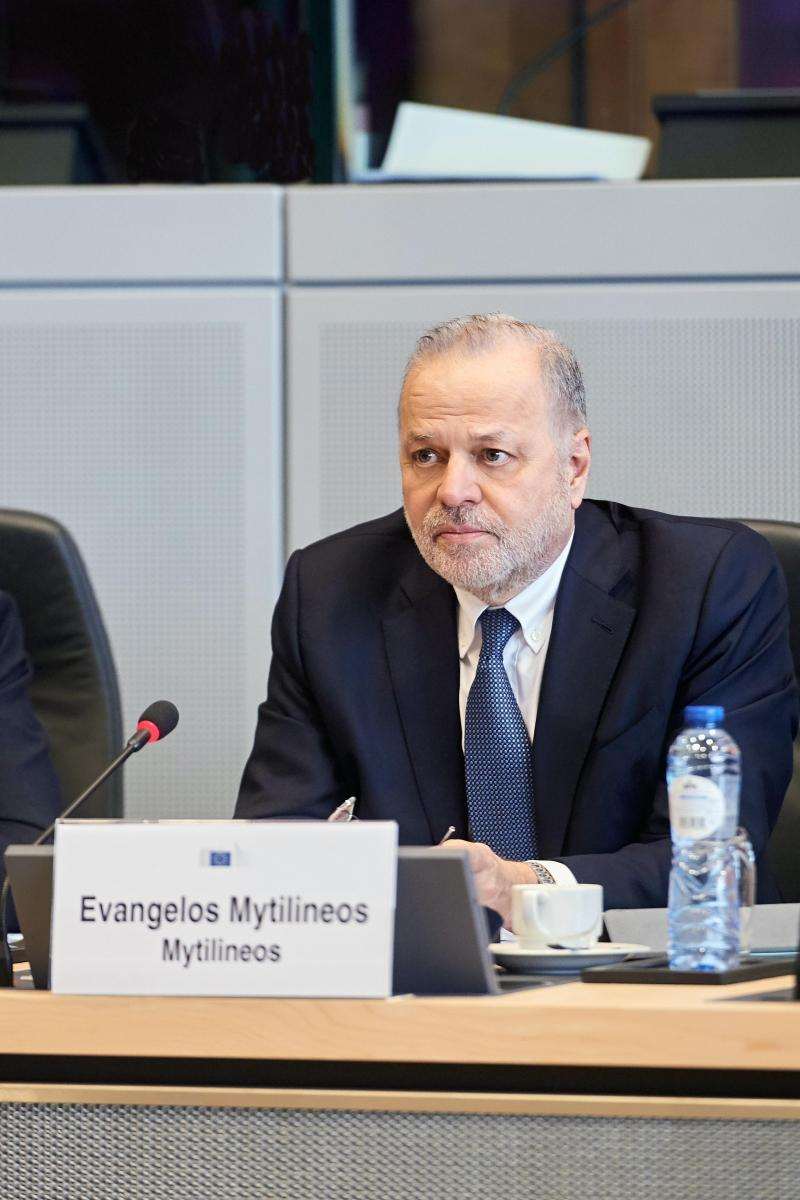
And Greece now has two companies entering that contest with proven credentials rather than aspirations alone: Evangelos Mytilineos’ METLEN and Salamis Shipyards.
According to information published by Crisismonitor, both Greek companies are seeking industrial work linked to the four Swedish FDI frigates.
For now, however, there has been no public announcement from Naval Group, METLEN or Salamis Shipyards confirming a final award of specific work packages under the Swedish programme.
What is already officially confirmed may be even more important: the industrial foundation for such cooperation is already in place.


The €4.3bn deal reshaping the FDI industrial map
On 31 August 2026, Sweden’s Defence Materiel Administration, FMV, and Naval Group signed the contract in Stockholm for four FDI frigates for the Royal Swedish Navy.
The ceremony took place in the presence of French President Emmanuel Macron and Swedish Prime Minister Ulf Kristersson, while the agreement was signed by FMV Director General Mikael Granholm and Naval Group Chairman and CEO Pierre Éric Pommellet.
The contract is valued at approximately €4.3 billion, equivalent to around SEK 47 billion, with delivery of the first Swedish frigate scheduled for 2030.
Naval Group has also stated that it is seeking long-term cooperation with Sweden’s defence industry, including technology and know-how transfers to Swedish partners.
That makes the emerging industrial ecosystem around the four ships crucial: which sections will be produced where, which certified suppliers will participate, and which existing Naval Group partners will manage to extend their current roles into the new export programme.
This is precisely where the Greek opportunity emerges.
Mytilineos’ strongest card
For METLEN, the key factor is that the company is not approaching Naval Group for the first time.
On 19 March 2026, METLEN and Naval Group signed a Memorandum of Understanding at M Technologies’ facilities in Volos to explore new cooperation in submarines and surface vessels.
The wording used by Naval Group itself is particularly significant.
The French defence group described METLEN as a “strategic partner within Naval Group’s supply chain”, while also highlighting the potential for broader industrial cooperation across multiple naval platforms and international markets.
This is therefore not simply another supplier agreement.
METLEN has already entered the category of companies Naval Group views as part of its broader international industrial ecosystem.
That may prove to be Evangelos Mytilineos’ strongest asset in the race for Swedish FDI-related work.


From Volos to Lorient — and now potentially Sweden
The relationship already includes real industrial output.
In December 2025, METLEN delivered two complex platform systems on schedule to Naval Group’s shipyard in Lorient.
These systems include mechanical, hydraulic, electrical and electronic equipment and were destined for the French FDI frigate Amiral Louzeau.
Naval Group has also confirmed that METLEN is already involved in producing critical FDI components for both the Greek and French programmes.
That fundamentally changes the character of a possible Swedish agreement.
METLEN would not be trying to break into an unfamiliar supply chain.
It would be attempting to extend an already certified production footprint from the Greek and French FDI programmes into the Swedish one.
Salamis Shipyards also bring proven production credentials
The industrial case is similarly strong for Salamis Shipyards.
Its production cooperation with Naval Group began in 2022 and includes the construction and pre-outfitting of sections of FDI hulls.
Naval Group itself has described Salamis Shipyards not merely as a subcontractor, but as a “real partner.”
The latest available figures also show that Greek industrial participation has already expanded significantly: of 21 sections ordered from Salamis Shipyards, 15 had been delivered by summer 2026.
So here too, the story goes well beyond ambition.
There is certified production, actual deliveries and integration into Naval Group’s supply chain.
The real strategic bet for Mytilineos
For METLEN, the importance of the Swedish programme goes far beyond the value of any individual contract.
Evangelos Mytilineos has been steadily building a new industrial pillar around defence at a time when Europe is sharply increasing military expenditure and urgently looking for additional manufacturing capacity within its own borders.
METLEN is developing a six-factory defence industrial hub in Volos, while Naval Group has publicly linked this investment to stronger European strategic autonomy and increased defence manufacturing capacity.
If METLEN secures work on the Swedish FDI programme, the achievement would be far more significant than simply adding another contract to its order book.
It would demonstrate that the company can manufacture in Greece for several national naval programmes operated by one of Europe’s largest defence groups.
That is the real transition: from domestic supplier to European defence manufacturing partner.
Greece is moving into Europe’s defence supply chain
The Greek industrial footprint is already more substantial than is often recognised.
Around 70 Greek companies are involved in Naval Group’s Hellenic Industrial Participation programme, more than 120 contracts have been signed, and approximately 75 Greek companies have registered on the French group’s supplier platform.
Crucially, Naval Group’s original strategy was never limited to the Greek FDI programme.
From the outset, the objective was to integrate Greek companies into the group’s wider supply chain for French programmes and future export contracts.
Sweden may now become the first major test of that strategy.


From Greek and French FDIs to a 13-ship European fleet
There is also a bigger picture.
France now plans to operate five FDI frigates, Greece has ordered four, and Sweden has contracted four more.
That creates a combined European pipeline of 13 FDI frigates.
For industrial partners, that means far more than initial ship construction.
It means spare parts, repairs, upgrades, technical support, new systems integration and potentially decades of maintenance-related work.
And this may be the most important point for METLEN.
If Mytilineos succeeds in converting today’s MoU and existing production relationship with Naval Group into participation in Sweden’s FDI programme, the company will not merely have won another defence contract.
It will have secured a position inside a European naval platform that is beginning to achieve real scale.
And in defence manufacturing, scale, certification and integration into a prime contractor’s supply chain can ultimately be far more valuable than the size of the first contract.


What is confirmed
- Sweden’s order for four FDI frigates is confirmed and was signed on 31 August 2026.
- The contract is worth approximately €4.3 billion, or SEK 47 billion.
- Delivery of the first Swedish FDI is scheduled for 2030.
- METLEN signed an MoU with Naval Group on 19 March 2026.
- Naval Group officially describes METLEN as a strategic partner within its supply chain.
- METLEN and Salamis Shipyards already have real production work linked to FDI programmes.
- The information that both Greek companies are pursuing work on Sweden’s FDI frigates comes from Crisismonitor and has not yet been confirmed through an official contract award announcement.


- The claim that Sweden secured 50% co-production from the first frigate has not been confirmed by the official sources reviewed and should therefore not be treated as established fact.
Source: pagenews.gr