Rubio in Samarkand: Trump’s Russia Sanctions U-Turn Reshapes the US–China–Russia Power Game
 ΧΡΟΝΟΣ ΑΝΑΓΝΩΣΗΣ 14 '
Πηγή Φωτογραφίας: AP Photo//Rubio in Samarkand: Trump’s Russia Sanctions U-Turn Reshapes the US–China–Russia Power Game



Samarkand Becomes a Strategic Battleground for Three Major Powers
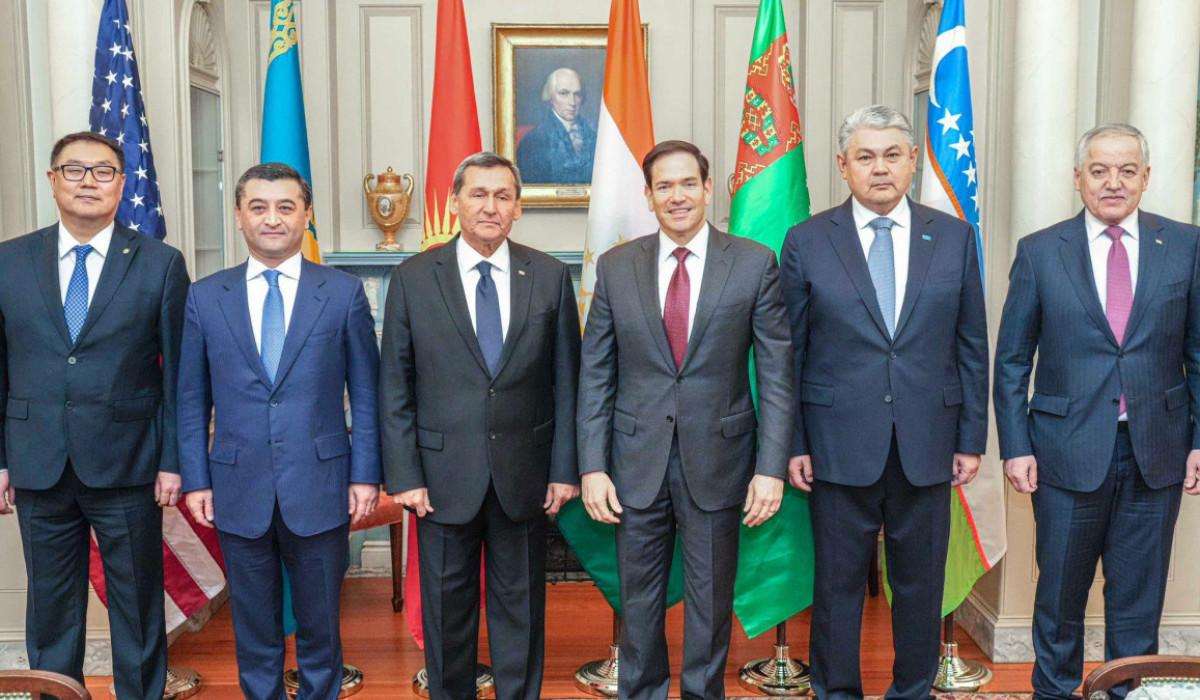
US Secretary of State Marco Rubio’s visit to Samarkand, Uzbekistan, highlights Central Asia’s growing geopolitical importance as a region positioned between Russia, China and the strategic trade and energy corridors of Eurasia.
Washington is seeking to expand its economic and strategic presence through investment, commercial agreements and access to American financing.
However, the diplomatic initiative comes at a time when President Donald Trump’s administration has altered its approach to certain sanctions measures targeting Russia.
The suspension of new restrictions, combined with Washington’s agreement to import Russian diesel, has raised questions about the durability and predictability of American economic pressure.
For Central Asian governments, this development represents more than uncertainty.
It could become an additional bargaining advantage.
The region possesses natural resources, strategic infrastructure and trade routes that are increasingly important to all three major powers.
The central question is whether Washington can secure economic and strategic cooperation without weakening the mechanisms it has established to pressure Moscow.
More Than 100 American Companies Accompany Rubio
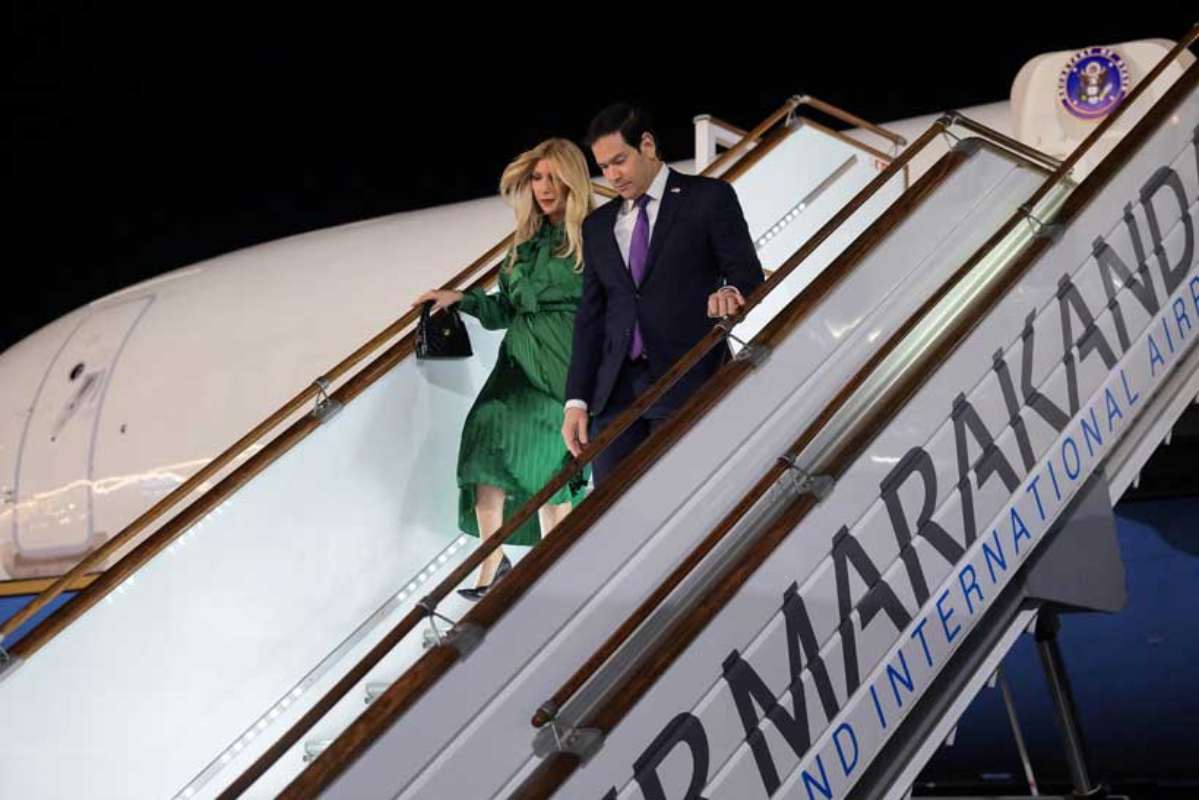
Marco Rubio arrived in Samarkand on Sunday, October 18, for his first visit to Central Asia as US secretary of state.
The American delegation includes representatives of more than 100 companies, underscoring the economic importance of the initiative.
Critical minerals, rare earth elements, energy resources, trade corridors and financing for major investment projects are at the center of the agenda.
Washington’s strategy extends beyond strengthening diplomatic relations.
Its objective is to establish economic partnerships that provide Central Asian countries with alternatives to Russian and Chinese influence.
Central Asia holds significant reserves of uranium, tungsten and other raw materials essential to defense manufacturing, advanced technology and the energy transition.
For the United States, securing access to these resources is both an economic competitiveness issue and a national security priority.
Two Days Before the Summit, Trump Changes the Equation
The American delegation arrives following a significant decision by the White House.
On October 16, Donald Trump issued an executive order suspending the implementation of provisions in new sanctions legislation he had signed the previous month.
The legislation, associated with an initiative by Senators Lindsey Graham and Richard Blumenthal, authorized substantial tariffs against countries purchasing Russian energy or facilitating sanctions evasion.
According to the analysis underlying the debate, the proposed tariffs could reach 100%.
Kazakhstan was among the countries potentially exposed to the new measures.
The suspension followed the October 9 agreement concerning imports of Russian diesel into the United States.
Together, these decisions have created a different political environment.
Sanctions remain an instrument of American foreign policy, but the recent suspension demonstrates that the implementation of certain new measures can change according to Washington’s political and economic priorities.
That is precisely what Central Asian governments are watching.
Central Asia: A Transit Route Into Russia’s War Economy
Since Russia launched its full-scale invasion of Ukraine in 2022, Central Asian trade routes have become increasingly important for shipments of goods entering the Russian market.
Some of these products appear on Western high-priority lists because they can serve both civilian and military purposes.
They include electronic components, microchips, machine tools and parts potentially used in unmanned systems.
According to research cited by Eurasianet, Kazakhstan’s exports to Russia of certain high-priority dual-use products increased by more than 400% in 2022.
These flows declined significantly over the following two years as the risk of secondary sanctions increased.
However, the same research identified renewed growth in certain trade flows through Kazakhstan, Kyrgyzstan and Uzbekistan in 2025.
Importantly, the findings did not establish systematic involvement by Kazakhstan’s government in circumventing sanctions.
Geographical proximity to Russia, established commercial networks and Kazakhstan’s membership in the Eurasian Economic Union create conditions in which export controls are particularly difficult to enforce.
The challenge therefore concerns not only government policy but also the behavior of private companies and intermediary trading networks.
Why Secondary Sanctions Depend on Credibility
Secondary sanctions allow the United States to exert pressure on companies and financial institutions in third countries that conduct business with sanctioned entities.
Their effectiveness does not depend exclusively on penalties already imposed.
It also depends on how businesses assess the likelihood of future enforcement.
A company considering the export of machine tools to a Russian buyer must evaluate not only existing legislation but also the risk of future investigations and penalties.
The more consistent and predictable enforcement appears, the stronger the incentive to comply.
Conversely, when governments observe that significant provisions can be suspended or become part of political negotiations, their calculations change.
This does not mean companies are released from existing legal obligations.
It means uncertainty over future enforcement acquires economic and diplomatic value.
The credibility of sanctions is therefore not merely a legal matter.
It is also a question of expectations.
Kazakhstan: A Case Study in Multivector Foreign Policy
Kazakhstan illustrates how Central Asian governments seek to maintain partnerships with competing major powers.
To the United States, it offers access to critical minerals, investment opportunities and commercial agreements.
With Russia, it maintains substantial economic, energy and institutional ties.
To China, it offers access to overland trade corridors and alternative transportation routes connecting Asia with Europe.
This multivector foreign policy is not new.
However, intensifying competition between Washington, Moscow and Beijing has increased its strategic significance.
Kazakhstan can attract American investment without severing its economic relationships with Russia.
It can also develop cooperation with China without excluding Western financing and technology.
For Astana, the challenge is to preserve these relationships without becoming exposed to sanctions or creating dependencies that restrict its strategic autonomy.
The $25 Billion Investment Push and the Battle for Critical Minerals
Washington’s engagement with Central Asia has already acquired a substantial economic dimension.
At the White House summit with Central Asian leaders in November 2025, agreements worth approximately $25 billion were announced.
Among them was a tungsten project in Kazakhstan valued at approximately $1.1 billion.
Tungsten is particularly important for industrial and defense applications, while secure supply chains have become an increasingly important American priority.
Washington is also interested in uranium and rare earth elements.
Developing new investment projects could provide regional governments with additional financing and export opportunities.
At the same time, American businesses are seeking access to markets where Russia and China maintain established positions.
The unresolved question is whether these commercial agreements will include specific commitments concerning export controls and sanctions compliance.
Rosatom: Russia Retains a Powerful Energy Footprint
Despite growing American interest, Russia continues to play a significant role in Kazakhstan’s energy strategy.
Russia’s state nuclear corporation, Rosatom, has secured the contract to construct the country’s first nuclear power plant.
Under the reported terms of the arrangement, Russia is expected to finance approximately 85% of the project.
The agreement demonstrates the depth of the economic relationship between Astana and Moscow.
Large energy projects establish long-term technological, financial and operational partnerships.
Consequently, a stronger American presence does not automatically translate into diminished Russian influence.
Kazakhstan is seeking to develop relationships with multiple partners rather than committing itself exclusively to one geopolitical bloc.
The Russian Oil Corridor and the Importance of Sanctions Exemptions
Kazakhstan’s reliance on transportation routes through Russia is another critical factor.
Approximately 80% of the country’s oil exports reach international markets through the Caspian Pipeline Consortium, which terminates on the Black Sea.
Kazakh-origin oil transported through this route has been exempted from Western restrictions targeting Russian oil.
This exemption differs fundamentally from a temporary political suspension of sanctions.
It is an established arrangement allowing specified energy flows to continue under defined conditions.
By contrast, when the implementation of new sanctions is suspended through a political decision, companies must assess how durable that change will be.
The distinction between stable legal exemptions and discretionary political decisions is essential to the functioning of international markets.
China and the Eurasian Trade Corridors
China represents the third major element in Central Asia’s geopolitical equation.
Beijing is interested in maintaining and expanding overland trade routes connecting China with Europe through the region.
These corridors become increasingly important when traditional transportation routes face geopolitical disruption.
Kazakhstan and its neighbors are significant hubs for trade, transportation and energy.
China can offer infrastructure investment, commercial access and financing.
Russia maintains deep historical and economic connections.
The United States offers technology, access to Western markets and cooperation in critical raw materials.
For regional governments, the availability of these different partnerships creates substantial negotiating opportunities.
Rather than choosing one major power, Central Asian states are attempting to extract economic and strategic benefits from several relationships simultaneously.
The European Union Takes a Greater Role in Sanctions Enforcement
While Washington pursues new commercial agreements, the European Union continues strengthening its restrictive measures against Russia.
In July, the EU’s 21st sanctions package placed two companies from Kazakhstan and three from Kyrgyzstan under export restrictions.
Restrictions were also imposed on dealings with a Kyrgyz bank.
Brussels has increasingly used anti-circumvention instruments to restrict the transfer of prohibited goods through third countries.
This approach is particularly important for companies maintaining commercial or financial relationships with European markets.
Central Asian businesses must therefore consider both American and European restrictions.
Differences between Washington’s and Brussels’ approaches could create an environment in which compliance requirements vary according to jurisdiction and enforcement priorities.
The resulting paradox is significant.
The United States is expanding its economic presence through investment and commercial agreements, while the European Union may increasingly shape the practical rules governing trade with Russia.
Washington’s Strategic Contradiction: Investment Without Weaker Sanctions
The Trump administration wants to attract Central Asian governments through investment and economic cooperation.
At the same time, Washington seeks to preserve its ability to pressure companies and countries that facilitate Russia’s war economy.
These objectives are not necessarily incompatible.
They can be pursued together if commercial agreements include clear and enforceable export-control obligations.
For example, American financing for critical-mineral projects could be linked to transparency requirements, end-user verification and restrictions on the transfer of sensitive technologies.
Such an approach would integrate compliance into commercial arrangements rather than relying exclusively on threats of future sanctions.
Its effectiveness, however, would depend on the precise terms negotiated and the mechanisms established to monitor implementation.
The challenge is to ensure that commercial diplomacy and sanctions enforcement reinforce rather than undermine one another.
Three Possible Scenarios for the Next Phase
Relations between Washington and Central Asia could develop in several directions, depending on American policy decisions and regional responses.
Scenario One: Two-Speed Sanctions Enforcement
The United States continues prioritizing investment while maintaining selective enforcement against companies involved in violations.
The European Union maintains stricter restrictions, leaving businesses exposed to different levels of regulatory risk.
Scenario Two: Renewed American Pressure
Following the November 3 midterm elections, Washington could reconsider the suspension of the new measures.
Such a development would increase uncertainty for companies that adjusted their commercial decisions in response to the current policy.
Scenario Three: Compliance Built Into Investment Agreements
The United States incorporates specific export-control obligations into financing and procurement agreements involving critical raw materials.
Under this approach, economic cooperation becomes a mechanism for strengthening compliance.
These scenarios describe possible policy developments rather than certain forecasts.
Their relevance depends on future decisions by governments, regulators and commercial partners.
The C5+1 Summit: The Real Diplomatic Test
The most important immediate test will be the content of the C5+1 joint statement in Samarkand.
The format brings together the United States and five Central Asian countries: Kazakhstan, Kyrgyzstan, Tajikistan, Turkmenistan and Uzbekistan.
If the final declaration includes clear references to export controls, sanctions compliance and preventing circumvention, it would indicate that Washington continues to treat enforcement as a strategic priority.
If the emphasis falls almost exclusively on critical minerals, investment and trade connectivity, questions may intensify about whether American policy is shifting toward economic diplomacy at the expense of sanctions pressure.
In either case, regional governments will assess not only public statements but also the commitments attached to individual agreements.
Moscow and Beijing will be watching the outcome closely.
The Geopolitical Bottom Line: Sanctions Become Part of the Bargaining Process
Marco Rubio’s presence in Samarkand highlights a broader transformation in relations between major powers and Central Asia.
The region is no longer viewed simply as an arena of competition between Russia and China.
It is becoming an increasingly important partner for access to critical minerals, energy security and the development of new Eurasian trade corridors.
Washington’s efforts to expand its presence offer regional governments additional strategic options.
At the same time, changes in the implementation of new sanctions against Russia have raised questions about the long-term predictability of American economic pressure.
The central issue is not whether Washington still possesses powerful sanctions instruments. It is whether third countries believe those instruments will be applied consistently, regardless of political and commercial negotiations.
For Kazakhstan and its neighbors, uncertainty may create additional bargaining opportunities.
For the European Union, it presents challenges in maintaining coordinated pressure on Moscow.
For Russia, any divergence between Western partners carries strategic significance.
And for China, growing American activity in Central Asia introduces another dimension into the competition over Eurasian trade and energy corridors.
Samarkand is more than another diplomatic stop for Marco Rubio. It is a negotiating arena where investment, sanctions and geopolitical influence are becoming increasingly interconnected — and where Central Asian governments are seeking to turn their strategic location into greater bargaining power.
Source: pagenews.gr
Διαβάστε όλες τις τελευταίες Ειδήσεις από την Ελλάδα και τον Κόσμο