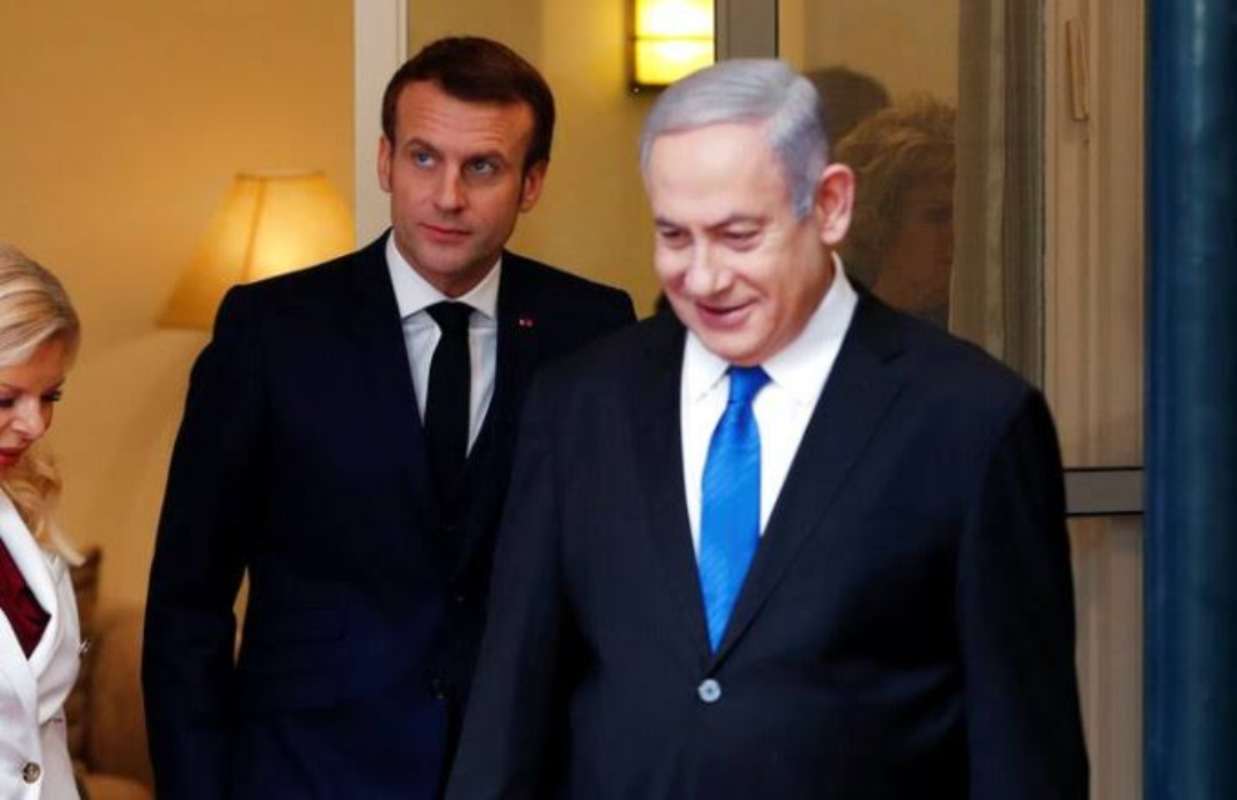
Israeli diplomats see little prospect of a near-term thaw with Emmanuel Macron’s government after France moved to ban trade with Israeli settlements in the West Bank. The immediate economic impact may be limited, but the geopolitical signal is far larger: Paris is shifting from diplomatic criticism to economic pressure, raising the question of whether other European governments will follow.
Relations between Emmanuel Macron and Benjamin Netanyahu’s government are moving beyond political disagreement into a deeper diplomatic confrontation.
The latest flashpoint is France’s decision to move toward banning trade in goods originating from Israeli settlements in the occupied West Bank, part of a broader push involving the United Kingdom, Canada and several European countries.
According to Israeli diplomats cited by Al-Monitor, bilateral relations have reached an unprecedented low, with no meaningful warming expected with Macron’s government in the near term.
France Moves From Warnings to Economic Pressure
The significance of the French move goes beyond its immediate commercial impact.
Paris is no longer limiting itself to statements condemning settlement expansion.
French Foreign Minister Jean-Noël Barrot announced on September 8 that France would begin the process of ending trade in products originating from Israeli settlements in the West Bank.
“France will put an end to its trade with Israeli settlements in Palestine,” Barrot said.
The French government has linked the decision to accelerating settlement expansion, violence by extremist settlers against Palestinians and what Paris views as an increasing threat to the viability of a two-state solution.
That represents an important shift: economic instruments are now entering a dispute that for years was fought primarily through diplomatic statements and international forums.


The E1 Plan Becomes a Red Line
At the center of the confrontation is the controversial E1 settlement project east of Jerusalem.
France and several other European governments argue that construction there would further fragment the West Bank and undermine the territorial continuity required for a viable future Palestinian state.
France, Germany, Italy, the Netherlands, Norway and the United Kingdom had already described Israel’s move to advance construction tenders in E1 as unacceptable and urged the Israeli government to reverse course.
France’s latest decision suggests that, at least for some European capitals, diplomatic warnings alone are no longer considered sufficient.
France Is Not Acting Alone
That is potentially the more important development for Israel.
Canada, Denmark, Finland, France, Iceland, Ireland, Norway, Poland, Portugal, Spain, Sweden and the United Kingdom have backed national restrictions or European measures targeting trade linked to Israeli settlements.
France, Britain and Canada have gone further by committing to national measures restricting settlement goods.
The geopolitical significance therefore extends beyond another clash between Macron and Netanyahu.
A group of Western governments is beginning to use trade policy as leverage over Israeli policy in the West Bank.
Paris Draws a Crucial Distinction: This Is Not a Boycott of Israel
France is also drawing a deliberate line between Israeli settlements and Israel itself.
The French position is that the measure concerns goods originating from settlements in the occupied West Bank and does not constitute a general boycott of Israeli products.
That distinction matters economically and diplomatically.
Trade directly linked to settlements represents only a small fraction of Israel’s overall exports. The immediate macroeconomic consequences of the measure are therefore likely to remain limited.
But the political message is substantially larger than the value of the goods involved.
Israel’s Bigger Concern: The Precedent
This is where the story becomes a geo-economic one.
The European Union is Israel’s largest trading partner in goods. That makes Europe fundamentally different from a market whose pressure Jerusalem could simply disregard.
The critical question is therefore not how many bottles of wine, agricultural products or other settlement goods are stopped at European borders.
It is whether restrictions on settlement trade establish a political precedent for broader economic pressure on Israel.
That is why a commercially modest measure can have disproportionately large strategic consequences.
If additional European governments adopt similar policies — or if pressure eventually moves toward broader elements of the EU-Israel economic relationship — the stakes would rise dramatically.
The Much Bigger Question: EU–Israel Trade Relations
Behind the settlement dispute stands the far more important EU-Israel Association Agreement, which provides the institutional framework for preferential economic relations between the two sides.
There is currently no unified EU decision to dismantle that relationship.
Indeed, France’s national approach also demonstrates the limits of European unity.
Several EU governments remain reluctant to move toward broader economic measures against Israel, meaning Paris cannot simply translate its national policy into an EU-wide position.
Europe is therefore divided.
But part of Europe is moving faster than before.
And that distinction matters.
Washington and Europe Are Moving in Different Directions
The growing tension also exposes another geopolitical divide.
While France, Britain and other Western governments are increasing pressure over the settlements, Washington has not embraced the same strategy.
The United States has rejected joining the settlement-trade restrictions, underscoring a widening divergence between some European governments and Washington over how to respond to Israeli policy in the West Bank.
The emerging picture is therefore increasingly complex:
Paris and London are experimenting with economic pressure while Washington remains opposed to following the same path.
That divergence gives Netanyahu’s government room to maneuver, but it also makes relations with individual European capitals considerably more difficult.
Why a Macron–Netanyahu Reset Looks Difficult
The problem for both governments is that the dispute is no longer primarily personal.
It reflects fundamentally different strategic views of the West Bank, settlement expansion and the future of a two-state solution.
France argues that continued settlement expansion threatens both the creation of a viable Palestinian state and, ultimately, Israel’s long-term security.
Paris simultaneously stresses Israel’s legitimate security concerns and continues to condemn Hamas’ October 7 attack.
Netanyahu’s government, however, rejects much of the European approach to the Palestinian question and strongly disputes outside pressure over settlement policy.
That makes a simple diplomatic reset considerably harder.
Changing the tone between Macron and Netanyahu would not resolve the underlying policy conflict.
From Diplomatic Condemnation to Economic Leverage
That is ultimately what makes the French decision strategically significant.
The immediate commercial consequences may remain modest.
But Paris has crossed an important threshold: criticism of Israeli settlement policy is being translated into a concrete trade measure.
The question now is whether this remains a narrowly targeted policy concerning the West Bank — or becomes the beginning of a wider European shift toward economic leverage.
If it remains limited to settlement goods, its effect will be primarily political and symbolic.
If the logic expands into the much larger EU-Israel economic relationship, the consequences would be of an entirely different magnitude.
The real question is therefore no longer simply how low Macron–Netanyahu relations can fall. It is whether France’s settlement ban marks the outer limit of European pressure — or the first step toward a much broader recalibration of Europe’s relationship with Israel.
Source: pagenews.gr