Iran Hits US Targets but Calls for Dialogue — Pezeshkian Tries to Stop a New Full-Scale War
 ΧΡΟΝΟΣ ΑΝΑΓΝΩΣΗΣ 13 '
Πηγή Φωτογραφίας: AP Photo//Iran Hits US Targets but Calls for Dialogue — Pezeshkian Tries to Stop a New Full-Scale War



Iran is attempting an extraordinarily difficult balancing act: demonstrating that it can retaliate against the United States without allowing the latest confrontation to spiral back into full-scale war.
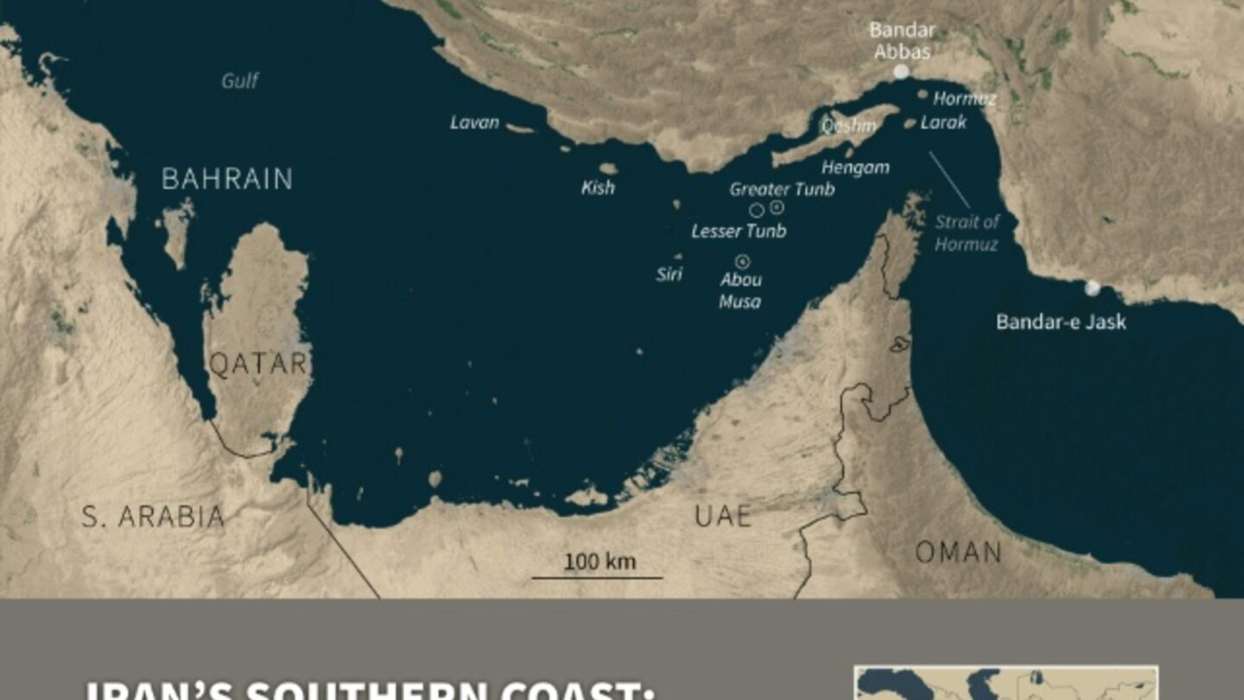
After US forces struck Iranian launchers on Larak Island in the Strait of Hormuz, Tehran launched retaliatory attacks against US military targets across the region.
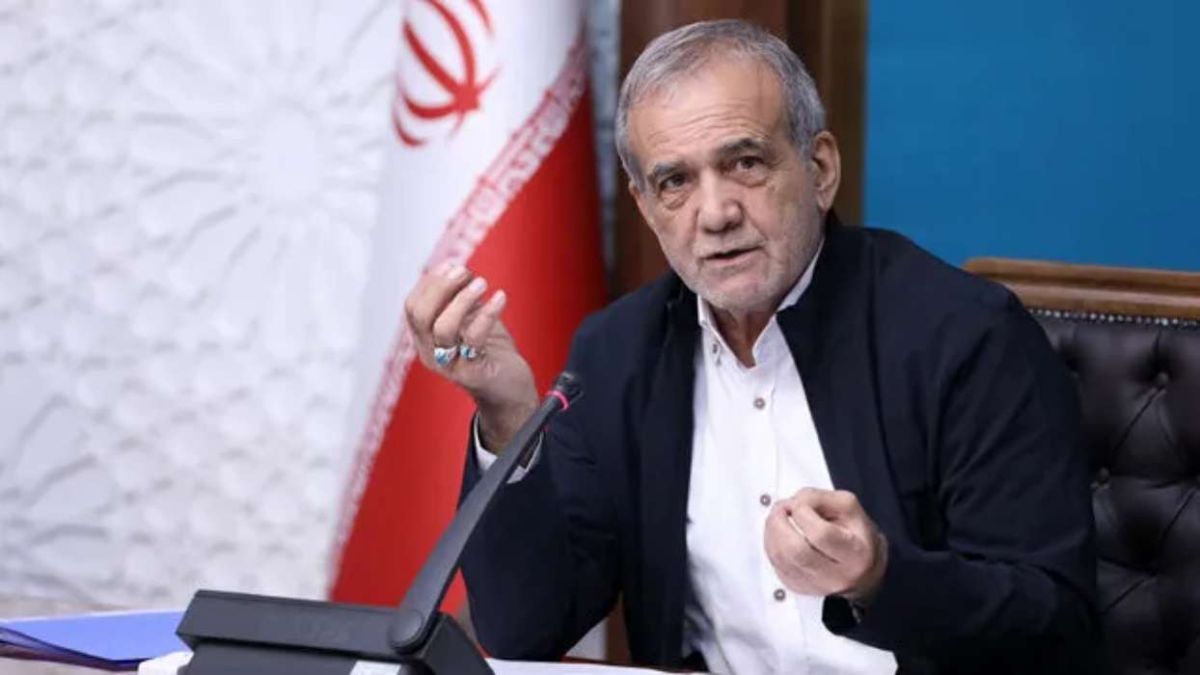
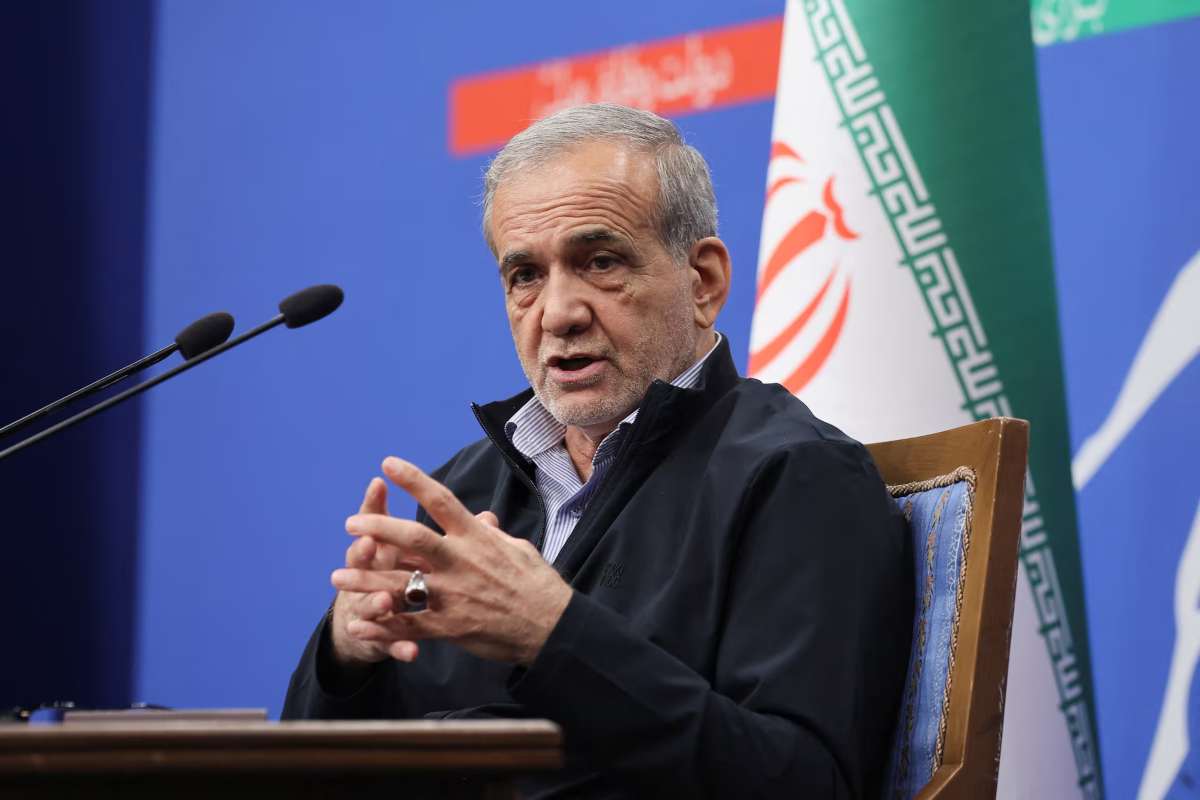
Hours later, however, Iranian President Masoud Pezeshkian adopted a markedly different tone.
Speaking at the Shanghai Cooperation Organisation summit in Kyrgyzstan, he delivered one of Tehran’s clearest signals yet that Iran wants to prevent another major escalation.
“We continue to strive for a path of agreement and understanding, and we believe that continuing the war is neither in our interest, nor in the interest of the region,” Pezeshkian said.
He added:
“We believe that the solution to the existing problems is dialogue and cooperation, and all capacities must be used to prevent the spread of insecurity and conflict.”
The message is deliberately two-sided.
Iran wants Washington to know that US attacks will carry a military cost — but it is simultaneously offering a diplomatic off-ramp.
Larak: The US Strike That Changed the Equation Again
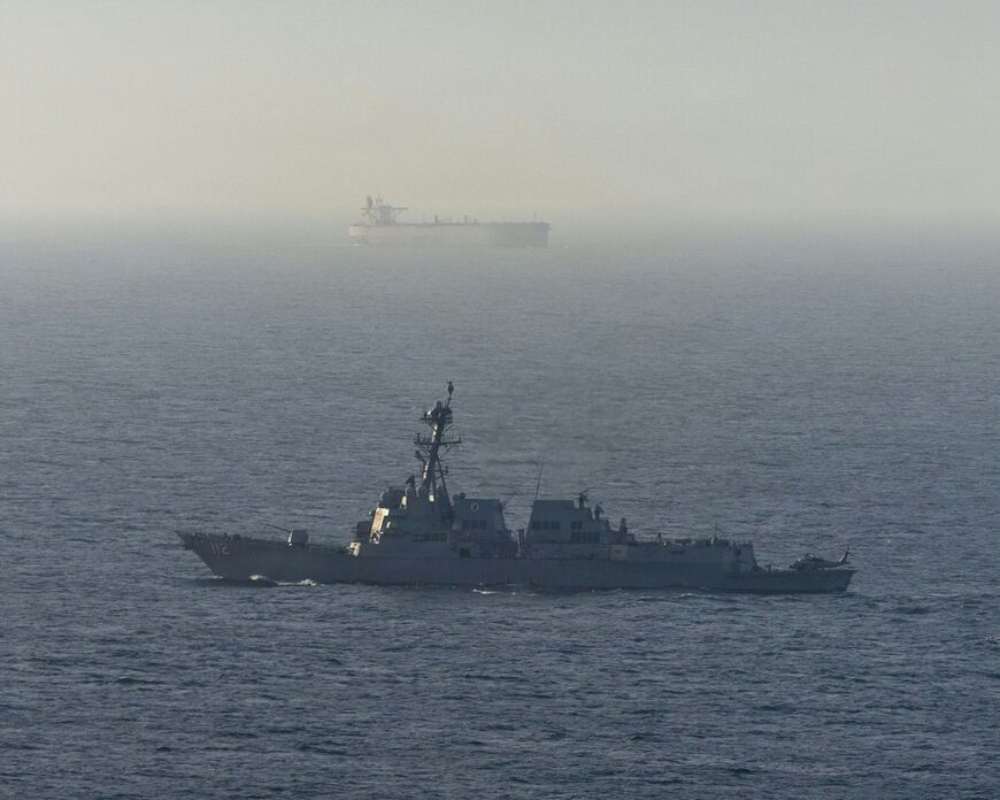
The latest confrontation began on Sunday when the United States struck two Iranian rocket launchers on Larak Island, strategically positioned inside the Strait of Hormuz.
Washington said the launchers were targeted to prevent Iranian forces from planting mines in the critical shipping lane.
According to Iranian state media, two people were killed and several others wounded.
The operation marked the first known US strike against Iran since July 29 and ended a period in which direct military exchanges between Washington and Tehran had significantly declined.
Iran had warned that it would respond.
It did.
Iran Launches Ballistic Missiles Toward US Targets in Jordan
Iran’s Islamic Revolutionary Guard Corps said it retaliated by targeting two US military bases in Jordan with ballistic missiles.
The IRGC claimed that the attacks caused “heavy damage.”
Jordan presented a different account.
Its military said it intercepted eight missiles, without initially specifying their origin.
The Iranian claims about the extent of the damage have therefore not been independently confirmed.
What is clear, however, is that Washington and Tehran have again exchanged direct military blows after more than a month of comparatively reduced hostilities.
The UAE Is Pulled Back Into the Crisis
Iran also claimed that it targeted US personnel at the Al Minhad Air Base in the United Arab Emirates and shot down an American drone over the Strait of Hormuz.
Abu Dhabi rejected part of Tehran’s account.
The UAE said it had intercepted a drone over the country’s waters but dismissed claims that Al Minhad Air Base itself had been targeted as “baseless.”
The episode illustrates one of the greatest dangers surrounding the US-Iran conflict.
Any direct confrontation between Washington and Tehran can rapidly expand beyond the two adversaries and place America’s Gulf partners in the firing line.
Pezeshkian: War Is Not in Iran’s Interest
Pezeshkian’s intervention is particularly significant because it came immediately after Iran demonstrated its willingness to retaliate.
The Iranian president had already made Tehran’s position clear before arriving in Kyrgyzstan.
“We do not seek war, but we will never remain passive in the face of any aggression,” he said.
That formulation captures Iran’s emerging strategy.
Retaliate strongly enough to preserve deterrence.
But avoid an attack so damaging that Washington feels compelled to launch another major military operation.
Tehran is effectively trying to establish a threshold: Iran will answer US military action, but it does not want retaliation to become an uncontrolled cycle of escalation.
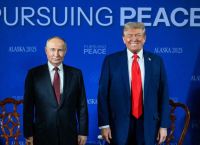
Trump: Iran Is “Officially a Failed Nation”
Donald Trump chose confrontation rather than conciliation in his public response.
The US president declared on Truth Social that Iran was “officially a Failed Nation,” portraying the Islamic Republic as economically and militarily devastated.
“They have no Navy, they have no Air Force, they have no currency, they are not paying their soldiers or police, Inflation is at 300%, and their leadership is in total disarray and incapable of properly representing the country,” Trump wrote.
Those numerical and military claims are Trump’s assertions and should not automatically be treated as independently verified assessments.
Politically, however, the message is unmistakable.
Washington continues to portray Iran as severely weakened and appears to believe that sustained military and economic pressure can force Tehran into greater concessions.
That calculation is precisely what makes the current moment so dangerous.
If Washington believes Iran cannot afford another major confrontation, it may be willing to apply more pressure.
Tehran, meanwhile, has a powerful incentive to demonstrate that weakness does not mean it has lost the capacity to retaliate.
Hormuz Remains the Real Battlefield
Behind the latest exchange of fire lies the unresolved strategic issue at the heart of the six-month conflict:
the Strait of Hormuz.
Before the war, roughly one-fifth of global oil flows passed through the narrow waterway connecting the Persian Gulf with international markets.
Iran has restricted commercial shipping through the strait since the conflict began and has attacked vessels, turning Hormuz into one of Tehran’s most powerful instruments of leverage.
The United States has sought to break that pressure through naval operations and a counter-blockade of Iran.
Washington announced last week that it had completed operations to clear explosives from the waterway.
Trump has repeatedly claimed that the US Navy has “total control” of Hormuz.
Yet the latest clash around Larak demonstrates that military control and normal commercial navigation are two very different things.
As long as Iran retains the ability to threaten shipping, mines, drones and missiles around the strait, Hormuz remains a potential trigger for another major escalation.
Six Months of War — And Still No Final Deal
The confrontation has now lasted six months without producing a political settlement.
The April ceasefire ended the most intense phase of the fighting.
A memorandum of understanding signed in June was supposed to provide a path toward a final agreement.
But the diplomatic process stalled.
Disagreements over Hormuz, sanctions, Iranian exports and the wider regional security architecture remained unresolved.
Sporadic military exchanges continued.
The result is an unstable middle ground in which neither side appears to want an all-out war, yet neither has been willing to make the concessions required for a lasting settlement.
That is precisely the environment in which miscalculation becomes particularly dangerous.
Trump Had Shifted Toward “Economic Warfare”
The latest US strike is also significant because Washington had recently placed greater emphasis on economic rather than military pressure.
The Trump administration’s calculation appeared to be that sanctions, financial restrictions and pressure on Iranian exports could inflict sustained damage without the risks associated with another major bombing campaign.
That strategy offered Washington an important advantage.
Economic pressure could continue every day without automatically provoking Iranian missile retaliation.
Larak demonstrates the limits of that approach.
As long as the military confrontation over Hormuz remains unresolved, economic warfare and conventional warfare cannot be completely separated.
Araghchi Turns His Fire on Netanyahu
Iran is simultaneously attempting to reshape the political narrative surrounding the conflict by focusing attention on Israeli Prime Minister Benjamin Netanyahu.
Foreign Minister Abbas Araghchi accused Netanyahu of manipulating Washington into fighting Iran on Israel’s behalf.
“In Hebrew, Netanyahu openly crows that he suckered the US administration into a war on Iran on behalf of Israel,” Araghchi wrote on X.
He argued that Netanyahu boasts domestically about his influence in Washington while publicly praising Trump’s leadership in English.
Araghchi concluded with a one-word attack on the Israeli prime minister:
“Serpent.”
The accusation represents Tehran’s political interpretation of the war rather than independently established evidence that Netanyahu “suckered” Washington into military action.
But the strategy behind Araghchi’s rhetoric is important.
Iran wants to drive a wedge between Trump’s America and Netanyahu’s Israel, portraying the conflict as a war Washington is paying for while Israel receives the strategic benefit.
Tehran Wants to Prove It Can Strike — Not That It Wants More War
Iran’s behaviour following the Larak attack reveals a carefully calibrated strategy.
Failing to respond could have encouraged Washington to conclude that further strikes could be conducted without serious consequences.
An overwhelming Iranian retaliation, however, could have triggered another large-scale US military campaign.
Tehran therefore attempted to do both things at once.
Restore deterrence through retaliation and immediately signal that the escalation can stop there.
Pezeshkian’s appeal for dialogue only hours after Iran’s military response is consequently difficult to view as accidental.
It provides Washington with an exit.
The question is whether Trump wants to take it.
The Next Strike Could Decide Which Way the War Goes
Much now depends on Washington’s assessment of the Iranian retaliation.
If US officials conclude that Iran’s attacks caused limited damage and decide against another major response, diplomatic mediators could regain room to operate.
Pakistan and Qatar have spent months attempting to bridge the differences between Washington and Tehran.
Pezeshkian’s remarks could provide them with a new opening.
But another round of US strikes would again put Iran under pressure to retaliate.
At that point, controlled deterrence could quickly become uncontrolled escalation.
The distinction between the two may ultimately depend on a single missile, drone or miscalculation.
The Gulf States Have the Most to Lose
Jordan and the UAE being drawn into the latest confrontation also demonstrates why regional governments have powerful incentives to prevent escalation.
Throughout the conflict, Iran has demonstrated its ability to threaten US facilities and American partners across the Gulf.
Kuwait, Oman, Saudi Arabia and the UAE have all faced attacks during the war.
For those governments, the strategic dilemma is acute.
They rely heavily on US security guarantees but do not want their territory transformed into a battlefield between Washington and Tehran.
Another major round of fighting could also threaten oil infrastructure, ports, aviation and investment across a region that has spent years trying to present itself as a global hub for business and capital.
Hormuz Gives Iran Its Most Powerful Leverage
Iran’s conventional military capabilities have been damaged during the conflict.
But geography cannot be destroyed.
That remains Tehran’s greatest strategic advantage.
The Strait of Hormuz gives Iran leverage over an artery through which enormous volumes of global energy trade traditionally move.
Its closure and disruption have already contributed to higher energy costs and shortages, including pressure on fertiliser markets.
That means Tehran can impose economic costs far beyond the immediate battlefield.
And it explains why Iran is reluctant to surrender its leverage over the strait without receiving significant concessions in return.
Pezeshkian Opens the Door — But Hormuz Keeps the Fuse Burning
After six months of war, the United States and Iran remain trapped in essentially the same strategic deadlock.
Washington wants freedom of navigation through Hormuz and greater Iranian concessions.
Tehran wants relief from economic pressure and refuses to surrender its strongest bargaining instrument without receiving something substantial in return.
Between them stand the Gulf states, global energy markets and one of the world’s most strategically important waterways.
That is why Pezeshkian’s statement matters.
It is not a peace agreement.
It does not mean Iran is abandoning military retaliation.
And it certainly does not resolve the struggle over Hormuz.
But after demonstrating that Tehran was prepared to answer the Larak attack, Iran’s president has publicly offered Washington a route back toward diplomacy.
Trump now faces a strategic choice.
He can interpret Iran’s calibrated retaliation as an opportunity to stop the latest cycle of strikes and return to negotiations.
Or Washington can hit back again — forcing Tehran to decide whether it can continue exercising restraint without appearing weak.
Iran has fired its missiles and opened the diplomatic door at the same time. What Washington does next may determine whether Hormuz moves back toward negotiation — or becomes the battlefield that reignites the war.
Source: pagenews.gr
Διαβάστε όλες τις τελευταίες Ειδήσεις από την Ελλάδα και τον Κόσμο