Turkey–Israel: Syria Becomes the New Red Line — Why Ankara Wants a Deal
 ΧΡΟΝΟΣ ΑΝΑΓΝΩΣΗΣ 10 '
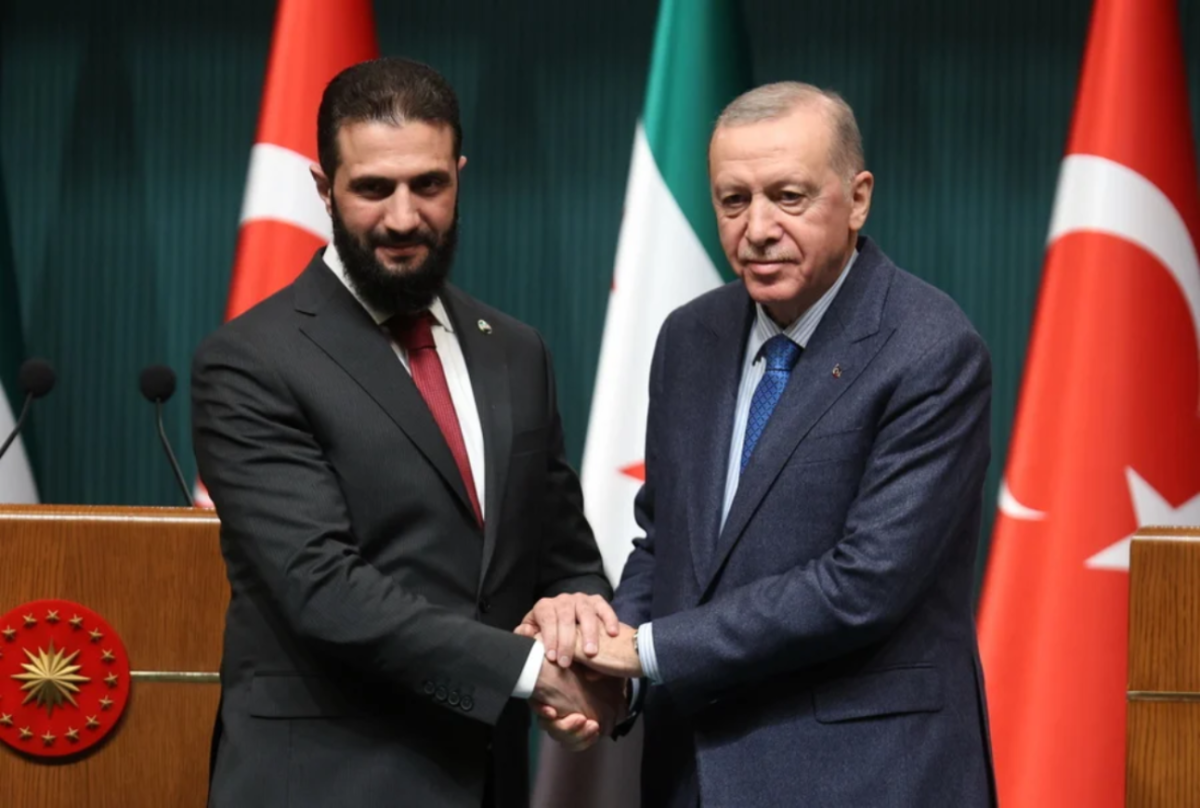
Πηγή Φωτογραφίας: AP Photo//Turkey–Israel: Syria Becomes the New Red Line — Why Ankara Wants a Deal



Turkey wants an agreement between Israel and Syria.
But not just any agreement.
Behind Ankara’s support for US-mediated Israeli-Syrian talks lies a much larger geopolitical question: who will shape post-Assad Syria, and how far can Turkey expand its military influence before crossing Israel’s red lines?
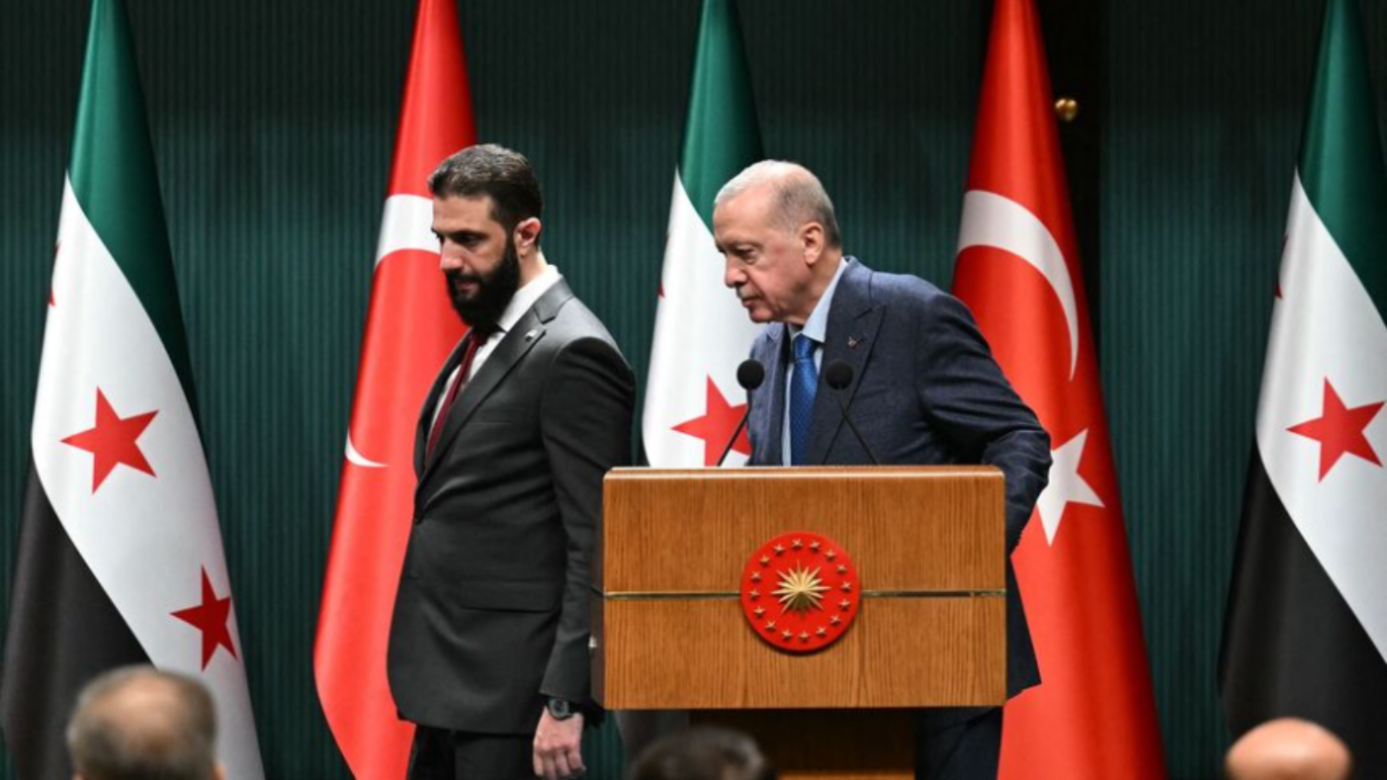
The immediate trigger is the escalating friction surrounding Syria’s military infrastructure and Turkey’s growing relationship with the government of President Ahmed al-Sharaa.
According to Al-Monitor, Ankara welcomes negotiations between Damascus and Israel, but Turkish officials remain skeptical that Israel is prepared to accept a stronger Syrian state backed politically and militarily by Turkey.
The dispute is no longer theoretical.
Israel’s August 18 strike on the Abu al-Duhur air base, roughly 70 kilometers from the Turkish border, demonstrated how quickly strategic competition could move into the military domain.
The Jordan Talks — And the Turkish Question
Washington is now trying to contain that risk.
Syrian Foreign Minister Asaad al-Shibani and Mossad chief Roman Gofman held US-mediated talks in Jordan aimed at de-escalating tensions and reviving Israeli-Syrian security negotiations.
But another relationship inevitably entered the discussion:
Israel–Turkey.
The talks addressed mounting tensions between Ankara and Jerusalem following the Israeli strike on Abu al-Duhur.
That transforms what appears to be a bilateral Israel–Syria negotiation into something much larger.
The United States is effectively trying to manage three interconnected security relationships: Israel–Syria, Turkey–Syria and Turkey–Israel.
Abu al-Duhur Changed the Equation
The August 18 strike brought those tensions into sharp focus.
Israel linked the operation to alleged Turkish efforts to install advanced military technology at the Syrian air base.
Ankara rejected the Israeli claims and accused Benjamin Netanyahu of exploiting regional tensions for domestic political purposes ahead of Israel’s October elections.
But beyond the competing narratives, the strategic message was difficult to miss:
Israel does not want Syria to become a forward operating space for Turkish military power.
And that creates a direct collision with Ankara’s ambitions.
What Erdogan Wants From the New Syria
For Turkey, the post-Assad order represents a potentially historic strategic opportunity.
Ankara wants a Syrian state that is stable, territorially unified and capable of exercising authority across the country.
It also wants to prevent an autonomous Kurdish military structure from emerging along Turkey’s southern frontier.
And it wants Turkey to become one of Damascus’ principal partners in defense, reconstruction, trade and state-building.
The al-Sharaa government offers Ankara an opportunity to convert years of Turkish involvement in the Syrian conflict into long-term regional influence.
A strong and friendly Damascus could provide Turkey with strategic depth extending far beyond its own southern border.
But that is precisely where Israel becomes concerned.
Israel’s Problem: What Replaces Iran?
For years, Israel’s military doctrine in Syria was dominated by one objective: preventing Iran and Hezbollah from establishing strategic military infrastructure close to Israeli territory.
The weakening of Tehran’s position transformed that landscape.
But eliminating one threat creates another question:
Who fills the vacuum left by Iran?
Turkey is not Iran.
It is a NATO member, a major regional economy and one of the Middle East’s most powerful conventional military actors.
That makes a potential Turkish military presence in Syria fundamentally different from the Iranian-backed militia networks Israel spent years targeting.
For Israeli planners, Turkish access to Syrian air bases, advanced surveillance systems, air defenses or other strategic infrastructure could dramatically alter the regional balance.
Abu al-Duhur therefore matters far beyond one airfield.
It represents the emerging boundary between Turkish strategic expansion and Israeli preventive power.
So Why Does Turkey Want an Israel–Syria Deal?
This is the apparent contradiction at the center of Ankara’s strategy.
If Turkey and Israel are increasingly competing over Syria, why would Erdogan’s government support an agreement between Damascus and Jerusalem?
Because an uncontrolled military confrontation would probably damage Turkish interests more than a negotiated security arrangement.
Turkey needs stability to consolidate its position in Syria.
Repeated Israeli strikes weaken the Syrian government, complicate the reconstruction of its armed forces and make it more difficult for Damascus to restore effective sovereignty.
A security arrangement limiting Israeli military operations could therefore benefit Ankara.
But only if that agreement does not give Israel an effective veto over Syria’s defense relationship with Turkey.
That is where the negotiations become extremely difficult.
Ankara’s Red Lines
Turkey’s emerging position rests on several strategic principles.
It does not want Syria permanently weak or fragmented.
It does not want Israel determining how much military capability the government in Damascus is allowed to possess.
And it does not want Israeli military action to prevent Turkey from developing a long-term strategic relationship with Syria.
For Ankara, therefore, diplomacy is not an alternative to influence.
Diplomacy is a way of protecting that influence.
Turkey can simultaneously support Israeli-Syrian talks and resist Israeli demands it considers incompatible with Syrian sovereignty or Turkish strategic interests.
Israel Has Red Lines Too
Israel approaches the problem from almost the opposite direction.
Jerusalem does not want the disappearance of Iranian influence to be followed by the emergence of another powerful military actor with permanent access to Syrian territory.
A Turkish military network across strategically located Syrian bases could restrict Israel’s freedom of action and fundamentally change its northern security environment.
The Israeli strike on Abu al-Duhur suggests that Jerusalem is prepared to use military force when it believes those red lines are being crossed.
The danger is obvious.
The closer Israeli operations move toward areas involving Turkish personnel or equipment, the greater the possibility of miscalculation.
And unlike many of the forces Israel has previously confronted in Syria, Turkey possesses the military capability to respond.
Washington’s Nightmare: Israel Versus a NATO Ally
That possibility presents Washington with a uniquely difficult problem.
Israel is America’s closest strategic partner in the Middle East.
Turkey is a NATO ally controlling one of the most important geopolitical corridors linking the Black Sea, the Mediterranean, Europe and the Middle East.
Washington has little interest in watching two critical partners turn Syria into an arena for direct military confrontation.
This helps explain why US diplomacy is increasingly focused not only on an Israel–Syria arrangement but also on deconfliction between Israel and Turkey.
The objective is to establish rules before an accident establishes them instead.
America Wants Rules Before the Next Strike
The emerging US approach is therefore highly practical.
Washington wants mechanisms capable of preventing an Israeli air strike from unexpectedly hitting Turkish personnel or a Turkish deployment from being interpreted in Jerusalem as preparation for a strategic threat.
That requires communication channels, geographical understandings and, potentially, restrictions defining what each side can tolerate inside Syria.
In effect, the United States is trying to negotiate an unwritten second agreement behind the formal Israel–Syria talks.
The first would regulate relations between Damascus and Jerusalem.
The second would establish a workable balance between Ankara and Jerusalem inside Syria.
The success of one may increasingly depend on the other.
The Netanyahu Factor
Domestic Israeli politics complicates the equation further.
According to Al-Monitor, Ankara sees limited prospects for a lasting arrangement before Israel’s October elections.
Turkey believes the current Israeli political environment leaves relatively little room for major compromises.
This helps explain Ankara’s seemingly contradictory approach.
It wants negotiations to continue.
It wants military escalation contained.
But it remains skeptical that the conditions for a comprehensive settlement exist yet.
In strategic terms, Turkey wants to buy time without surrendering space.
This Is Not Really About One Air Base
Abu al-Duhur is ultimately a symptom.
The underlying transformation is much larger.
The fall of Assad and the erosion of Iranian influence created a new balance-of-power competition inside Syria.
Turkey wants a strong, unified and friendly Syrian state.
Israel wants a Syrian state that can never again become a significant military threat.
Those objectives are not necessarily incompatible.
But they become much harder to reconcile if Syrian military reconstruction is accompanied by a deep and permanent Turkish defense presence.
That is the fundamental problem Washington is now trying to solve.
The Bigger Picture: Who Fills the Vacuum Iran Left Behind?
For more than a decade, Israel’s central strategic challenge in Syria was Iran.
That equation is changing.
Iran has lost much of its previous leverage, while Turkey is positioning itself as perhaps the most consequential external partner of the new government in Damascus.
Israel does not view Turkey in the same category as Iran.
But neither is it prepared to give Ankara unrestricted strategic depth across Syria.
That is why the US-mediated talks matter far beyond the future relationship between Israel and Syria.
Behind them lies another negotiation — less visible but potentially more consequential:
How much Turkey can expand in Syria, how much Israel is prepared to tolerate, and where Washington can draw a line acceptable to both.
If that balance is found, Syria could gradually move from war toward an uneasy regional stabilization.
If it is not, the country risks becoming the arena where two of the region’s most powerful militaries begin testing each other’s red lines in real time.
Turkey’s support for negotiations therefore should not be mistaken for strategic retreat.
Ankara wants a deal because it has much to gain from a stable Syria.
But it wants a Syria in which Turkish influence is recognized as part of the new regional order — not treated by Israel as the next threat to be eliminated after Iran.
That is the real contest behind the diplomacy.
Source: pagenews.gr
Διαβάστε όλες τις τελευταίες Ειδήσεις από την Ελλάδα και τον Κόσμο