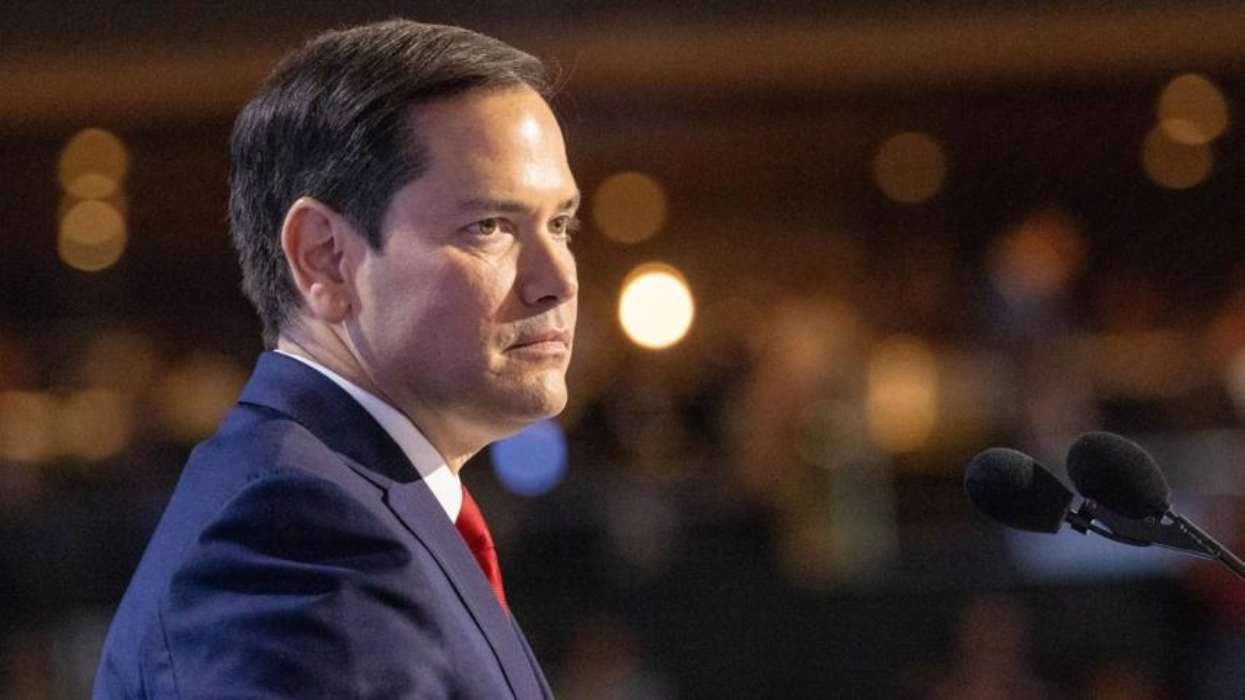
Marco Rubio is expected to arrive in Athens on the evening of Tuesday, October 6, for talks focused on defense cooperation, energy security and developments in the Eastern Mediterranean.
The US Secretary of State will participate in the sixth US–Greece Strategic Dialogue, meet Foreign Minister George Gerapetritis and hold talks with Prime Minister Kyriakos Mitsotakis.
The visit comes as military cooperation, energy infrastructure and regional security increasingly overlap. For Athens, attention is focused on the substance of the discussions and the commitments that may emerge.
Rubio Highlights Greece’s Importance
Before departing on his European tour, Rubio described Greece as a significant US ally, highlighting both the American military presence and the economic relationship between the two countries.
The State Department’s official announcement identifies defense cooperation, regional security and energy security as priorities for the Strategic Dialogue.
The announced itinerary includes Iceland, Greece and Portugal, with no corresponding stop in Turkey.
That distinction has attracted media attention. It does not, by itself, establish a change in Washington’s policy toward Ankara.


Three Cooperation Documents Expected
Three agreements and cooperation documents are expected during the Strategic Dialogue.
They concern the renewal of restrictions on imports of certain archaeological and ethnological materials, a Letter of Intent establishing cooperation between the Greek Armed Forces and the Florida National Guard, and a memorandum on the mutual recognition of seafarers’ certificates of competency.
The planned signatures give practical substance to bilateral cooperation. They do not amount to an announced weapons package or a specific American commitment to every energy project of interest to Greece.
The Power Interconnector Question
The proposed Greece–Cyprus–Israel electricity interconnection featured prominently in SKAI’s television coverage ahead of the visit.
Reporting from New York, correspondent Thanasis Tsitsas raised the question of whether Washington would offer concrete support for hydrocarbon exploration, maritime issues and regional energy infrastructure.
The distinction matters: general support for energy cooperation differs from an explicit commitment to a particular project.
Rubio’s public remarks and the statements issued after the meetings will therefore be closely watched for indications of what was discussed and what, if anything, was agreed.
Hydrocarbons and the Vertical Corridor
The television discussion also highlighted the involvement of American energy companies, including ExxonMobil and Chevron, alongside the Vertical Gas Corridor.
These issues were presented as part of the expansion of Greek–American ties beyond military cooperation.
The energy dimension encompasses investment, supply routes and infrastructure. Its relevance to the visit is reinforced by Washington’s official inclusion of energy security among the dialogue’s priorities.
The State Department announcement does not, however, establish that each individual project is already backed by a new agreement or an implementation guarantee.
Souda Bay and Defense Expectations
Tsitsas also emphasized the strategic importance of Souda Bay and the military facilities Greece provides.
His reporting raised the question of whether recognition of Greece’s role would translate into specific outcomes in defense and economic cooperation.
Discussion of F-35s and the regional military balance forms part of that broader debate. These remain matters of diplomatic interest and media assessment; the visit has not yet produced an announced new decision on defense transfers.
How Turkish Media View the Visit
Reporting from Istanbul, correspondent Anna Andreou said Turkish journalists and analysts were examining the visit as a potential diplomatic opportunity for Athens.
According to her account, those assessments suggest Greece may seek American support for the electricity interconnector and raise issues connected to Turkish objections.
She also relayed coverage by Turkish outlets, including CNN Türk, concerning the arguments Athens might make about regional tensions. Other analyses, she reported, linked the visit to Turkey’s effort to return to the F-35 program.
These accounts reflect discussion in Turkish media rather than an official Turkish government position.
The Answers Will Follow the Talks
The Strategic Dialogue provides the institutional framework for discussions on defense, energy, trade and regional developments.
The scope of cooperation will become clearer through the documents signed and the public statements made by both governments.
Those outcomes will show whether the visit moves beyond reaffirming close relations to produce new commitments on the issues that matter most to Athens.
Source: pagenews.gr