Trump Wants to Hook the World on American Gas — Greece at the Heart of His Global Energy Strategy
 ΧΡΟΝΟΣ ΑΝΑΓΝΩΣΗΣ 16 '
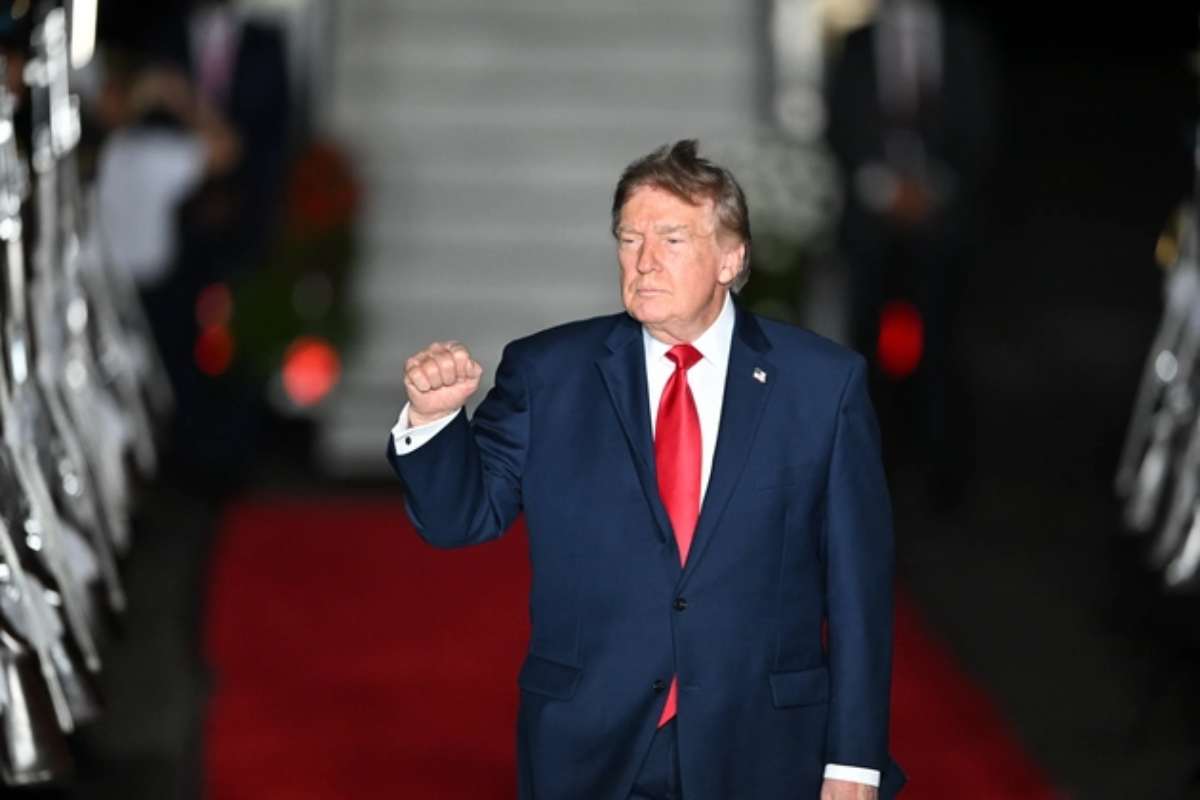



Donald Trump is pursuing an energy strategy designed to outlast his presidency, using American natural gas exports, infrastructure financing and diplomatic pressure to reshape global energy markets for decades.
From Europe and Africa to the Caucasus and Southeast Asia, Washington is promoting tens of billions of dollars in natural gas infrastructure projects that could establish long-term commercial relationships between American energy companies and foreign governments.
According to POLITICO, the administration’s objective goes far beyond increasing liquefied natural gas (LNG) exports. It seeks to establish a network of pipelines, import terminals and supply agreements that will make American gas a central component of energy systems around the world.
Greece occupies a strategically important position in this plan.
The Vertical Gas Corridor, connecting Greece with Southeastern and Central Europe, is emerging as a major route for delivering American LNG to markets historically dependent on Russian supplies.
The initiative combines economic ambition with geopolitical objectives. By expanding the infrastructure required to import American gas, Washington hopes to strengthen its influence over international energy markets while reducing Russia’s role as a supplier.
However, the strategy also raises concerns about long-term dependence on fossil fuels, the competitiveness of renewable energy and the financial risks associated with multibillion-dollar infrastructure investments.
Trump’s Energy Strategy: Infrastructure That Could Outlast His Presidency
The central idea behind the administration’s approach is that energy infrastructure creates lasting commercial relationships.
Natural gas pipelines, LNG import terminals and associated transport networks require substantial investment and often depend on long-term contracts.
Once completed, governments and private companies have strong financial incentives to keep using those facilities for decades.
Rich Goldberg, a former member of Trump’s White House Energy Dominance Council, explained the administration’s thinking to POLITICO.
“A lot of that infrastructure will be well underway and not reversible by the end of the Trump administration,” Goldberg said.
“The import terminals are up and running. Gas is coming in.”
The strategy is intended to create commercial arrangements that remain in place regardless of future political changes in Washington.
By supporting the construction of physical infrastructure, the United States can help establish markets for American LNG that could endure long after Trump leaves office.
The implications extend beyond energy trade.
Infrastructure investments can strengthen diplomatic relationships, influence regional supply chains and reshape the balance of power between competing energy exporters.
Greece’s Vertical Gas Corridor: A Strategic Route for American LNG
One of the most significant elements of the American strategy is the Vertical Gas Corridor, which connects Greece with countries across Southeastern and Central Europe.
The corridor is designed to facilitate northbound gas flows from the Aegean region through the Balkans and into wider European markets.
According to POLITICO, the project aims to create transportation capacity of up to 12 billion cubic metres of natural gas annually.
American suppliers want to provide a substantial share of that volume.
For Greece, the project represents an opportunity to strengthen its position as an energy gateway to Southeastern Europe.
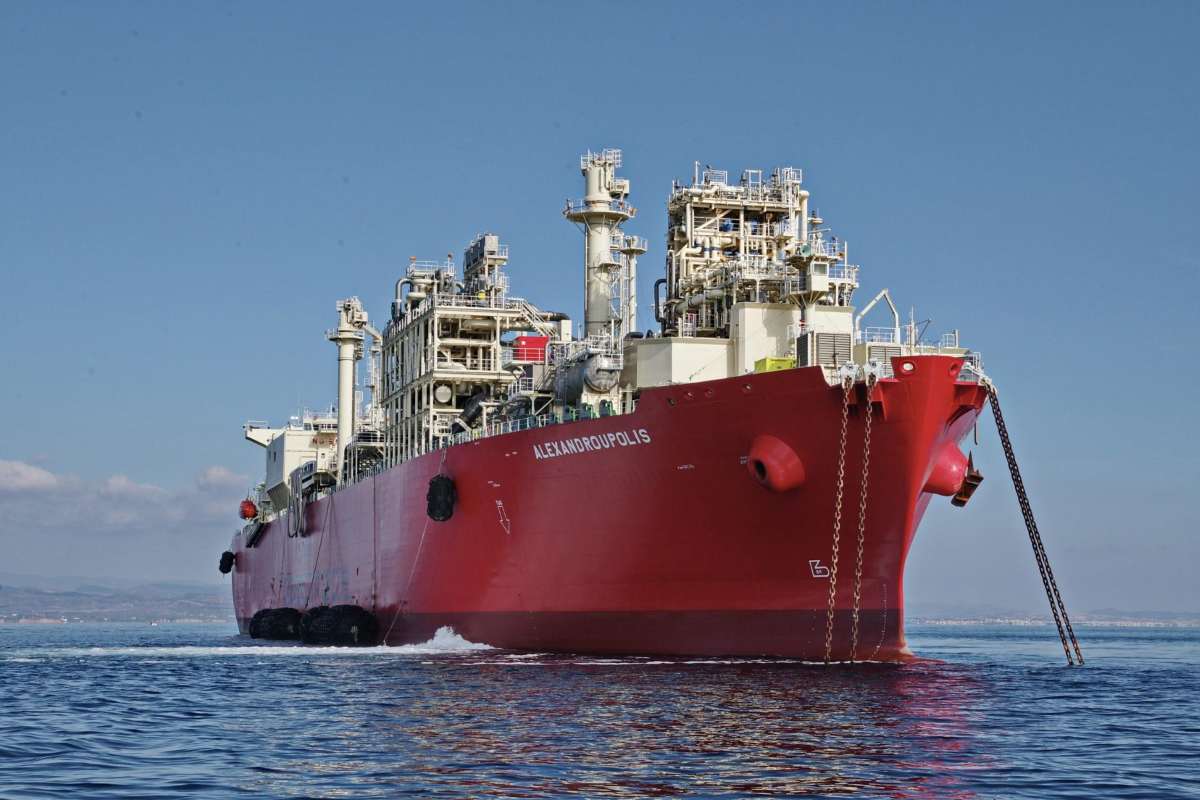
The country’s existing LNG infrastructure, including the Revithoussa terminal and the Alexandroupolis floating LNG facility, provides entry points for imported gas.
Through interconnected pipeline systems, supplies can move towards Bulgaria, Romania and other European markets.
The corridor is particularly important for countries seeking to reduce their dependence on Russian natural gas.
By creating additional routes for imported LNG, the project could offer greater flexibility in sourcing supplies.
Greece’s role is therefore not limited to importing natural gas for domestic consumption. It increasingly involves facilitating energy flows across a much larger regional market.
However, the corridor’s commercial success will depend on transportation costs, regulatory agreements, market demand and the availability of competitively priced LNG.
Chris Wright Becomes Washington’s Energy Salesman
Trump has deployed Energy Secretary Chris Wright as a leading advocate for expanding American gas infrastructure overseas.
Wright has promoted the Vertical Gas Corridor and related projects designed to strengthen energy connections across the Balkans.
One of the initiatives receiving American attention is the Southern Interconnection Gas Pipeline, a proposed project connecting Bosnia and Herzegovina with a pipeline network supplied by Croatia’s LNG infrastructure.
The project could provide Bosnia with an alternative to existing gas supply arrangements.
Washington is also working to address regulatory and taxation barriers that have complicated efforts to expand the Vertical Corridor into Hungary, Ukraine, Serbia and North Macedonia.
At a conference in November 2025, Wright described the United States’ willingness to support new energy infrastructure.
“The United States has the gas. We would love nothing more than to cooperate to build this infrastructure,” he said.
The statement captures the administration’s broader approach: combine American production capacity with diplomatic engagement and financial support to create new export opportunities.
American Diplomacy Is Opening Markets for LNG
The expansion of American natural gas exports is not being left entirely to private energy companies.
US diplomats are actively involved in discussions about infrastructure development, cross-border transportation arrangements and investment opportunities.
Nicole McGraw, the US ambassador to Croatia, has shared information about planned energy investments in Europe, the Caucasus and Central Asia, according to Landon Derentz, senior director of the Atlantic Council’s Global Energy Center.
American officials are also working with governments to address tax policies and other regulatory obstacles affecting gas transportation.
These efforts are particularly relevant to the expansion of the Vertical Corridor.
An American government official, speaking anonymously to POLITICO about diplomatic matters, described the significance of making the projects an administration priority.
“It builds political momentum in the region by branding this as an administration priority, allowing us as a government to focus on this regionally,” the official said.
The administration’s involvement illustrates how energy infrastructure has become an instrument of American foreign policy.
Rather than relying exclusively on market demand, Washington is attempting to shape the conditions under which energy projects are developed.
From the Baltic States to Italy: Washington’s European Gas Network
The American strategy involves several major infrastructure corridors across Europe.
The Amber Gas Corridor is intended to strengthen gas connections involving the Baltic states, Finland and Poland.
The Vertical Gas Corridor would facilitate the movement of LNG from Greece towards Southeastern and Central Europe.
The Southern Gas Corridor, which transports natural gas from Azerbaijan to southern Italy, is another important element of Europe’s efforts to diversify its energy supplies.
Not all these projects originated under Trump.
Several were developed or proposed before his second presidency.
However, the administration is seeking to expand existing initiatives and provide additional diplomatic or financial support.
The common objective is to strengthen alternatives to Russian gas supplies.
For American exporters, the development of these networks also creates additional potential customers.
The strategy therefore serves two overlapping purposes: reducing Russian energy influence and increasing opportunities for US natural gas companies.
Beyond Europe: Africa, the Caucasus and Southeast Asia
Washington’s ambitions extend well beyond the European market.
In the Caucasus, the US International Development Finance Corporation (DFC) is considering support for oil and gas infrastructure associated with the proposed Trump Route for International Peace and Prosperity.
The initiative is connected to efforts to improve transport and economic links between Armenia and Azerbaijan.
Potential energy infrastructure along the route could form part of a wider regional development strategy.
In Africa, American-backed LNG projects are being pursued in countries including Egypt and Mozambique.
These investments could expand natural gas production, processing and export infrastructure.
Southeast Asia is another priority.
According to POLITICO, the DFC approved $1.5 billion in June 2026 to support LNG infrastructure development in the region.
Growing electricity demand has made Southeast Asian markets particularly important for international energy suppliers.
American companies are seeking to establish commercial relationships before competing supply arrangements become firmly established.
The expansion reflects Washington’s intention to position itself as a major energy partner across several continents.
Trump Reverses Restrictions on Fossil Fuel Financing
A major element of the administration’s strategy involves changing how American public institutions finance overseas energy projects.
Trump reversed Biden-era restrictions that had limited public financing for fossil fuel infrastructure abroad.
The policy change opened the door to additional government-backed support for oil and natural gas projects.
The Export-Import Bank of the United States, which supports American exports and employment, has become an important instrument in this approach.
The administration is also using the expanded financing authority of the DFC to support energy investments in a wider range of countries.
At the international level, Washington has pressed institutions such as the World Bank to reconsider policies restricting financial support for fossil fuel development.
According to POLITICO, these changes have also influenced discussions at institutions including the Asian Development Bank.
Clemence Landers, vice president and senior fellow at the Center for Global Development, criticised the shift.
“This is actually like a huge deal, and everyone sort of seems to have quietly just consented to this,” she said.
“We’re kind of hitting rock bottom here.”
Her concerns reflect the view that renewed public support for fossil fuel infrastructure could undermine international efforts to redirect investment towards lower-emission energy systems.
White House: Allies Are Turning to American Energy
The Trump administration presents its strategy as a way to strengthen supply chains and improve energy security among American allies.
White House spokesperson Taylor Rogers defended the policy in a statement to POLITICO.
“President Trump’s energy dominance agenda has shifted the epicenter of energy to the Western Hemisphere,” Rogers said.
“Now, more than ever, our allies from across the world in both Europe and Asia are looking to the United States to strengthen their supply chains and make new investments.”
Washington argues that American LNG can help governments diversify energy imports and reduce dependence on suppliers considered geopolitically unreliable.
The strategy also supports American industrial and commercial interests.
Expanded LNG exports can create demand for domestic natural gas production, transportation services and related infrastructure.
However, the long-term economic benefits will depend on international gas prices, infrastructure costs and the evolution of global energy demand.
COP31 in Turkey: The Climate Contradiction
The expansion of fossil fuel infrastructure is taking place as governments gather at COP31 in Antalya, Turkey, to discuss global climate commitments.
The negotiations are unfolding against a backdrop of rising energy demand and growing concerns about the world’s ability to limit global warming to 1.5 degrees Celsius.
Natural gas presents a complex challenge for policymakers.
It can provide dispatchable electricity generation and help countries manage energy shortages.
When replacing coal in power generation, natural gas can reduce carbon dioxide emissions at the point of combustion.
However, it remains a fossil fuel.
Methane leakage during production, transportation and processing can significantly increase its overall climate impact.
New LNG terminals and pipelines are also designed to operate for decades.
That creates a potential conflict between long-term fossil fuel investments and policies aimed at reducing greenhouse gas emissions.
The administration’s strategy could therefore influence not only global energy trade but also the pace of the transition towards cleaner energy systems.
Can American LNG Slow the Expansion of Renewable Energy?
Large investments in natural gas infrastructure can affect the competitiveness of renewable energy.
LNG terminals, pipelines and gas-fired power stations require substantial upfront capital.
Investors generally seek long-term contracts to recover those costs.
Once these agreements are established, governments and energy companies may face financial incentives to continue using gas infrastructure even as renewable technologies become cheaper.
This phenomenon is often described as carbon lock-in.
However, the economic future of gas infrastructure is not guaranteed.
If international gas prices remain elevated, importing countries may accelerate investment in renewable energy, storage technologies and alternative electricity sources.
The war involving Iran has added further uncertainty to international energy markets.
Higher fossil fuel prices could undermine the economics of some proposed LNG projects.
The result is a significant investment dilemma.
Infrastructure intended to strengthen American energy exports could become less commercially attractive if global demand shifts faster than anticipated.
Europe Faces the Risk of Replacing One Energy Dependency With Another
Reducing dependence on Russian gas has been a central European objective since Russia’s full-scale invasion of Ukraine.
American LNG has helped European governments diversify their energy supplies.
However, increasing reliance on a single major supplier can create new economic and geopolitical vulnerabilities.
Europe must balance several competing objectives: securing reliable energy imports, maintaining affordable prices, strengthening industrial competitiveness and meeting climate commitments.
Diversification involves more than changing the country from which gas is purchased.
It also requires access to multiple suppliers, flexible contracts, competitive infrastructure and the ability to adjust the energy mix as technologies and market conditions change.
Long-term LNG contracts can provide supply certainty, but they may also limit flexibility.
For European governments, the challenge is to strengthen energy security without creating another concentrated dependency.
Greece’s Opportunity: Becoming an Energy Gateway to Southeastern Europe
The American strategy could reinforce Greece’s growing role in regional energy infrastructure.
Its geographical position provides access to maritime LNG deliveries and pipeline connections towards the Balkans.
The Revithoussa terminal, Alexandroupolis LNG infrastructure and cross-border gas connections are important elements of this network.
The Vertical Gas Corridor could increase the movement of natural gas through Greece towards markets further north.
That development has potential implications for infrastructure operators, energy suppliers, shipping companies and regional trading activities.
It could also improve supply flexibility for neighbouring countries.
However, the economic benefits are not automatic.
The success of the corridor depends on sustained demand, commercially viable transportation tariffs, competitive LNG prices and effective cooperation among participating countries.
The distinction between available pipeline capacity and actual contracted gas volumes is particularly important.
Greece has an opportunity to strengthen its role as a regional energy gateway, but the project’s long-term value will depend on how extensively and efficiently the infrastructure is used.
The country’s energy strategy also involves electricity interconnections, renewable generation and other investments that could reduce dependence on imported fossil fuels over time.
The development of gas infrastructure therefore forms one part of a broader regional energy transformation.
Trump’s Long-Term Energy Legacy: Commercial Power and Geopolitical Influence
Trump’s approach brings together energy production, infrastructure investment, public financing and diplomacy.
The administration wants to use America’s natural gas resources to strengthen its position in international markets.
By supporting pipelines and LNG facilities, Washington aims to establish commercial relationships that could endure for decades.
The strategy also seeks to reduce Russia’s influence in regions historically dependent on its energy exports.
But its success remains subject to major uncertainties.
Global gas prices, geopolitical conflicts, renewable energy development and climate policies will all influence the commercial viability of the proposed projects.
Some infrastructure investments could generate substantial long-term demand for American gas.
Others may face delays, financing difficulties or weaker-than-expected demand.
For Greece, the Vertical Gas Corridor places the country within an important international energy strategy.
For Europe, the central question is how to improve supply security while preserving the flexibility needed for a changing energy market.
Trump is not simply trying to sell more American natural gas. He is attempting to build the pipelines, terminals and commercial relationships that could keep US energy at the centre of global markets for decades.
The broader implications extend well beyond fossil fuel exports.
They concern the distribution of economic influence, the future of energy security and the balance between geopolitical priorities and climate commitments.
Source: pagenews.gr
Διαβάστε όλες τις τελευταίες Ειδήσεις από την Ελλάδα και τον Κόσμο