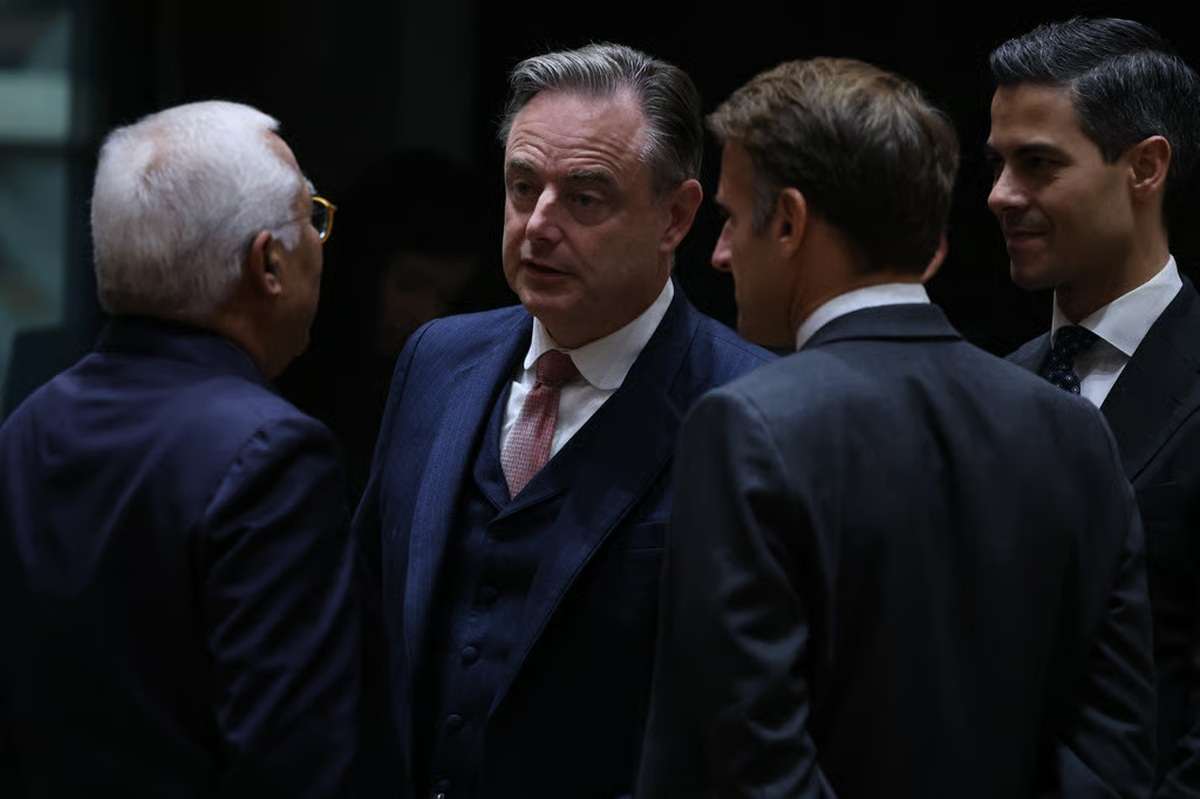
European Council President António Costa is facing one of the most difficult political tests of his presidency after a European Union summit in Brussels descended into prolonged disputes over energy policy and the bloc’s next seven-year budget.
According to a POLITICO report, Thursday’s negotiations lasted approximately 14 hours, producing little of the progress that several European governments had expected.
Instead of moving toward compromise, the discussions exposed deep disagreements between major European economies over the cost of the green transition, rising household energy bills and the distribution of EU financial resources.
Behind closed doors, diplomats described mounting frustration, with some accusing Costa of failing to coordinate negotiations effectively.
The confrontation comes at a particularly sensitive moment for Europe, as governments struggle with high energy costs, geopolitical uncertainty and mounting pressure to reach a budget agreement before national elections complicate negotiations in 2027.
“He Lost Control of the Room”: European Leaders Turn on Costa
The criticism directed at the former Portuguese prime minister was unusually sharp.
Costa, whose primary responsibility as European Council president is to facilitate agreements among the bloc’s 27 national leaders, faced growing dissatisfaction over his management of the discussions.
POLITICO spoke with 16 diplomats and officials who either attended Thursday’s summit or were directly briefed by participating leaders.
Most expressed criticism of Costa’s performance, although some offered more positive assessments.
One diplomat accused him of “losing control of the room,” while another described the negotiations over energy policy as “insane chaos.”
According to these accounts, the Council presidency struggled to manage successive amendments to the proposed summit conclusions.
As a result, leaders were reportedly left debating proposals without receiving all the relevant texts in time.
The procedural difficulties contributed to significant delays, forcing negotiations to continue beyond midnight.
For Costa, who is widely expected to seek another two-and-a-half-year term in 2027, the criticism represents a potentially important challenge to his political standing.


Meloni vs. Merz: A Major Clash Over Carbon Pricing
The most contentious dispute centered on the European Union’s Emissions Trading System and, in particular, its second phase, known as ETS2.
The new framework will introduce carbon pricing for fuels used in building heating and road transportation, with implementation scheduled for 2028.
The prospect of additional costs for households and businesses has triggered resistance from governments already facing public pressure over energy prices.
According to five diplomats cited by POLITICO, Italian Prime Minister Giorgia Meloni, supported by Hungary, Poland, Czechia and Slovakia, pushed for a postponement of ETS2.
The Italian-led coalition argued that introducing additional carbon costs during an energy crisis could further increase household bills and transport expenses.
Opposing this position was a group comprising Germany, France, Spain, Portugal, the Nordic countries and the Netherlands.
German Chancellor Friedrich Merz was reportedly particularly frustrated by Rome’s position, which Berlin viewed as an obstacle to reaching an agreement.
The confrontation highlighted a fundamental disagreement over European climate policy.
One side emphasized the need to maintain previously agreed environmental commitments and provide regulatory certainty.
The other warned that implementing new carbon-pricing measures during a period of economic pressure could intensify the cost-of-living crisis.
Italy and the Visegrád Countries Challenge Brussels
The coalition seeking to delay ETS2 brought together Italy and the four Visegrád countries: Hungary, Poland, Czechia and Slovakia.
Their central concern was the financial burden that carbon pricing could place on households, businesses and transport operators.
Governments opposing the delay argued that reopening legislation already adopted by the EU could undermine regulatory predictability and weaken confidence in the bloc’s climate commitments.
The dispute was particularly difficult because ETS2 had already been incorporated into EU legislation.
According to diplomats, the draft conclusions prepared ahead of the summit did not anticipate a fundamental reconsideration of the system.
Nevertheless, several governments attempted to reopen the debate during the leaders’ meeting.
That move complicated negotiations and placed additional pressure on Costa’s ability to manage competing national demands.
Press Conference Canceled as Negotiations Descend Into Confusion
The confrontation became so intense that Costa canceled the summit’s scheduled press conference and postponed further discussions until after the leaders’ dinner.
Three European diplomats described the negotiations to POLITICO as having become a procedural and political mess.
The central difficulty involved repeated changes to draft conclusions and conflicting demands from national delegations.
One diplomat suggested that Costa prefers summit conclusions to be largely settled during preparatory meetings between ambassadors, rather than extensively rewritten by heads of government.
However, that approach came under pressure when leaders insisted on reopening politically sensitive questions.
Another diplomat criticized the handling of Italian proposals, arguing that earlier submissions from other governments had effectively been disregarded.
The result was a prolonged negotiation process in which disagreements over substance were compounded by frustration over procedure.
EU’s Seven-Year Budget: A Second Political Battleground
While energy policy dominated Thursday’s confrontation, the negotiations over the EU’s next long-term budget represent an equally significant challenge.
The Multiannual Financial Framework for 2028–2034 will determine the Union’s spending priorities across major policy areas.
These include cohesion funding, agricultural support, defense, competitiveness, infrastructure and strategic investment.
The negotiations are taking place against a difficult economic backdrop, with national governments facing fiscal constraints while demands for European financing continue to grow.
Finnish Prime Minister Petteri Orpo warned that delays would make an agreement increasingly difficult.
“So we have to work to find a solution this year,” Orpo told POLITICO, describing the negotiations as a major challenge.
European officials are particularly concerned that national elections scheduled for 2027 could further complicate efforts to secure a compromise.
As electoral pressures intensify, governments may become less willing to accept politically sensitive budget concessions.
Greece’s Stakes: Energy Relief, Fiscal Flexibility and EU Funding
For Greece, the negotiations carry significant economic and political implications.
Athens has emphasized the need for a coordinated European response to rising energy prices and greater flexibility for governments seeking to protect households and businesses.
The Greek government has supported targeted intervention mechanisms and fiscal room for measures designed to address exceptional energy costs.
At the same time, Greece has a strong interest in preserving substantial funding under the EU’s Cohesion Policy and Common Agricultural Policy.
These programs play an important role in financing regional infrastructure, agricultural production, investment and economic development.
Any major restructuring or reduction in these funding streams could affect Greece’s medium-term development priorities.
The budget negotiations therefore present Athens with a dual challenge: securing sufficient European resources while supporting policies that protect economic stability and energy affordability.
The wider dispute over ETS2 also matters for Greece because carbon pricing in heating and transportation could have implications for consumers, businesses and the cost of living.
Costa’s Political Future: A Second Term in Question?
The summit’s difficulties come as Costa approaches a politically important period in his presidency.
According to European officials cited by POLITICO, he is widely expected to seek reappointment for another two-and-a-half-year term in 2027.
His ability to facilitate an agreement on the EU’s long-term budget is likely to be a central consideration in assessments of his leadership.
Diplomats have already begun comparing his performance with that of his predecessors.
Former European Council President Charles Michel frequently faced criticism from national governments over his negotiating methods.
Donald Tusk, by contrast, enjoyed broader support during his presidency.
The comparisons illustrate the importance of effective mediation in an institution where agreement depends heavily on negotiations between governments with competing domestic priorities.
However, the criticism of Costa is not universal.
Some officials offered more favorable assessments, while his spokesperson declined to comment on the allegations reported by POLITICO.
Trump, Russia and China Add Pressure to an Already Divided Europe
The European Union’s internal disagreements are unfolding amid a particularly challenging international environment.
The bloc is facing renewed energy pressures, economic competition from China and uncertainty surrounding Washington’s approach to Russia and the war in Ukraine.
President Donald Trump’s recent moves involving Russian energy supplies have intensified concerns in European capitals over the future direction of American policy.
At the same time, the EU is struggling to strengthen its industrial competitiveness while financing defense, climate transition and economic modernization.
The rise of nationalist and Eurosceptic political forces in several member states adds another layer of complexity.
These pressures make European unity increasingly important, but also more difficult to achieve.
The disagreements over ETS2 and the seven-year budget illustrate how national economic interests can collide with collective European objectives.
A Defining Moment for Europe’s Leadership
The Brussels summit has exposed more than dissatisfaction with António Costa’s management of negotiations.
It has highlighted structural disagreements over how the European Union should balance climate commitments, energy affordability, economic competitiveness and fiscal responsibility.
For governments seeking to protect households from rising prices, additional carbon costs represent a politically sensitive challenge.
For countries committed to maintaining the existing climate framework, repeated delays risk undermining the credibility of European policymaking.
Meanwhile, the next long-term budget will require difficult decisions over competing priorities at a time when resources are limited and geopolitical demands are increasing.
The central challenge for the European Union is whether its 27 member states can translate their competing national priorities into workable collective decisions.
Costa’s ability to rebuild consensus will be closely watched as budget negotiations intensify.
For Greece and other member states, the outcome will influence not only the EU’s institutional credibility but also the financial and energy policies shaping Europe’s economic future.
Source: pagenews.gr