“It is clear that we have lost these elections.”
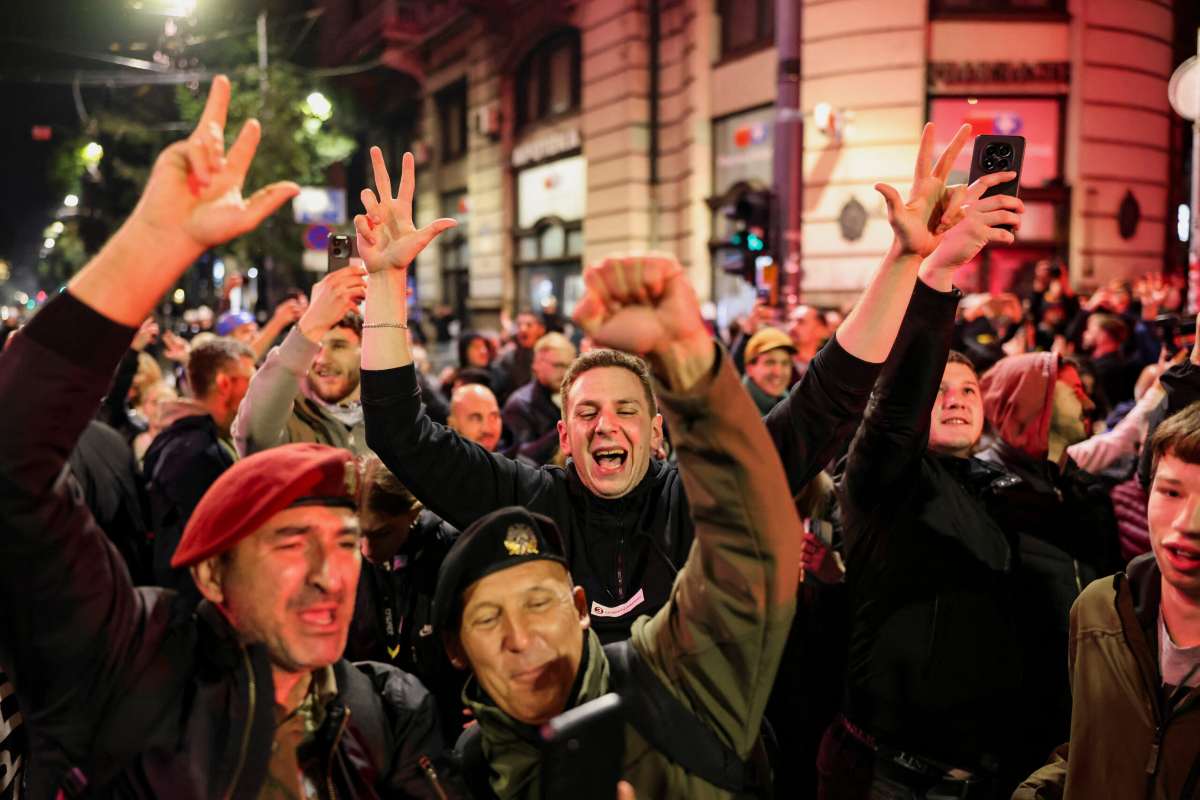
Aleksandar Vučić’s concession marked a political turning point for Serbia. Thousands poured onto Belgrade’s streets to celebrate the Student List’s victory and the defeat of the country’s long-dominant governing camp.
According to the preliminary estimates cited by Vučić, the student-backed movement was expected to secure 135–140 seats in the 250-member parliament, exceeding the 126 required for an absolute majority. Those figures remain distinct from the final, officially certified allocation.
Turnout approached 70%, illustrating the scale of mobilisation. Speaking on behalf of the movement, university professor Radomir Šajčić captured the transition from celebration to responsibility:
“Tonight we celebrate victory, tomorrow we build the future.”
Why Vučić Lost
The first explanation is the transformation of a crisis of public trust into an electoral majority.
The collapse of a canopy at Novi Sad railway station in November 2024, which killed 16 people, triggered protests that developed into a broader challenge to the government. Demonstrators linked the disaster to allegations of corruption, opaque decision-making and failures of accountability, which the governing camp rejected.
The political force of that connection lay in bringing institutional questions into everyday life: who checks public construction, who accepts responsibility and who protects citizens when oversight fails?
The economic development and infrastructure promoted by Vučić became inseparable from questions about the state’s reliability.


High Turnout Changed the Balance
A second explanation concerns mobilisation beyond established party constituencies.
A movement can fill streets without winning an election. The Student List’s success shows that it converted a substantial part of the pressure generated by protests into votes.
High participation can weaken the advantages of a political strategy built around retaining a disciplined, established electoral base. In Serbia, the result suggests that the movement reached citizens whom conventional opposition campaigns had struggled to mobilise.
This remains an analytical interpretation. Detailed election data will be needed to establish precisely how previous non-voters and different social groups voted.
A Different Opposition Offer
The Student List also sought to represent disappointment with the established opposition. Its candidates included professionals from different social backgrounds rather than being restricted to students.
That approach helped present political change as a broader civic undertaking. Its collective identity offered a different model from Vučić’s highly personalised dominance.
The same diversity now creates a demanding task: turning different experiences and expectations into a coherent governing programme.
An Election Victory Does Not Complete the Transition
The movement must now determine who will govern, which figures will hold key ministries and what reforms will come first.
It faces three connected challenges: rebuilding confidence in institutions, maintaining the state’s functioning during the transition and demonstrating that fighting corruption can improve public services and economic conditions.
Voters can replace a political leadership in one election. Changing administrative practices, networks of influence and institutional weaknesses takes longer.
The new majority’s credibility will also depend on pursuing accountability through transparent procedures and judicial safeguards.
Brussels Sees an Opening for Reform
European reactions were swift. Enlargement Commissioner Marta Kos declared:
“Serbia has raised its voice.”
European Commission President Ursula von der Leyen congratulated the Student List and offered support for reforms addressing the rule of law, media freedom, corruption and democratic institutions.
Council of Europe Secretary-General Alain Berset welcomed Vučić’s acceptance of the result and commitment to a peaceful democratic transition.
For the EU, the outcome creates an opportunity to renew cooperation on concrete institutional reforms. Membership still requires sustained progress and fulfilment of accession obligations. A change of government does not automatically accelerate that process.
Russia and China: The Geopolitical Direction Remains Open
The election result does not, by itself, establish an immediate change in Serbia’s international alignment.
The incoming government must manage relations with the EU, Serbia’s largest trading partner; China, a major investor; and Russia, a traditional ally and principal natural-gas supplier.
Those relationships have economic, energy and domestic political foundations. New leadership could change their balance, but its direction will become clear through decisions rather than election-night symbolism.
Kosovo remains another major challenge. The EU links progress on the European paths of Belgrade and Pristina to meaningful steps towards normalising their relations.


The Message Beyond Serbia
Serbia’s election demonstrates that sustained civic mobilisation can become electorally effective when it develops a shared purpose, organisational continuity and wider public appeal.
It offers no automatic formula for other countries, whose political systems and circumstances differ. It nevertheless provides a striking example of demands for accountability becoming a mandate for change.
The celebrations mark the end of the electoral battle. The harder test begins now: whether the Student List can turn public trust into institutions that work better for everyone.
Source: pagenews.gr