Trump Weighs Major New Iran Strikes After US Midterms as Military Prepares for Action Within 96 Hours
 ΧΡΟΝΟΣ ΑΝΑΓΝΩΣΗΣ 12 '
Πηγή Φωτογραφίας: AP Photo//Trump Weighs Major New Iran Strikes After US Midterms as Military Prepares for Action Within 96 Hours



“We have to finish the job that we started!”
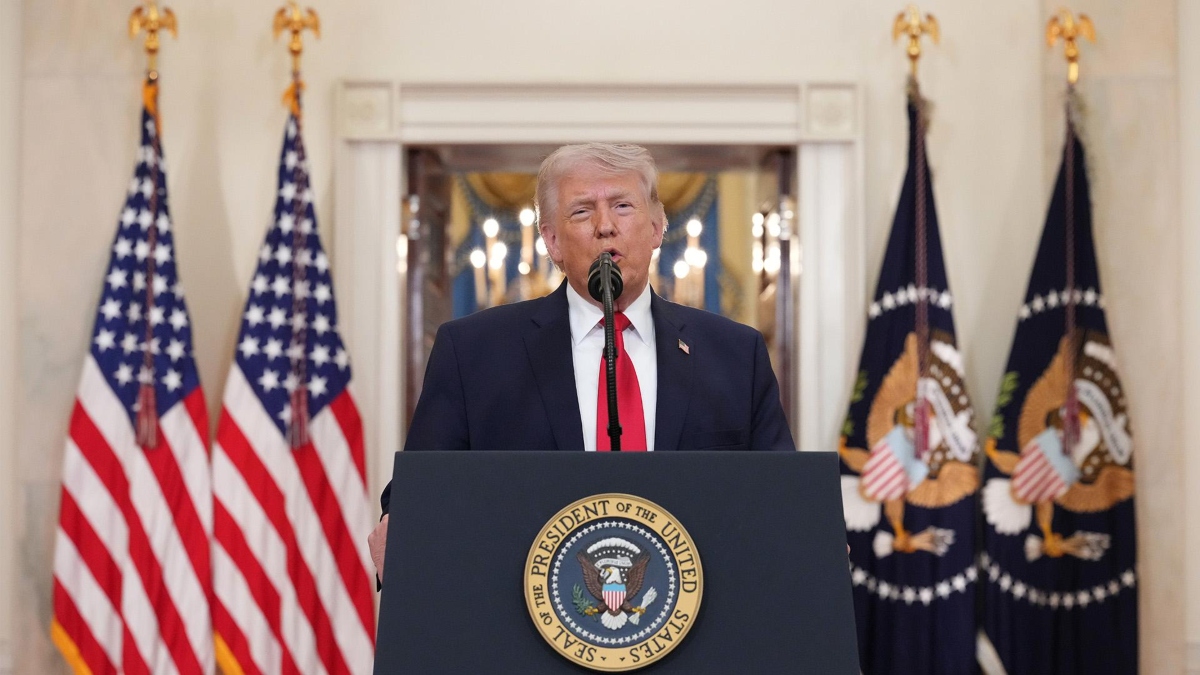
With those words, US President Donald Trump delivered a striking political message in support of Israeli Prime Minister Benjamin Netanyahu, as reports emerged that Washington was preparing options for a potentially extensive new military campaign against Iran.
According to CNN, citing two unnamed US officials, American forces could begin a new operation within 96 hours of receiving a presidential order.
The reported plans include potential strikes against Iran’s energy infrastructure, nuclear facilities and military installations.
One official described the scale of the possible operation in unusually direct terms:
“It will be a big effort.”
The operation could be launched at any time following a presidential decision, although officials reportedly believe that action is more likely after the November 3, 2026, US midterm elections.
Crucially, there is no public confirmation that Trump has approved the operation or established a date for military action.
The distinction between operational readiness and a final political decision remains central to understanding the developing crisis.
The 96-Hour Window: What US Military Readiness Really Means
The most significant detail in the CNN report is the claim that American forces could launch operations within four days of receiving an order from the White House.
This does not mean an attack will occur within 96 hours.
Rather, it suggests that military planning and force deployments have advanced to a stage where Washington could move relatively quickly if Trump decides to authorize action.
The Pentagon and US Central Command, or CENTCOM, are reportedly considering an extensive range of potential targets.
These include Iranian military facilities, nuclear infrastructure and energy assets.
The inclusion of energy infrastructure is particularly significant.
Previous military operations have frequently focused on assets such as missile launchers, radar installations and other military capabilities.
A broader campaign targeting energy infrastructure could have far-reaching economic consequences, potentially affecting Iranian oil production, export capacity and the wider regional energy market.
The reported preparations therefore raise questions not only about military objectives but also about the economic and diplomatic consequences of escalation.
Why November 3 Matters
The timing of a possible operation is closely linked to the American political calendar.
The United States will hold its midterm elections on November 3, with control of Congress at stake.
Military escalation before the vote could introduce additional uncertainty into financial and energy markets.
A significant rise in oil prices could increase fuel costs and add to inflationary pressures, potentially affecting American households and businesses.
According to the reports, administration officials have considered the electoral timetable when discussing the possibility of further action against Iran.
That does not establish that the president has made a definitive decision to postpone an attack until after the elections.
It does, however, underline how domestic political considerations and national security decisions can intersect during an international crisis.
Netanyahu, Trump and the Question of a Joint Operation
Israel’s position is another critical element of the developing situation.
According to CNN, Israeli officials have explored the possibility of additional strikes against Iran and sought American support.
Sources cited by the network suggest that senior US officials, including Trump, encouraged Israel to wait while Washington considered the possibility of a coordinated operation.
An Israeli security source reportedly stated:
“Netanyahu really wanted and tried to convince Trump to jointly attack Iran before the elections, but Trump did not give the green light.”
The reported disagreement over timing comes immediately before Israel’s October 27 national election.
The election is taking place amid intense debate over national security, the consequences of previous military operations and Netanyahu’s leadership.
The possibility of a major military confrontation so close to the vote adds another dimension to an already sensitive political environment.
However, reports about private discussions between American and Israeli officials remain attributed to unnamed sources.
They should not be treated as confirmation that the two governments have reached a final agreement on a joint operation.
Trump’s Truth Social Message: “Bibi Has Been an Outstanding Warrior Prime Minister”
Against this backdrop, Trump published an extensive statement on Truth Social expressing his support for Netanyahu.
The president addressed Israeli voters directly and highlighted what he described as the two leaders’ successful military cooperation.
“Bibi and I have had a great relationship in winning together,” Trump wrote.
He referred to previous military operations, including Operation Midnight Hammer, which he said had prevented Iran from obtaining a nuclear weapon.
Trump also cited Operation Epic Fury, claiming that Iran had suffered extensive military and economic damage.
“Iran now has No Navy, No Air Force, and both their Military and Economy are in shambles,” he wrote.
These are the president’s own characterizations of the conflict and should not be confused with an independently verified assessment of Iran’s remaining military capabilities.
Trump also claimed that Iranian inflation had reached 301%.
The figure was presented without an accompanying statistical source or clarification of the inflation measure being used.
His message then turned explicitly to the Israeli election.
“When you go to the Polls please remember that Bibi has been an outstanding Warrior Prime Minister!”
Trump concluded:
“Vote for Bibi Netanyahu for Prime Minister, we have to finish the job that we started!”
The statement represents a direct public endorsement of Netanyahu by the American president.
It also connects Trump’s support for the Israeli leader with the broader military confrontation involving Iran.
Nevertheless, the message does not itself constitute an official announcement of a new US military operation.
Iran’s Energy Infrastructure: A Potential Shock to Global Oil Markets
The possibility of strikes against Iranian energy facilities is among the most consequential elements of the reported plans.
Iran remains strategically important to the energy security of the Middle East, while the Persian Gulf is a critical region for global oil transportation.
Any major escalation could affect oil production, shipping routes, insurance costs and international energy prices.
The Strait of Hormuz is particularly important because it connects the Persian Gulf to international shipping lanes.
A wider military confrontation could create additional risks for commercial vessels and energy infrastructure across the region.
The consequences would not necessarily remain confined to Iran.
European economies could face higher energy costs, while Asian markets heavily dependent on imported hydrocarbons could also experience supply-related pressures.
For countries such as Greece, potential effects could include increased fuel prices, higher maritime transportation costs and renewed inflationary pressure.
The scale of any economic disruption would depend on the actual targets, the duration of military operations and the extent of any Iranian response.
At present, those factors remain uncertain.
Nuclear Facilities and the Risks of Escalation
The reported inclusion of Iranian nuclear facilities among potential targets raises additional strategic concerns.
Washington and Israel have long identified Iran’s nuclear program as a major security issue.
Military action against nuclear infrastructure, however, presents complex operational and political challenges.
Some facilities may be located underground or protected by substantial defensive structures.
Attacks could also create safety risks, depending on the materials present and the operational status of the installations.
The effectiveness of military strikes in permanently limiting nuclear capabilities is also a matter of debate.
Physical damage to facilities does not necessarily eliminate scientific expertise, technical knowledge or the capacity to rebuild.
These considerations make the distinction between short-term military objectives and longer-term strategic outcomes particularly important.
A campaign designed to damage infrastructure is not necessarily equivalent to a strategy capable of producing a durable political settlement.
The Risk of Iranian Retaliation
A major American attack would carry the possibility of retaliation.
Iran retains relationships with regional armed groups and has previously demonstrated the ability to threaten military installations and maritime activity.
US forces, diplomatic facilities and regional partners could face additional security risks if the confrontation escalates.
Israel would also need to consider the implications for its missile-defense capabilities and civilian infrastructure.
The possibility of retaliation helps explain why extensive military planning would be required before launching a larger campaign.
Protecting personnel, coordinating regional defenses and preparing for potential disruptions would be essential considerations.
At the same time, the precise form and scale of any Iranian response cannot be predicted with certainty.
Could Military Pressure Produce Regime Change?
The ultimate strategic objective of a new operation remains unclear.
Some Israeli political statements have linked military pressure to the possibility of broader political change in Iran.
But weakening military capabilities and producing a change in government are fundamentally different objectives.
The first can be assessed through damage to infrastructure, weapons systems and operational capacity.
The second depends on complex political, institutional and social factors that military force alone may not determine.
A campaign designed around extensive infrastructure strikes could therefore generate significant destruction without necessarily producing a clear or lasting political outcome.
This uncertainty is likely to feature prominently in any assessment of the risks associated with a new operation.
The White House and Pentagon: Planning Is Not an Order
According to CNN, the White House declined to comment on the reported military preparations.
A senior Pentagon official emphasized the department’s responsibility to prepare options for the president.
“The Department is a planning organization, and its job is to develop and execute the military options ordered by the President,” the official said.
That distinction is essential.
Military planners routinely prepare scenarios for possible operations.
The existence of a detailed plan does not establish that the president has authorized its execution.
For now, the reports point to advanced preparation and a potentially short operational timeline, rather than a confirmed decision to attack.
The Geopolitical Stakes for Europe and the Middle East
The prospect of another major confrontation with Iran presents difficult questions for European governments.
A renewed conflict could disrupt trade routes, increase energy costs and complicate diplomatic efforts across the Middle East.
It could also intensify pressure on countries attempting to balance their security relationships with Washington against their economic interests in the Gulf.
For the European Union, energy security and maritime stability would be among the most immediate concerns.
For NATO members, including Greece, the wider security environment could become more demanding, even without direct involvement in military operations.
The consequences would depend heavily on whether a potential campaign remained limited or developed into a prolonged regional confrontation.
The Next Critical Days
Three political and military developments now define the situation.
Israel is approaching its October 27 election, with Trump publicly endorsing Netanyahu.
The United States is preparing for its November 3 midterm elections, while American officials reportedly assess the timing of possible military action.
And US forces are said to be capable of beginning a major operation within 96 hours of a presidential order.
Taken together, these developments create a period of heightened uncertainty.
The central question is no longer whether Washington possesses military options against Iran. It is whether Trump will decide to activate them, what objectives he would seek to achieve and how Tehran might respond.
Until a formal decision is announced, the reported preparations remain military contingency planning rather than confirmation of an imminent attack.
The stakes, however, extend well beyond the battlefield.
A new confrontation could affect global energy markets, regional security, US-Israeli relations and the broader balance of power in the Middle East.
Source: pagenews.gr
Διαβάστε όλες τις τελευταίες Ειδήσεις από την Ελλάδα και τον Κόσμο