“First comes November, and then comes December.”
Kremlin foreign policy adviser Yuri Ushakov’s remark, linking diplomacy in China to Vladimir Putin’s potential attendance at December’s G20 summit in Miami, captures the importance Moscow attaches to the coming month.
According to Ushakov, preparations have begun for a meeting between Donald Trump, Xi Jinping and Vladimir Putinon the sidelines of the November 18–19 APEC summit in Shenzhen. That account establishes the Kremlin’s description of the preparations. It does not establish a final agenda or a negotiated outcome.
The central geopolitical question is whose interests might be discussed without their direct participation. Europe, Ukraine, Japan and Taiwan all have substantial stakes in issues that could enter a broader negotiation among the three powers.
China Benefits From the Setting
Shenzhen offers Beijing a powerful diplomatic stage. The city will host the APEC Economic Leaders’ Meeting on November 18–19, according to the host authorities.
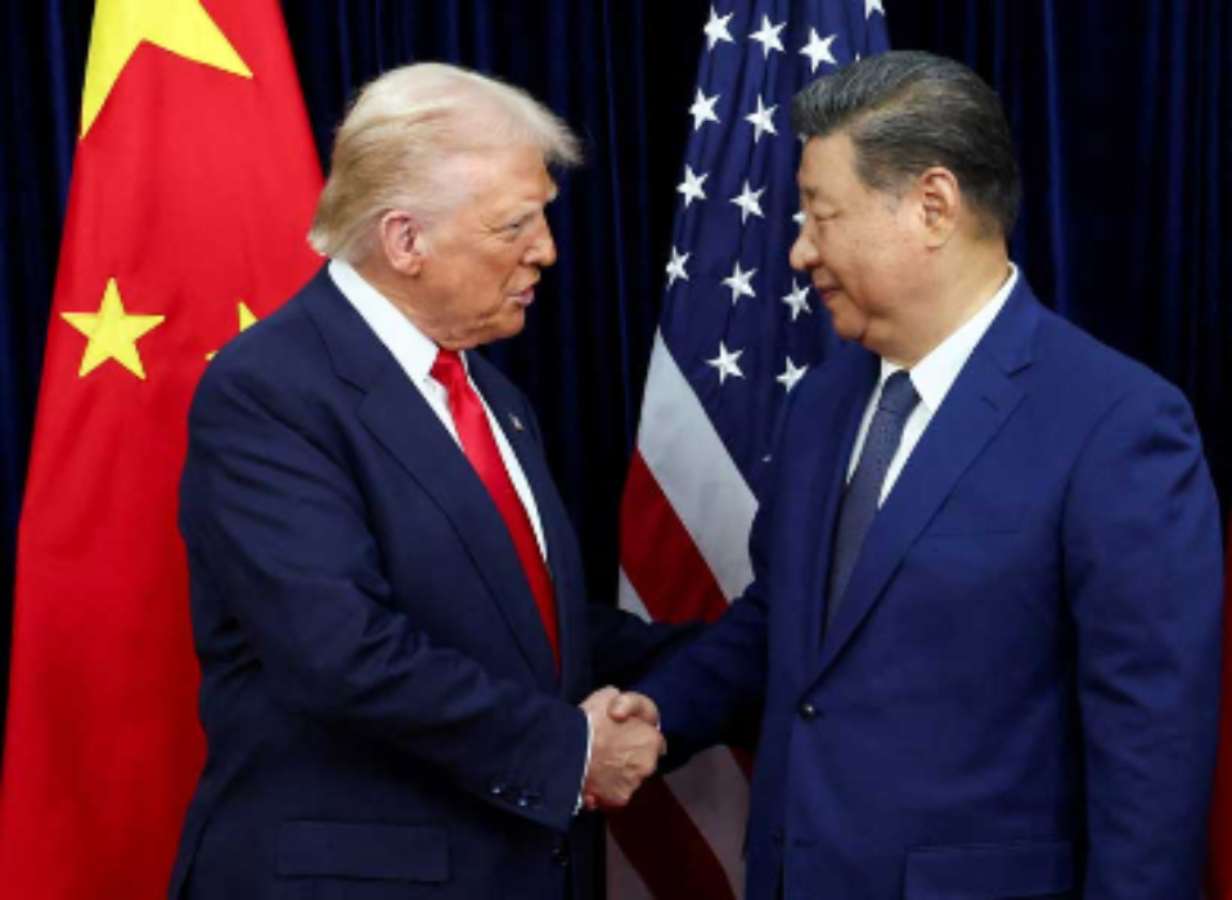
A photograph of Xi receiving the American and Russian presidents would reinforce China’s presentation of itself as a central participant in managing international crises.
Hosting also provides opportunities to shape the atmosphere, sequence discussions and influence the public presentation of the meeting. It does not guarantee that Xi can dictate the outcome. The three leaders bring competing priorities and significant disagreements to the table.
Putin Wants the Status of an Indispensable Negotiator
For Moscow, the meeting’s value could precede any joint communiqué.
A restricted format with Washington and Beijing would allow Putin to portray Russia as an essential participant in decisions about global security. Ushakov’s connection between Shenzhen and Miami suggests that the Kremlin sees the meetings as successive opportunities for international re-engagement.
If Ukraine enters the discussion, representation becomes a fundamental issue. Exchanging views among major powers is different from negotiating terms affecting another country without its participation.
The proposed leaders’ meeting must also be distinguished from the separate preparations for talks involving American, Russian and Ukrainian negotiators.
Trump Wants an Outcome With Global Reach
For the American president, an agreement to restart nuclear arms discussions could provide a significant diplomatic achievement.
The need for a successor framework is real. New START expired on February 5, 2026, prompting a United Nations warning about the absence of binding limits on American and Russian strategic nuclear arsenals.
A three-way statement on reducing nuclear risks would carry value. Turning a political declaration into an effective agreement, however, would require specific obligations, transparency and verification.
China’s influence over Iran could also feature in Washington’s calculations. Securing Beijing’s assistance with de-escalation would potentially interest the United States. There is no publicly established bargain linking such assistance to American concessions elsewhere.


Taiwan and Technology: The Most Sensitive Ground
Taiwan and restrictions on access to advanced technology remain central strategic concerns for Beijing.
Their possible connection to trade concessions or rare-earth supplies deserves scrutiny. There is no publicly substantiated agreement exchanging Washington’s position on Taiwan for Chinese concessions.
The proposed American arms package worth approximately $14 billion illustrates the need for precision. Earlier reporting by the Associated Press recorded Taiwan’s statement that it had received no official notification of a pause in the package, despite public reports of delays.
For Taipei, the danger in a wider bargain would be bearing political or economic consequences from decisions in which it had no direct voice.
For Japan, the uncertainty would concern the consistency of American strategy in the Indo-Pacific and Tokyo’s ability to coordinate policy with its principal ally.
Rare Earths as Negotiating Leverage
Access to critical materials connects diplomacy directly to manufacturing, technology and defence.
China previously announced the suspension of specified export restrictions until November 10, 2026, a deadline documented in an official Chinese government account.
Individual restrictions, export licences and any subsequent extensions require separate examination. A broader trade truce does not automatically remove every control.
The substantive question ahead of Shenzhen is whether Beijing will use access to these materials to strengthen its negotiating position — and what response it might seek from Washington.
Europe’s Concern: Paying for a Settlement It Did Not Shape
For Europe, a major risk would be the emergence of a political framework for Ukraine without meaningful European participation, followed by demands that European governments help implement it.
The European Commission has reiterated that Europe will play a key role in a future settlement and that any solution must respect Ukraine’s territorial integrity.
Making that position effective requires practical influence: a common European approach, coordination with Kyiv and clear conditions governing contributions to security and reconstruction.
A declaration of relevance is a starting point. The harder task is ensuring that diplomatic decisions reflect the responsibilities Europe would be expected to assume.
Three Possible Outcomes
One possibility is a short meeting producing broad language on strategic stability, while substantive negotiations remain concentrated in bilateral discussions.
A second is a wider political understanding connecting different issues. That would increase the risk of pressure on partners absent from the three-way meeting.
A third is that the meeting does not take place, or gives way to separate bilateral encounters because of disagreements over its purpose and conditions.
These are analytical scenarios. Publicly available evidence does not support assigning them reliable numerical probabilities.
Shenzhen’s real test will be whether the meeting reduces international risks through clear commitments or creates fresh uncertainty for those affected by its decisions. Bringing three powerful leaders together creates a diplomatic opportunity. The substance will determine who benefits — and who bears the cost.
Source: pagenews.gr