Xi Heads to Egypt: China Expands Its Military and AI Footprint at the Gateway to the Middle East
 ΧΡΟΝΟΣ ΑΝΑΓΝΩΣΗΣ 12 '
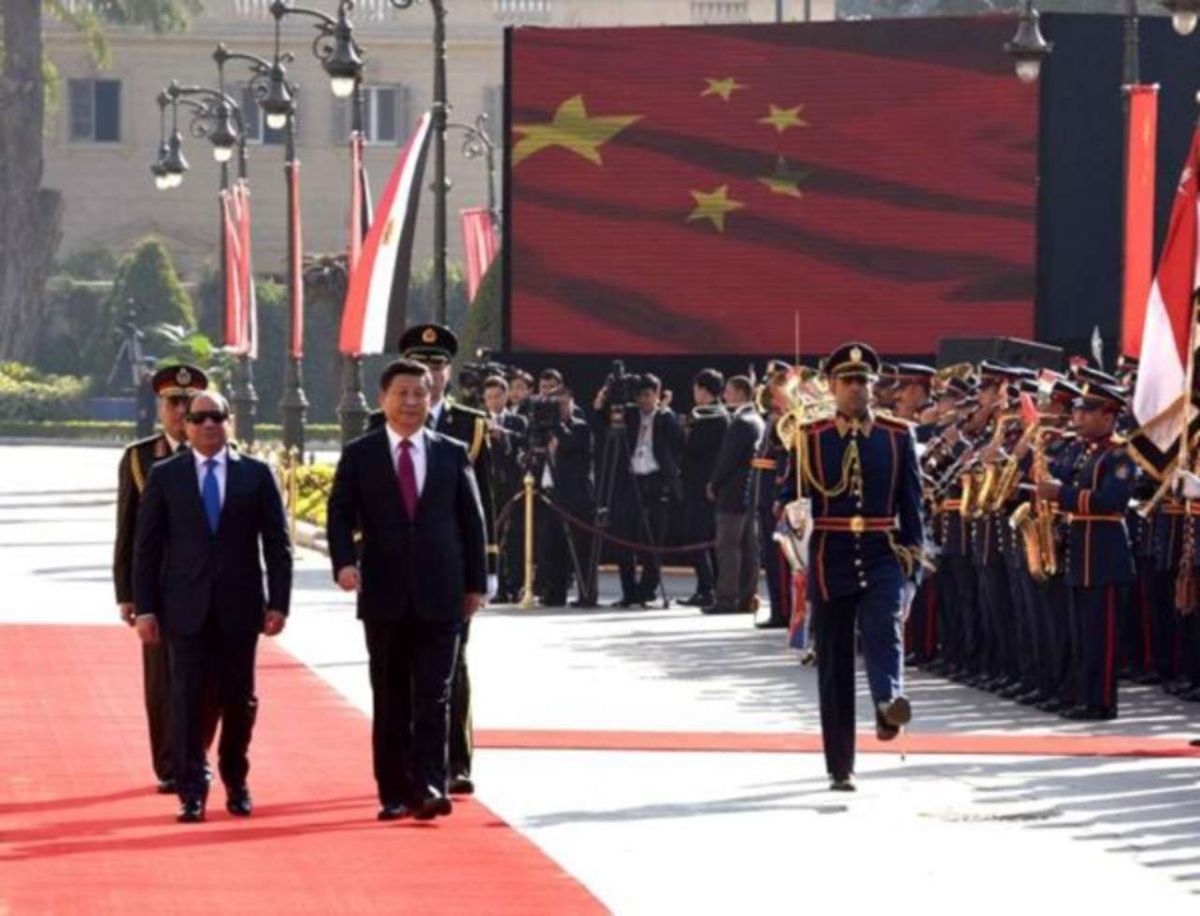
Πηγή Φωτογραφίας: AP Photo//Xi Heads to Egypt: China Expands Its Military and AI Footprint at the Gateway to the Middle East



Chinese President Xi Jinping is preparing for his first visit to Egypt in a decade at a moment when the relationship between Beijing and Cairo is evolving far beyond traditional trade and infrastructure.
Defense cooperation, artificial intelligence, advanced computing, industrial investment and the strategic geography of the Suez Canal are increasingly converging into a partnership with consequences extending across Africa, the Middle East and the Mediterranean.
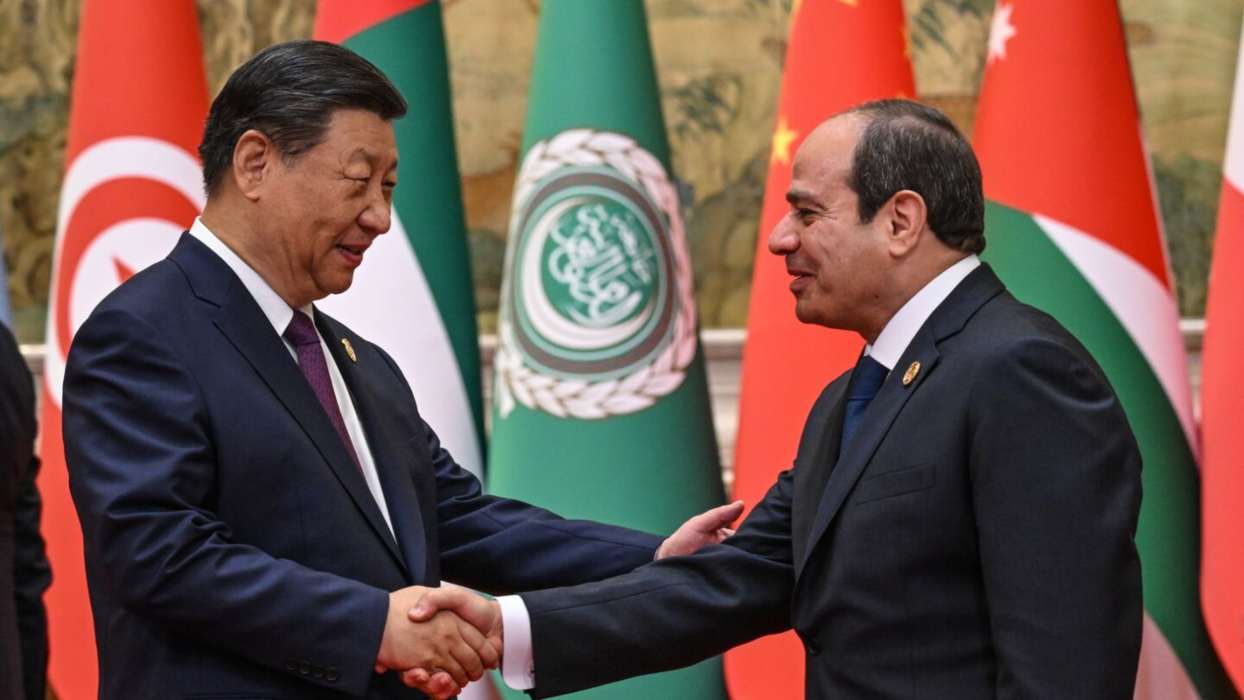
Xi is expected to meet Egyptian President Abdel Fattah el-Sisi during his Aug. 30-Sept. 3 foreign tour, marking his first visit to Egypt since 2016.
But the timing is particularly significant.
Chinese and Egyptian forces have just launched another round of joint military exercises, while Huawei is simultaneously attempting to secure a potentially strategic contract to build AI infrastructure for the Egyptian government.
Washington has noticed.
U.S. officials are now exploring a competing American technology package involving some of the biggest names in the U.S. semiconductor and cloud industry.
The result is a much larger geopolitical story:
Egypt is becoming another frontline in the technological competition between the United States and China.
Huawei puts more than 2,000 AI chips on the table
The most immediate battle is over artificial intelligence.
Huawei has submitted a proposal to build AI data centers for the Egyptian government, according to documents reviewed by Bloomberg.
The Chinese technology giant is offering 1,408 high-end Ascend 950-series processors for an AI training cloud.
Another 600 processors — either Ascend 950 chips or the older Ascend 910B — would power two inference clusters used to operate AI models after training.
That takes the proposed deployment to more than 2,000 AI accelerators.
Huawei’s proposal reportedly includes a 12-month infrastructure development plan.
The significance extends beyond the size of the contract.
If Cairo accepts the offer, Egypt could become an important international showcase for Huawei’s attempt to export an AI ecosystem capable of competing with American technology.
Until recently, the central question was whether Chinese companies could develop advanced AI hardware despite U.S. export controls.
The next question is becoming much more important:
Can China export that ecosystem internationally?
Egypt could provide part of the answer.
Washington moves to build a rival offer
The Huawei bid has triggered concern in Washington.
U.S. officials have reportedly contacted major American technology companies as they explore the possibility of assembling a competing proposal for Cairo.
Companies discussed in reporting around the potential American alternative include Nvidia, AMD and Microsoft.
That turns what might otherwise have been a government technology procurement into a geopolitical contest.
The United States has restricted exports of some advanced AI processors to Egypt since 2023, meaning shipments of sensitive American chips can require Washington’s approval.
China can exploit precisely that vulnerability.
Beijing’s proposition to countries such as Egypt is increasingly straightforward: Chinese technology may come with fewer geopolitical conditions attached to access.
Washington, meanwhile, must balance two competing objectives — preventing sensitive advanced technology from spreading while ensuring that restrictions do not push strategically important countries directly toward Chinese alternatives.
AI, surveillance and national security converge
There is another dimension to the Huawei proposal.
Reporting based on the tender documents indicates that the proposed infrastructure could support public-sector applications including government services, security and surveillance-related functions.
The package reportedly includes technologies for identifying vehicles and individuals, potentially drawing on national databases, alongside broader situational-awareness capabilities.
That changes the strategic importance of the contract.
This is not simply about building a faster cloud.
AI infrastructure increasingly sits at the intersection of intelligence, defense, public administration, cybersecurity and national data sovereignty.
Whichever technological ecosystem Egypt chooses could influence the country’s digital architecture for years.
Chinese and Egyptian fighters train together
Technology is only one side of the relationship.
China and Egypt have simultaneously been strengthening military cooperation.
The latest “Eagles of Civilization 2026” exercises began on Aug. 22, continuing a developing pattern of Chinese-Egyptian military training.
The exercises have included training connected to planning and managing aerial combat operations.
That matters because Egypt has historically been deeply embedded in the American security architecture of the Middle East.
Cairo remains a major recipient of U.S. military assistance and operates large quantities of American equipment.
China is not replacing that relationship.
But Beijing does not necessarily need to.
Its strategy can instead be incremental: establish military contacts, conduct exercises, sell selected systems, deepen officer-to-officer relationships and gradually normalize the People’s Liberation Army as another defense partner available to Cairo.
The symbolism is difficult to miss.
AI processors and military aircraft are becoming two sides of China’s expanding relationship with Egypt.
Why Egypt matters enormously to Beijing
Egypt’s strategic value is difficult to overstate.
It sits simultaneously at the crossroads of:
- Africa,
- the Arab world,
- the Mediterranean,
- the Red Sea,
- and the Suez Canal.
The Suez Canal is one of the central arteries of world commerce.
For China — the world’s largest trading nation and the architect of the Belt and Road Initiative — political and economic influence around that corridor carries enormous strategic value.
Beijing has therefore spent years building an industrial presence around the canal.
The China-Egypt TEDA Suez Economic and Trade Cooperation Zone in Ain Sokhna has attracted more than 200 companies, many backed by Chinese capital.
Manufacturing, logistics, energy and industrial development have turned the area into one of the most visible examples of China’s economic footprint in North Africa.
Now Beijing is adding another layer:
digital infrastructure.
Trade has surged — but heavily in China’s favor
Economic relations have also expanded rapidly.
According to official figures cited in recent reporting, bilateral trade increased from approximately $17.38 billion in 2024 to $20.8 billion in 2025.
But the relationship is highly asymmetric.
Chinese exports accounted for approximately $19.9 billion, while Egyptian exports amounted to only about $819 million.
That imbalance illustrates both China’s economic strength and one of Cairo’s long-term challenges.
Egypt wants Chinese investment.
But it also wants investment that generates domestic production, exports, employment and technology transfer rather than simply increasing imports.
Xi’s visit therefore provides Cairo with an opportunity to push for a more industrially balanced relationship.
Egypt’s BRICS strategy
There is also a broader diplomatic context.
Egypt’s entry into BRICS strengthened its institutional relationship with China and other major emerging economies.
For Cairo, BRICS does not necessarily represent a decision to abandon Washington.
Instead, it fits President Sisi’s increasingly multipolar foreign policy.
Egypt wants room to maneuver.
It can maintain security cooperation with the United States, attract Gulf investment, deepen ties with Europe, purchase equipment from multiple suppliers and simultaneously develop a strategic relationship with China.
That approach is becoming increasingly common across the Middle East.
Saudi Arabia, the United Arab Emirates, Turkey and other regional powers are similarly resisting pressure to choose permanently between Washington and Beijing.
China marks 70 years of relations with Egypt
Xi’s visit also carries powerful historical symbolism.
Egypt became the first Arab and African country to establish diplomatic relations with the People’s Republic of China in 1956.
The two countries are therefore marking 70 years of diplomatic relations in 2026.
Beijing will undoubtedly emphasize that history.
But today’s relationship is fundamentally different from the one established during the Cold War.
China is now an economic superpower, a major technological competitor to the United States and an increasingly capable military actor.
Egypt, meanwhile, controls one of the most strategically important transit corridors in the world.
The partnership is therefore becoming less ceremonial and much more geopolitical.
The Middle East becomes an AI battlefield
The Huawei-Egypt negotiations should also be viewed alongside the enormous AI infrastructure competition already unfolding elsewhere in the Middle East.
The United States has invested considerable political capital in maintaining American technological leadership in Saudi Arabia and the UAE.
China wants access to the same emerging markets.
Egypt adds a different dimension.
With a population exceeding 100 million and a strategic position linking Africa, the Middle East and the Mediterranean, it could provide Chinese technology companies with a major platform for regional expansion.
Egypt’s second national AI strategy aims for artificial intelligence to contribute 7.7% of GDP by 2030, according to reporting on the government’s plans.
But Egypt does not manufacture advanced AI accelerators domestically.
It therefore has to choose foreign technology.
And increasingly that means choosing between competing American and Chinese technology stacks.
Washington faces a dilemma of its own making
The U.S. position is complicated.
Washington wants to prevent China from acquiring or proliferating advanced semiconductor capabilities.
Export controls are one of its principal tools.
But excessive restrictions create an unintended incentive for other countries to adopt Chinese technology instead.
Huawei’s Egypt bid demonstrates the problem.
If Washington tells Cairo that access to advanced American processors is difficult, conditional or restricted while Huawei arrives with an integrated alternative, Egyptian policymakers have an obvious reason to consider Beijing’s offer.
The global semiconductor contest is therefore entering a new phase.
The question is no longer simply whether China can match Nvidia technologically.
It is whether China can build an alternative international AI supply chain.
Xi arrives with more than economics on the agenda
Against that background, Xi’s trip acquires considerably greater importance.
His meeting with Sisi will formally address bilateral relations and international issues.
But behind the diplomatic language sits a much larger strategic agenda:
Chinese industrial investment.
The Suez Canal.
BRICS.
Military cooperation.
Artificial intelligence.
Data infrastructure.
And China’s growing role in the Middle East.
Egypt sits at the intersection of all of them.
Egypt does not want to choose — and that is precisely its leverage
The most important element of the Xi visit may be what Cairo does not intend to do.
Egypt is unlikely to choose China over the United States outright.
Nor does it need to.
Its strategic advantage comes from maintaining relationships with both.
Washington remains enormously important to Egyptian security. China is becoming increasingly important to Egyptian infrastructure, manufacturing, trade and potentially artificial intelligence.
That creates bargaining power.
If Washington wants Egypt inside an American AI ecosystem, it may have to provide Cairo with better access to advanced technology.
If Beijing wants Egypt to become a showcase for Huawei and Chinese computing infrastructure, it may have to offer financing, localization and industrial benefits.
Cairo can play both sides.
And that is why the battle over approximately 2,000 AI chips matters much more than the number suggests.
The real prize is not a data center. It is Egypt’s technological alignment for the next generation.
Xi’s visit therefore represents another sign of a profound change across the Middle East.
The region is no longer simply an arena of American influence challenged occasionally by outside powers.
It is becoming one of the principal marketplaces in which the United States and China compete for technology, infrastructure, military access, energy routes and political influence simultaneously.
And Egypt — controlling the Suez Canal and sitting between Africa, the Mediterranean and the Middle East — may prove to be one of the most valuable prizes of all.
Source: pagenews.gr
Διαβάστε όλες τις τελευταίες Ειδήσεις από την Ελλάδα και τον Κόσμο