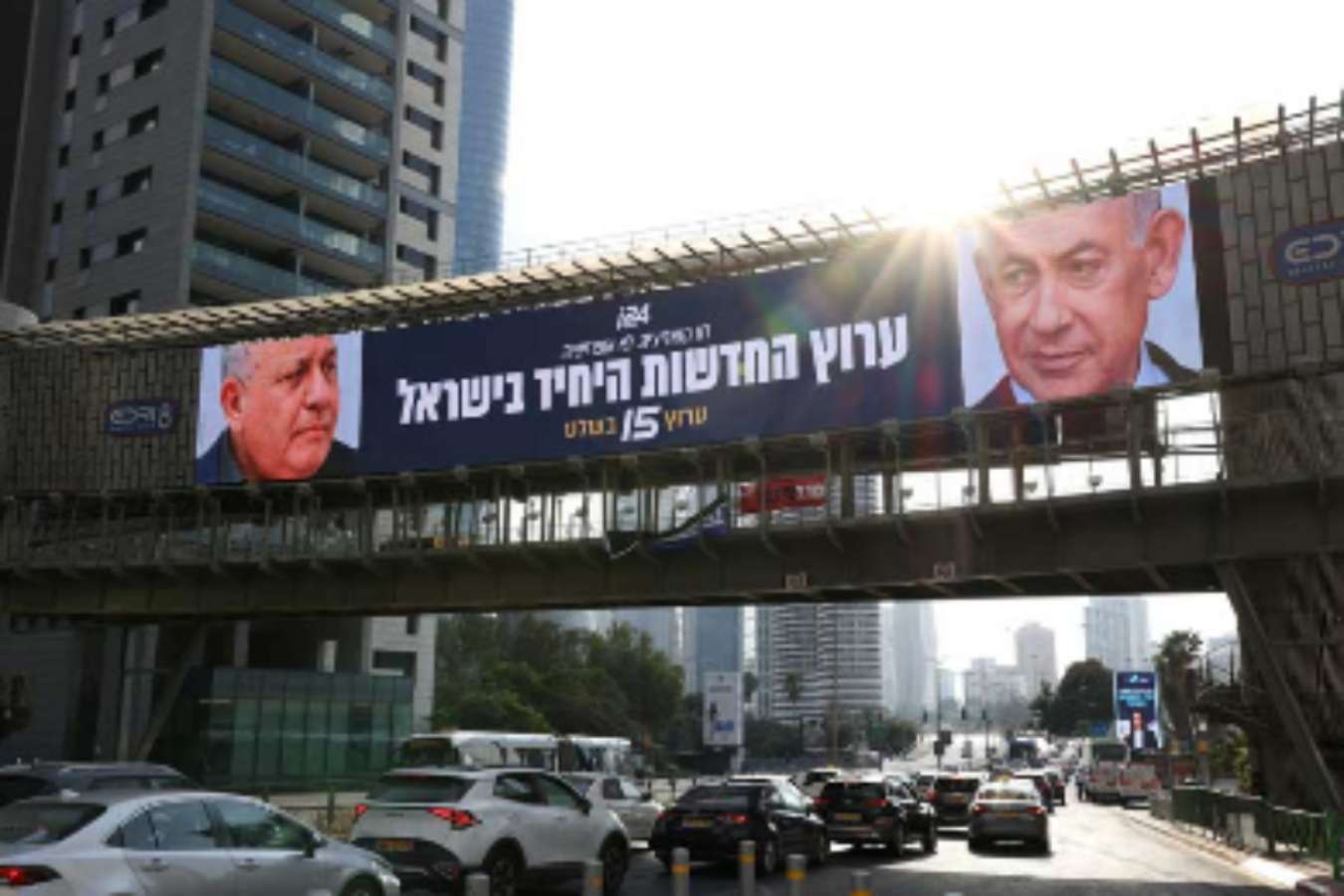
Israel’s electoral deadlock could buy Benjamin Netanyahu more time in power. Although neither major political camp has secured a clear route to a parliamentary majority, the incumbent remains prime minister until a new government takes office.
That is the central paradox of the post-election contest: failure by Likud and its allies to reach 61 seats does not automatically make Gadi Eisenkot prime minister. His challenger must also demonstrate that he can assemble viable parliamentary support.
The battle now moves from the ballot box to the remaining count, presidential consultations and negotiations with smaller parties.
The Count Can Still Shift the Balance
Exit polls provided the first picture, but they do not determine the final distribution of the Knesset’s 120 seats.
Wednesday morning’s count illustrated that uncertainty. With 66.2% of ballot boxes counted at 9:20 a.m. on October 28, partial figures gave 56 seats to Netanyahu’s bloc, 48 to Eisenkot’s bloc and 16 to Arab-led parties.
Those numbers were a snapshot, not a final result or a reliable forecast. The polling stations counted first do not necessarily represent the country as a whole.
Ballots processed later—including votes cast by military personnel and other voters using special procedures—can also affect the final balance.
Why a Few Seats Matter
Israel’s proportional representation system requires parties to win at least 3.25% of the national vote to enter parliament.
Small shifts near that threshold can determine whether a party qualifies for seats, potentially changing the strength of an entire political camp.
Finishing first provides political leverage. But government formation depends on assembling sufficient parliamentary support, with 61 seats constituting an absolute majority.
The decisive question is which parties can agree to govern together, under what commitments and with whom as prime minister.
Herzog Does Not Have to Choose the Largest Party
After official results are published, President Isaac Herzog consults representatives of the parliamentary parties before assigning the task of forming a government.
The mandate does not automatically go to the leader of the largest party. The president must assess which candidate has the strongest prospects of forming a government.
Netanyahu can therefore cite Likud’s first-place position, while Eisenkot will seek to demonstrate that he has broader coalition options.
Party recommendations are an important test, but the final answer depends on negotiations and parliamentary confidence.
The 28-Day Deadline—and a Possible Extension
The first candidate assigned the task has 28 days to form a government.
The president may grant extensions totalling up to 14 additional days, bringing the maximum period to 42 days. That extension is not automatic.
If the attempt fails, the president can assign the task to another lawmaker. That second candidate receives 28 days without the equivalent extension.
Failure at the first stage therefore does not immediately trigger another election. Further constitutional procedures provide opportunities to find a governing arrangement.


Smaller Parties Gain Outsized Influence
When neither major camp commands a majority, smaller parties gain negotiating power.
Their demands may concern cabinet positions, spending priorities, military service, judicial policy or security decisions.
Arab-led parties are also important to the parliamentary arithmetic. However, opposition to Netanyahu does not automatically translate into agreement with Eisenkot. Participation in a coalition—or support from outside it—faces significant political obstacles.
The same applies to proposals for a broader government: a mathematically possible alliance must also become politically workable.
Why Time Could Help Netanyahu
The outgoing government continues to perform its functions until a successor takes office.
That keeps Netanyahu in the premiership during the transition. It does not give him a renewed electoral mandate or unrestricted political authority, but it prevents an inconclusive result from automatically forcing his departure.
Remaining in office provides time and institutional presence. It does not guarantee that he can recruit the partners needed for a new government.
A New Government—or Another Election?
If the prescribed attempts to form a government fail, Israel could return to the polls.
That would prolong uncertainty during a period of serious regional conflict, with security, budget decisions and public accountability unresolved.
Winning the largest number of seats is only the opening stage of the struggle for power. Netanyahu must find additional support. Eisenkot must turn demands for change into a workable governing agreement.
Until one succeeds, deadlock produces no successor. It extends the transition.
Source: pagenews.gr