Ukraine Peace Talks: Zelensky Eyes Abu Dhabi Summit as Kremlin Moves to Keep Europe Out
 ΧΡΟΝΟΣ ΑΝΑΓΝΩΣΗΣ 12 '
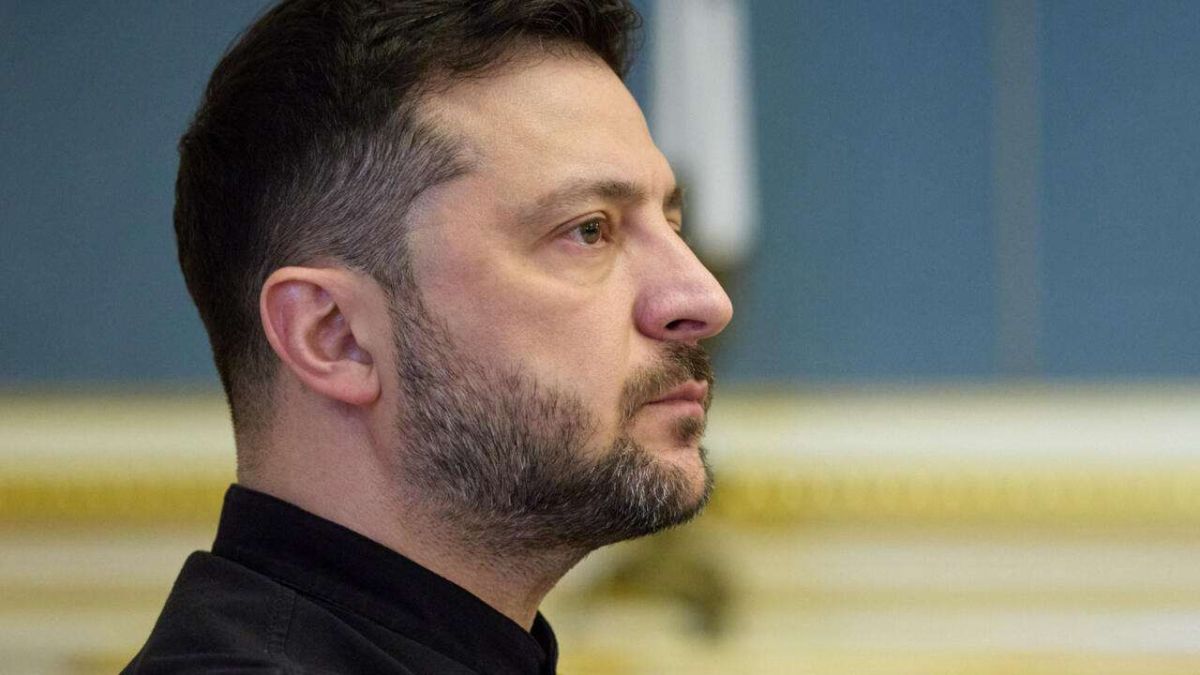
Πηγή Φωτογραφίας: Ukraine's President Volodymyr Zelensky waits for international guests at the Nordic-Baltic Eight summit in Kyiv, Ukraine, on Aug. 23, 2026.Tetiana Dzhafarova—AFP/Getty Images Ukraine's Volodymyr Zelensky said on Tuesday he was "ready" to hold new elections if security could be ensured for the poll. © AP



A new diplomatic confrontation is emerging over the future of the war in Ukraine, even before the next round of peace negotiations has been formally scheduled.
Ukrainian President Volodymyr Zelensky has expressed hope that representatives of Ukraine, Russia and the United States will meet in Abu Dhabi between November 6 and 10, potentially reopening a crucial channel of negotiations aimed at ending the conflict.
But the prospect of renewed diplomacy has already exposed a major disagreement.
Kyiv wants European countries involved in the peace process. Moscow, meanwhile, has made clear that European representatives are not expected to participate in the next trilateral meeting.
Kremlin foreign policy adviser Yuri Ushakov confirmed that no date has yet been finalised and said European participation was not part of the arrangements under discussion.
The dispute raises a question that extends far beyond diplomatic protocol:
Can a lasting settlement to Europe’s largest war in decades be negotiated without European governments having a direct seat at the table?
Zelensky’s November 6–10 Window: A New Opportunity for Diplomacy
Zelensky’s remarks have established a possible timeframe for the next round of trilateral negotiations.
Speaking about the prospect of a meeting in the United Arab Emirates, the Ukrainian president expressed hope that negotiators from Kyiv, Moscow and Washington could gather between November 6 and 10.
The proposed dates, however, should not be mistaken for a confirmed diplomatic appointment.
The Kremlin has yet to agree publicly to a specific date, while the practical arrangements for the meeting remain unresolved.
Zelensky has also emphasised that Ukraine wants European governments to play a role in the negotiations.
For Kyiv, European participation is not merely a matter of diplomatic representation.
European countries have provided substantial military, financial and humanitarian assistance to Ukraine. They are also directly affected by the war’s consequences for continental security, energy markets and economic stability.
The Ukrainian president has stressed the importance of unity and stronger pressure on Russia as negotiations are explored.
That position reflects Kyiv’s broader concern that any agreement must provide credible security arrangements rather than simply produce a temporary pause in hostilities.
Ukraine wants negotiations to end the war, but it also wants the eventual settlement to be sustainable — and supported by the countries expected to help guarantee its implementation.
The Kremlin’s Response: Europe Will Not Join the Next Round
Moscow’s position was delivered by Yuri Ushakov, a senior adviser to Russian President Vladimir Putin.
According to statements reported by Interfax, Ushakov said that European representatives would not participate in the next round of negotiations involving Russia, the United States and Ukraine.
His remarks followed telephone contacts between Putin and two European leaders: Finnish President Alexander Stubb and Norwegian Prime Minister Jonas Gahr Støre.
Ushakov said the possible participation of European countries in the peace negotiations had not been discussed during those conversations.
The Kremlin adviser also made clear that no precise date had been established for the anticipated Abu Dhabi meeting.
The Russian position therefore introduces two important qualifications to Zelensky’s announcement.
First, the November 6–10 period remains a proposed window rather than a confirmed schedule.
Second, Moscow is describing the next negotiating format as strictly trilateral.
Ushakov was also reported as making a pointed remark about the possibility of European officials travelling to Abu Dhabi:
“They can get there if they buy tickets, but nobody intends to invite them to the negotiating table.”
The comment, reported in Ukrainian media and translated into English, illustrates the dismissive tone of Moscow’s position toward direct European participation in the next round.
However, excluding European representatives from one meeting does not necessarily establish their exclusion from every subsequent stage of a potential peace process.
What is clear is that Russia and Ukraine currently disagree over the appropriate diplomatic format for the next round of negotiations.
Why Abu Dhabi Matters: The UAE’s Growing Diplomatic Role
The choice of Abu Dhabi as the possible venue carries geopolitical significance.
The United Arab Emirates has cultivated relationships with multiple international powers, maintaining diplomatic and economic contacts with Western countries while also preserving channels of communication with Russia.
This approach has allowed the UAE to serve as a venue for sensitive diplomatic contacts involving governments with sharply conflicting interests.
Hosting negotiations between Ukraine, Russia and the United States would reinforce Abu Dhabi’s role as a diplomatic meeting point.
For the parties involved, a location outside Europe may offer practical advantages in facilitating contact.
Nevertheless, the selection of a venue does not, by itself, indicate progress toward agreement.
The critical question remains whether the negotiating teams can identify areas of convergence on the substantive issues dividing Moscow and Kyiv.
A meeting can create diplomatic momentum.
Turning that momentum into a credible peace settlement is a considerably more difficult task.
The Ukrainian Agenda: Energy Infrastructure, Maritime Security and Prisoners
Beyond the dispute over European participation, Zelensky has outlined several issues Ukraine wants to address through renewed diplomacy.
These include reducing attacks against energy infrastructure, addressing threats at sea, prisoner exchanges and broader humanitarian questions.
Each issue carries immediate practical importance.
Attacks against energy infrastructure can disrupt electricity supplies and essential services, particularly as Ukraine approaches the winter months.
Maritime security remains crucial for commercial shipping and Ukraine’s ability to maintain access to international markets.
Prisoner exchanges and humanitarian arrangements can produce tangible results even when broader political negotiations remain deadlocked.
These subjects may also offer potential opportunities for limited agreements.
However, progress on humanitarian or technical matters would not necessarily resolve the fundamental political questions underlying the war.
Zelensky has indicated that territorial issues should be addressed at the level of national leaders.
That distinction suggests a possible separation between negotiations on immediate measures and decisions requiring direct political authority.
A technical agreement on prisoner exchanges or infrastructure protection is not the same as a comprehensive settlement over territory, sovereignty and security guarantees.
The Territorial Question: The Most Difficult Obstacle
Any serious attempt to end the war must eventually confront the territorial dispute.
Ukraine continues to defend its sovereignty and territorial integrity.
Russia maintains territorial claims and demands that remain incompatible with Kyiv’s stated position.
The disagreement goes to the heart of the conflict and presents an obstacle that cannot be resolved through procedural diplomacy alone.
Even if negotiators make progress on ceasefire arrangements or humanitarian measures, a durable settlement would require answers to fundamental questions.
What happens to territories under Russian occupation?
How would any agreed ceasefire be monitored?
What mechanisms could prevent renewed hostilities?
And what security commitments would be available to Ukraine?
The answers would have implications not only for Ukraine and Russia, but also for the wider European security order.
This is one reason Kyiv continues to insist that European governments must be involved in the diplomatic process.
Europe Faces a Strategic Dilemma
For the European Union, the prospect of a US–Russia–Ukraine negotiating process without direct European participation raises a difficult strategic question.
Europe has been a central source of support for Ukraine and would likely play an important role in the economic and security arrangements accompanying any future settlement.
Yet the next round of talks, as currently described by Moscow, would proceed without European representatives.
This creates a potential gap between responsibility and influence.
European governments could be expected to contribute to reconstruction, financial assistance, sanctions policy and long-term security arrangements while having limited direct participation in the initial negotiation of the settlement.
For Brussels and European capitals, that would raise questions about the EU’s ability to shape decisions directly affecting its own security environment.
The issue also intersects with the broader debate over European strategic autonomy.
The war has exposed the extent to which Europe’s security remains linked to American military capabilities and diplomatic leadership.
A negotiating process dominated by Washington, Moscow and Kyiv would reinforce the importance of the transatlantic relationship while highlighting Europe’s challenge in establishing a more direct diplomatic role.
At the same time, an initial trilateral format does not automatically prevent European consultation through parallel channels or later negotiations.
The decisive question is whether Europe will be involved before the essential terms of a settlement are agreed, rather than being asked to support decisions after they have been made.
Washington’s Central Role in the Peace Process
The proposed negotiations would place the United States at the centre of another attempt to bridge the divide between Russia and Ukraine.
Washington possesses considerable diplomatic influence because of its relationship with Kyiv, its military and financial support for Ukraine, and its ability to communicate directly with Moscow.
American participation could facilitate discussions on security arrangements, sanctions and potential mechanisms for implementing any agreement.
But US involvement cannot eliminate the fundamental disagreements between the parties.
Russia and Ukraine retain incompatible positions on major aspects of a possible settlement.
The United States would also need to consider how any emerging agreement relates to the interests and commitments of European allies.
This creates a complex diplomatic challenge.
Washington may be able to help bring the negotiating parties together, but a lasting settlement would require the agreement of those directly involved and workable arrangements for implementation.
November 6–10: Three Questions That Will Define the Next Round
As attention turns toward the proposed Abu Dhabi meeting, three issues will determine the immediate diplomatic outlook.
The first is whether the meeting will actually take place within the timeframe identified by Zelensky.
Ushakov’s statement that no date has been fixed means the schedule remains uncertain.
The second is whether the negotiating teams can agree on an agenda capable of producing concrete results.
Humanitarian measures, prisoner exchanges and steps to protect infrastructure may offer more immediate opportunities than the most contentious territorial questions.
The third is whether European governments will find a role in the broader peace process despite their anticipated absence from the next trilateral round.
The answers will help determine whether Abu Dhabi becomes a meaningful stage in renewed diplomacy or simply another meeting that exposes the distance between the parties.
Can Europe Be Excluded From Negotiating Its Own Security Future?
The diplomatic activity surrounding Abu Dhabi reveals a wider geopolitical tension.
Zelensky wants Europe involved.
The Kremlin is seeking to maintain the next round as a trilateral process.
The United States remains a central diplomatic actor, while the UAE is emerging as a potential host for renewed negotiations.
But the fundamental obstacles to peace remain unresolved.
Territory, security guarantees, sanctions and the practical enforcement of any agreement will ultimately determine whether negotiations can produce a sustainable outcome.
Abu Dhabi may provide the venue for another attempt at diplomacy. It has not yet provided evidence that the parties are ready to agree on the terms of peace.
And as the proposed November meeting approaches, one question is becoming increasingly difficult to avoid:
Can a durable peace in Ukraine be negotiated without giving Europe a meaningful role in shaping — and guaranteeing — the security arrangements that follow?
Source: pagenews.gr
Διαβάστε όλες τις τελευταίες Ειδήσεις από την Ελλάδα και τον Κόσμο