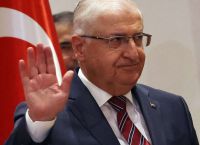
Mitsotakis at the UN: Greece Puts the New Battle for Maritime Security on the Global Agenda
 ΧΡΟΝΟΣ ΑΝΑΓΝΩΣΗΣ 10 '
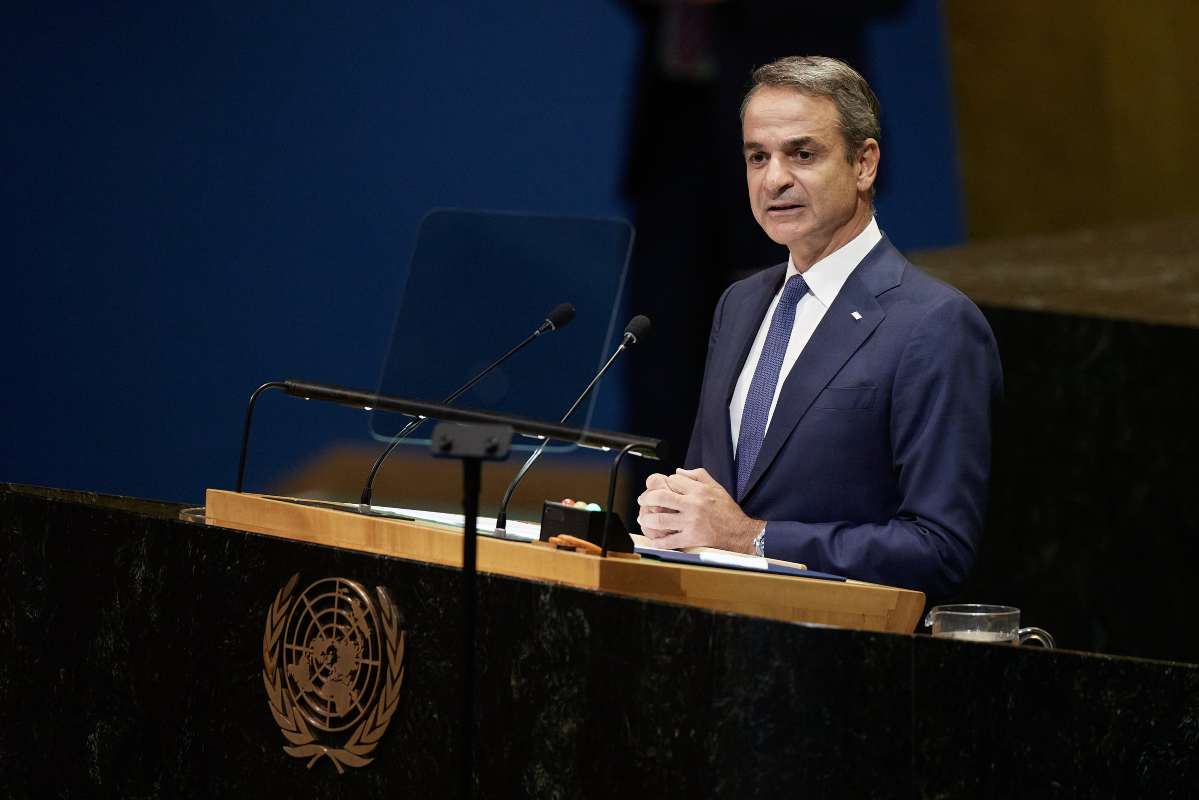
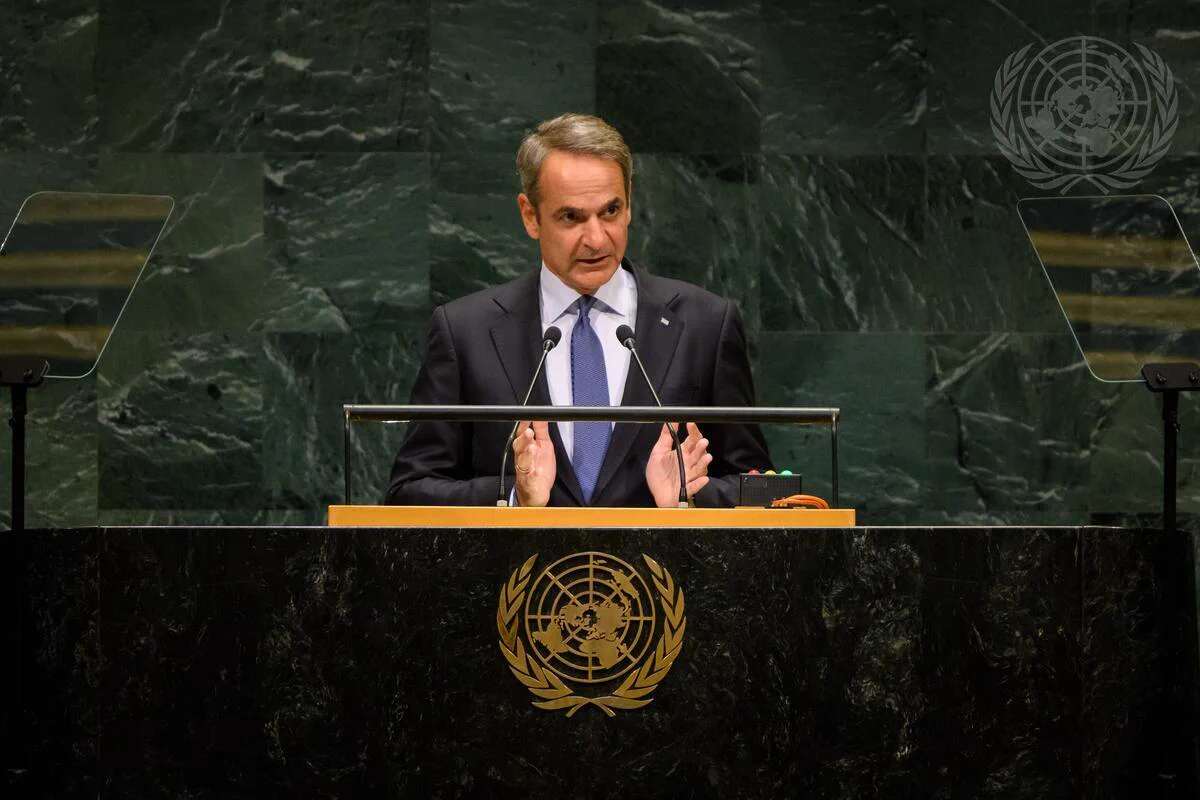
Πηγή Φωτογραφίας: Greek Prime Minister Office--Papamitsos//Mitsotakis at the UN: Greece Puts the New Battle for Maritime Security on the Global Agenda



The world’s oceans are no longer simply arenas of international trade, energy transportation and conventional naval power. They are increasingly becoming strategic spaces where artificial intelligence, cyber warfare, autonomous systems and geopolitical competition intersect.
Against this backdrop, Greek Prime Minister Kyriakos Mitsotakis is scheduled to travel to New York on Thursday, October 29, to chair a high-level open debate of the United Nations Security Council, as part of Greece’s presidency of the body.
The meeting is scheduled to begin at 10:00 a.m. New York time under the theme:
“Maintenance of international peace and security: Emerging technologies and maritime security.”
The choice of subject carries particular significance for Greece, a country with a major international shipping presence, extensive maritime interests and a strategic position at the crossroads of Europe and the Eastern Mediterranean.
Beyond the diplomatic symbolism, the debate addresses a fundamental question facing governments around the world: How can international maritime security be protected when threats increasingly originate not only from warships, but also from algorithms, autonomous platforms and digital networks?
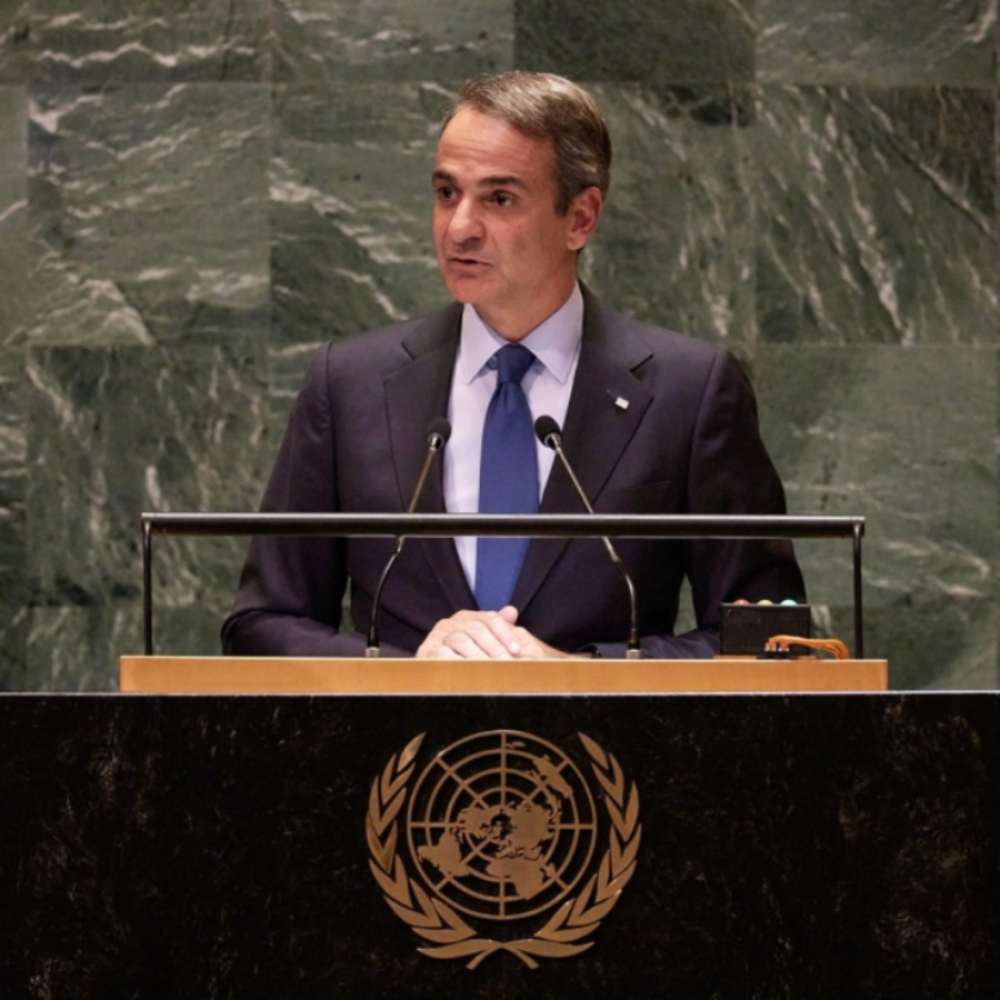
From Warships to Undersea Cables: The New Front Line of Maritime Security
The international understanding of maritime security has undergone a profound transformation.
Protecting commercial vessels, safeguarding freedom of navigation and securing strategic shipping routes remain essential priorities. Yet these traditional concerns now form only part of a much broader security landscape.
Submarine telecommunications cables, offshore energy infrastructure, port operating systems and digital networks supporting global supply chains have become increasingly important strategic assets.
An incident involving an undersea cable can disrupt communications and economic activity. A cyberattack against a major port can delay shipments and affect international supply chains. Unmanned maritime or aerial systems can threaten commercial vessels and critical installations.
Maritime security is therefore no longer exclusively a matter of naval presence. It has become inseparable from technological resilience, economic security and the protection of critical infrastructure.
This is the broader policy challenge that the UN Security Council debate will address under Greece’s presidency.
For Athens, the subject also provides an opportunity to connect its longstanding maritime interests with some of the most urgent international security questions of the digital age.
Why Maritime Security Has Become a European Strategic Priority
For the European Union, maritime security is simultaneously an economic, technological, energy and defence concern.
European trade depends on reliable maritime transportation, while energy security increasingly requires the protection of offshore facilities, interconnectors and critical infrastructure.
At the same time, submarine communications networks underpin essential digital services and international connectivity.
The protection of these systems has become an increasingly important part of Europe’s broader debate about resilience and strategic autonomy.
Three policy priorities are particularly relevant: protecting critical infrastructure, ensuring the responsible deployment of emerging technologies and strengthening international cooperation against cross-border threats.
Greece occupies a distinctive position within this discussion.
As an EU member state with a substantial shipping footprint and a strategic location in southeastern Europe, it has a direct interest in linking global maritime governance with European security priorities.
The challenge for Europe is not simply to develop more advanced technologies, but to ensure that the infrastructure supporting its economy remains secure in an increasingly contested international environment.
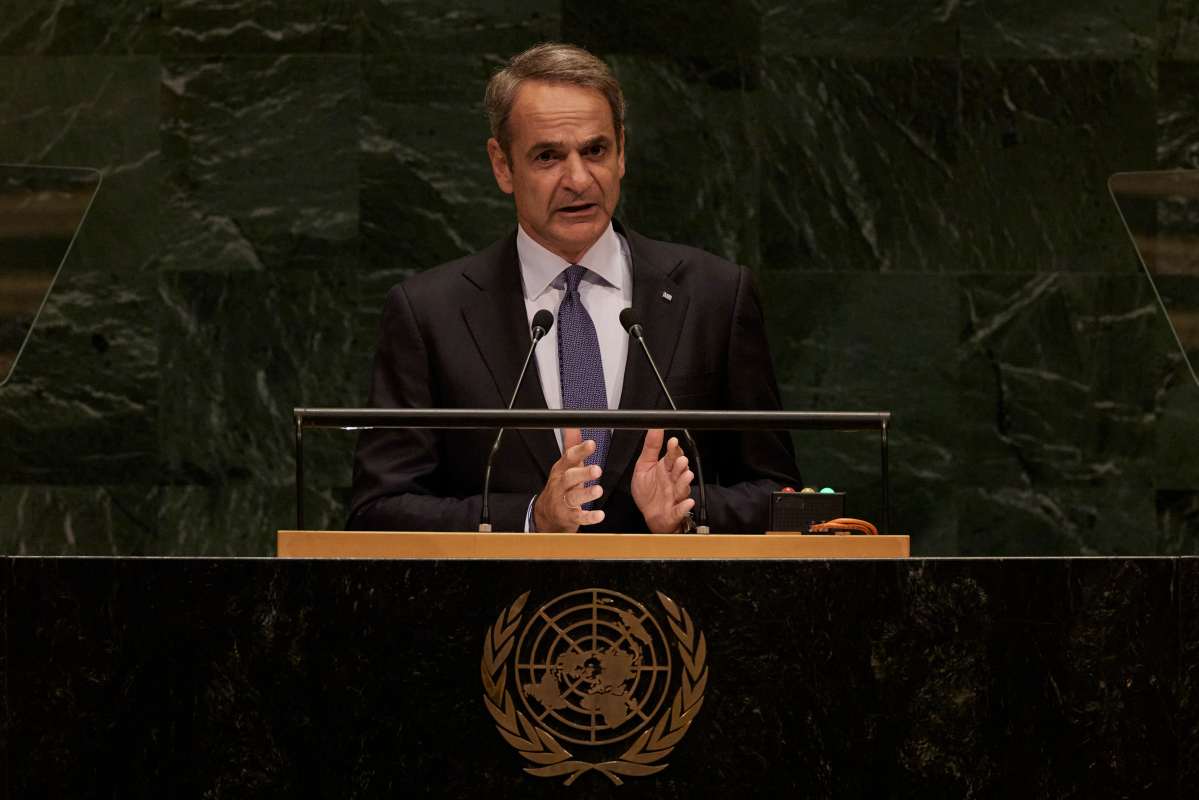
Artificial Intelligence Is Changing the Rules at Sea
One of the central questions concerns the growing use of artificial intelligence in maritime operations.
Autonomous vessels, advanced surveillance systems, AI-assisted threat detection and digitally integrated port infrastructure are creating new operational possibilities.
These technologies can improve maritime monitoring, enhance navigation and support more efficient responses to emerging threats.
They also introduce complex legal and security challenges.
Who bears responsibility when an autonomous maritime system causes an accident?
How should governments respond when critical port infrastructure is targeted by a sophisticated cyberattack?
What safeguards are needed to ensure that AI-enabled systems operate consistently with international law?
And how can states prevent emerging technologies from increasing the risk of unintended escalation in already sensitive maritime regions?
These questions are particularly significant where commercial activity, military operations and contested maritime claims overlap.
The next phase of maritime security will depend not only on technological capabilities, but also on the rules governing how those capabilities are deployed.
That is why a Security Council discussion on emerging technologies extends beyond the traditional boundaries of maritime policy.
It touches on international humanitarian law, state responsibility, critical infrastructure protection and the prevention of conflict.
The Eastern Mediterranean and the Importance of International Maritime Law
The debate also carries wider relevance for developments in the Eastern Mediterranean.
The region combines major energy interests, strategic shipping routes, submarine infrastructure and competing maritime claims.
For Greek foreign policy, the international law of the sea remains a central point of reference.
However, the Security Council meeting should not be confused with a forum for resolving bilateral maritime delimitation disputes.
Its purpose is broader: to examine how international peace and security can be maintained as emerging technologies transform maritime operations and introduce new vulnerabilities.
That distinction is important.
It allows Greece to highlight issues relevant to its own maritime environment while addressing challenges shared by countries across the world.
The protection of freedom of navigation, the security of critical maritime infrastructure and the responsible use of technology are concerns that extend well beyond the Eastern Mediterranean.
In his September 25, 2026 address to the UN General Assembly, Mitsotakis underlined the importance of international maritime rules:
“Freedom of navigation and unimpeded passage through international straits, as enshrined in international law, must be safeguarded globally.”
The statement, translated from his official English-language address as quoted in Greek reporting, reflects the broader policy position Athens is bringing to the maritime security debate.
Greece’s Security Council Presidency: Diplomacy Beyond Symbolism
Chairing a high-level Security Council debate gives a country the opportunity to frame the discussion, highlight international priorities and encourage cooperation among member states.
It does not, however, guarantee that the meeting will produce binding decisions or a common position.
The significance of the initiative will depend on the substance of the interventions, the positions adopted by participating countries and whether the debate identifies practical areas for further cooperation.
For Greece, the objective is to draw international attention to the connection between maritime security and technological transformation.
That includes the risks posed by cyber threats, the protection of maritime infrastructure and the implications of autonomous systems for international peace.
The discussion also highlights the importance of multilateral institutions in addressing challenges that no single country can manage independently.
A cyberattack against a major maritime hub, for example, can have consequences far beyond the country in which the facility is located.
Similarly, damage to submarine infrastructure can affect international communications and commercial activity across multiple jurisdictions.
The increasingly interconnected nature of maritime threats makes international coordination an essential part of any effective response.
From New York to Bahrain: Mitsotakis Extends His International Security Agenda
The prime minister’s international programme also includes participation in the IISS Manama Dialogue 2026, hosted in Bahrain.
According to the announced schedule, Mitsotakis will join a discussion by video link on Friday, October 30, at 12:30 p.m. New York time, with Bastian Giegerich, Director-General and Chief Executive of the International Institute for Strategic Studies.
The Manama Dialogue is an established international forum focused on strategic affairs, defence and regional security.
The prime minister’s participation provides a further opportunity to address contemporary security challenges, including the changing geopolitical environment and the relationship between regional stability and international cooperation.
Taken together, the UN Security Council debate and the Manama Dialogue reflect a diplomatic programme focused on the evolving nature of international security.
The issues range from maritime infrastructure and emerging technologies to broader strategic questions affecting regional and global stability.
The Real Question: Who Will Secure the Seas of the Digital Age?
The debate in New York highlights a fundamental transformation in global security.
Threats at sea no longer arise exclusively from conventional naval operations or direct military confrontation.
They can emerge through compromised digital systems, autonomous platforms, attacks on critical infrastructure and disruptions to international communications networks.
For Europe, the stakes include economic resilience, energy security and the protection of essential infrastructure.
For the international community, the challenge is to preserve safe maritime transportation and prevent technological vulnerabilities from becoming sources of wider instability.
For Greece, chairing the discussion offers an opportunity to place its maritime experience within a global policy conversation about the future of security.
The defining question is no longer simply who controls the world’s sea lanes. It is who will establish the rules, protect the infrastructure and ensure stability in an era when a digital attack can have consequences across oceans and continents.
That is the strategic challenge at the heart of the UN debate — and the issue Greece is bringing to the Security Council’s agenda.
Source: pagenews.gr
Διαβάστε όλες τις τελευταίες Ειδήσεις από την Ελλάδα και τον Κόσμο