Erdoğan Under Pressure: Turkey’s $7.5 Billion Fund Scandal Reaches the Heart of the AKP
 ΧΡΟΝΟΣ ΑΝΑΓΝΩΣΗΣ 11 '
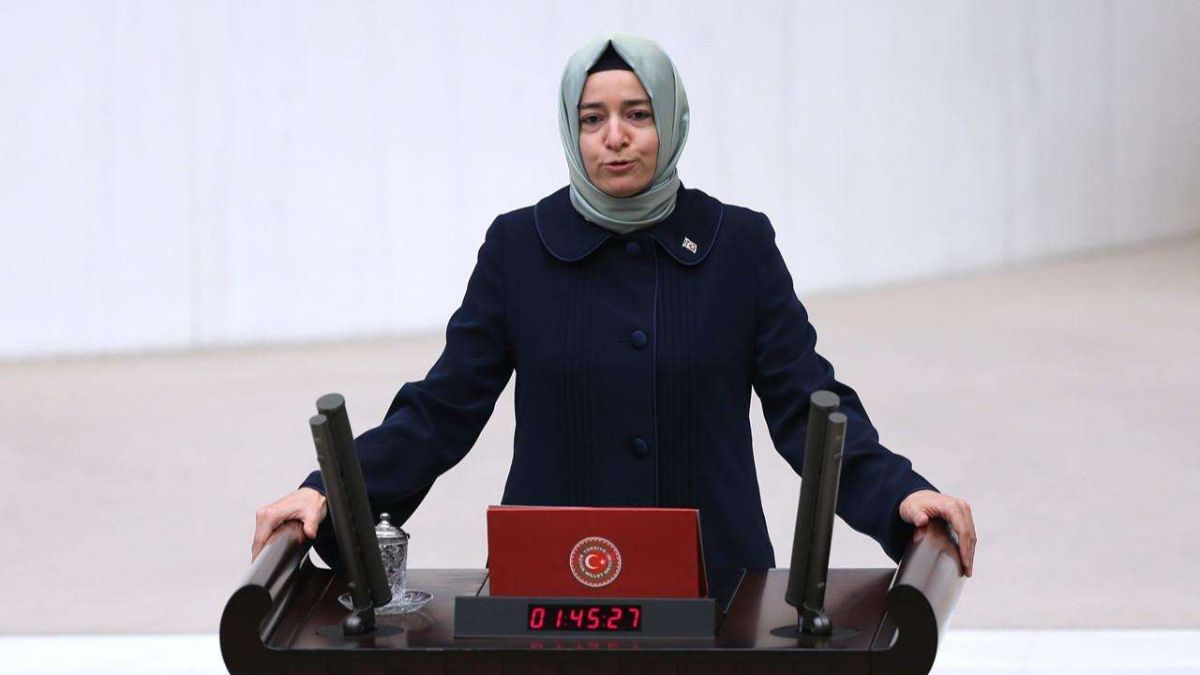
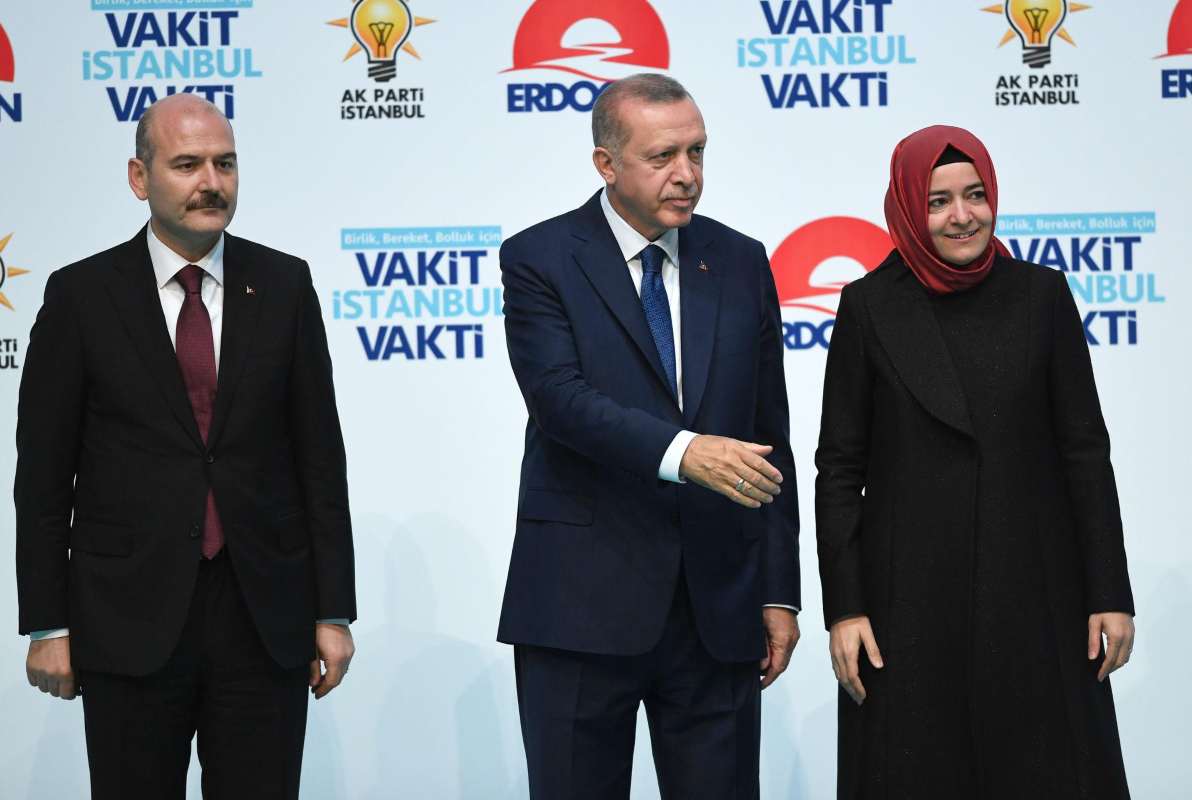
Πηγή Φωτογραφίας: A court in Istanbul has ordered the pretrial detention of Fatma Betül Sayan Kaya, a former minister of family and social policies and former deputy chair of the AKP, as prosecutors investigate alleged violations



Who knew that Turkey’s investment funds were heading toward a liquidity crisis — and who managed to withdraw their money before the collapse?
That question is becoming increasingly politically explosive in Ankara as a criminal investigation into Turkey’s investment fund scandal reaches figures formerly associated with the highest levels of President Recep Tayyip Erdoğan’s ruling Justice and Development Party (AKP).
A court in Istanbul has ordered the pretrial detention of Fatma Betül Sayan Kaya, a former minister of family and social policies and former deputy chair of the AKP, as prosecutors investigate alleged violations of capital markets legislation and participation in a criminal organization.
Kaya served in Erdoğan’s government between 2016 and 2018 and remained a senior figure in the ruling party until stepping down from its deputy leadership in September.
Her detention represents a significant escalation in an investigation that has already reached investment fund managers, stock exchange officials and institutions responsible for overseeing Turkey’s capital markets.
The allegations remain under investigation, and pretrial detention does not constitute a finding of guilt.
Nevertheless, the political implications are substantial.
What began as a liquidity crisis involving investment funds has developed into a wider examination of the relationship between financial markets, regulatory oversight and political influence in Turkey.
The September 16 Transaction at the Center of the Investigation
One of the most significant elements of the investigation concerns the timing of Kaya’s financial transactions.
According to information from the prosecutor’s investigation reported by Turkey’s state-run Anadolu Agency, Kaya purchased shares in Özata Denizcilik, a Turkish maritime company, in April 2026.
On September 16, just one day before the decision to liquidate the investment funds, those shares were transferred to Tera Yatırım.
The proceeds were reportedly credited to Kaya’s account on the same day.
That sequence has become a central focus of the criminal investigation.
Prosecutors are examining whether the transaction followed ordinary market procedures and whether Kaya had access to information unavailable to other investors.
A further question concerns the reported same-day settlement, commonly referred to as T+0, rather than the standard two-business-day settlement cycle, or T+2, generally applicable to Turkish equity transactions.
Investigators are also examining reported contacts between Kaya and Tera executives.
The timing of the transaction does not, by itself, establish insider trading or any other criminal offense.
However, the proximity of the transfer to the fund liquidation decision has raised questions about whether certain investors were able to exit their positions under conditions unavailable to others.
The Alleged 2 Billion Lira Profit
The investigation has attracted additional political attention because of allegations concerning the scale of Kaya’s financial gains.
According to claims made by the Turkish opposition, Kaya and her husband, İlyas Kaya, invested approximately 163 million Turkish lira and allegedly generated profits approaching 2 billion lira before the crisis.
Those figures are allegations, not judicially established findings.
The Associated Press has reported that the couple deny wrongdoing.
İlyas Kaya was released under judicial restrictions, including a prohibition on leaving Turkey.
The allegations nevertheless create an uncomfortable question for the ruling party.
Were certain politically connected investors able to protect their wealth before hundreds of thousands of ordinary investors found themselves exposed to frozen or illiquid investment funds?
Answering that question will require prosecutors to establish the nature of the transactions, the information available to the individuals involved and whether any legal obligations were breached.
For Erdoğan’s government, the issue goes beyond the conduct of one former minister.
It concerns public confidence in the fairness and integrity of Turkey’s financial markets.
From Investment Funds to the Istanbul Stock Exchange
The scandal has expanded well beyond individual investors and fund management companies.
The investigation has also drawn attention to senior figures associated with Turkey’s financial market infrastructure.
Among those whose names have emerged in connection with the broader investigation is Korkmaz Ergun, the head of Borsa Istanbul.
Yunus Arıncı, chief executive of Takasbank, was also reportedly questioned by prosecutors, with Turkish media reporting his subsequent resignation.
Changes have additionally taken place in the leadership of Turkey’s Capital Markets Board, known as the SPK.
These developments have increased scrutiny of the institutions responsible for ensuring the orderly operation of the country’s capital markets.
Takasbank plays a central role in securities clearing and settlement, while the SPK is responsible for regulating and supervising the investment market.
The investigation raises questions about when regulators became aware of the concentration and liquidity risks developing within the affected funds.
It also places renewed attention on the effectiveness of market surveillance and the procedures used to protect investors.
The involvement of senior market officials does not automatically establish institutional wrongdoing.
But the widening scope of the investigation increases pressure on Turkish authorities to demonstrate that financial oversight operates independently of political and commercial influence.
How Turkey’s Investment Funds Became Trapped
At the center of the crisis was an increasingly fragile investment structure.
Large positions in relatively illiquid stocks, concentrated exposures to connected companies and the use of leverage created vulnerabilities that became apparent when investors began demanding their money back.
Some funds were unable to sell their holdings quickly enough to meet redemption requests without triggering further declines in the prices of the underlying assets.
Two funds associated with Tera, with combined assets reportedly valued at approximately $7.5 billion, experienced serious difficulties meeting withdrawal demands.
The resulting liquidity crisis expanded into a broader collapse of investor confidence.
According to figures reported in connection with the case, 131 investment funds entered liquidation proceedings, affecting more than 455,000 investors.
For those investors, the immediate concern is not the political fallout but the recovery of their savings.
Liquidation proceedings may allow assets to be sold and proceeds distributed, but the amount ultimately recovered depends on the realizable value of the underlying investments and the legal framework governing creditor and investor claims.
The process could prove particularly difficult where assets are concentrated in securities with limited market liquidity.
Bank of America: Where Did the Money Go?
An analysis by Bank of America provides important context for understanding the wider financial consequences.
According to the bank’s October 5 assessment, outflows through Turkey’s TEFAS investment fund platform reached approximately 743 billion Turkish lira in September.
During the same period, bank deposits increased by roughly 950 billion lira between September 1 and September 29.
The bank estimated that a substantial proportion of the money leaving investment funds had moved into deposits rather than out of Turkey’s financial system.
It also found limited evidence of a corresponding large-scale increase in dollarization.
This distinction is important.
A mass withdrawal from investment funds is not necessarily equivalent to a generalized flight of savings from the banking system.
The movement of capital into bank deposits suggests that many investors were seeking greater liquidity and perceived safety rather than abandoning Turkish financial assets altogether.
That interpretation does not diminish the losses or difficulties faced by investors in the affected funds.
It does, however, suggest that the crisis should be distinguished from a systemic banking collapse.
Why the Scandal Matters for Erdoğan
The case presents a significant political challenge for President Erdoğan at a time when his administration is seeking to strengthen confidence in Turkey’s economic management.
The government has made financial stability, monetary credibility and the restoration of investor confidence important elements of its economic strategy.
An investigation involving alleged capital markets violations, politically connected investors and former senior officials of the ruling party threatens to complicate that effort.
The detention of Kaya could be presented as evidence that judicial authorities are prepared to investigate individuals regardless of their political status.
But opposition parties may also use the scandal to challenge the government’s record on financial transparency and regulatory independence.
The political consequences will ultimately depend on the evidence presented and the findings of the courts.
If prosecutors establish that certain individuals benefited from unlawful access to information or improper transactions, the implications could extend beyond the individuals directly involved.
If the allegations are not substantiated, the investigation will still have exposed significant questions about the oversight of investment funds and the management of liquidity risks.
Either way, the case has become a test of institutional credibility.
The Broader Investigation: Hundreds Under Scrutiny
The Associated Press has reported that Turkish authorities are investigating more than 430 individuals in connection with the broader scandal, with 112 arrests reported.
The scale of the inquiry suggests that prosecutors are examining an extensive network of financial transactions and relationships.
The investigation covers alleged misconduct in capital markets, the movement of investment assets and the conduct of individuals associated with the affected funds.
Determining responsibility will require investigators to distinguish between legitimate investment activity, poor risk management and conduct that may constitute criminal wrongdoing.
That distinction is particularly important in a case involving large numbers of investors and politically sensitive allegations.
The existence of substantial financial losses does not necessarily demonstrate fraud.
Likewise, profitable transactions ahead of a market crisis do not automatically establish illegal access to privileged information.
The central legal questions concern the evidence of knowledge, intent, market manipulation and possible violations of securities legislation.
The Real Test: Can 455,000 Investors Recover Their Money?
Beyond the political confrontation, the most important unresolved issue remains the fate of the investors whose assets became trapped in the affected funds.
Criminal prosecutions may establish individual responsibility, but they do not automatically guarantee financial compensation.
The outcome will depend on the progress of liquidation proceedings, the value of the remaining assets and the mechanisms available for distributing recovered funds.
For Turkey’s financial authorities, the challenge is therefore twofold.
They must investigate potential misconduct while demonstrating that the investment system can protect investors and manage the consequences of a major liquidity crisis.
The transparency of the proceedings will be essential.
Investors will want to know how much money can be recovered, when distributions will take place and whether the authorities have identified failures that allowed the crisis to develop.
For Erdoğan and the AKP, the political question is equally direct.
Will the investigation establish who was able to exit before the crisis — and will the hundreds of thousands of affected investors receive meaningful financial restitution?
Those answers, rather than the detention of a single former minister, will determine whether Turkey can begin restoring confidence in its capital markets.
Source: pagenews.gr
Διαβάστε όλες τις τελευταίες Ειδήσεις από την Ελλάδα και τον Κόσμο