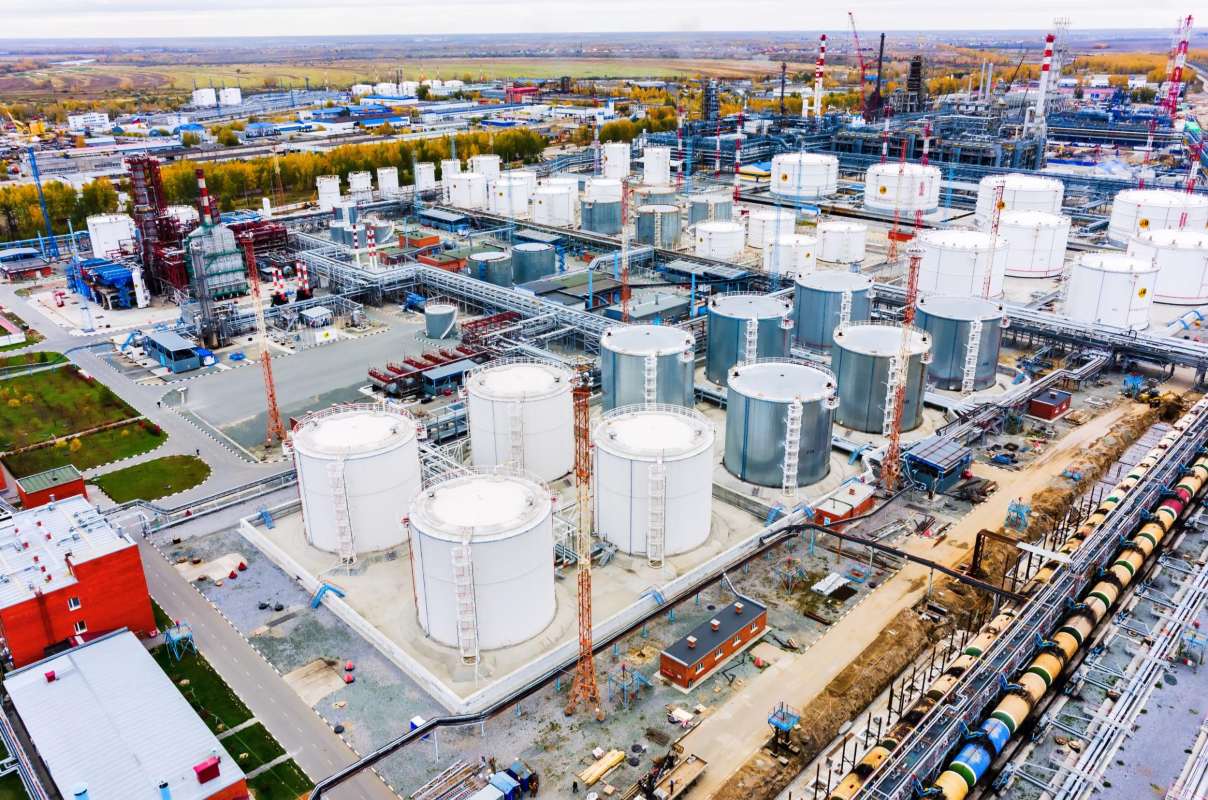
Ukraine has launched another significant attack against Russia’s energy infrastructure, targeting the **Kirishi oil refinery** in the northwestern Leningrad region, approximately 800 kilometres from the Ukrainian border.
The overnight drone strike triggered a fire at one of Russia’s most important petroleum-processing facilities, highlighting Kyiv’s ability to strike strategically valuable economic targets deep inside Russian territory.
According to regional governor **Alexander Drozdenko**, emergency services brought the fire under control and continued managing the aftermath of the attack.
The incident also resulted in a civilian death. A woman was killed when debris from an intercepted drone struck the roof of a residential building in Vsevolozhsk.
The latest strike comes at a particularly sensitive moment for global energy markets, as the US-Israeli war with Iran has already created uncertainty over international oil supplies and fuel prices.
Kirishi: A Refinery Processing 400,000 Barrels a Day
The Kirishi refinery, formally known as **Kirishinefteorgsintez**, ranks among Russia’s largest petroleum-processing facilities.
Its annual processing capacity stands at approximately **20 million metric tons of crude oil**, equivalent to around **400,000 barrels per day**.
The facility plays an important role in Russia’s refining and fuel-distribution network, supplying petroleum products to the domestic economy and supporting export activity.
A prolonged disruption could affect the production of diesel, gasoline and other refined fuels.
However, the full extent of the damage has not yet been established.
It remains unclear whether the fire affected essential processing units or caused a significant reduction in operational capacity.
That distinction is crucial when assessing the potential economic consequences.
A fire at a major refinery does not necessarily mean the entire facility has stopped operating.


Russia Reports 113 Drone Interceptions and Civilian Casualties
Governor Drozdenko said Russian air defence systems intercepted 113 Ukrainian drones during the night.
According to regional authorities, the attack damaged an apartment building in Kirishi.
In Vsevolozhsk, debris from a downed drone struck a residential roof, killing a woman.
Videos circulating on social media appeared to show a major fire at the refinery.
However, the footage had not been independently verified, according to the available reporting.
Kirishi has been targeted by Ukrainian forces on several previous occasions, reflecting its importance within Russia’s energy infrastructure.
The repeated attacks also demonstrate the growing role of long-range drones in the conflict.
Why Ukraine Is Targeting Russian Oil Refineries
Attacks on refineries have become an increasingly important component of Ukraine’s strategy to impose economic costs on Moscow.
Russia possesses substantial crude oil reserves and production capacity, but it depends on functioning refineries to transform crude into gasoline, diesel and other petroleum products.
Damaging those facilities can create pressure on domestic fuel supplies, disrupt distribution networks and increase operating costs.
Refined fuels are also essential for military transportation, industrial production and logistical operations.
For Kyiv, striking refineries offers a way to weaken Russia’s economic resilience without relying exclusively on operations along the front line.
The campaign also forces Moscow to allocate additional resources to protecting industrial installations far from the battlefield.
However, the economic effectiveness of individual strikes depends on several factors.
These include which processing units are damaged, how long repairs take and whether production can be redirected to other facilities.
Not every successful drone attack results in a substantial or lasting loss of refining capacity.
The Failed Energy Ceasefire and Trump’s Diplomatic Challenge
The latest strike follows the failure of efforts to reduce attacks on energy infrastructure under an initiative announced by US President Donald Trump
According to the underlying report, Ukraine intensified its campaign against Russian refineries in late October after the proposed energy ceasefire failed to produce a meaningful halt in strikes.
The development highlights one of the central difficulties facing diplomatic efforts to limit the conflict.
Energy facilities have become strategic assets and targets because they are directly connected to economic activity, military logistics and the ability to sustain prolonged warfare.
Protecting them is therefore no longer simply a matter of energy security.
It has become part of the wider military confrontation.
For Washington, the challenge is particularly complicated because developments in Ukraine increasingly interact with energy disruptions elsewhere.


Russian Oil and the Iran War: A Double Threat to Global Energy Markets
The attack on Kirishi carries wider significance because of the ongoing conflict in the Middle East.
The US-Israeli war with Iran has created considerable uncertainty surrounding international energy flows, particularly through the **Strait of Hormuz**.
The waterway is one of the world’s most strategically important routes for oil and liquefied natural gas shipments.
Disruptions in the Middle East can affect crude oil availability and maritime transportation.
Strikes against Russian refineries, by contrast, can directly affect the production of finished petroleum products.
The two crises therefore create different but potentially overlapping risks.
If Russian refining disruptions reduce supplies of diesel or other fuels while Middle Eastern instability restricts crude oil movements, international markets could face additional pressure.
The consequences could spread through transportation, manufacturing and consumer prices.
Nevertheless, the actual impact will depend on the duration of disruptions, available inventories and the response of other producers and refiners.
Fuel Prices Become a Political Issue in Washington
The energy crisis has also become part of the domestic political debate in the United States.
Trump previously blamed Ukrainian attacks on Russian refineries for contributing to higher American gasoline and diesel prices.
According to the report, he subsequently acknowledged that the US decision to attack Iran alongside Israel had played a major role in driving fuel costs higher.
The issue has acquired additional political importance following the Republican Party’s poor performance in the midterm elections.
Fuel prices directly affect household budgets and business operating costs, making them a politically sensitive indicator of economic conditions.
The interaction between the wars in Ukraine and the Middle East complicates efforts to contain inflationary pressures.
For American policymakers, the concern is not simply the price of crude oil.
It is the possibility that simultaneous disruptions to crude supplies, refining operations and international transportation could increase costs across the economy.
Could the Kirishi Strike Push Global Oil Prices Higher?
Kirishi’s processing capacity of approximately 400,000 barrels per day explains why the facility is considered a significant energy target.
However, its nominal capacity should not be confused with the amount of production actually lost.
If the damage is limited to auxiliary installations and major processing units remain operational, the market impact could be relatively modest.
If the refinery requires an extended shutdown, the consequences could become more significant for Russian fuel production and distribution.
International markets will be watching three developments particularly closely: the duration of repairs, the frequency of further Ukrainian attacks and the evolution of energy exports from the Middle East.
A simultaneous deterioration across these areas could increase volatility in global fuel markets.
Diesel prices may be particularly sensitive to disruptions in refining capacity because they depend on the availability of finished products, not simply crude oil supplies.
At the same time, the relationship between individual refinery attacks and international prices is complex.
Global inventories, alternative suppliers, shipping costs and demand conditions all influence the eventual market response.
Russia’s Energy Infrastructure Becomes a Strategic Vulnerability
The attack demonstrates how the battlefield has expanded beyond conventional military positions.
Ukraine’s growing ability to deploy long-range drones against Russian industrial infrastructure has forced Moscow to confront security challenges across a much wider geographical area.
Oil refineries are particularly important because they combine economic value with logistical significance.
For Kyiv, repeated strikes can impose repair costs, disrupt operations and create uncertainty for Russian energy producers.
For Moscow, defending such facilities requires air defence resources, surveillance capabilities and additional protective measures.
The challenge becomes more difficult when attacks are conducted against multiple locations over extended periods.
Yet Russia’s extensive refining network and its capacity to repair damaged infrastructure mean that the effectiveness of Ukraine’s campaign must be assessed over time rather than through individual incidents.
What Happens Next?
The immediate priority is determining the extent of the damage at Kirishi and establishing how quickly normal operations can be restored.
The facility’s substantial processing capacity means a prolonged interruption could have meaningful consequences for Russia’s petroleum sector.
The attack also raises further questions about the future of energy-related ceasefire efforts.
With Ukraine continuing to target Russian infrastructure and Moscow maintaining its military campaign, the prospects for a sustained halt to energy strikes remain uncertain.
For Kyiv, refinery attacks provide a means of imposing economic and logistical costs beyond the battlefield.
For Russia, protecting critical energy installations is becoming an increasingly demanding security challenge.
Meanwhile, international markets must assess the combined effects of disruptions in Russia and instability surrounding Middle Eastern energy exports.
The consequences of the Kirishi attack will ultimately depend on the scale of the damage, the duration of any production losses and whether the broader campaign against Russian refineries continues to intensify.
Source: pagenews.gr