EU–Russia: The €200bn Legal War That Never Ended — Moscow Is Taking the Fight to Europe’s Courts
 ΧΡΟΝΟΣ ΑΝΑΓΝΩΣΗΣ 11 '
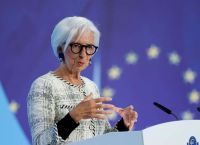
Πηγή Φωτογραφίας: AP Photo//EU–Russia: The €200bn Legal War That Never Ended — Moscow Is Taking the Fight to Europe’s Courts


For several months, one of Europe’s biggest political problems appeared to have been solved.
It had not.
It had simply moved from the negotiating table to the courtroom.
At the centre of the dispute are more than €200 billion in sanctioned Russian assets, most of them held at Brussels-based Euroclear.
The European Union has immobilised them.
Russia continues to claim ownership.
Europe is already using extraordinary revenues generated by the assets to support Ukraine.
But the principal remains untouched.
And that distinction is crucial:
Freezing €200 billion is one thing. Taking ownership of €200 billion is another.
Europe Bought Time With €90 Billion
In December 2025, European leaders faced a difficult choice.
Ukraine needed substantial additional financing for 2026 and 2027.
One option was the ambitious Reparations Loan, which would be linked to Russia’s immobilised sovereign assets.
But the legal and financial risks were considerable.
Belgium was particularly cautious.
The reason was simple: Euroclear is based in Brussels and holds most of the Russian assets immobilised in Europe.
If Russia were ultimately entitled to recover the money, Belgium feared being left carrying a disproportionate share of the legal and financial exposure.
European leaders therefore chose another route.
The EU would provide €90 billion in financial support to Ukraine for 2026–27, financed through EU borrowing and backed by the EU budget.
The Russian assets would remain immobilised.
But the Reparations Loan Never Died
There was an important detail in the December agreement.
European leaders did not formally abandon the Reparations Loan.
The European Council called for work on its legal and technical aspects to continue.
Europe had effectively said:
We do not need to decide today what happens to the €200 billion.
Ukraine’s immediate financing problem had another solution.
The ownership problem did not.
And now it is returning.
Moscow vs Euroclear: 18.2 Trillion Rubles
The first major legal shock came in May.
Moscow’s Arbitration Court sided with the Central Bank of Russia in its case against Euroclear, awarding approximately 18.2 trillion rubles in damages.
Euroclear rejected the ruling.
Its position is that the Russian court has no jurisdiction over a Belgian financial institution complying with binding European sanctions.
Euroclear appealed.
That appeal was rejected in July.
The result is an extraordinary legal standoff:
Russia has a court judgment. Euroclear says that judgment cannot be enforced against it inside the EU.
Two Legal Systems Are Colliding
This is the heart of the dispute.
From Moscow’s perspective, restrictions on the Russian assets amount to unlawful interference with its property.
From Europe’s perspective, Euroclear is complying with legally binding EU sanctions.
The result is two competing legal systems.
Russia can issue judgments against Euroclear.
But obtaining a judgment and successfully enforcing one are very different things.
Inside the European Union, Russian judgments do not automatically have legal force.
The next battleground could therefore be outside both Russia and the EU.
Moscow Could Hunt for Euroclear Assets Abroad
Russia has indicated that it could seek enforcement against Euroclear assets in third countries.
Success is far from guaranteed.
But the possibility matters.
The crucial question would be whether a court outside the EU recognised a Russian judgment and permitted enforcement against assets belonging to Euroclear.
If that happened, the dispute would no longer be simply a sanctions battle between Brussels and Moscow.
It would become a global contest over the recognition and enforcement of competing court decisions.
Now Private Russian Investors Are Joining the Fight
The pressure on Belgium no longer comes only from the Russian state.
Nine notices of dispute have reportedly been filed against Belgium by Russian investors.
Some claims rely on older investment treaties concluded through the Belgian-Luxembourg Economic Union.
One of the agreements being invoked dates back to 1989 and the Soviet Union.
The investors are attempting to move their disputes beyond ordinary Belgian courts and into international arbitration.
The value of all the claims has not been made public.
And filing a claim certainly does not mean that the investors will prevail.
But politically, the development matters.
Belgium is increasingly facing legal pressure from several directions simultaneously.
September 11: A Warning From Belgium’s Own Courts
Then came another development this month.
Belgium’s Council of State considered a dispute involving Russia’s BCS Bank and assets held at Euroclear.
The ruling did not overturn EU sanctions.
Nor did it order a general release of Russian assets.
Instead, the court found a problem with the legal authority under which Belgium’s Treasury had rejected the particular request.
That sounds procedural.
But when hundreds of billions of euros are involved, procedural questions can become strategically significant.
Every weakness in the administrative architecture creates another potential avenue for litigation.
September 15: Moscow Takes the Fight Inside the EU
Four days later, the legal confrontation moved to another level.
Russia’s Central Bank brought a case before the General Court of the European Union.
It is challenging part of the EU’s regulatory framework designed to make it harder for certain Russian court judgments to be recognised or enforced outside Russia.
Moscow argues that the measure interferes with its attempt to enforce the judgment it obtained against Euroclear.
That produces an extraordinary situation:
Russia is now using the EU’s own judicial system to challenge part of the legal shield Europe built against Russian judgments.
€202 Billion Is Still Sitting at Euroclear
None of this means Moscow is close to recovering the money.
At the end of June, Euroclear reported approximately €202 billion in sanctioned Russian assets on its balance sheet.
The assets remain immobilised.
EU sanctions remain in force.
Russian judgments have no automatic effect within the European legal order.
But the litigation surrounding the assets is multiplying.
And that matters because freezing property and permanently confiscating it are legally different actions.
Europe Is Already Making Billions From the Assets
There is another dimension.
Although the underlying assets remain Russian property, their immobilisation has generated extraordinary revenues.
Euroclear reported that by the end of the first half of 2026 it had paid approximately €6.6 billion to the EU through the windfall contribution mechanism.
This allows Europe to channel economic benefits generated by the frozen assets towards Ukraine without directly taking ownership of the underlying principal.
Legally, that distinction is fundamental.
Why Doesn’t Europe Simply Take the €200 Billion?
Because confiscating the reserves of another country’s central bank is much more complicated than freezing access to them.
Permanent seizure raises difficult questions involving:
sovereign immunity,
property rights,
international law,
state responsibility,
and possible retaliation against European assets elsewhere.
There is also a wider financial question.
If central-bank reserves can ultimately be confiscated for geopolitical reasons, other governments could reconsider the risks involved in keeping large portions of their sovereign reserves in European financial institutions.
That is one reason this dispute extends far beyond Russia and Ukraine.
The Hardest Question Comes When the War Ends
As long as the war continues and sanctions remain in force, the current arrangement can continue.
The assets stay immobilised.
Extraordinary revenues help Ukraine.
And the EU avoids deciding what happens to the principal.
But what happens if there is a peace agreement?
What if sanctions are modified?
What if reparations are negotiated?
What if Moscow demands the return of its reserves?
At that point, Europe will have to answer the question it postponed in December.
And the Reparations Loan Returns
That is why the Reparations Loan remains relevant.
In principle, such a mechanism could provide Ukraine with financing linked to future Russian reparations.
But its legal design is extraordinarily sensitive.
As long as ownership of the underlying assets remains Russian, Europe must avoid constructing a mechanism that could effectively amount to confiscation without a sufficiently robust legal basis.
That is why the proposal remains technically alive — but politically and legally difficult.
This Is No Longer Just a Fight Over €200 Billion
The deeper battle is now about something larger:
which legal order ultimately prevails.
Russia is producing domestic judgments establishing claims against Euroclear.
The European Union is constructing legal barriers designed to prevent those judgments from being enforced.
Private Russian investors are opening parallel fronts through international arbitration.
Belgian courts are scrutinising individual administrative decisions.
And now the EU’s own General Court is being asked to hear a Russian challenge against part of Europe’s defensive framework.
The frozen-assets confrontation has therefore changed form.
It is not being fought with tanks.
It is being fought with:
sanctions, regulations, court judgments, investment treaties, international arbitration and competing claims of jurisdiction.
Belgium Is Sitting on a €200 Billion European Fault Line
There is also a political reality Brussels cannot ignore.
Much of Europe’s exposure is concentrated in one country and one financial institution:
Belgium and Euroclear.
That helps explain why successive Belgian governments have been so cautious about proposals that could transform immobilisation into effective confiscation.
From the EU’s perspective, this is a European problem.
From Belgium’s perspective, however, much of the potential litigation is physically and legally sitting on Belgian soil.
A technical financial debate can therefore quickly become a major political dispute inside the European Union.
Europe Solved the €90 Billion Problem — Not the €200 Billion One
The December compromise achieved something important.
It gave Ukraine a financing route for 2026–27 without forcing European leaders to make their most difficult decision immediately.
But that decision was postponed, not eliminated.
More than €200 billion remains inside Europe’s financial system.
Russia still claims the money.
Europe still keeps it immobilised.
Ukraine argues that Russian resources should ultimately contribute to repairing the damage caused by the war.
And courts are beginning to test, piece by piece, the legal boundaries of this unprecedented arrangement.
The real question is therefore no longer:
Can Europe keep Russia’s €200 billion frozen?
So far, it can.
The much harder question is what happens on the day when the freeze can no longer simply continue:
Who will ultimately have the legal right to the money?
Europe still does not have a definitive answer.
Source: pagenews.gr
Διαβάστε όλες τις τελευταίες Ειδήσεις από την Ελλάδα και τον Κόσμο