Romania is emerging as a cornerstone of HELLENiQ ENERGY’s international growth strategy, as the Greek energy group prepares to increase its total investment in the country to €1.3bn by 2030, positioning itself as a major player in southeastern Europe’s rapidly evolving electricity market.
The investment programme encompasses new solar and wind farms, large-scale battery storage systems and hybrid renewable energy projects, reflecting the group’s ambition to develop an integrated portfolio of clean power generation and energy management assets.
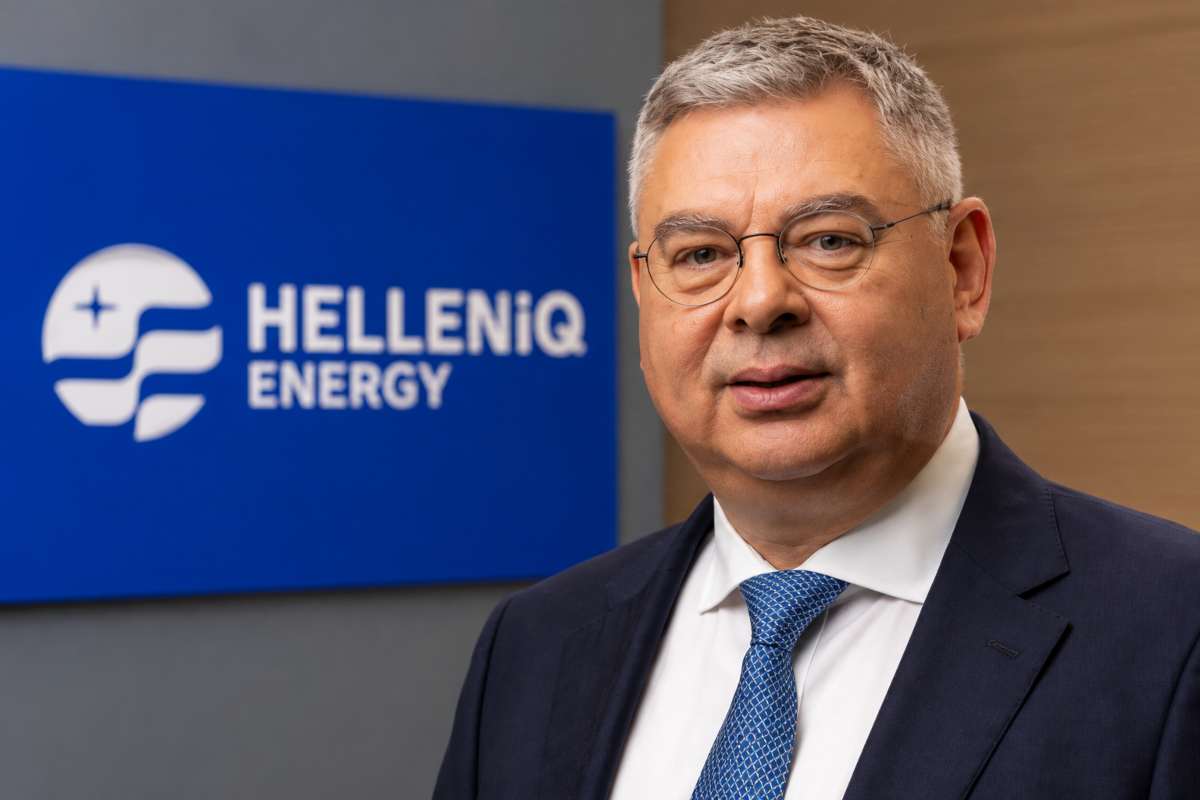
The strategy was unveiled in Bucharest during the official presentation of HELLENiQ Renewables Romania, attended by HELLENiQ ENERGY chief executive Andreas Shiamishis and deputy chief executive George Alexopoulos.
The expansion represents a significant step in the transformation of HELLENiQ ENERGY from a predominantly Greek energy company into a diversified regional group, combining its established operations with an increasingly substantial renewable energy business.
Romania Moves to the Centre of HELLENiQ ENERGY’s Growth Strategy
According to George Alexopoulos, Romania is expected to account for approximately 60% of the group’s planned investments between 2027 and 2030, within the renewable energy development strategy presented in Bucharest.
By the end of the decade, the country is projected to represent around 40% of HELLENiQ ENERGY’s total installed capacity.
When renewable energy and battery storage assets are considered separately, Romania’s share is expected to exceed 50%.
Furthermore, approximately one-third of the group’s total electricity generation is projected to originate from its Romanian operations.
These figures underline Romania’s growing strategic importance within HELLENiQ ENERGY’s broader energy transition.
The company is seeking to capitalise on the country’s expanding electricity market, its geographical position and the increasing need for investment in renewable generation and energy storage infrastructure.
From €400mn to €1.3bn: The Scale of the Investment Programme
HELLENiQ ENERGY has already invested approximately €400mn in Romania, establishing a substantial platform for further expansion.
Under its current strategy, total investment is expected to reach €1.3bn by 2030.
This implies approximately €900mn in additional planned investment over the remainder of the decade.
The next phase will focus on developing renewable energy projects, completing investments already at advanced stages and integrating battery storage into the group’s generation portfolio.
Energy storage is a central component of the strategy.
As renewable energy penetration increases, electricity markets require greater flexibility to manage fluctuations in solar and wind generation.
By combining renewable power production with battery storage, HELLENiQ ENERGY aims to improve operational efficiency, optimise electricity sales and reduce exposure to wholesale market volatility.
The 2030 Targets: 1 GW of Renewables and 500 MW of Battery Storage
The group’s investment plan envisages 1 GW of installed renewable energy capacity in Romania by 2030.
Alongside this, HELLENiQ ENERGY intends to develop battery storage facilities with a combined power capacity of 500 MW and energy storage capacity of 1.5 GWh.
At their nominal ratings, these batteries would be capable of delivering 500 MW for approximately three hours, subject to operating conditions and technical limitations.
The combination of renewable generation and storage is designed to allow electricity produced during periods of strong solar or wind output to be used or sold when market demand is higher.
This flexibility is becoming increasingly important as European electricity systems integrate larger volumes of intermittent renewable generation.
For HELLENiQ ENERGY, batteries are therefore not merely an additional investment category but a strategic element in improving the commercial performance of its renewable energy assets.
Four Solar Parks Already Operating, with a New Wind Farm Under Development
HELLENiQ ENERGY’s Romanian expansion is already supported by operational assets.
The group currently has 211 MW of installed capacity across four solar parks in southern Romania.
According to company estimates, these facilities generate electricity equivalent to the annual consumption of approximately 155,000 households.
Around 65% of their output is already covered by contractual arrangements, providing greater revenue visibility and reducing exposure to fluctuations in electricity prices.
The next major milestone is a 96 MW wind farm in the Galati region, scheduled for completion during the first half of 2027.
Once operational, the project is expected to increase the group’s installed renewable capacity in Romania to 307 MW.
Annual electricity generation from the wind farm is estimated at approximately 300 GWh, equivalent to the consumption of around 150,000 households.
Approximately half of its expected production has already been contracted, providing an additional measure of commercial stability.
Shiamishis Calls for a Pragmatic Energy Transition
HELLENiQ ENERGY chief executive Andreas Shiamishis used the Bucharest presentation to highlight the group’s growing international footprint.
The company now operates through subsidiaries in 12 countries, reflecting the geographical expansion of its activities.
Shiamishis also reiterated the importance of pursuing Europe’s energy transition on economically and technologically realistic terms.
His remarks reflected concerns about the speed of Europe’s green transition and the need to balance decarbonisation objectives with energy security, industrial competitiveness and affordability.
HELLENiQ ENERGY’s strategy is built around developing its traditional businesses while accelerating investment in renewable energy and storage.
The scale of the transformation is considerable.
Over the past eight years, the group has moved from a limited renewable energy presence to an operational portfolio approaching 1 GW of installed capacity.
It also has approximately 6 GW of projects at various stages of development across four countries.
This expanding portfolio is intended to support the group’s transition towards a more diversified regional energy business.


Why Romania Is Attracting Major Energy Investment
Romania’s attractiveness is closely linked to the long-term growth prospects of its electricity market.
According to forecasts presented by George Alexopoulos, electricity demand in the country is expected to increase by approximately 25% by 2040.
Total installed power generation capacity is projected to rise from 22.1 GW in 2025 to 37.8 GW in 2030 and 46.1 GW by 2040.
This expansion will require substantial investment in new generation assets, storage systems and supporting infrastructure.
Romania is also undergoing a restructuring of its electricity generation mix, with renewable energy expected to play an increasingly important role.
Installed renewable capacity is projected to double as the country gradually replaces conventional generation assets and responds to growing electricity demand.
Energy storage is expected to expand particularly rapidly.
According to the forecasts presented in Bucharest, installed storage power capacity could increase from 0.8 GW in 2025 to 2.5 GW in 2030 and 5.1 GW by 2040.
These projections illustrate the scale of the investment opportunities emerging as Romania modernises its energy system.
A Significant Share of Romania’s Renewable Investment Pipeline
HELLENiQ ENERGY expects its investment programme to establish a substantial position in Romania’s utility-scale renewable energy market.
According to Alexopoulos, the group’s planned investments could represent approximately 18% of total investment in large-scale solar, wind and energy storage projects in Romania through 2030, based on the assumptions underlying the company’s forecasts.
Its projects are also expected to account for around 8% of the country’s total installed utility-scale solar and wind capacity by the end of the decade.
These projections, if realised, would significantly strengthen the Greek group’s presence in the Romanian electricity market.
The strategic significance extends beyond installed capacity.
By developing generation and storage assets together, HELLENiQ ENERGY is seeking to establish a more integrated position across electricity production, energy management and commercial operations.
Such a model could provide greater flexibility as southeastern Europe’s power markets become increasingly interconnected and competitive.
Green Electricity Equivalent to the Needs of One Million Households
Once fully implemented, HELLENiQ ENERGY’s Romanian investment programme is expected to generate enough renewable electricity to match the consumption of approximately one million households.
The figure represents an estimate of electricity-generation equivalence rather than the number of homes that would be directly supplied by the company’s facilities.
Nevertheless, it illustrates the intended scale of the group’s Romanian operations.
With 211 MW already operational, the 96 MW Galati wind farm scheduled for completion in the first half of 2027 and substantial battery investments planned, HELLENiQ ENERGY has established a series of milestones for its regional expansion.
The next phase will depend on project execution, financing, regulatory approvals and the continued development of Romania’s electricity market.
For the Greek group, the central objective is to translate its existing €400mn investment base into a €1.3bn renewable energy and storage platform by 2030, making Romania one of the principal engines of its international growth.
Source: Pagenews.gr