Greece’s Energy Ambitions Gain Momentum as Three International Firms Bid for Offshore Seismic Surveys
 ΧΡΟΝΟΣ ΑΝΑΓΝΩΣΗΣ 7 '
Πηγή Φωτογραφίας: EUROKINISSI/Greece’s Energy Ambitions Gain Momentum as Three International Firms Bid for Offshore Seismic Surveys



Greece is advancing its offshore energy exploration strategy after three international companies submitted bids for seismic data acquisition and processing in maritime areas of western and southern Greece, marking a new stage in the country’s efforts to assess its potential hydrocarbon resources.
The announcement was made by Environment and Energy Minister Stavros Papastavrou, following the successful completion of the submission phase of an international public invitation for non-exclusive seismic exploration permits.
The deadline for submitting bids expired on Monday, November 9, 2026, with the process now moving towards technical and administrative evaluation.
The development comes as European governments continue to reassess their energy security strategies, seeking to diversify supply sources while balancing decarbonisation objectives with long-term economic competitiveness.
For Athens, the renewed interest in offshore seismic surveys represents an opportunity to improve geological knowledge of its maritime areas and potentially attract further investment in hydrocarbon exploration.
Three International Bids Signal Renewed Investor Interest
According to the Greek Ministry of Environment and Energy, three bids were submitted by established international companies with extensive experience in seismic data acquisition and processing.
The tender concerns exploration permits for acquiring and processing non-exclusive seismic data in offshore areas of western and southern Greece.
Unlike exclusive exploration concessions, non-exclusive seismic data arrangements allow geological information to be made available to multiple interested companies under the applicable licensing and commercial terms.
This can help improve access to geological information and support future investment decisions.
The identities of the three participating companies have not yet been disclosed.
No successful bidder has been announced, and the submission of offers does not constitute the award of exploration rights.
Why Seismic Data Matters for Greece’s Offshore Energy Strategy
Seismic surveys are an essential preliminary stage in assessing the potential presence of oil and natural gas beneath the seabed.
Using specialised geophysical technologies, survey operators collect information about underground geological formations and structures that may contain hydrocarbons.
The resulting data can help energy companies identify areas that warrant further investigation and assess geological uncertainty before committing to more expensive exploration programmes.
However, seismic surveys do not establish the existence of commercially recoverable oil or gas reserves.
Confirming the presence and commercial viability of hydrocarbons requires additional geological analysis and, potentially, exploratory drilling.
For Greece, the acquisition of modern seismic data could strengthen the geological information available for both licensed and currently unlicensed offshore areas.
The initiative is therefore designed to improve the country’s attractiveness to prospective investors rather than deliver immediate energy production.
The Next Step: Evaluation by Greece’s Hydrocarbon Authority
The next phase will be managed by the Hellenic Hydrocarbons and Energy Resources Management Company (HEREMA), the national authority responsible for managing the country’s hydrocarbon exploration framework.
HEREMA’s board of directors will establish an evaluation committee tasked with opening and assessing the submitted bids in accordance with the terms of the international invitation.
Once the assessment is completed, HEREMA will submit its recommendation to the Ministry of Environment and Energy.
The ministry will then proceed with the subsequent steps required under the relevant regulatory framework.
No definitive timetable for the commencement of new seismic surveys has been announced.

The Geopolitical Dimension of Greece’s Offshore Exploration
The initiative comes against the backdrop of an evolving energy landscape in Europe and the eastern Mediterranean.
Energy security, supply diversification and access to reliable energy sources remain important strategic considerations for European governments.
Greece’s geographical position, connecting southeastern Europe with the eastern Mediterranean, gives its energy infrastructure and potential offshore resources broader regional significance.
Any commercially viable hydrocarbon discoveries could, in the longer term, influence Greece’s energy balance and contribute to regional supply diversification.
Nevertheless, the path from seismic surveys to potential commercial production is complex and can take many years.
It depends on geological findings, market conditions, financing, environmental requirements and the relevant regulatory approvals.
The current tender should therefore be understood as an early-stage exploration initiative, rather than evidence of an imminent oil or gas discovery.
Papastavrou: A Vote of Confidence in Greece’s Energy Prospects
Energy Minister Stavros Papastavrou welcomed the international response, describing the participation of three established companies as an encouraging signal for the country’s energy ambitions.
“The strong international interest in seismic surveys in Greece, reflected in the submission of three bids by internationally recognised companies, represents a vote of confidence in our country’s prospects,” Papastavrou said.
He argued that the development demonstrated growing interest in Greek hydrocarbon exploration beyond the oil and gas companies already operating in the country.
“It confirms that the development of hydrocarbons is maturing beyond the oil companies already active in our country,” he added.
The minister emphasised that the government intends to pursue the assessment of Greece’s offshore resources through a structured approach.
“Greece is moving forward with planning, consistency and confidence in the exploration and utilisation of its energy wealth.”
According to Papastavrou, new seismic surveys will provide a more comprehensive understanding of the geological potential of Greek maritime areas.
“The new seismic surveys will allow us to gain a more complete picture of the potential of Greek waters and further strengthen international investment interest.”
He also stressed the importance of environmental safeguards and international legal principles.
“With respect for the environment and the rules of international law, we are working to ensure that our country’s potential energy wealth translates into tangible benefits for all Greeks.”
HEREMA: Modern Geological Data Could Attract Further Investment
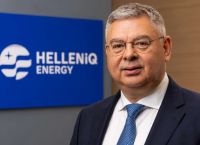
HEREMA chief executive Aristofanis Stefatos highlighted the importance of acquiring and processing modern seismic information to strengthen Greece’s offshore geological database.
The new surveys could improve the quality and availability of data covering both existing exploration concessions and areas that have not yet been licensed.
“The acquisition and processing of new data, using the most advanced technologies, will contribute to the creation of a more comprehensive database covering both licensed and unlicensed offshore areas,” Stefatos said.
He described the initiative as an important prerequisite for evaluating the country’s longer-term exploration potential.
“This is an important prerequisite for further assessing our country’s prospects and attracting investment interest.”
The immediate next milestone will be HEREMA’s evaluation of the three international bids, followed by its recommendation to the Ministry of Environment and Energy.
Source: Pagenews.gr
Διαβάστε όλες τις τελευταίες Ειδήσεις από την Ελλάδα και τον Κόσμο