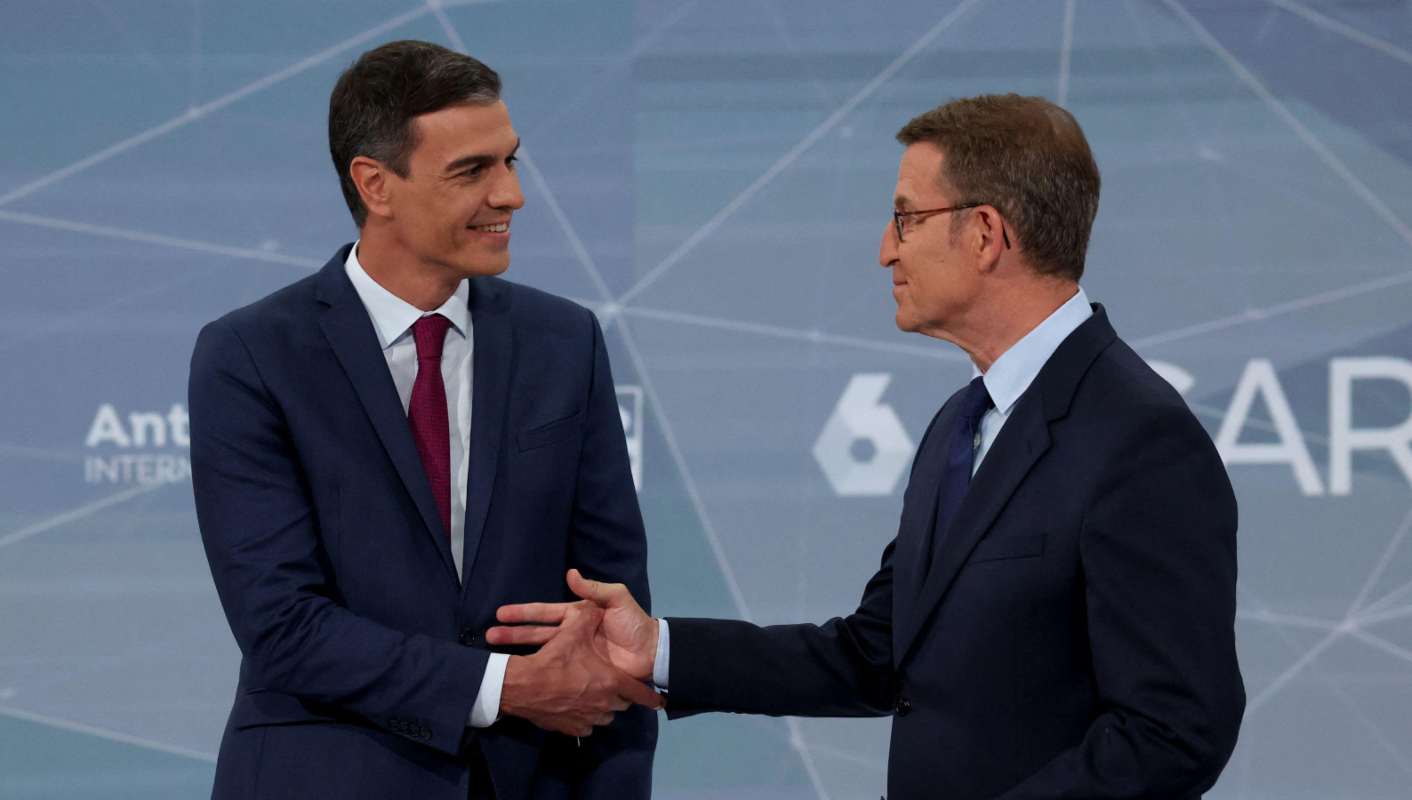
Spain is preparing for an election whose consequences could extend far beyond Madrid.
The political battle may be fought over immigration, housing, economic pressures and the future of Prime Minister Pedro Sánchez. But the deeper geopolitical stakes lie across the Mediterranean, where two rival North African powers are watching Spain’s political transition with considerable interest.
Morocco remains indispensable to Spain’s border security. Algeria is crucial to its energy security. And the next government in Madrid may discover that satisfying one neighbour risks antagonising the other.
The November 29 election therefore raises a question that extends beyond the identity of Spain’s next prime minister: can Madrid maintain its delicate relationship with Rabat and Algiers at a time when migration and natural gas have become increasingly powerful instruments of geopolitical influence?
For the European Union, the answer matters enormously.
Ceuta: The Migration Crisis That Changed Spain’s Election
The Spanish enclave of Ceuta, situated on the North African coast, has become one of the defining symbols of the country’s political crisis.
The arrival of more than 70,000 migrants during the summer placed enormous pressure on Spain’s border management system and intensified criticism of Sánchez’s government.
Opposition leader Alberto Núñez Feijóo, head of the conservative People’s Party (PP), made Ceuta a central issue in his election campaign.
His message has been straightforward: Spain must demonstrate that it controls its borders and is prepared to respond decisively to future migration emergencies.
Feijóo has even raised the possibility of deploying the armed forces if authorities receive advance warning of another large-scale border crossing.
Yet Ceuta represents more than an immigration controversy.
It exposes Spain’s dependence on Moroccan cooperation in managing the European Union’s external borders.
Rabat plays an essential role in preventing irregular crossings, facilitating returns and combating human-smuggling networks.
Without effective cooperation between Madrid and Rabat, even tougher Spanish border policies could prove difficult to implement.
That dependence gives Morocco significant diplomatic influence.
However, allegations that Moroccan authorities deliberately orchestrated the 2026 migration surge remain contested and should not be treated as established fact.


Morocco Controls the Border Question. Algeria Holds the Energy Card.
While Spanish politicians debate migration, another strategic calculation is unfolding in the energy sector.
Algeria has become one of Spain’s most important natural gas suppliers.
According to figures cited for the first half of 2026, Algerian gas accounted for approximately 34% of Spain’s natural gas imports, placing Algeria ahead of the United States during that period.
The importance of this relationship has increased as geopolitical tensions disrupt traditional energy markets.
The Medgaz pipeline provides a direct connection between Algeria and Spain beneath the Mediterranean Sea.
Unlike liquefied natural gas transported by tanker, pipeline supplies through Medgaz do not depend on shipping routes exposed to instability around the Persian Gulf.
That distinction has become increasingly important amid the war involving Iran and continuing concerns about maritime security around the Strait of Hormuz.
For Madrid, Algeria is not simply another commercial partner.
It is a major component of national energy security.
And for Europe, North African gas is becoming increasingly relevant to efforts to diversify supplies and reduce exposure to geopolitical disruption.
Spain therefore faces a difficult strategic equation.
It needs Morocco to help secure its borders and Algeria to help secure its energy supplies.
The challenge is that Morocco and Algeria are regional rivals whose competing interests frequently place Madrid in an uncomfortable diplomatic position.
Western Sahara: The Dispute That Could Reshape Spanish Foreign Policy
At the centre of this rivalry lies Western Sahara.
In 2022, Sánchez dramatically altered Spain’s diplomatic position by endorsing Morocco’s autonomy proposal as the most credible basis for resolving the dispute.
The decision strengthened relations with Rabat but provoked a serious confrontation with Algeria, which supports the Polisario Front and its campaign for Western Saharan self-determination.
Algiers responded by suspending its friendship treaty with Spain and restricting bilateral trade.
The diplomatic fallout demonstrated how decisions concerning Western Sahara can quickly affect commercial and economic relations.
The Sánchez government subsequently sought to rebuild ties with Algeria without formally reversing its position on Morocco’s autonomy proposal.
That balancing act has been difficult but strategically necessary.
A change of government in Madrid could reopen the debate.
The People’s Party has previously criticised Sánchez’s unilateral change of policy and called for a more balanced approach to the Western Sahara dispute.
Such a shift could be welcomed in Algiers.
But it could also create fresh tensions with Rabat.
And those tensions would emerge at precisely the moment when Spain needs reliable cooperation on migration.


Feijóo, Vox and the Risks of a Conservative Coalition
The election could produce a government led by Feijóo, potentially supported by Santiago Abascal’s right-wing Vox party.
Such an outcome would have implications for both domestic policy and Spain’s relationships with its southern neighbours.
Vox has adopted a particularly confrontational position towards Morocco, especially on immigration, sovereignty and border security.
Its participation in, or parliamentary support for, a conservative government could increase pressure for a tougher diplomatic stance.
But campaign rhetoric and government policy are not necessarily identical.
Feijóo has also emphasised the importance of maintaining constructive relationships with both Morocco and Algeria.
A PP-led government might therefore seek to combine stronger border enforcement with diplomatic continuity.
The problem would arise if coalition negotiations forced the People’s Party to adopt commitments that restricted its room for manoeuvre.
A formal reconsideration of Spain’s Western Sahara position, for example, could be interpreted in Rabat as a significant diplomatic reversal.
Likewise, highly confrontational measures concerning Ceuta could undermine cooperation on migration.
The central question is whether Feijóo would retain sufficient independence to pursue a pragmatic foreign policy.
The Energy Dimension: Why Algeria Matters More Than Ever
Algeria’s importance extends beyond its bilateral relationship with Spain.
European governments have spent recent years attempting to diversify energy supplies and strengthen their resilience against external shocks.
North Africa offers geographical proximity, existing infrastructure and substantial hydrocarbon resources.
The Medgaz pipeline is particularly important because it provides direct access to Algerian gas.
Algeria also has experience using energy infrastructure within broader geopolitical disputes.
In 2021, the Maghreb–Europe pipeline, which carried Algerian gas through Morocco towards Spain, ceased operating as a supply route following the deterioration of relations between Algiers and Rabat.
That episode illustrated the vulnerability of energy arrangements to political conflict.
For the next Spanish government, maintaining reliable access to Algerian supplies will therefore be a major strategic priority.
But an energy rapprochement with Algiers cannot be considered in isolation from Morocco.
Any significant change in Spain’s position towards Western Sahara could affect its relations with Rabat, while a renewed diplomatic confrontation with Algeria could complicate energy and trade cooperation.
Madrid must avoid turning one strategic dependency into a liability in another area.
Brussels Cannot Afford Another Mediterranean Crisis
The European Union has a direct interest in the outcome of Spain’s election.
Ceuta and Melilla represent the EU’s only land borders on the African continent.
Morocco is an essential partner in managing migration across the Western Mediterranean.
Algeria is an important supplier of natural gas to European markets.
A deterioration in Spain’s relations with either country could therefore have consequences beyond the Iberian Peninsula.
A serious dispute with Morocco could weaken cooperation on migration and increase pressure on European border-management systems.
A renewed confrontation with Algeria could complicate energy and commercial relations at a time when supply security remains a priority.
The risk is not necessarily that either government would deliberately trigger a crisis.
Rather, domestic political commitments in Spain could reduce diplomatic flexibility, while regional rivalries create opportunities for pressure and retaliation.
The EU would then be forced to manage tensions involving two countries that are simultaneously important to its migration, energy and neighbourhood policies.
Three Possible Outcomes After November 29
Scenario One: Tougher Rhetoric, Diplomatic Continuity
A PP-led government could adopt a tougher position on immigration while preserving the essential framework of Spain’s relations with Morocco.
At the same time, Madrid might seek closer commercial and energy cooperation with Algeria.
This would allow Feijóo to demonstrate a change in domestic policy without provoking a major regional confrontation.
It would require careful coalition management and sustained diplomatic engagement.
Scenario Two: A New Confrontation With Morocco
A conservative coalition could decide to reconsider Spain’s position on Western Sahara or introduce measures that Rabat interprets as hostile.
Morocco might respond by reducing cooperation in sensitive areas, particularly migration management.
Such a development could generate renewed pressure around Ceuta and Melilla, while drawing the European Union into a wider diplomatic dispute.
Although Algeria might welcome a shift in Madrid’s Western Sahara policy, the potential benefits would have to be weighed against the costs of deteriorating relations with Morocco.
Scenario Three: Spain Becomes Europe’s Mediterranean Broker
A third possibility is that the next government manages to improve relations with Algeria while maintaining productive cooperation with Morocco.
This would strengthen Spain’s position as an intermediary between Europe and North Africa.
Madrid could pursue deeper energy partnerships, greater investment and improved border coordination without openly choosing sides in the regional rivalry.
Such an outcome would be diplomatically demanding, but it could provide Spain with considerable strategic advantages.
These are analytical scenarios, not predictions supported by assigned statistical probabilities.
The Mediterranean Is Becoming Europe’s Strategic Front Line
The significance of Spain’s election reflects a broader transformation in European geopolitics.
Energy security, migration management and regional diplomacy are increasingly interconnected.
Developments in North Africa can affect European gas markets.
Changes in border cooperation can influence domestic political debates across the EU.
Disputes over sovereignty and territorial status can disrupt commercial relationships that governments have spent years developing.
Spain sits at the intersection of these pressures.
Its geographical position makes it a gateway between Europe and Africa, while its energy infrastructure gives it an important role in the continent’s supply networks.
That position creates opportunities, but it also exposes Madrid to competing demands.
The next Spanish government will have to decide how to protect national interests without destabilising the relationships on which those interests depend.
November 29: Spain Votes, but Morocco and Algeria Are Watching
The immediate question is whether Pedro Sánchez can remain in power or whether Alberto Núñez Feijóo will lead Spain’s next government.
But the more consequential issue may emerge after the election, when campaign promises must be translated into diplomatic decisions.
Will Madrid maintain its position on Western Sahara?
Will a conservative government seek a closer relationship with Algeria?
Can Spain adopt tougher border policies without damaging cooperation with Morocco?
And will the European Union be able to prevent tensions in the Western Mediterranean from affecting its wider energy and migration priorities?
These questions will help determine Spain’s position in a rapidly changing geopolitical environment.
The election may be fought over Ceuta, but its consequences could be measured in Algerian gas contracts, Moroccan border cooperation and Europe’s strategic influence across the Mediterranean.
For Madrid, the challenge is no longer simply to choose a government.
It is to preserve a regional balance in which every diplomatic move towards Rabat is closely watched in Algiers — and every gesture towards Algiers is interpreted in Rabat.
Spain’s next prime minister may discover that the most difficult decisions of the new administration will not be made in Madrid, but across the Mediterranean.
Source: pagenews.gr