Trump’s AI Alliance: Israel, UAE and Qatar Sign Pact as Nvidia Crisis Clouds Chip Race
 ΧΡΟΝΟΣ ΑΝΑΓΝΩΣΗΣ 4 '
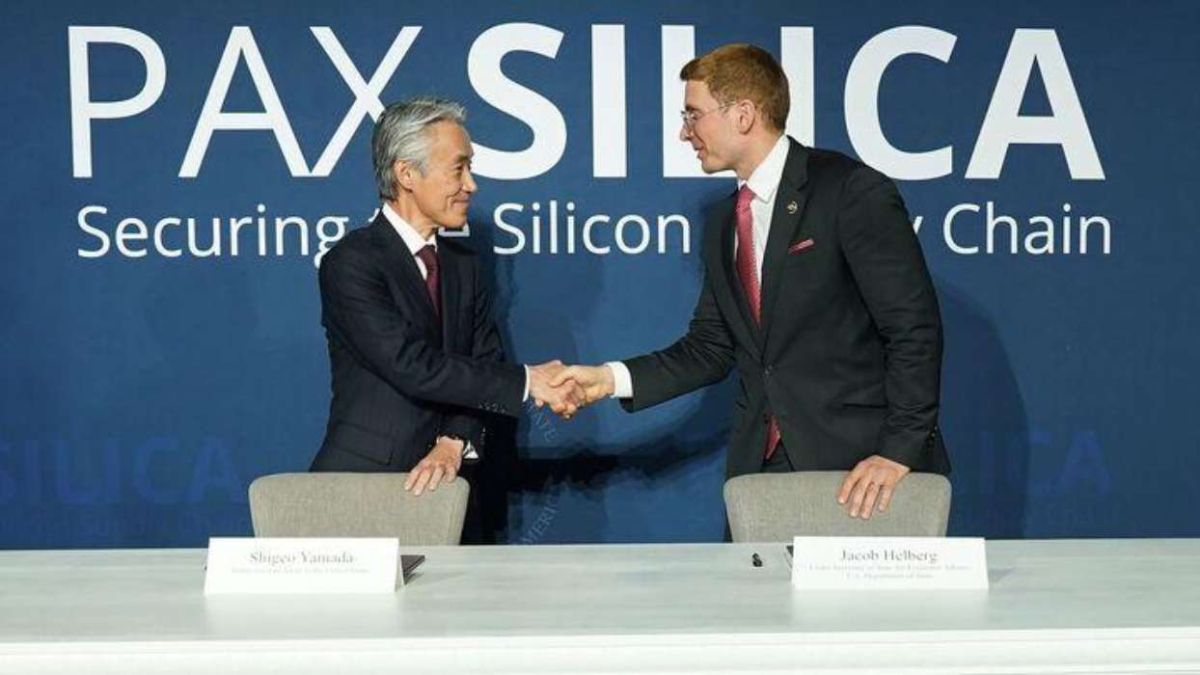
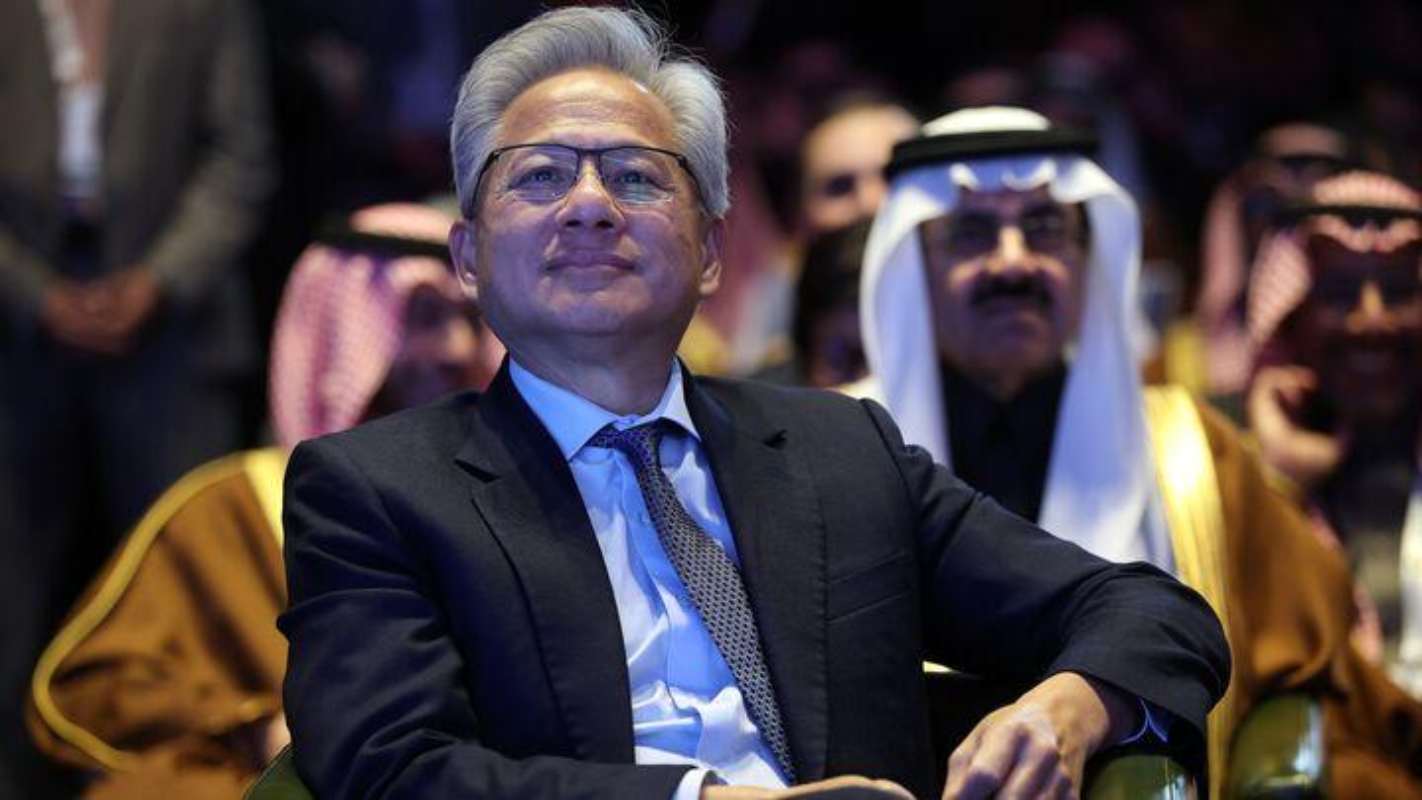
Πηγή Φωτογραφίας: Nvidia CEO Jensen Huang listens as US President Donald Trump delivers remarks at the US-Saudi Investment Forum at the Kennedy Center, on Nov. 19, 2025, in Washington. — Win McNamee/Getty Images//Ambassador of Japan to the United States Shigeo Yamada and Under Secretary of State for Economic Affairs, U.S. Department of State, Jacob Helberg sign the Pax Silica Declaration, an agreement focused on economic security and the establishment of a new grouping of partners tailored for the AI economy on Dec. 11, 2025, in Washington. — Leigh Vogel/Getty Images for Undersecretary of State for Economic Affairs Jacob Helberg



Israel, the United Arab Emirates and Qatar have joined a US-led agreement that treats the foundations of artificial intelligence as a national security priority. Its scope extends beyond advanced chips to the raw materials, energy supplies and infrastructure needed to power the technology.
The agreement comes as turmoil at Nvidia raises uncertainty over the Middle East’s technology ambitions and the Trump administration seeks closer coordination among partners competing with China.
Signed on November 15, the San Francisco Declaration brings the three Middle Eastern countries into a broader partnership to protect AI supply chains.
What the Ten Countries Agreed
The United States signed the declaration alongside Australia, India, Israel, Japan, South Korea, Qatar, Singapore, the UAE and the United Kingdom.
The agreement builds on Pax Silica, the US-led initiative launched in December 2025 to strengthen supply chains spanning semiconductors, critical minerals, energy and advanced manufacturing.
Its central principle, as the State Department puts it, is that “economic security is fundamental to national security.”
The declaration proposes five working groups covering policy frameworks, advanced AI adoption in key industries, supply-chain cooperation, secure hubs, and security and resilience.
The practical challenge is to establish which technologies and infrastructure require protection—and how participating governments will coordinate that protection.
China Is Central, Even Without Being Named
The declaration does not explicitly mention China. Al-Monitor nevertheless places it within Washington’s broader effort to reduce dependencies on Beijing, particularly in critical minerals and the industries supporting AI expansion.
US Under Secretary of State for Economic Affairs Jacob Helberg described the international nature of chip production to the Financial Times, explaining that design expertise, manufacturing equipment and shipping infrastructure can all sit in different countries.
That division creates vulnerabilities across the entire chain. Disruption can occur in manufacturing, transportation or the energy supplies needed to operate facilities.
Nvidia’s Crisis Reaches the Gulf
The agreement arrives at a difficult moment for the company at the centre of the global AI chip market.
According to an earlier Al-Monitor report, Jensen Huang resigned amid a scandal involving allegations of a relationship with a suspected Chinese spy. Chief Financial Officer Colette Kress took over as interim leader.
For the Middle East, the uncertainty carries investment implications. Access to Nvidia’s chips and partnerships with the company have become important components of government technology plans, the outlet reported.
Before Huang’s departure, Damac founder Hussain Sajwani warned that losing him would be “a big loss for the world.”
The leadership crisis does not itself establish that chip deliveries will be interrupted. It does, however, add uncertainty around a supplier on which major technology investments depend.
A Pact Ahead of the Three-Leader Meeting
The signing precedes Donald Trump’s scheduled meeting with Xi Jinping and Vladimir Putin on Thursday, November 19, according to Al-Monitor.
Washington approaches that meeting having strengthened cooperation with partners across Asia, Europe and the Middle East. For Israel, the UAE and Qatar, the next test is implementation: turning a shared declaration into reliable supplies, protected infrastructure and investments that can advance despite upheaval in the technology sector.
Source: pagenews.gr
Διαβάστε όλες τις τελευταίες Ειδήσεις από την Ελλάδα και τον Κόσμο