“Clear progress has been made on security guarantees.” That assessment from a European official involved in the diplomacy captures a shift among some of Ukraine’s allies: after months of fearing that Donald Trump might abandon Kyiv, they are beginning to believe he could help secure an acceptable peace.
According to POLITICO, the change follows the American negotiating team’s proposal to provide Ukraine with NATO-style collective defence guarantees.
The optimism remains cautious. Neither the substance of that protection nor the concessions potentially demanded in return has been agreed.
Kushner’s Opening in Berlin
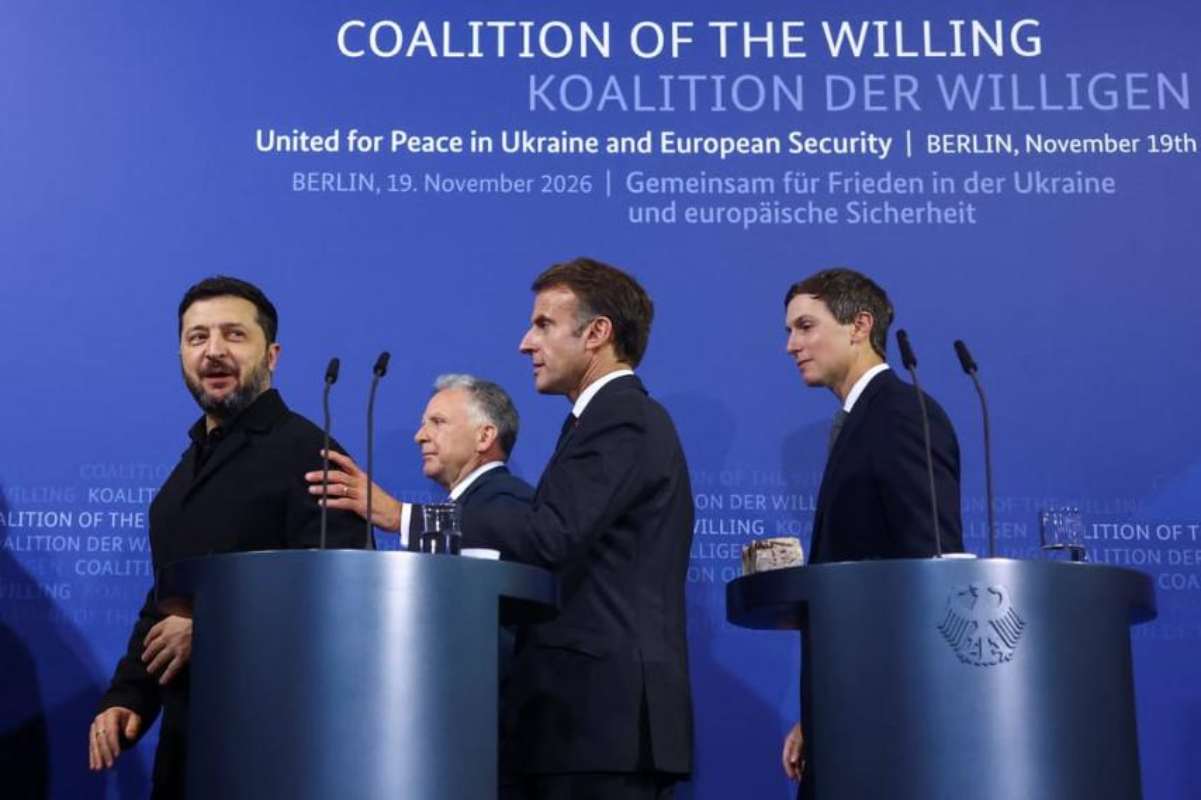
Jared Kushner, Trump’s envoy and son-in-law, presented the proposal in Berlin after two weeks of intensive diplomatic contacts.
He said the president was open to a major agreement and suggested Russia was comfortable with the idea. That does not establish Moscow’s acceptance: a Russian official has rejected the proposal, while Vladimir Putin had not publicly dismissed it, according to the report.
European negotiators are taking the offer seriously partly because American officials have been discussing the concept privately for months.
“On peace talks there is alignment with the U.S., no maximalist demands and no discussion on European security without the Europeans,” an official close to the negotiations said.
What Would America Commit To?
A credible security agreement could change Moscow’s calculations about attacking Ukraine again after the war.
But that requires answers to practical questions: which countries would be bound, what assistance they would provide and how they would respond to a renewed attack.
Invoking Article 5 does not automatically make Ukraine a NATO member. Nor does it, by itself, define the scope of American military involvement.
That ambiguity is precisely what Volodymyr Zelenskyy has challenged.


Zelenskyy: “What About American Soldiers?”
Ukraine’s president said he was unsure whether everyone understood NATO-style protection in the same way.
“What does it mean, Article 5? That there are some forces of partners on your land. So, my question is: What about American soldiers?”
He added that Ukraine would welcome American military bases, comparable to those in the Middle East.
Kyiv is therefore seeking more than a political assurance: it wants commitments capable of sustaining deterrence in practice.
Paris Wants Full NATO Membership
An aide to Emmanuel Macron said Washington was moving in the right direction but urged it to take the next step: full Ukrainian membership of the alliance.
“If we say we’re giving Ukraine Article 5-type guarantees, we shouldn’t overcomplicate things: It means that Ukraine is joining NATO,” the aide said.
That expresses the French approach. It is not an agreed alliance decision or an announcement of American support for membership.
Donbas Enters the Discussion
The most difficult issue is the possibility of territorial concessions.
POLITICO reports that American officials recently asked Ukraine whether it would hand Russia the whole of Donbas in exchange for full NATO membership.
Such a concession would include territory Russia has not captured militarily. It is not an agreement or an accepted Ukrainian condition, but a question reportedly raised during the contacts.
Poland, the Baltic states and Nordic countries remain particularly wary of any settlement that could reward Russian aggression.

The “Trojan Horse” Warning
The negotiations extend beyond Ukraine’s borders. Kushner argues that Europe’s wider security framework, including NATO’s relationship with Russia, needs reconsideration.
Some Europeans accept the possibility of parallel discussions. Others fear that these could open the door to restrictions on their defence choices.
Grégoire Roos of Chatham House warned:
“The danger is that an Article 5-style guarantee could somehow become a Trojan Horse in the case of a wider bargain with Moscow, in which Ukraine would surrender the Donbas and NATO would accept restrictions on its military presence in Eastern Europe.”
In his assessment, such an arrangement could give Russia a de facto veto over European security. He nevertheless said he did not believe Europeans would readily accept that trap.
Abu Dhabi and the Christmas Deadline
European officials expect another negotiating round, potentially in Abu Dhabi after Thanksgiving on November 26, although the meeting has not been finalised.
The aim would be progress towards targeted ceasefires covering energy infrastructure and the Black Sea, with Europeans participating.
Zelenskyy said the Americans “really wanted to get all this done before Christmas.”
Despite that desire for a rapid outcome, participants in the Berlin meetings said Washington had not applied the pressure for a rushed agreement that some leaders had feared.

Trump’s Relationship With Putin Keeps Doubts Alive
The Shenzhen summit reminded Europeans that Trump’s personal relationship with Putin remains an important factor.
Returning to Washington, the American president defended his relationship with the Russian leader and said: “He’d love to end the war.”
Europeans may see progress in discussions with Trump’s envoys. They also know that the president will make the final American decisions.
“A precedent was created,” a European official said of the Shenzhen meeting. “It wasn’t great.”

Source: pagenews.gr