


Ergani II: Greece’s Digital “Hammer” on the Labor Market Goes Live February 16
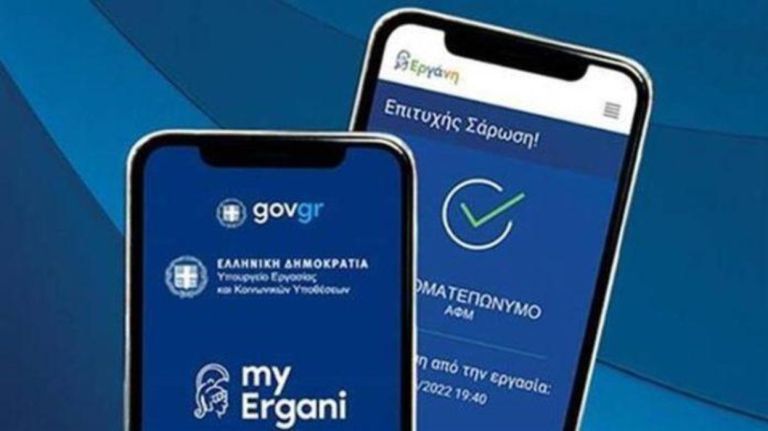
Πηγή Φωτογραφίας: Labour Market Press Office//Ergani II: Greece’s Digital “Hammer” on the Labor Market Goes Live February 16

Greece’s new labor information system, Ergani II, enters full production on Monday, February 16, 2026, officially replacing the original Ergani platform after 13 years.
This is not merely a technical upgrade. It represents a structural overhaul of how employment relationships are declared, monitored and enforced across the country.
All critical provisions of the updated labor framework — from working time arrangements and overtime to leave and wage changes — will now be declared exclusively and mandatorily in digital form.
Labor and Social Security Minister Niki Kerameus stated that the new system simplifies procedures, strengthens employee protection and significantly reduces bureaucracy for businesses, while enhancing transparency in the labor market.
Mandatory Digital Reporting for Working Time and “13-Hour” Shifts
A central reform under Ergani II is that all provisions of the recent labor law — including flexible working time arrangements, fast-track hiring for urgent needs and the controversial possibility of 13-hour daily employment (under specific conditions) — must now be submitted electronically.

Working time arrangements may be structured:
- On a weekly
- Monthly
- Or even annual basis
provided there is either a collective or individual agreement with the employee.
Employers must digitally declare:
- The type of arrangement
- The reference period (from one week up to one year)
- Periods of increased and reduced workload
Following submission, a Digital Working Time Organization Form must be filed, fully aligned with the agreed work schedule.
Any change affecting working hours — including weekly hours, breaks or flexible arrival times — now requires a Digital Employment Change Declaration before implementation.
Overtime, Leave and Wage Changes: What’s New
Under Ergani II:
- Traditional E8 overtime forms are integrated into new digital working time modules (pre-declaration and final reporting formats).
- E11 annual leave forms are abolished and incorporated into the digital time organization system (with a transitional arrangement for 2025).
- The classic E3 hiring form is replaced by a Digital Employment Commencement Notification, consolidating essential employment terms.
For wage increases based on agreement, employers must select “Change of Earnings by Agreement” and update gross salary and hourly wage fields accordingly.
A key innovation: No employment change declaration is finalized without digital acceptance by the employee, either via the myErgani app or through an officially certified electronic signature (including gov.gr authentication).
From Registry to Enforcement Mechanism
Ergani II incorporates provisions of Laws 5053/2023 and 5239/2025 (“Fair Work for All”) and introduces a new digital architecture modeled after Greece’s gov.gr platform.
It abolishes multiple legacy forms (including E4 annual staff tables and E9 part-time forms), allows corrections of submitted declarations and introduces:
- Unified monitoring of all employment types
- Recording of total weekly hours, including parallel employment
- Monthly employment status reports per work relationship
- Interoperability with HR and payroll management systems
For public authorities, the platform evolves from a simple reporting database into a dynamic labor market registry, strengthening oversight tools available to the Independent Labor Inspectorate Authority.
A Shift in Labor Market Power Dynamics
Ergani II centralizes critical employment data in real time, significantly narrowing the space for undeclared or misreported work. At the same time, it increases compliance obligations for employers.
Businesses that invest early in full digital integration of HR processes are likely to benefit from:
- Lower administrative costs
- Greater legal certainty
- Faster internal workforce management
Those that continue relying on manual practices face higher risks of audits, penalties and regulatory exposure.
Ultimately, Ergani II marks Greece’s transition from retrospective labor reporting to real-time digital labor governance — a transformation that reshapes the balance between employers, employees and the state in the modern Greek labor market.
Source: pagenews.gr
Διαβάστε όλες τις τελευταίες Ειδήσεις από την Ελλάδα και τον Κόσμο







Το σχόλιο σας