


Holy Light: From Jerusalem to neighborhoods – Faith, emotion and political undertones
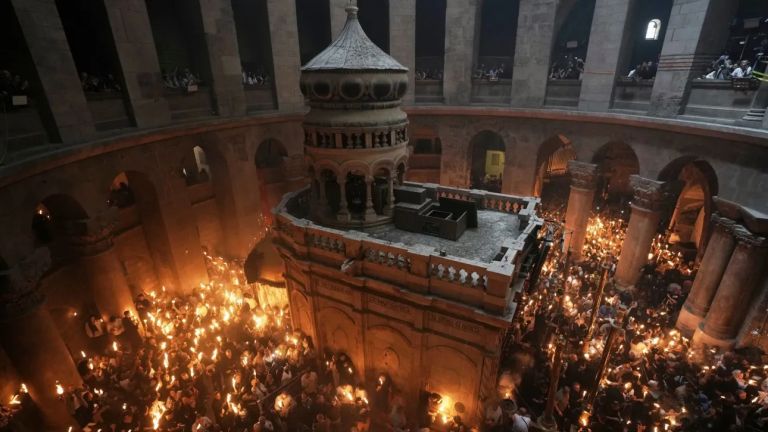
Πηγή Φωτογραφίας: AP Photo//Holy Light: From Jerusalem to neighborhoods – Faith, emotion and political undertones



Just before sunset on Holy Saturday, a quiet but powerful anticipation spreads across Greece. From major cities to the most remote villages and islands, church bells prepare to ring as people wait for one thing: the Holy Light.
Its arrival in Athens, shortly after 7:00 p.m., is not just another scheduled event. It marks the beginning of a shared national experience—one that repeats every year, yet never feels the same.
The moment of arrival: Emotion and silence
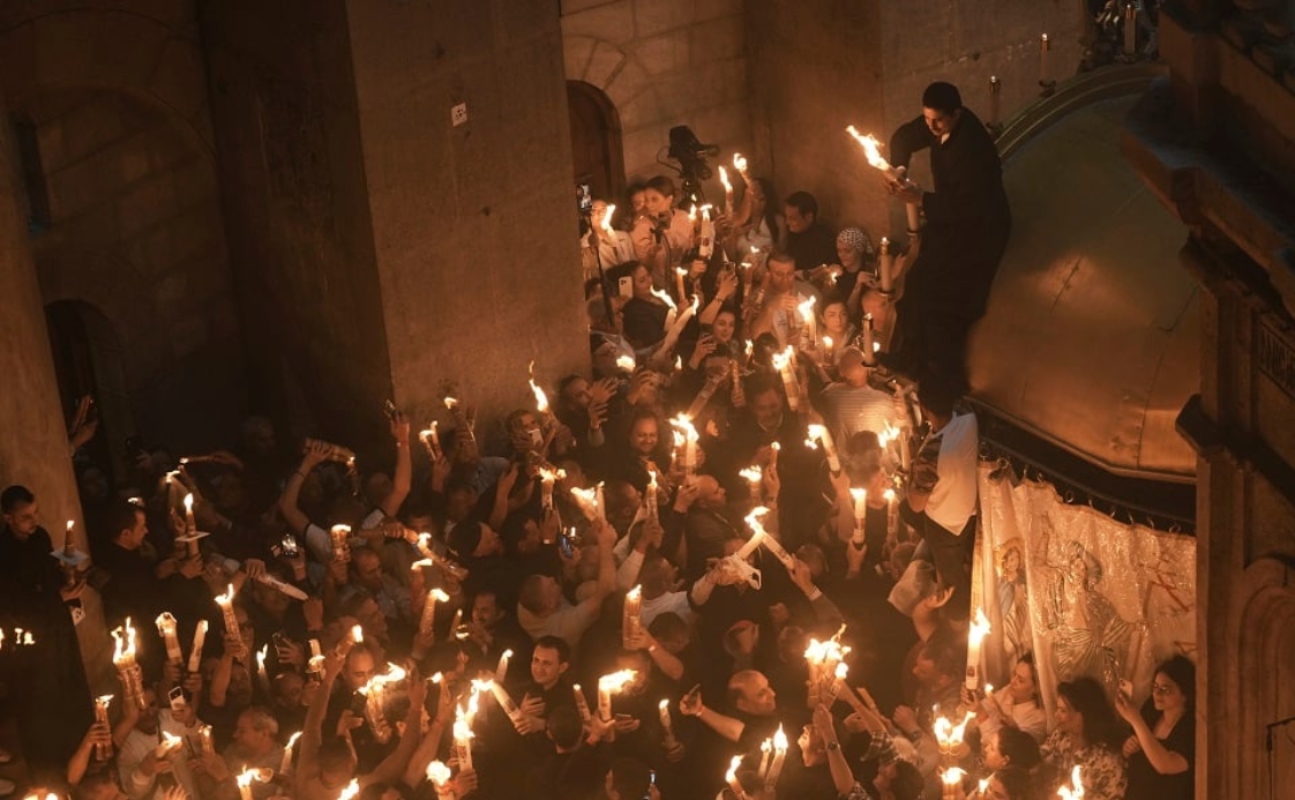
At the airport, the reception follows formal protocol. Yet the true weight of the moment lies elsewhere: in the silence of those receiving it, in the careful lighting of the first candle, in the passing of the flame from hand to hand.
It is a ritual that needs no words.
The journey across the country
Within hours, the Holy Light begins a second journey—across the entire country. Special flights carry it to multiple destinations, from major urban centers to distant islands.
Each المكان shapes the moment differently: fireworks, bells, crowds, but also quiet, personal prayers.
The flame becomes a shared symbol. It connects people across distances, backgrounds, and everyday struggles.
The people behind the tradition
Behind the larger εικόνα are deeply human stories:
- The elderly woman who insists on bringing the Light home every year
- The young person returning to their village just for Easter
- The priest distributing the flame to hundreds of faithful
- The workers ensuring the Light reaches even the most remote areas
They are the true carriers of the tradition.
Cyprus and a shared identity
At the same time, the Holy Light reaches Cyprus, carrying the same message. Its reception there is more than ceremonial—it reflects a shared cultural and spiritual identity across borders.
Faith in everyday life
In a time marked by uncertainty and pressure, the Holy Light takes on a more personal meaning.
For some, it is faith. For others, tradition. For many, a moment of hope.
The night of the Resurrection
At midnight, when “Christ is Risen” echoes everywhere, the Holy Light will already have reached churches, homes, and balconies.
For a few moments, everything pauses.
People exchange wishes, protect the flame, and hold onto something fragile yet deeply meaningful.
The political dimension of a religious tradition
Beyond its social and spiritual importance, the Holy Light also carries political implications.
Its transfer is not a private initiative. It is organized with the involvement of state authorities, diplomatic missions, and national carriers. This creates a framework where faith intersects with state function.
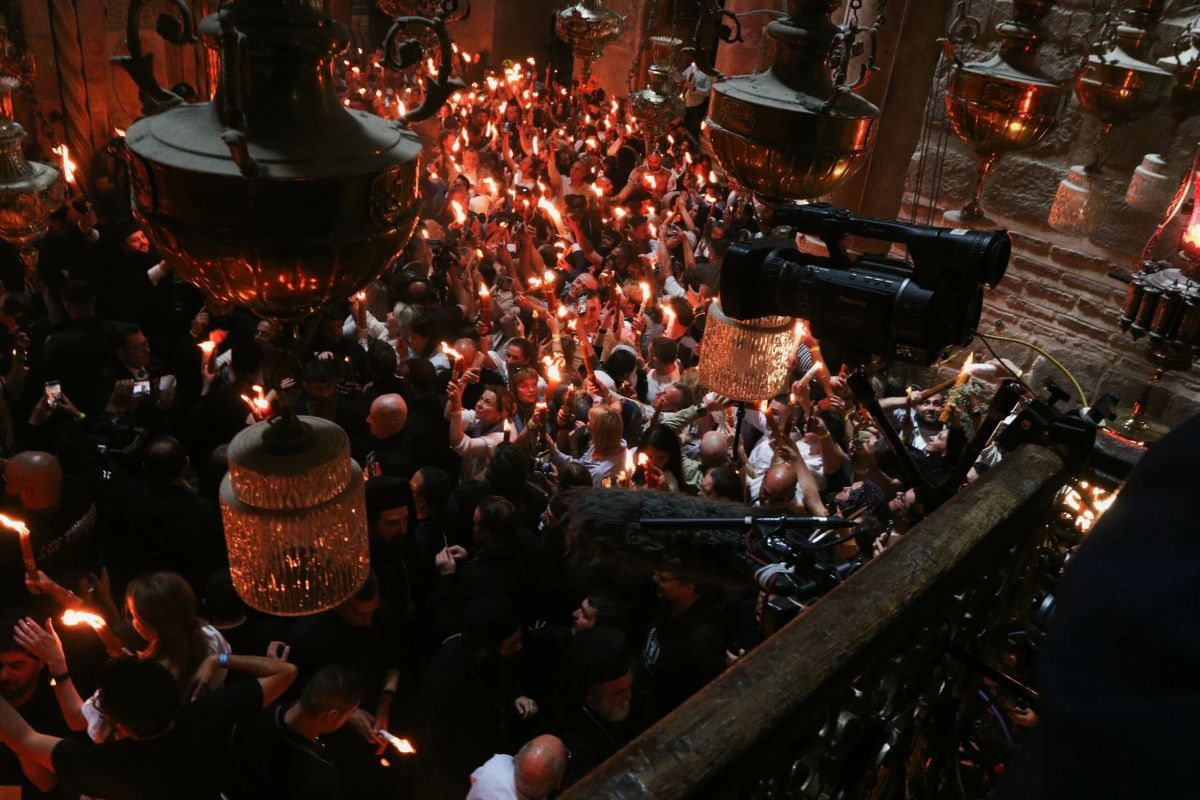
For many, this involvement is natural: a sign of respect for tradition and religious identity.
For others, it raises questions:
- What should be the role of the state in religious rituals?
- How is the cost justified?
- Where are the boundaries between Church and State?
Especially during periods of regional tension in the Middle East, the mission also gains diplomatic significance, requiring coordination, security, and careful balance.
Between tradition and modern reality
Ultimately, the Holy Light operates on two levels:
- As a deeply personal and collective expression of faith
- As a state-organized process with political characteristics
These two dimensions are not necessarily contradictory—but they do reflect the complexities of modern society.
Perhaps the real question is not whether the tradition should continue, but how it can evolve without losing its meaning.
Because every year, the Holy Light does more than illuminate candles. It sheds light on how a society balances faith, identity, and contemporary reality.
Source: pagenews.gr
Διαβάστε όλες τις τελευταίες Ειδήσεις από την Ελλάδα και τον Κόσμο







Το σχόλιο σας