Tourism Overhaul in Greece: New Spatial Plan to Cap Beds in Overcrowded Islands,Triggering Major Market Shift
 ΧΡΟΝΟΣ ΑΝΑΓΝΩΣΗΣ 5 '
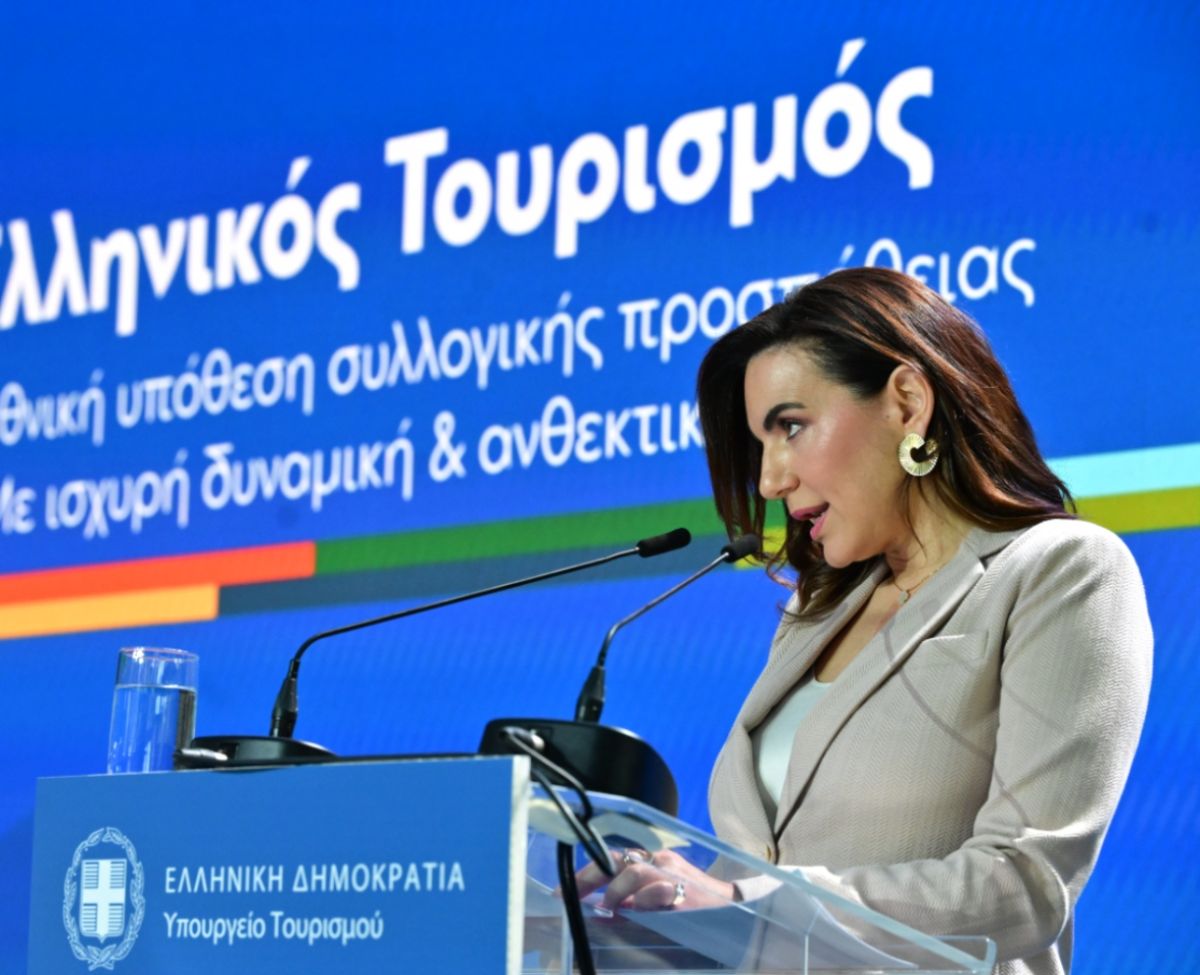
Πηγή Φωτογραφίας: eurokinissi//Tourism Overhaul in Greece: New Spatial Plan to Cap Beds in Overcrowded Islands, Triggering Major Market Shift



A decade in the making: the new tourism spatial framework
After nearly ten years of planning delays, Greece is preparing to officially unveil its Special Spatial Framework for Tourism Development, a landmark policy expected immediately after the Easter period.
The reform is designed to regulate tourism growth at a national scale, with a central goal of preventing overdevelopment in already saturated destinations and shifting the sector toward a more controlled, environmentally sustainable model.
Government sources indicate the framework will be formally presented as a Common Ministerial Decision (KYA) in the coming weeks, following high-level coordination between the Ministry of Environment and Energy and the Ministry of Tourism.
Strict caps on tourist accommodation in saturated destinations
At the heart of the reform lies a significant intervention in supply growth: limits on tourist accommodation capacity in overcrowded regions, with reductions in total bed capacity reportedly reaching 20%–30% in selected areas compared to previous planning assumptions.
The most affected destinations are expected to include some of Greece’s most tourism-intensive hotspots, such as Mykonos and Santorini in the Cyclades, alongside Crete, Rhodes, Kos, Corfu, and Zakynthos, where pressure on infrastructure, housing, and natural resources has intensified over recent years.
Policy drafts reportedly include mechanisms that could effectively impose a “development ceiling” on new hotel capacity, particularly in zones already classified as environmentally or infrastructurally stressed.

Crackdown on short-term rentals and uncontrolled expansion
One of the most closely watched elements of the plan concerns the rapid expansion of short-term rental platforms, which have significantly reshaped housing and tourism dynamics in many Greek islands.
According to policy discussions, the framework may introduce a “regulatory brake” on new short-term rental units, especially in areas where housing shortages and price inflation have become structural problems.
Among the scenarios under consideration is a system linking new building permits to strict usage restrictions, ensuring that future residential developments cannot be easily converted into large-scale tourist accommodation without clear planning approval.
A shift toward “low-impact tourism development”
Officials involved in the planning process have emphasized that the reform is not merely restrictive but strategic, aiming to transition Greece toward a lower environmental footprint tourism model.
Key priorities reportedly include:
- stronger protection of biodiversity and coastal ecosystems
- improved management of water and energy resources in high-pressure islands
- promotion of organized tourism zones with clear spatial rules
- acceleration of transparent and predictable licensing procedures
This approach reflects growing concerns that unchecked tourism expansion is placing long-term strain on infrastructure, natural landscapes, and local communities.
Government coordination and policy timeline
A high-level inter-ministerial meeting held recently between Environment and Energy Minister Stavros Papastavrou and Tourism Minister Olga Kefalogianni reportedly confirmed the strategic direction of the plan.
According to the timeline discussed, the official presentation of the framework was initially expected in early April, with final approval and signature of the ministerial decision projected within May.
The delayed rollout underscores the complexity of balancing economic growth, regional development, and environmental constraints in one of Europe’s most tourism-dependent economies.

Industry reaction: investment certainty vs. development limits
The proposed framework has already triggered strong reactions from the tourism sector. The Hellenic Chamber of Hotels (HCH) has emphasized the need for regulatory stability and investment security, warning that unpredictability in spatial planning can deter long-term capital inflows.
At the same time, industry representatives stress that while environmental protection is essential, excessive restrictions could risk reducing competitiveness and discouraging investment, particularly if rules are perceived as abrupt or unevenly applied.
A central concern raised by stakeholders is whether the new framework will function as a development tool or a deterrent to investment, especially in regions that rely heavily on tourism as their primary economic driver.
A structural turning point for Greek tourism policy
The upcoming spatial framework represents one of the most significant structural interventions in Greece’s tourism sector in decades. By directly linking spatial planning with tourism capacity, the government is attempting to redefine the growth trajectory of key destinations.
The core tension remains unresolved: how to maintain Greece’s position as a leading global tourism destination while preventing overexploitation of its most fragile and overcrowded regions.
Source: pagenews.gr
Διαβάστε όλες τις τελευταίες Ειδήσεις από την Ελλάδα και τον Κόσμο