Turkey Sends a Clear Diplomatic Message Before Guterres’ Arrival
The timing was anything but accidental.
As UN Secretary-General António Guterres prepares for a high-profile visit to Cyprus aimed at keeping negotiations alive, Turkey has chosen to publicly reaffirm its long-standing demand for a two-state solution, sending a clear political signal both to the United Nations and to the Republic of Cyprus.
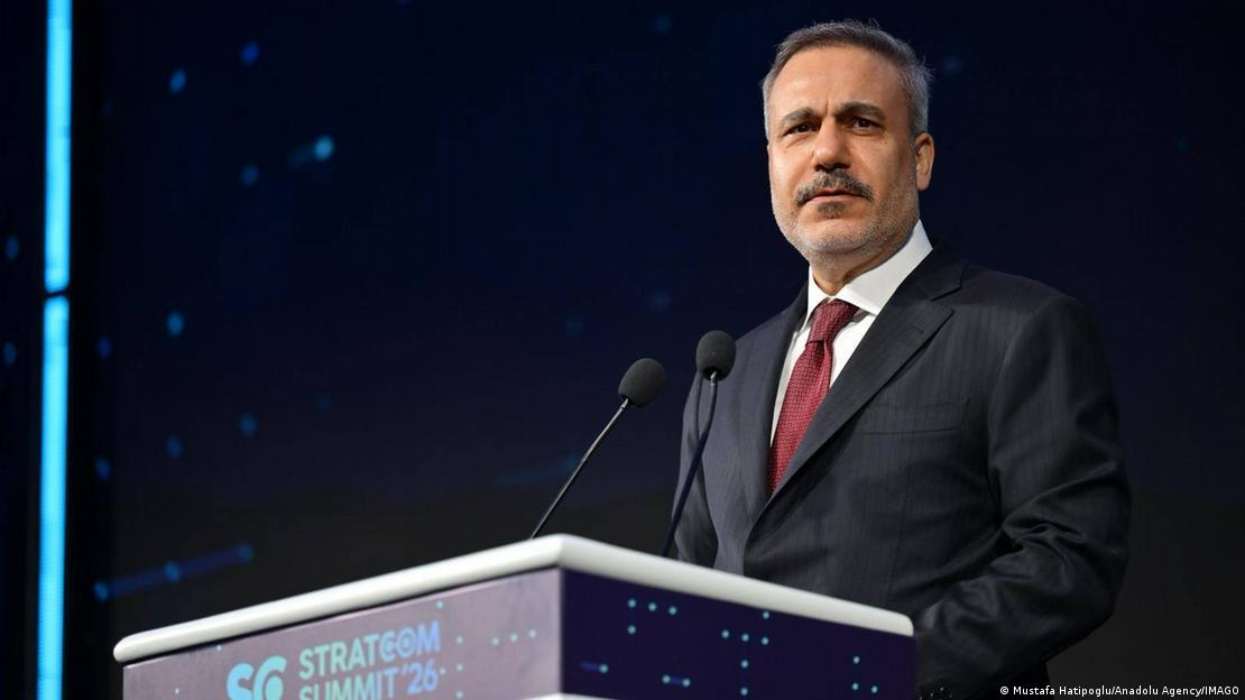
During a meeting in Ankara with the UN Secretary-General’s Personal Envoy for Cyprus, María Ángela Holguín Cuéllar, Turkish Foreign Minister Hakan Fidan reiterated that Ankara believes the “most realistic solution” is the coexistence of two sovereign states on the island.
According to sources from Turkey’s Foreign Ministry, Fidan also argued that any proposal failing to recognize what Ankara describes as the Turkish Cypriots’ “sovereign equality” and “equal international status” cannot lead to a lasting settlement.
A Strategic Shift That Has Become Permanent
Fidan’s remarks are not an isolated diplomatic statement but part of a broader strategic doctrine that Turkey has steadily pursued since the collapse of the Crans-Montana peace talks in 2017.
For decades, UN-sponsored negotiations were based on the objective of establishing a bizonal, bicommunal federation, as outlined in successive UN Security Council resolutions.
Today, however, Ankara has effectively abandoned that framework, insisting instead that negotiations should begin from the premise that two separate sovereign entities already exist on the island.
This position remains fundamentally incompatible with the internationally recognized framework supported by the United Nations, the European Union, and the Republic of Cyprus.


Pressure on the United Nations
The meeting between Fidan and Holguín took place only days before António Guterres’ expected visit to Cyprus—a mission widely viewed as an opportunity to inject new momentum into one of the world’s longest-running diplomatic disputes.
Yet Turkey’s renewed insistence on the two-state formula risks undermining those efforts before formal discussions even begin.
Diplomatic observers believe Ankara aims to enter any future negotiations from a position of strength, attempting to shift the international debate away from federal reunification and toward acceptance of two separate political entities.
The European Dimension
The issue extends far beyond the island itself.
Cyprus has been a member of the European Union since 2004, and Brussels continues to support a comprehensive settlement based on a bizonal, bicommunal federation in line with UN resolutions and EU principles.
European institutions have repeatedly backed the UN-led process, viewing a reunified Cyprus as an important pillar of regional stability and European security.
Turkey’s latest statements therefore place Ankara once again at odds not only with the Republic of Cyprus but also with the broader European diplomatic consensus.


Cyprus at the Heart of Eastern Mediterranean Geopolitics
The Cyprus question has evolved into one of the defining geopolitical issues of the Eastern Mediterranean.
It now intersects with:
- maritime boundary disputes,
- offshore energy exploration,
- regional security architecture,
- NATO dynamics,
- EU–Turkey relations,
- and strategic competition across the Eastern Mediterranean.
For Ankara, maintaining its position on Cyprus is closely linked to its broader ambitions regarding maritime jurisdiction, energy resources and regional influence.
By insisting on “sovereign equality,” Turkey seeks to strengthen its negotiating position before any future diplomatic initiative gains momentum.
A Critical Test for the Peace Process
The coming days could prove decisive.
António Guterres’ visit is expected to determine whether sufficient political space still exists to relaunch meaningful negotiations—or whether the widening gap between the two sides has become too great to bridge.
With Turkey firmly reiterating that two sovereign states represent the only realistic solution, while the United Nations, the European Union and the Republic of Cyprus continue to advocate for a federal settlement, the Cyprus issue once again finds itself at a diplomatic crossroads.
The outcome of the Secretary-General’s mission is likely to shape not only the future of reunification talks but also the broader geopolitical balance in the Eastern Mediterranean, where Cyprus remains one of the region’s most strategically significant flashpoints.
Source: pagenews.gr