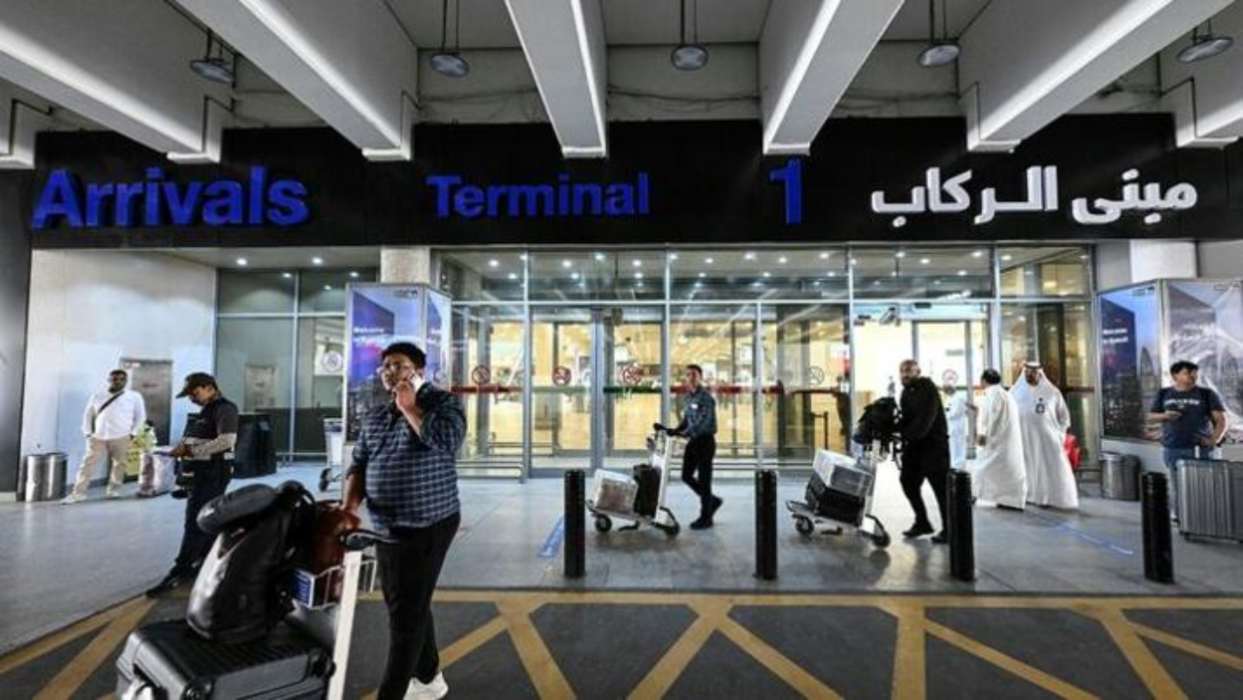
The United States has significantly expanded its regional security posture by issuing coordinated travel advisories through its embassies across the Middle East, warning American citizens to prepare for the possibility of leaving the region should the security environment deteriorate further.
The alerts were simultaneously released by U.S. diplomatic missions in Bahrain, Egypt, Iraq, Israel, Jordan, Kuwait, Lebanon, Oman, Qatar, Saudi Arabia and the United Arab Emirates, underscoring Washington’s growing concern that the conflict with Iran could enter a more dangerous phase.
Travel advisory upgraded across the region
The State Department urged Americans currently living or travelling in the Middle East to remain on heightened alert and to review departure options before conditions potentially worsen.
The advisory warns of:
- possible flight cancellations;
- temporary airspace closures;
- significant travel disruptions;
- rapidly changing security conditions;
- the need to maintain flexible evacuation plans.
U.S. citizens were also encouraged to closely monitor local government guidance and airline schedules.
In Jordan, Americans were advised to avoid military installations following recent missile attacks in the country, while those in Israel were urged to identify the nearest bomb shelters in advance.


Diplomatic signal follows Trump’s warning
The coordinated security alert was issued shortly after President Donald Trump warned that the United States could strike Iran “very hard” if attacks against American interests continue.
Although no evacuation order has been issued, the timing of the advisory suggests that Washington considers the possibility of further military escalation increasingly credible.
The warnings also reflect concerns that any expansion of the conflict could quickly affect civilian transportation networks across the region.
Iran responds with new warnings
Iranian officials reacted sharply to the latest U.S. statements.
Senior military commanders warned that any country assisting future American military operations could become a legitimate target, while advisers close to Iran’s Supreme Leader cautioned against attacks on Iranian infrastructure, arguing that such actions would trigger broader regional consequences.
The exchange of increasingly forceful rhetoric highlights the fragile security environment despite previous attempts at de-escalation.
Shipping lanes under growing pressure
Beyond military developments, the crisis is placing increasing pressure on international maritime trade.
Commercial traffic through the Strait of Hormuz, one of the world’s most important energy corridors, has declined significantly as shipping companies reassess operational risks.
Meanwhile, another security incident involving a commercial tanker near the coast of Oman has reinforced concerns over navigation safety in the Gulf.
Attention also remains focused on the Bab el-Mandeb Strait, another strategic maritime chokepoint linking the Red Sea with the Indian Ocean and serving as a critical route for global energy supplies.
Travel implications
For international travellers, airlines and the tourism sector, the latest advisory highlights a rapidly evolving security landscape.
Industry analysts expect carriers operating between Europe, Asia and the Gulf to continue monitoring developments closely, with possible route adjustments should tensions intensify further.
While commercial flights continue to operate across much of the region, travellers are being advised to maintain flexible itineraries and prepare for last-minute operational changes.
The latest U.S. travel advisory carries significance well beyond consular guidance. It serves as a diplomatic indicator that Washington is preparing for multiple escalation scenarios while seeking to reduce risks for American citizens abroad.
At the same time, instability surrounding the Strait of Hormuz and the Bab el-Mandeb has transformed the regional conflict into a global strategic concern. Any disruption to these maritime corridors would affect energy markets, international shipping, aviation routes and global supply chains.
For governments, airlines and multinational businesses, the Middle East is no longer viewed solely as a military flashpoint but as a critical test of global economic resilience and international crisis management.
Source: pagenews.gr