Greece Sends Clear Warning to Turkey: Any Obstruction of Cyprus Power Cable Will Face an Operational Response
 ΧΡΟΝΟΣ ΑΝΑΓΝΩΣΗΣ 10 '
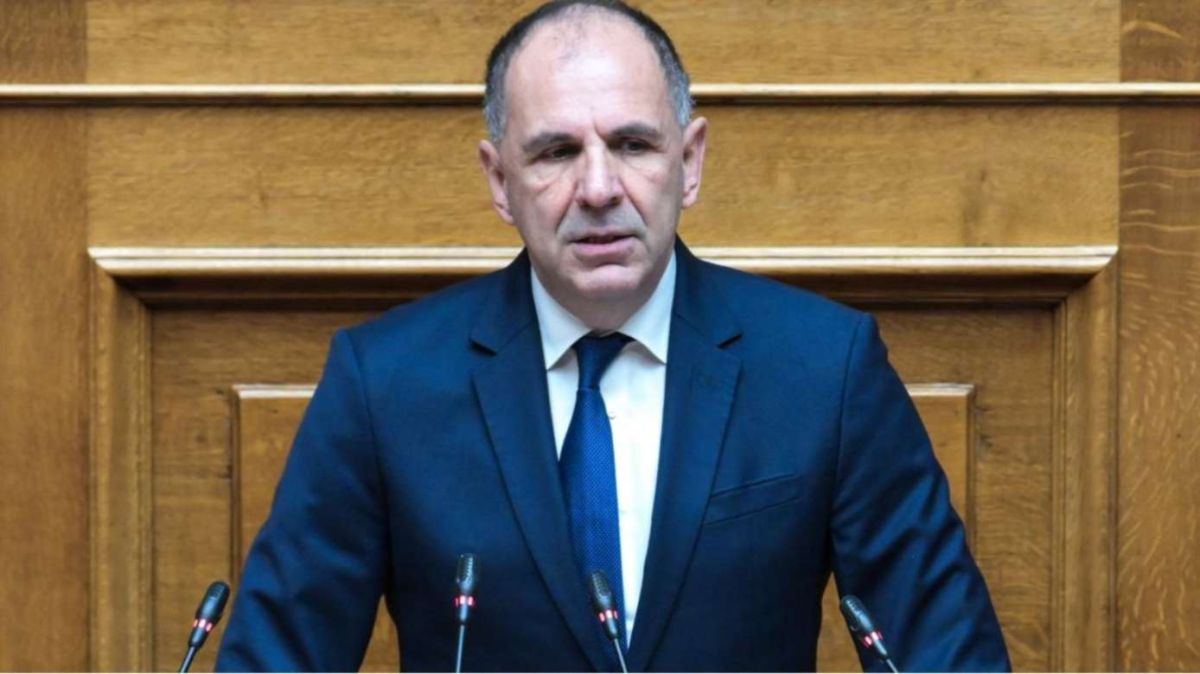



Greece has delivered a clear message to Turkey over the future of the Great Sea Interconnector (GSI), the strategically important electricity link between Greece and Cyprus, warning that any attempt to obstruct the project would be met with an operational response.
Speaking before the Greek Parliament’s Standing Committee on National Defence and Foreign Affairs on Tuesday, November 3, Foreign Minister George Gerapetritis reaffirmed Athens’ determination to proceed with the project and its readiness to address potential interference from Ankara.
According to Greek media reports of the parliamentary briefing, Gerapetritis indicated that any Turkish attempt to prevent the cable installation would trigger an operational response by the Greek authorities.
At the same time, he reportedly reiterated his assessment that Turkey would ultimately refrain from interfering on the ground.
The message reflects Athens’ dual approach: maintaining diplomatic channels and avoiding unnecessary escalation while making clear that the implementation of a major European energy project cannot be subject to unilateral obstruction.
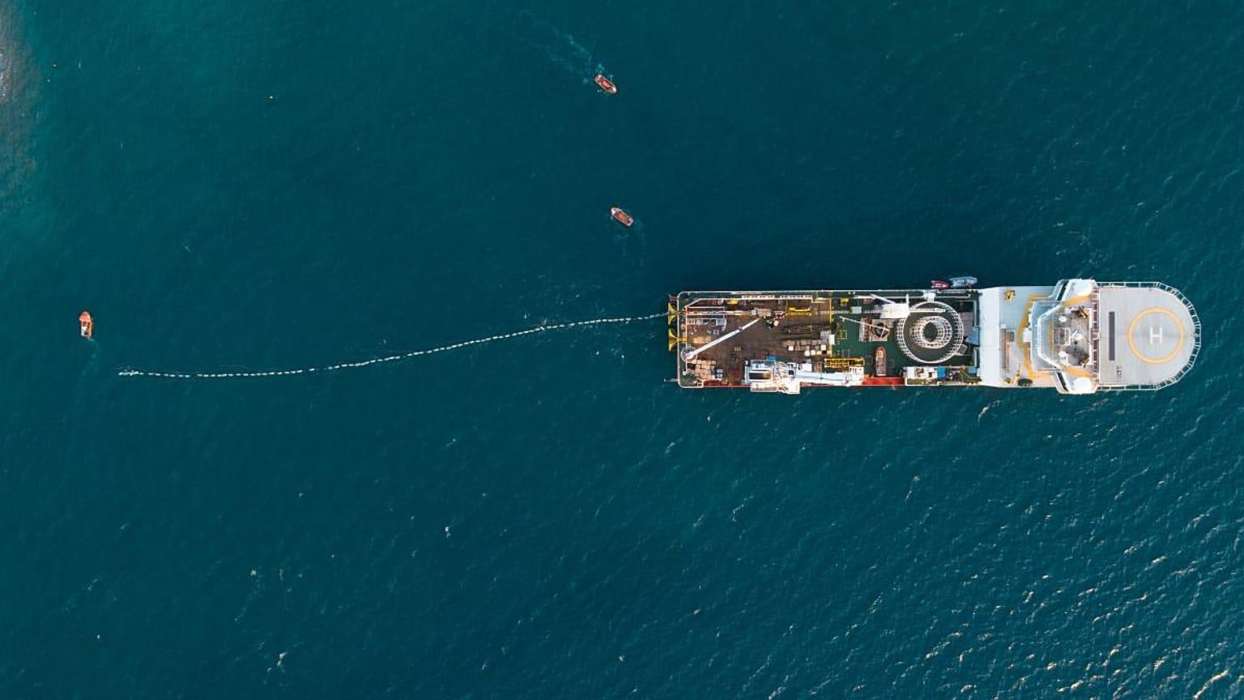
The warning comes as Greece prepares to issue a maritime NAVTEX notice connected to the activities of the French vessel Abeille Marengo, which is expected to undertake seabed survey operations associated with the interconnection.
A strategic message ahead of the next maritime operations
The timing of Gerapetritis’ intervention is significant.
The anticipated NAVTEX, a navigational warning used to notify vessels of maritime activities, represents an important procedural step toward the next phase of work on the electricity interconnection.
The French vessel Abeille Marengo is expected to conduct seabed surveys, which are distinct from the subsequent installation of the submarine power cable itself.
Yet even these preliminary operations carry geopolitical implications.
Turkey has previously challenged Greek and Cypriot maritime jurisdiction in parts of the Eastern Mediterranean, while disputes over maritime boundaries and offshore activities have repeatedly generated tensions between Athens and Ankara.
For Greece, the ability to proceed with lawful submarine infrastructure projects is closely linked to the rights and freedoms recognised under international maritime law.
Under the United Nations Convention on the Law of the Sea, the laying of submarine cables is subject to an established legal framework, including specific rights and obligations within territorial waters and exclusive economic zones.
Athens maintains that the Great Sea Interconnector should proceed in accordance with that framework, without interference that it considers incompatible with international law.
What does an “operational response” actually mean?
The most consequential element of the reported parliamentary briefing was the reference to an operational response in the event of Turkish interference.
Such language suggests that Athens is prepared to address a potential incident through the relevant state authorities and operational mechanisms rather than relying exclusively on diplomatic protests.
However, no specific rules of engagement, military deployments or operational measures were publicly detailed.
The statement should therefore not be interpreted as an automatic announcement of military action.
Instead, it signals preparedness and deterrence: an effort to discourage interference by making clear that any incident would require an active response.
This distinction is particularly important in the Eastern Mediterranean, where maritime disputes can rapidly acquire broader political and security implications.
Greece’s apparent objective is to protect the project’s implementation while avoiding an uncontrolled escalation with Turkey.
Why Athens believes Ankara may avoid confrontation
Despite the warning, Gerapetritis reportedly expressed confidence that Turkey would not attempt to obstruct the project.
Two factors appear central to that assessment: the involvement of French commercial interests and the project’s European financing.
The Great Sea Interconnector is not simply a bilateral Greek-Cypriot undertaking.
It is part of the European Union’s broader effort to strengthen cross-border electricity infrastructure, improve energy resilience and reduce the isolation of peripheral electricity systems.
French industrial participation adds another international dimension.
Any attempt to obstruct operations involving a French vessel could generate diplomatic repercussions extending beyond the immediate Greek-Turkish relationship.
Likewise, interference with an EU-supported infrastructure project would raise questions about the protection of European strategic investments.
Neither French commercial involvement nor European funding automatically creates a military security guarantee.
Both, however, increase the potential diplomatic and economic costs of disruption.
From Athens’ perspective, those considerations may provide additional incentives for Ankara to avoid a direct confrontation.
The Great Sea Interconnector: More than an electricity cable
The Great Sea Interconnector is designed to establish an electricity connection between Greece and Cyprus, helping integrate the island into the wider European power system.
Cyprus remains one of the EU’s most geographically isolated electricity markets, making interconnection a strategic priority for the country’s long-term energy security.
The project is intended to create several benefits.
It would allow greater electricity exchange between interconnected markets, support the integration of renewable energy and provide additional flexibility in balancing electricity supply and demand.
It could also help reduce Cyprus’ dependence on isolated domestic generation, although the scale of the economic benefits will depend on construction costs, financing arrangements, electricity prices and the project’s eventual operation.
For Greece, the interconnector reinforces its potential role as an energy infrastructure hub connecting the Eastern Mediterranean with continental Europe.
The project’s importance therefore extends beyond the immediate commercial interests of the companies involved.
It forms part of a wider debate about Europe’s energy independence, regional connectivity and the security of critical infrastructure.
The Turkish dimension and the law of the sea
The geopolitical sensitivity surrounding the GSI reflects a longstanding disagreement over maritime jurisdiction in the Eastern Mediterranean.
Greece and Cyprus support the application of international maritime law to offshore activities, including submarine cables and energy infrastructure.
Turkey disputes aspects of Greek and Cypriot maritime claims and has advanced competing interpretations of jurisdiction in parts of the region.
These disagreements have affected offshore exploration, maritime research and broader regional energy initiatives.
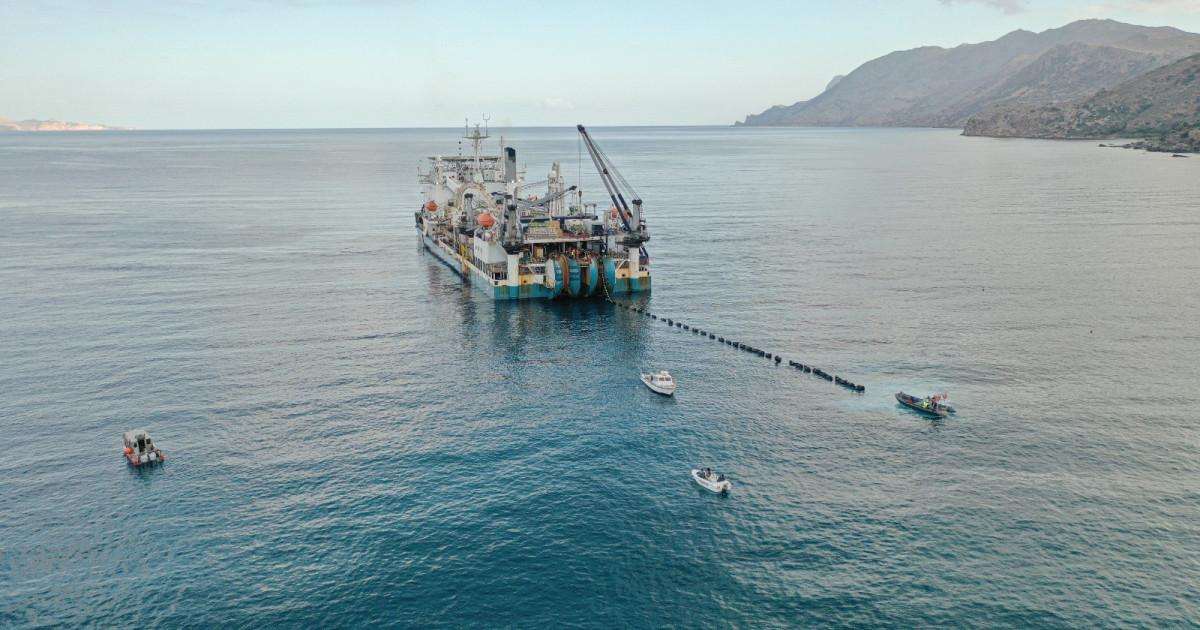
The Great Sea Interconnector adds another dimension because it involves a physical infrastructure project whose implementation requires survey vessels and specialised construction operations at sea.
For Athens, the central question is whether such activities can proceed under the applicable legal framework without being subjected to unilateral restrictions.
The Greek government has sought to maintain dialogue with Ankara while insisting that diplomatic engagement does not entail abandoning its legal positions.
Gerapetritis’ reported warning is consistent with that approach: diplomatic communication remains open, but the government signals that it does not accept interference with the project.
France and the European Union enter the strategic equation
The participation of French interests introduces an additional layer to the dispute.
France has an established strategic relationship with Greece, including significant defence cooperation, while French companies are involved in energy and infrastructure projects across the Mediterranean.
In the GSI case, the involvement of a French-operated vessel highlights the international nature of the undertaking.
The European dimension is equally important.
Brussels has consistently promoted electricity interconnections as a means of strengthening the internal energy market, improving resilience and facilitating the transition toward cleaner energy.
A successful Greece-Cyprus interconnection would represent a substantial step toward ending Cyprus’ electricity isolation.
For the European Union, delays or disruption to strategically important infrastructure can therefore have consequences beyond the countries directly involved.
Nevertheless, the project’s European status does not eliminate its financial, technical or regulatory challenges.
Its progress continues to depend on coordination between Greece, Cyprus, project authorities, contractors and other relevant stakeholders.
Athens balances deterrence with diplomatic restraint
Gerapetritis’ parliamentary intervention took place during a broader briefing on transatlantic relations and recent developments at the United Nations.
The inclusion of the Great Sea Interconnector in the discussion underlines its growing importance within Greek foreign policy.
Athens faces the challenge of defending its interpretation of maritime rights while preserving the relative stability of Greek-Turkish relations.
The government’s position, as presented in the reported briefing, combines three elements: a commitment to the project’s implementation, an assessment that direct Turkish interference can be avoided, and preparedness to respond should that assessment prove incorrect.
This is not necessarily a contradiction.
Diplomatic deterrence frequently rests on communicating both a preference for avoiding confrontation and a readiness to manage one if it occurs.
The effectiveness of that approach will be tested by developments at sea rather than by political statements alone.
The next test: NAVTEX and the French survey vessel
Attention now turns to the expected Greek NAVTEX and the next operational steps involving Abeille Marengo.
The vessel’s anticipated seabed surveys are a preliminary stage associated with the wider interconnection project, not the immediate laying of the entire electricity cable.
Their progress will nevertheless provide an important indication of the operating environment in the Eastern Mediterranean.
For Greece, the objective is to move the project forward without allowing maritime disputes to dictate the future of European energy infrastructure.
For Turkey, the coming phase presents a choice over whether to contest the activities in practice or allow them to proceed without direct interference.
For Cyprus and the European Union, the stakes include the development of a long-planned electricity connection with significant implications for regional energy security.
According to the accounts of his November 3 parliamentary briefing, Gerapetritis reaffirmed that Greece intends to proceed with the interconnection and is prepared to address any attempt to obstruct its implementation.
Source: pagenews.gr
Διαβάστε όλες τις τελευταίες Ειδήσεις από την Ελλάδα και τον Κόσμο