Xi Pushes New Middle East Security Order — China Moves Into the Space Long Dominated by the US
 ΧΡΟΝΟΣ ΑΝΑΓΝΩΣΗΣ 9 '
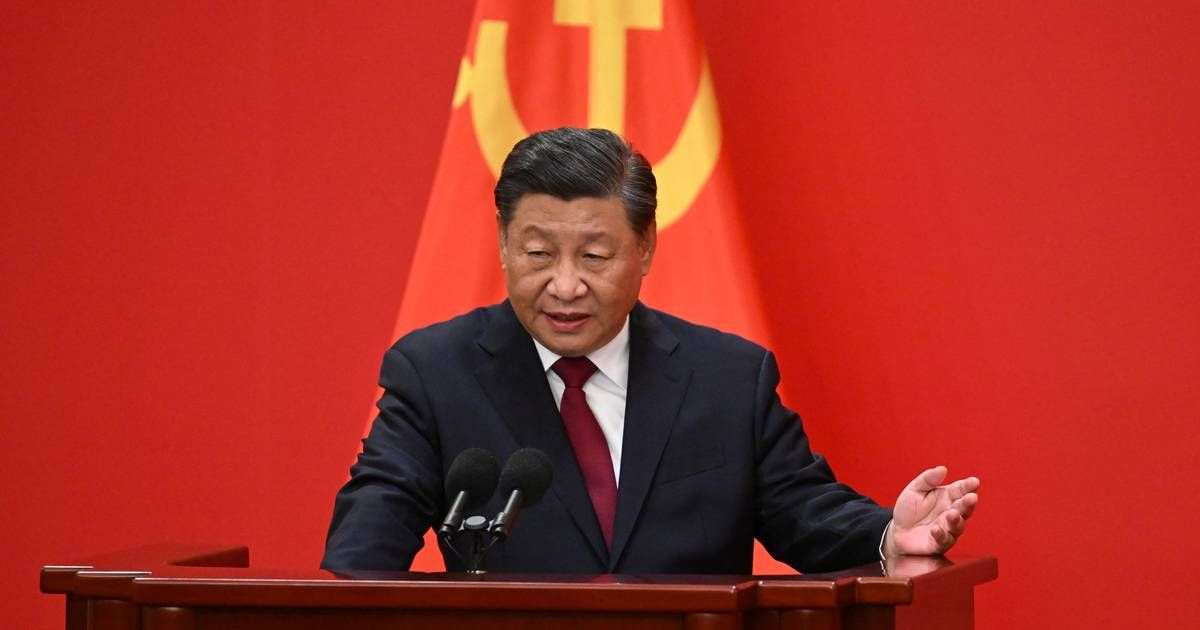
Πηγή Φωτογραφίας: AP Photo//Xi Pushes New Middle East Security Order — China Moves Into the Space Long Dominated by the US



Chinese President Xi Jinping has used his visit to Egypt to advance a much bigger proposition than closer bilateral ties: a new security architecture for the Middle East.
During talks with Egyptian President Abdel Fattah al-Sisi in Cairo, Xi urged countries across the region to resist external interference, strengthen their strategic autonomy and explore a new regional security framework.
The message comes at an exceptionally sensitive moment.
Months of conflict involving the United States and Iran have disrupted trade routes, shaken regional economies and forced traditional US partners to reconsider how heavily they should depend on Washington for their long-term security.
Against that backdrop, Beijing sees an opportunity.
China is no longer positioning itself merely as the Middle East’s largest commercial partner or a major buyer of energy.
It increasingly wants a role in shaping the region’s security and geopolitical order.
“Masters of Their Own Destiny”
Xi’s language in Cairo was particularly revealing.
The Chinese leader argued that Middle Eastern countries should become “masters of their own destiny” and explore a new regional “security architecture.”
Behind the diplomatic language lies a significant geopolitical proposition.
For decades, much of the Middle East’s security order — particularly in the Gulf — has been underpinned by American military power, security guarantees and defence partnerships.
China is now promoting a different model: greater regional autonomy, less dependence on outside powers and a more multipolar system of security.
Beijing does not explicitly say that Washington should leave the Middle East.
But its message is increasingly clear: the United States should no longer be the only power around which the region’s security architecture revolves.
Why the Timing Matters
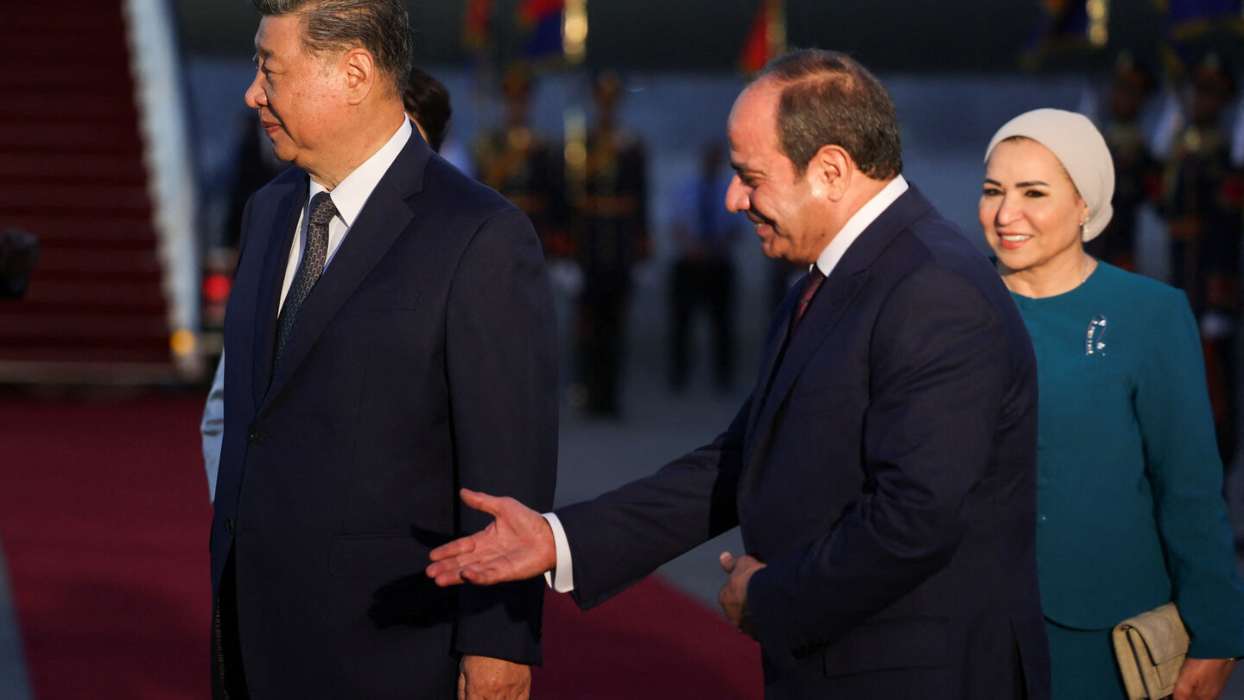
This is Xi’s first Middle East trip in four years, and the timing is critical.
The US war against Iran has transformed the strategic environment.
Conflict has disrupted traffic through the Strait of Hormuz and Bab al-Mandeb, increased energy risks and forced Gulf and regional governments to reconsider their exposure to escalating confrontation.
Some long-standing American partners are consequently looking for additional strategic options.
China is positioning itself as one of them.
Beijing’s advantage is that it maintains significant relations with countries on multiple sides of the region’s geopolitical divides.
That gives Xi an opportunity to present China as a partner capable of dealing simultaneously with Arab states, Iran and other regional actors.
Egypt Calls It “Strategic Balance”
Egypt is an ideal partner for this strategy.
Cairo remains a major US defence partner and receives roughly $1.3 billion annually in American military assistance.
But Egypt has also been steadily expanding its economic and military cooperation with China.
Ahead of Xi’s visit, Sisi described Egypt’s foreign-policy approach as one of “strategic balance.”
That phrase captures Cairo’s strategy.
Egypt is not seeking to abandon Washington.
It wants more options.
Former Egyptian diplomat Ayman Zaineldine told Reuters:
“Egypt wants to widen the circle of its relations with major world powers, including China.”
For Beijing, that is precisely the opening it needs.
Chinese Fighters and Egyptian Rafales
The changing relationship is becoming visible in military cooperation as well.
During the recent “Eagles of Civilization” exercises, Egypt and China conducted an unusual air-combat drill involving Chinese-made J-16 fighters and French-made Rafale aircraft.
The symbolism was difficult to miss.
Egypt, whose military has historically depended heavily on Western and American systems, is experimenting with deeper operational cooperation with China.
That does not mean Cairo is switching military camps.
But it demonstrates its determination to diversify.
And military diversification gives Egypt greater bargaining power with all of its partners.
Xi Targets the World’s Strategic Sea Lanes
One of the most important elements of Xi’s message concerned freedom and security of navigation.
The Chinese president said Beijing was ready to cooperate with regional states to safeguard shipping routes.
That is not simply diplomatic rhetoric.
The Strait of Hormuz, Bab al-Mandeb, Red Sea and Suez Canal form one of the most strategically important commercial corridors on the planet.
For China, their security is fundamental.
Beijing depends heavily on Middle Eastern energy and on maritime trade connecting Chinese factories with European and African markets.
Instability along these routes therefore represents a direct threat to China’s economy.
This helps explain why Beijing’s Middle East strategy is gradually moving beyond investment and diplomacy into questions traditionally associated with security policy.
From Ports to Semiconductors
The economic agreements reached in Cairo reveal another important shift.
China and Egypt agreed to expand cooperation in:
- data centres;
- semiconductors;
- critical-mineral supply chains;
- advanced industries;
- security and counterterrorism;
- and greater use of their own currencies in bilateral trade and investment.
This represents a significant evolution.
The first phase of China’s expansion across the developing world was dominated by infrastructure — roads, railways, ports and power plants.
The next phase increasingly involves technology, industrial capacity, digital infrastructure and control over strategic supply chains.
Egypt sits at the intersection of all of them.
Suez Becomes Even More Important to Beijing
Egypt’s geography gives the relationship extraordinary strategic value.
With more than 110 million people, the country offers China a huge domestic market.
But the greater prize is location.
The Suez Canal connects Asian manufacturing with European consumers and sits between the Red Sea and Mediterranean.
According to Egyptian government figures cited by Reuters, the Suez Canal Economic Zone has already attracted roughly $4 billion in Chinese investment.
Chinese companies are involved in container terminals, green hydrogen, manufacturing, industrial infrastructure and satellite-related projects.
Egyptian authorities also announced plans during Xi’s visit to expand a Chinese-developed industrial zone, while China’s ZC Rubber Group signed a preliminary agreement to examine a $500 million tyre-manufacturing complex.
China is therefore building more than commercial relationships.
It is constructing strategic economic nodes along the routes connecting Asia, Africa and Europe.
Why Egypt Matters Beyond Economics
H. A. Hellyer of the Royal United Services Institute highlighted another part of Cairo’s value to Beijing.
Egypt offers not only investment opportunities but substantial diplomatic influence across the Arab world, Africa and particularly on the Palestinian issue.
That matters because China increasingly wants to present itself as a diplomatic power in the Middle East rather than simply an economic partner.
Its earlier role in facilitating rapprochement between Saudi Arabia and Iran offered a glimpse of that ambition.
Xi’s proposal for a broader regional security architecture takes the strategy one step further.
The Message to Washington
China is not currently offering Egypt an alternative equivalent to America’s military alliance network.
Nor does Beijing possess the enormous regional military infrastructure Washington has built over decades.
That distinction matters.
The Chinese strategy is subtler.
Beijing does not need every Middle Eastern country to abandon the United States.
It only needs them to conclude that Washington should no longer be their sole strategic option.
Every new Chinese investment, military exercise, technology agreement or security partnership reduces exclusivity in the traditional US-led system.
And over time, that can reshape the balance of power without China ever formally replacing the United States.
Why Greece Should Be Watching
The shift also has implications for Athens.
Greece has developed an increasingly important strategic relationship with Egypt, particularly around the Eastern Mediterranean, energy and maritime issues.
China, meanwhile, already possesses a major economic footprint in Greece through COSCO’s presence at the Port of Piraeus.
A stronger Chinese presence in Egypt and around Suez therefore adds another layer to the geopolitical competition surrounding the Eastern Mediterranean.
The region can no longer be viewed primarily through the interaction of the US, Europe, Russia, Türkiye and the Middle Eastern powers.
China is becoming increasingly difficult to leave out of that equation.
Beijing Wants More Than Middle Eastern Markets
For years, China’s Middle East strategy could be described relatively simply: secure energy, expand trade and build infrastructure while avoiding the region’s political conflicts.
That model is changing.
China still has little interest in assuming the enormous military costs carried by the United States.
But it increasingly wants influence over diplomacy, technology, strategic supply chains, maritime security and the institutions that will shape the region’s future.
Xi’s call from Cairo for a new security architecture is perhaps the clearest evidence yet of that transition.
China is not yet saying it wants to replace America in the Middle East. It is telling Middle Eastern capitals that they no longer need to depend exclusively on America.
In a region already searching for greater strategic autonomy, that distinction could eventually prove transformative.
Source: pagenews.gr
Διαβάστε όλες τις τελευταίες Ειδήσεις από την Ελλάδα και τον Κόσμο