The European Union has issued one of its clearest warnings yet to Turkey over reports that Ankara is preparing legislation linked to its controversial “Blue Homeland” (Mavi Vatan) maritime doctrine, reaffirming that any unilateral actions violating international law or the sovereign rights of EU member states are unacceptable.
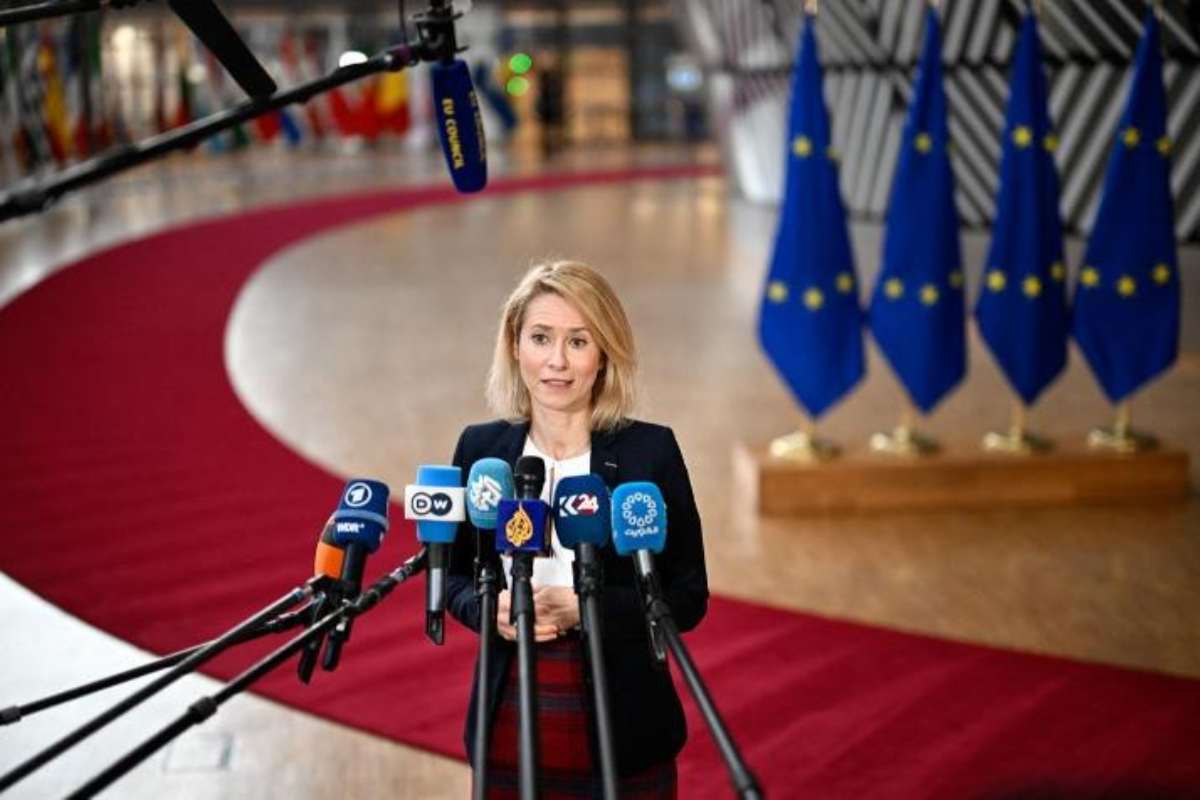
The statement was made by EU High Representative for Foreign Affairs and Security Policy and Vice-President of the European Commission Kaja Kallas, in response to a written question submitted by Giannis Maniatis, Head of the PASOK delegation in the European Parliament and Vice-President of the Socialists & Democrats (S&D) Group.


Brussels Monitoring Turkey’s Legislative Plans
In her official reply, Kallas confirmed that the European Commission is closely following reports regarding Turkey’s planned maritime jurisdiction bill.
“The Commission is closely monitoring media reports and public statements concerning preparations for the submission to the Grand National Assembly of Turkey of draft legislation on maritime jurisdiction areas.”
She noted, however, that the proposed legislation has not yet been officially published and therefore the Commission would not comment on media speculation regarding its contents.


“Respect Member States’ Sovereign Rights”
Kallas delivered an unequivocal message regarding Turkey’s obligations under international law.
“The European Union has repeatedly made it clear that Turkey is expected to demonstrate an unequivocal commitment to good neighbourly relations, international agreements, and the peaceful settlement of disputes.”
She further emphasized that the EU remains fully committed to defending both its own interests and those of its member states.
“The EU remains committed to safeguarding its interests and those of its Member States, while preserving regional stability.”
Particular emphasis was placed on respect for sovereign rights, with explicit reference to the United Nations Convention on the Law of the Sea (UNCLOS).
“The EU attaches the utmost importance to ensuring the sovereign rights of all Member States, in full respect of international law, including the United Nations Convention on the Law of the Sea.”
Warning Against Unilateral Actions
Perhaps the strongest part of Kallas’ response concerns Ankara’s future conduct in the Eastern Mediterranean.
She stressed that refraining from unilateral actions is not merely desirable but a prerequisite for improved EU–Turkey relations.
“Refraining from unilateral actions that violate international law and the sovereign rights of Member States is an essential condition for ensuring a stable and secure environment in the Eastern Mediterranean. It is also necessary for developing a cooperative and mutually beneficial relationship between the European Union and Turkey.”
The statement is widely viewed as a direct response to Turkey’s long-standing maritime claims under the “Blue Homeland” doctrine, which Greece and Cyprus argue violate international maritime law.
Maniatis Raised Questions About EU Funding
In his parliamentary question, Giannis Maniatis also sought clarification over reports that DEHUKAM, a Turkish maritime law research center involved in drafting Turkey’s maritime strategy, may have collaborated with the Climate Change Regional Activity Centre (CC/RAC), raising concerns about possible links with EU-supported initiatives.
Kallas dismissed suggestions that EU funding had contributed to the preparation of the proposed legislation.
She clarified that CC/RAC was not established specifically in cooperation with the European Union and is fully financed through direct Turkish contributions, while its activities are now supervised under the mandate adopted during the 2025 Conference of the Parties (COP).


A Significant Political Signal
Although the Commission refrained from commenting on the unpublished Turkish legislation itself, Kallas’ response sends a clear diplomatic signal that Brussels expects Ankara to fully comply with international law and respect the sovereign rights of Greece, Cyprus, and all EU member states.
At a time when EU–Turkey relations remain complex and geopolitical tensions persist in the Eastern Mediterranean, the Commission’s position reinforces the Union’s longstanding stance that maritime disputes must be resolved peacefully and in accordance with international law—not through unilateral legislative or political initiatives.
Source: pagenews.gr