Turkey: ‘Israeli Missiles on Greek Islands Are Targeting Us’-Ankara Reopens Kastellorizo
 ΧΡΟΝΟΣ ΑΝΑΓΝΩΣΗΣ 11 '
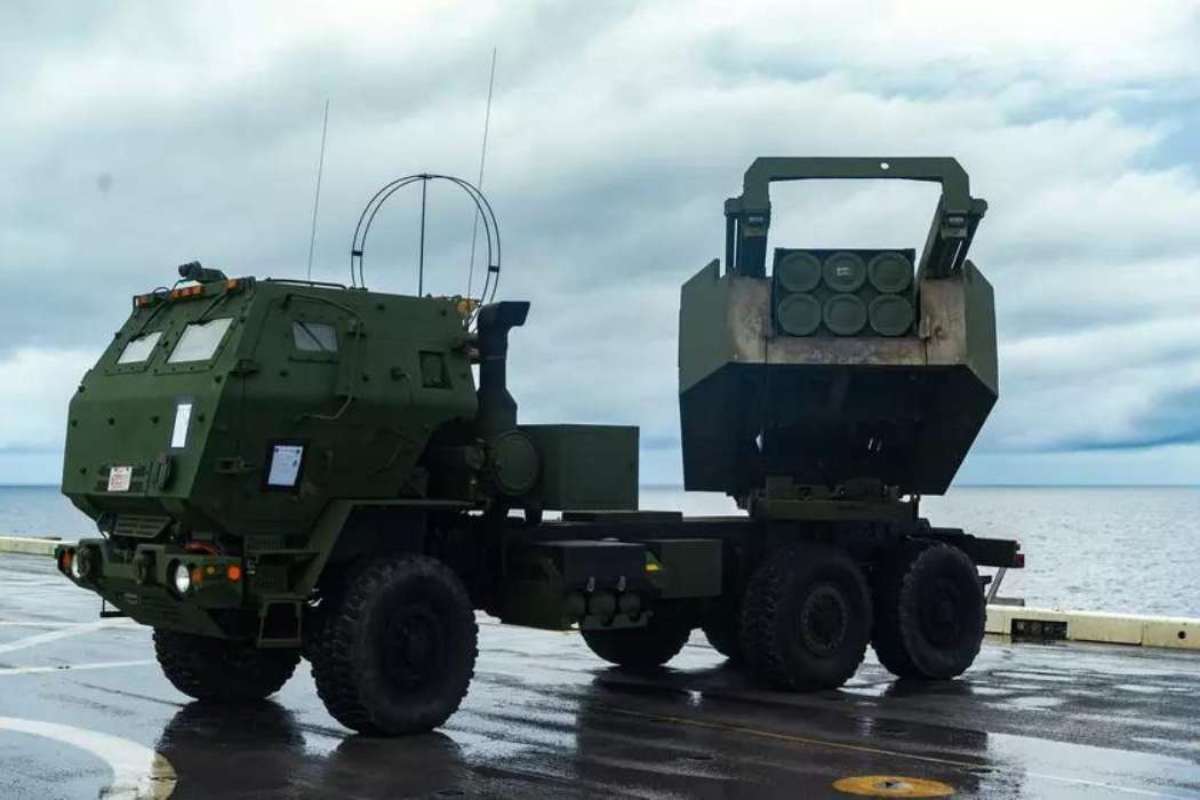
Πηγή Φωτογραφίας: AP Photo//Turkey: ‘Israeli Missiles on Greek Islands Are Targeting Us’ — Ankara Reopens Kastellorizo and Demilitarization Disputes



Ankara appears to be opening a new chapter in its confrontation with Athens — this time putting not only the Greek islands, but also the rapidly deepening Greece-Israel defense relationship, at the center of the dispute.
Turkish media have once again raised claims concerning the demilitarized status of Greek islands, displaying maps of the Aegean and increasingly portraying Greece’s military modernization as an issue directly affecting Turkey’s national security.
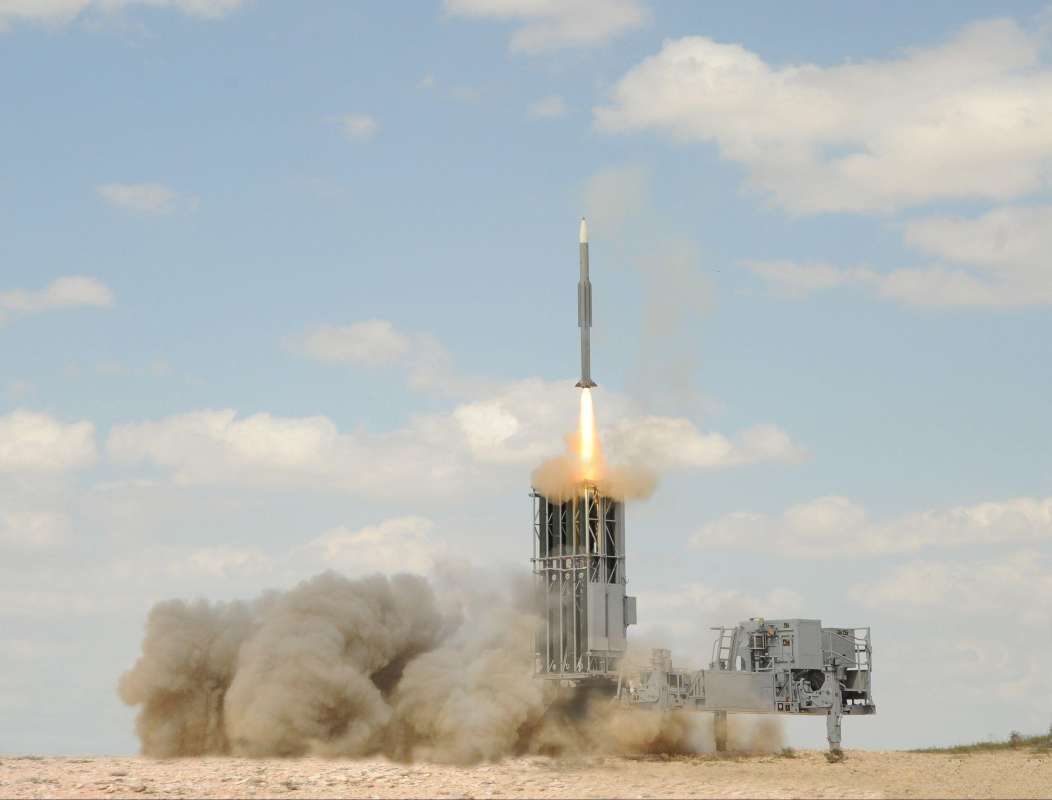
At the heart of this emerging narrative are Israeli-made Barak MX systems and, more broadly, Greece’s new multilayered air and missile defense architecture known as the “Achilles Shield.”
The message coming from the Turkish public debate is increasingly clear: Greece’s air-defense buildup is no longer being portrayed merely as another procurement program. It is being incorporated into the wider Turkish narrative surrounding sovereignty, the military status of the islands, maritime zones and Ankara’s “Blue Homeland” doctrine.
‘A Deployment That Targets Turkey’
A Turkish television program recently displayed maps of the Aegean and listed Greek islands that, according to Turkey’s interpretation of the Lausanne and Paris treaties, should remain under restrictions concerning militarization.
The islands cited included Samothrace, Lemnos, Lesvos, Chios, Psara, Samos, Ikaria, Patmos, Leros, Kalymnos, Kos, Tilos, Karpathos, Rhodes, Symi and Kastellorizo.
The Turkish broadcaster then made a particularly pointed claim, alleging that Israeli-made Barak MX missiles “are reportedly being deployed on these Greek islands, facing Turkey.”
The presenter went further:
“You may ask: ‘What does this mean?’ Well, it is not something pleasant. It really is not pleasant at all. It almost creates the image of a deployment targeting Turkey.”
This is a claim made by the Turkish media outlet, not a confirmed description of the operational deployment of the Greek Armed Forces.
Its political significance, however, should not be underestimated.
It reveals how the new Greek air-defense architecture is beginning to be incorporated into Ankara’s broader strategic narrative on the Aegean.
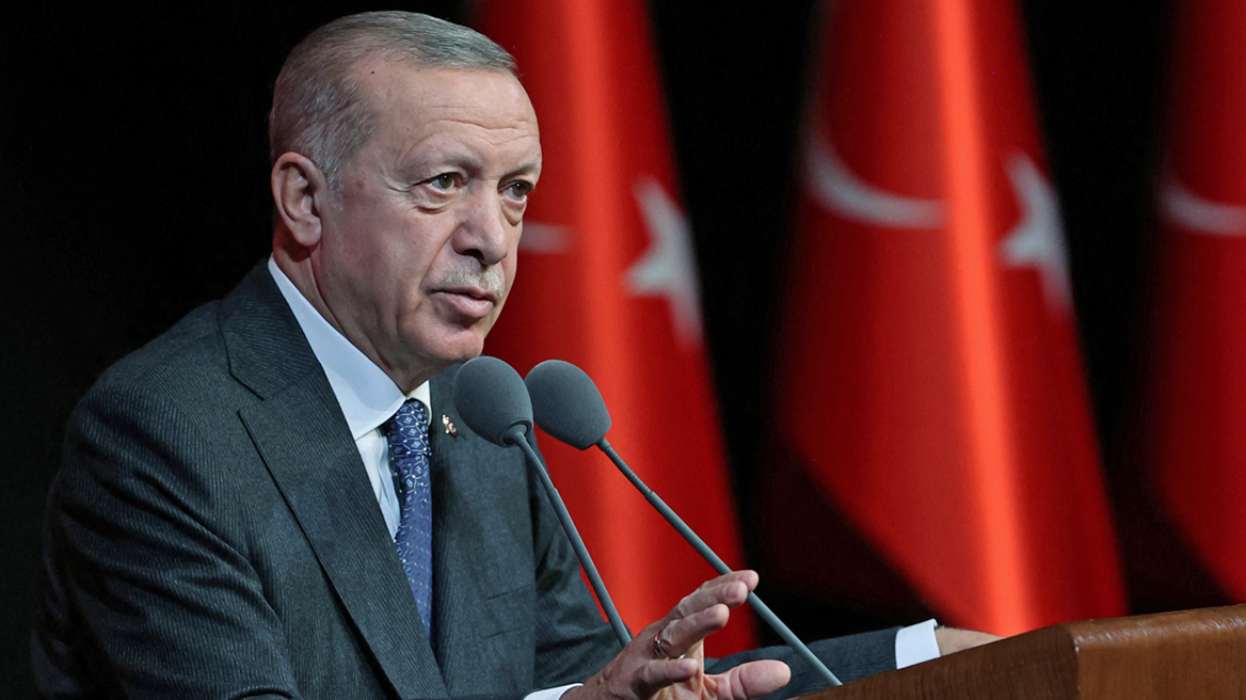
Barak MX Enters the Greek-Turkish Equation
The Achilles Shield is far more ambitious than the procurement of a single missile system.
Greece’s emerging architecture includes David’s Sling, SPYDER and Barak MX systems and is designed to create a multilayered defense network capable of confronting threats ranging from aircraft and drones to cruise and ballistic missiles.
The critical change is not simply the acquisition of additional interceptors.
It is the creation of an integrated network of radars, sensors, command-and-control systems and weapons capable of responding to different threats across multiple ranges.
That is precisely what Ankara is watching.
Turkey is no longer assessing Greek military modernization solely through the number of Rafale fighters, F-35s or new frigates Athens acquires.
It is increasingly looking at how all these capabilities can be connected into a broader deterrence architecture.
Kastellorizo Returns to Center Stage
The same Turkish debate has also brought Kastellorizo back into the spotlight.
Turkish analysts attribute particular strategic importance to the Greek island because of its potential role in maritime delimitation in the Eastern Mediterranean.
International relations analyst Tolga Sakman argued:
“Kastellorizo is essentially the island Greece uses in order to claim a very large maritime area in the Eastern Mediterranean as a Greek Exclusive Economic Zone.”
He also challenged the Greek approach to the maritime effect of islands:
“It is not a continental coast. It is not a continental landmass and therefore should not be treated in the same way.”
This represents the Turkish legal and political position, rather than a definitive interpretation of international law.
Athens takes the opposite position, maintaining that islands generate maritime zones and rejecting attempts to deprive Greek islands of maritime effect.
The dispute is also central to Greece’s rejection of the Turkey-Libya maritime memorandum, which disregards the effect of Greek islands including Crete and Kastellorizo.
Demilitarization Returns to the Agenda
The second major front concerns the military status of the Greek islands.
Turkey has recently revived the issue in increasingly forceful terms, while Ankara’s media have linked the debate directly to the prospect of new Israeli-made defense systems being deployed in the Aegean.
Athens rejects any linkage between Greek sovereignty and the military status of the islands.
It also stresses that there is no single legal regime governing all Aegean islands.
Lesvos, Chios, Samos and Ikaria are governed by provisions stemming from the 1923 Treaty of Lausanne; the Dodecanese by the 1947 Paris Peace Treaty; while Greece also invokes the 1936 Montreux Convention in relation to Lemnos and Samothrace.
Athens further invokes its right to self-defense under Article 51 of the UN Charter, pointing to Turkey’s Aegean Army opposite the islands and the Turkish parliament’s 1995 casus belli should Greece extend its territorial waters to 12 nautical miles.
From ‘Calm Waters’ Back to Military Friction
The deterioration is not confined to rhetoric.
Recent months have seen renewed Turkish military activity in the Aegean, including UAV flights and violations of Greek airspace.
On August 18 alone, 25 violations of Greek airspace and 14 breaches of air traffic regulations within the Athens FIR were recorded. Turkish military UAV activity has also intensified in the northeastern Aegean.
The shift is significant because it follows the period of relative de-escalation established after the 2023 Athens Declaration on Friendly Relations and Good Neighborliness.
The underlying disputes were never resolved. They were being managed.
That distinction is now becoming increasingly important.
Ankara Is Rewriting the Aegean Agenda: Barak MX, Kastellorizo and the ‘Blue Homeland’
The significance of the latest escalation lies precisely here.
Turkey is increasingly treating what were previously separate Greek-Turkish disputes as parts of a single strategic equation.
The emerging chain is:
Greek islands → demilitarization → Israeli defense systems → Kastellorizo → maritime zones → Blue Homeland.
That linkage may signal a broader change in Ankara’s approach.
Why the Achilles Shield Changes the Military Calculation
The first reason is purely military.
Greece has already substantially upgraded its capabilities through Rafale fighters, new-generation frigates and the planned acquisition of F-35s.
The Achilles Shield, however, adds something fundamentally different: integrated, multilayered air and missile defense.
The strategic value of the system does not depend solely on the range of a Barak MX or David’s Sling interceptor.
It lies in the ability of different sensors, radars and interceptors to operate as one network.
For any potential adversary, that complicates the operational planning required to penetrate Greek airspace or attack critical military and civilian infrastructure.
And that helps explain why the Turkish debate has shifted from individual Greek weapons systems to the architecture connecting them.
Why Ankara Is Linking Weapons to Sovereignty
This is where the deeper geopolitical contest begins.
If Ankara portrays the deployment of new defense systems on Greek islands as a violation of international treaties, it can attempt to transform a Greek defense procurement decision into a diplomatic dispute.
If it simultaneously connects that dispute to Kastellorizo and maritime delimitation, the argument immediately moves beyond military deployments and into questions of sovereignty, jurisdiction and regional power.
That is why the latest Turkish media narrative matters.
The issue is not merely what appears on a television map.
It is an attempt to connect Greece’s growing deterrence capabilities to Turkey’s wider claims in the Aegean and Eastern Mediterranean.
Why Kastellorizo Is the Key
Kastellorizo sits at precisely the point where the two countries’ competing strategic visions collide.
For Greece, it is an integral part of Greek sovereign territory and an important factor in the maritime geography of the Eastern Mediterranean.
For Turkey, the island sits at the center of Ankara’s effort to limit the maritime effect attributed to Greek islands and establish a fundamentally different map of maritime jurisdiction.
That is why Kastellorizo repeatedly returns to Turkish rhetoric whenever tensions rise over maritime zones.
And it explains why the island is now being brought into the same discussion as Israeli missile systems and demilitarization.
‘Blue Homeland’ Meets Greece’s New Deterrence Architecture
This brings the debate back to Mavi Vatan — Turkey’s “Blue Homeland” doctrine.
The concept is about far more than a map.
It reflects a broader Turkish vision of maritime power, strategic depth and influence across the Aegean and Eastern Mediterranean.
Greece is pursuing a different strategy.
Athens is investing in military modernization, stronger international partnerships and deeper integration with American, European and Israeli security structures.
Alexandroupolis has also emerged as an important logistics hub supporting NATO’s eastern flank, further increasing Greece’s strategic relevance beyond the narrow context of Greek-Turkish relations.
The result is a changing regional balance in which both countries increasingly view military capability, maritime jurisdiction and alliances as interconnected.
The Real Risk: The End of the ‘Calm Waters’ Strategy
The 2023 Athens Declaration never resolved the fundamental disputes between Greece and Turkey.
What it did was create a framework for managing them without allowing every disagreement to become a crisis.
That framework is now under pressure.
Renewed disputes over the military status of the islands, Kastellorizo, maritime zones and the increasing linkage of Israeli defense technology to the Aegean create a considerably more difficult environment for diplomacy.
The most important conclusion, therefore, is that Ankara is not simply reacting to a new Greek missile system.
It is reacting to a Greece seeking a different strategic position in the Eastern Mediterranean — with stronger air defenses, a deeper defense relationship with Israel, next-generation weapons and growing strategic value for NATO and the United States.
At the same time, the more Turkey connects those changes to sovereignty and maritime rights, the greater the risk that competition moves beyond deterrence and back toward crisis politics.
That is why the Barak MX is not, ultimately, the story on its own.
The real contest is over who will shape the balance of power, maritime order and security architecture of the Aegean and Eastern Mediterranean over the next decade.
Source: pagenews.gr
Διαβάστε όλες τις τελευταίες Ειδήσεις από την Ελλάδα και τον Κόσμο