Greece Sends 3+1 Messages to Turkey from the UN: Dialogue, but No Concessions on Sovereignty
 ΧΡΟΝΟΣ ΑΝΑΓΝΩΣΗΣ 8 '
Πηγή Φωτογραφίας: eurokinissi//Greece Sends 3+1 Messages to Turkey from the UN: Dialogue, but No Concessions on Sovereignty



Greece is taking its message on Greek-Turkish relations to the United Nations at a particularly sensitive moment in the Eastern Mediterranean.
The government’s strategy combines two objectives: preserving the channels of communication established with Turkey while making clear that de-escalation will not come at the expense of what Athens considers its sovereignty and sovereign rights.
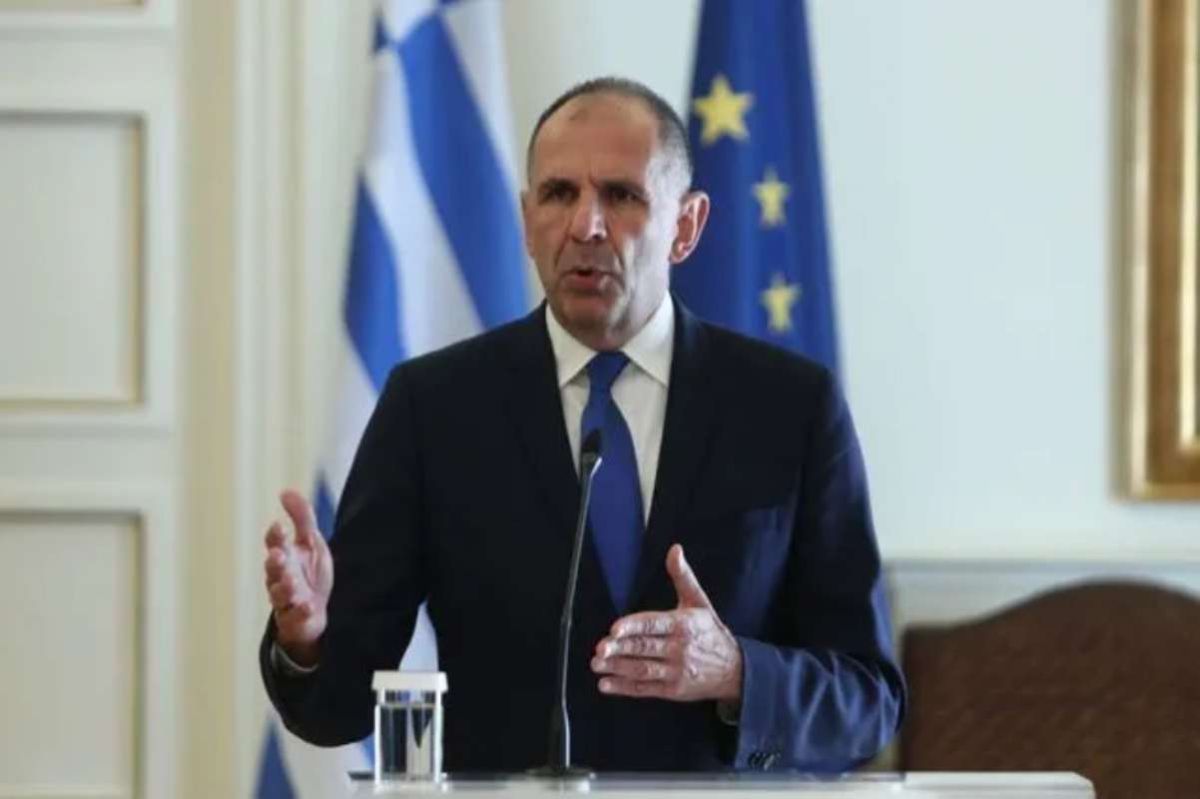
Foreign Minister George Gerapetritis set out that position ahead of the UN General Assembly, acknowledging a recent increase in tensions in Turkish rhetoric.
“The message we are conveying in New York is that Greece seeks stability, peace and good-neighbourly relations in the Eastern Mediterranean, but without any concession on issues of sovereignty and sovereign rights,” he said.
1. Athens: Continental shelf and EEZ are the only dispute that can go before international jurisdiction
The first message concerns the scope of the Greek-Turkish dispute itself.
Athens insists that there is only one issue that could be submitted to international jurisdiction: the delimitation of the continental shelf and Exclusive Economic Zone.
Gerapetritis reiterated:
“Greece’s position is absolutely clear and longstanding. The delimitation of the continental shelf and the Exclusive Economic Zone is the one and only dispute between Greece and Turkey that can be brought before international jurisdiction.”
That position excludes several other issues raised by Ankara from the agenda Athens is prepared to negotiate.
Gerapetritis described Turkish claims concerning so-called “grey zones” and the demilitarisation of Greek islands as “arbitrary and unfounded”, adding that they are not matters for negotiation.
The distinction is fundamental to the Greek strategy: Athens supports dialogue over maritime delimitation but rejects a broader negotiation over sovereignty.
2. Keep talking even when “the sea gets a little rough”
The second message is that Greece does not intend to abandon the dialogue framework established through the Athens Declaration.
Prime Minister Kyriakos Mitsotakis recently acknowledged that the atmosphere had become more difficult, saying that “the sea has become a little rough lately.”
Nevertheless, he argued that the communication channels developed between the two countries remain useful.
“The channels of communication are institutionalised and remain open. And that is how it should be,” Mitsotakis said.
For Athens, therefore, dialogue and disagreement are not mutually exclusive.
The purpose of the communication mechanism is partly to prevent political rhetoric or an incident in the Aegean and Eastern Mediterranean from escalating into a wider crisis.
3. Greece says defence decisions will not be dictated by threats
The third message concerns defence and the Greek islands.
Following renewed statements from Turkish Foreign Minister Hakan Fidan and questions over Greek weapons systems on the islands, government spokesman Pavlos Marinakis said Athens would make its defence decisions according to its own security requirements and national interests.
He stressed that every Greek decision is guided by the objective of strengthening the country and protecting its longstanding national interests, with “not even a hint of retreat,” while respecting international law.
His broader formulation was equally explicit:
“Greece neither retreats nor accepts threats, nor does it threaten. It continues to assert its rights, continues to grow stronger and continues to defend its longstanding national interests.”
This is intended to draw a distinction between deterrence and escalation: Athens says it does not seek confrontation with Turkey but will not allow Turkish objections to determine Greek defence planning.
+1. The 12-nautical-mile issue remains a sovereign-right question for Athens
The “plus one” concerns territorial waters.
Greece maintains that extending its territorial sea up to 12 nautical miles is a sovereign right under the UN Convention on the Law of the Sea.
Mitsotakis reiterated earlier this month that Greece retains “the inalienable right to extend its territorial waters to 12 miles, whenever and in whatever way it considers the timing most appropriate.”
Turkey is not a party to UNCLOS and has long objected to a Greek extension to 12 nautical miles in the Aegean. The Turkish parliament’s 1995 resolution authorising the government to take “all necessary measures” if Greece extended its territorial waters in the Aegean remains a major point of contention between the two countries.
For Athens, however, territorial waters are not treated as a bilateral dispute to be negotiated in the same category as continental-shelf and EEZ delimitation.
Gerapetritis: Conditions are not yet in place for the major negotiation
There is another important element behind the diplomatic messaging.
Despite maintaining dialogue with Ankara, the Greek government does not suggest that the two countries are currently close to an agreement that would take their maritime dispute to an international court.
Gerapetritis has said that “the conditions do not yet exist for a substantive discussion on delimitation to begin.”
He has also said separately that Greece and Turkey are not currently close to reaching a compromis that could pave the way for referral to The Hague.
That means the current Greek-Turkish dialogue is functioning primarily as a mechanism for managing differences and reducing the risk of escalation rather than as a mature negotiation toward a comprehensive settlement.
Why the UN matters
New York gives Athens an international stage on which to frame its positions primarily through the language of international law.
That matters at a time when the rules-based international system is under intense pressure from wars and territorial disputes elsewhere.
Gerapetritis argues that Greece’s strengthened diplomatic position allows it to enter talks with Turkey “with confidence and steadfast commitment to our principles, while presenting our arguments.”
Athens is also seeking to use Greece’s role at the UN Security Council to reinforce its wider diplomatic profile.
The objective is to present Greek-Turkish differences not simply as a bilateral rivalry but within a broader framework of international law, peaceful dispute settlement and regional stability.
No Mitsotakis-Erdoğan meeting announced
With the information currently available, no meeting between Mitsotakis and Turkish President Recep Tayyip Erdoğan has been announced on the sidelines of this year’s UN General Assembly.
That does not mean diplomatic communication has stopped.
It does, however, reduce expectations that New York itself will produce a major bilateral breakthrough.
Instead, Athens appears focused on publicly defining the boundaries within which it believes dialogue can continue.
The real test may come after New York
Speeches at the United Nations can clarify positions. They cannot determine how either country will react when those positions are tested at sea.
That is why the next significant test of Greek-Turkish relations may come not in a UN conference room but in the Eastern Mediterranean.
The Greece-Cyprus electricity interconnector, survey activity in areas where maritime boundaries have not been delimited, Turkey’s reaction to Greek defence deployments and the wider debate over maritime rights all have the potential to test the resilience of the current de-escalation.
The central Greek message from New York is therefore deliberately two-track: Athens wants communication and stability with Ankara, but says that neither dialogue nor calm relations imply negotiations over Greek sovereignty.
Source: pagenews.gr
Διαβάστε όλες τις τελευταίες Ειδήσεις από την Ελλάδα και τον Κόσμο