USS Abraham Lincoln: Nine Months at Sea Push a Carrier Crew to the Breaking Point
 ΧΡΟΝΟΣ ΑΝΑΓΝΩΣΗΣ 9 '
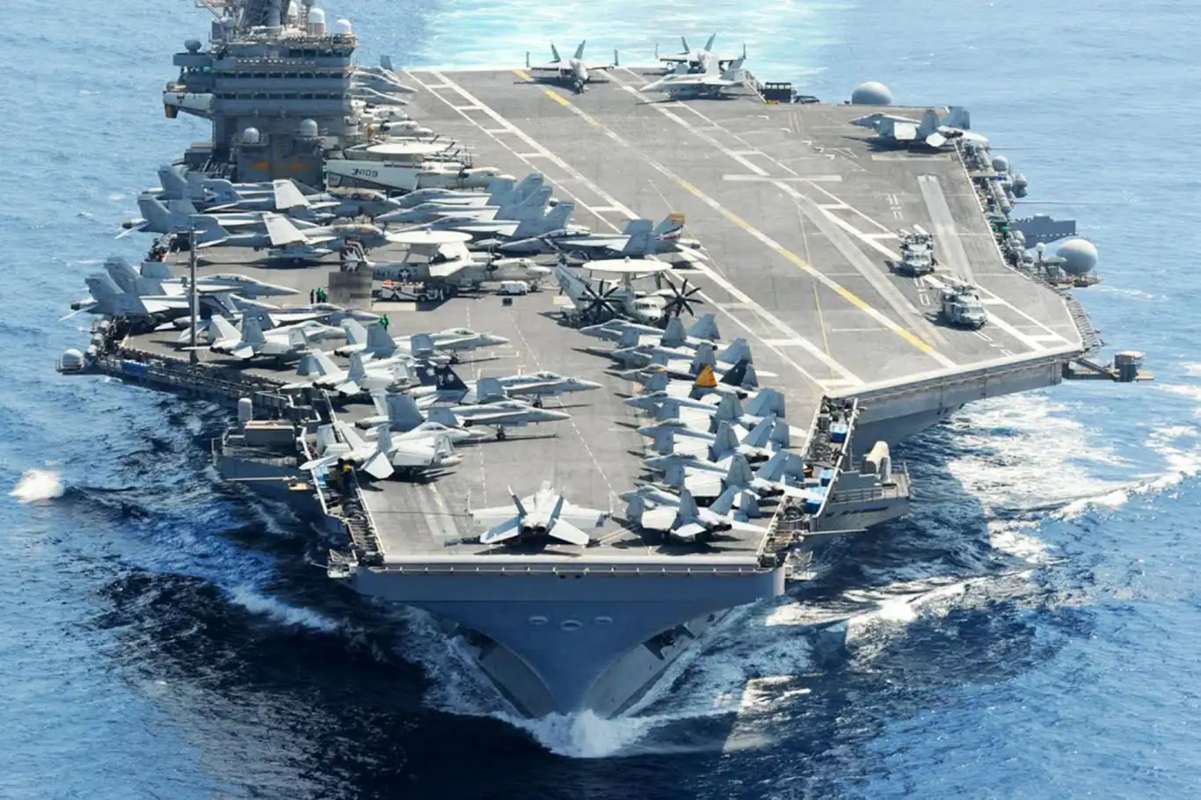
Πηγή Φωτογραφίας: AP Photo//USS Abraham Lincoln: Nine Months at Sea Push a Carrier Crew to the Breaking Point



The USS Abraham Lincoln is one of the most powerful warships in the world.
But after nine months of deployment and an extraordinary stretch at sea, the strategic debate surrounding the carrier is no longer focused only on aircraft, missiles or deterrence.
It is increasingly about the people keeping the ship operational.
The Guardian reports that military families and members of Congress are sounding the alarm over an intensifying mental-health crisis aboard the carrier, citing reports by Navy Times and Stars and Stripes of multiple incidents in which sailors allegedly tried to jump overboard.
One spouse told a Navy town hall in San Diego that her husband had sent her a message saying he hoped he would not wake up the following day.
The allegation has transformed what could otherwise have been treated as another difficult carrier deployment into a wider debate over endurance, command responsibility and the human cost of sustained U.S. military operations in the Middle East.
250 days without a normal port call
The numbers alone illustrate the strain.
According to the Guardian, the carrier’s crew has spent approximately 250 consecutive days at sea, with only two days ashore during the deployment.
Stars and Stripes had already reported in July that the Lincoln reached 207 consecutive days at sea, surpassing the previous record set by USS Dwight D. Eisenhower during the Covid era. The paper noted that carrier crews would normally expect port visits roughly every 30 to 45 days.
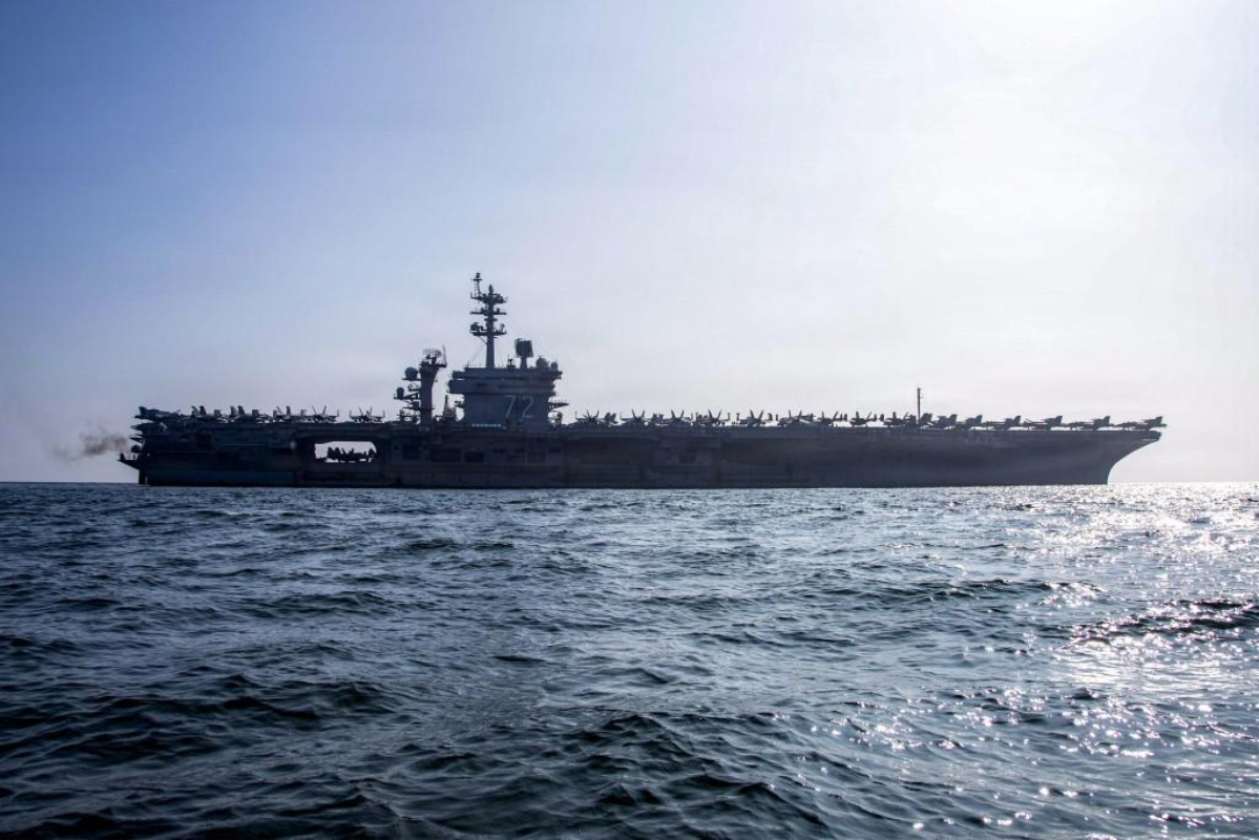
The contrast is striking.
A carrier is designed for long-range power projection, but its crews are not machines. Port calls are not simply recreational breaks. They allow rest, resupply, repairs and a psychological separation from the relentless routines of flight operations, watches, maintenance and combat readiness.
On the Lincoln, that cycle appears to have been stretched close to its limits.
“Moldy showers, broken toilets”
The controversy has deepened because the complaints are not limited to fatigue.
California Democratic congressman Mike Levin described reports from the ship involving moldy showers, broken toilets, laundry systems out of service for weeks, extended periods without hot water, shortages of basic hygiene products and inadequate meals.
The Guardian cited Levin describing one reported meal as little more than rice and tortillas, alongside shortages of soap, deodorant and toothpaste.
Those accounts matter militarily as much as politically.
On a nuclear-powered carrier, combat capability depends on thousands of people performing highly technical tasks under conditions where mistakes can be catastrophic.
Aircraft launch and recovery operations, reactor management, weapons handling, maintenance and damage control all require concentration and discipline.
Sleep deprivation, prolonged stress and deteriorating living conditions are therefore not merely welfare issues. They can become operational risks.
Suicide-attempt reports deepen the crisis
The most serious allegations concern the mental health of the crew.
The Guardian, drawing on reporting by specialist U.S. military publications, said there had been several reported attempts by sailors to go overboard.
Annabelle Loma told Navy Times that her husband had attempted to jump from the ship after repeated extensions of his deployment.
She said he feared that the incident could destroy a 13-year Navy career.
Another sailor was reportedly prevented from going overboard by a crewmate.
The U.S. Navy, however, has pushed back against the suggestion that there has been a measurable surge in suicidal behavior aboard the carrier.
In a statement cited by the Guardian, a Navy official said that, based on information available to the command, there had been no identified increase in reported suicidal ideation or suicide attempts aboard the ship. The Navy also said medical, religious and mental-health personnel remained available to the crew.
That distinction is important.
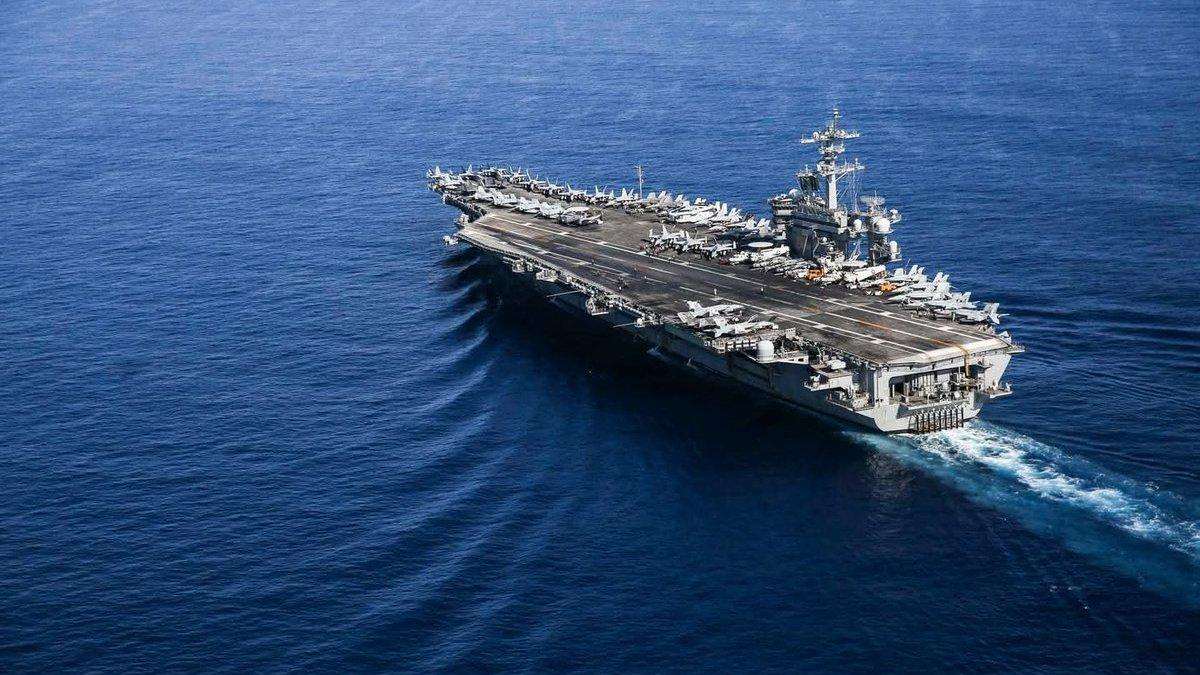
The allegations are serious, but the Navy contests the conclusion that they amount to a documented ship-wide increase in suicidal behavior.
The Iran war changed the deployment
The deployment was not originally expected to unfold this way.
The Lincoln left San Diego on 21 November and had initially been scheduled for operations in the Pacific.
It was later redirected toward the Middle East after the outbreak of the U.S.-Israeli war with Iran and became heavily involved in regional operations.
The carrier has subsequently operated as a major component of U.S. power projection in the region.
In June, Stars and Stripes reported that aircraft from the Lincoln were involved in operations connected to the American blockade of Iran, including an F/A-18 strike against a tanker that U.S. Central Command said was heading toward an Iranian port.
Earlier in the year, Washington assembled an extraordinary concentration of naval power in the region.
By late April, the United States had three aircraft carriers operating in the Middle East simultaneously — USS Gerald R. Ford, USS George H.W. Bush and USS Abraham Lincoln — something not seen there in more than two decades.
That concentration demonstrated overwhelming American military reach.
But the crisis aboard the Lincoln highlights the other side of carrier warfare:
power projection has a human endurance limit.
The hidden vulnerability of the carrier force
The geopolitical importance of the case goes beyond a single ship.
Aircraft carriers are among Washington’s most visible instruments of deterrence. Their arrival can alter military calculations without a shot being fired.
Yet they are also extraordinarily manpower-intensive systems.
The effectiveness of a carrier strike group rests on the physical and psychological resilience of thousands of sailors, aviation personnel and Marines operating under continuous pressure.
A nuclear reactor may allow a ship to remain at sea for very long periods.
Its crew cannot necessarily do the same.
That creates a fundamental tension in modern naval strategy.
The more frequently Washington relies on carriers to manage simultaneous crises, deter adversaries and sustain combat operations, the greater the strain placed on a relatively limited number of ships and crews.
A warning for Pentagon planners
The Lincoln controversy is therefore becoming a test for the Pentagon.
The question is not whether the carrier remains capable of launching aircraft today.
The deeper question is whether extremely prolonged deployments gradually consume the very readiness they are intended to demonstrate.
Military readiness is commonly measured through aircraft availability, weapons inventories, maintenance and training.
But human endurance is also a combat resource.
If experienced sailors become exhausted, psychologically distressed or unable to perform at their normal level, the effectiveness of a multibillion-dollar platform can deteriorate even when the ship itself remains technically operational.
That is particularly significant during sustained high-intensity operations against a capable regional adversary such as Iran.
Congress enters the fight
Political pressure is now growing.
Levin has accused Defense Secretary Pete Hegseth of dismissing sailors’ and families’ concerns after Hegseth characterized earlier accounts of poor conditions aboard the carrier as “fake news.”
Democratic congressman Jason Crow, a former Army Ranger who served in Iraq and Afghanistan, has also warned that pressure on service members and their families is increasing week after week.
The dispute therefore risks moving beyond Navy personnel management and into a broader congressional argument over the conduct and sustainability of U.S. operations against Iran.
A supercarrier can endure. Can its crew?
The USS Abraham Lincoln remains an extraordinary instrument of American military power.
Its air wing can conduct sustained combat missions hundreds of kilometers from the ship. Its escorts provide air defense, missile defense and long-range strike capabilities. Its nuclear propulsion gives it enormous endurance.
But the events now being reported aboard the carrier expose a limitation no propulsion system can overcome.
The ultimate endurance of a warship is still determined by the people serving on it.
For the United States, this is more than a personnel-management problem.
If Washington intends to sustain prolonged confrontations across the Indo-Pacific and Middle East simultaneously, the Pentagon must confront a strategic reality that the Lincoln is making increasingly difficult to ignore:
a carrier strike group may remain physically at sea for months — but combat power cannot be separated indefinitely from human resilience.
Source: pagenews.gr
Διαβάστε όλες τις τελευταίες Ειδήσεις από την Ελλάδα και τον Κόσμο