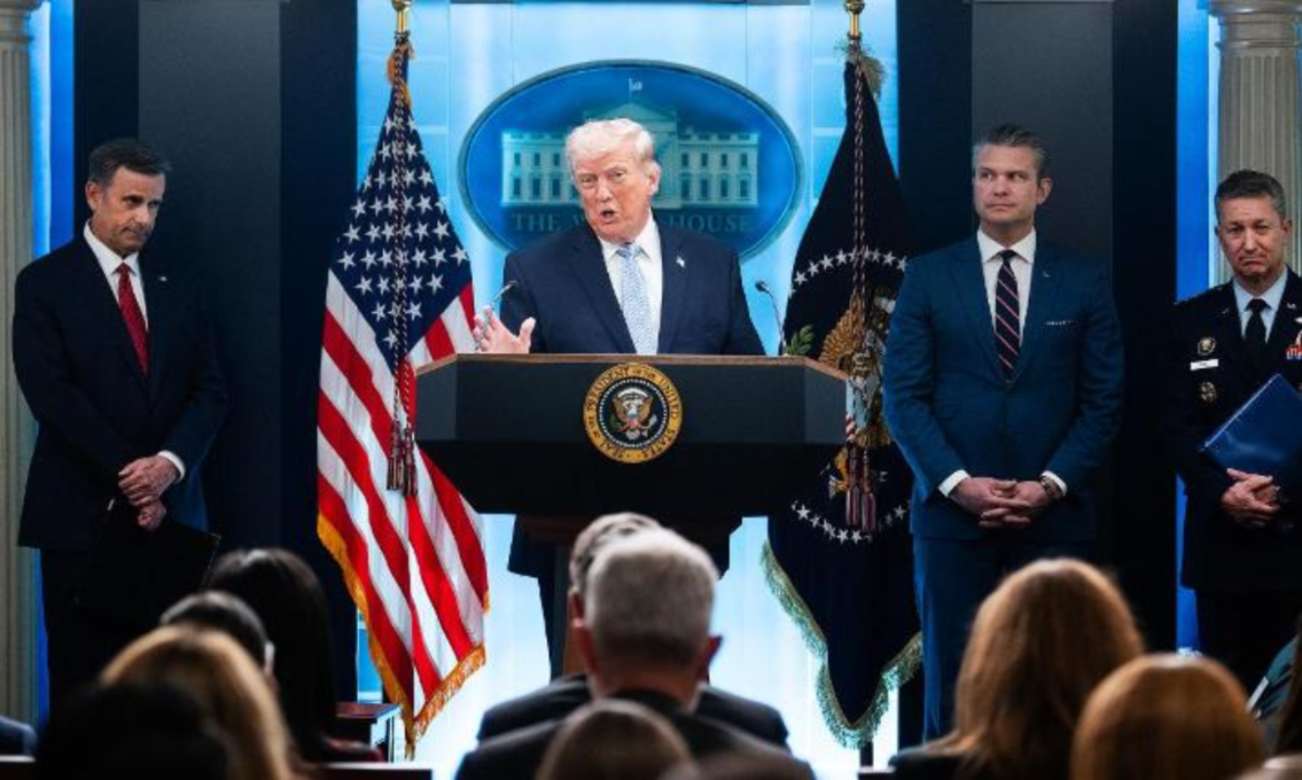
Donald Trump is dramatically widening the confrontation with Iran, warning that any country helping Tehran economically could itself face severe U.S. measures. The threat signals that Washington may be preparing to move the conflict from the battlefield into global banking, trade, shipping and energy markets.
The U.S. president promised “economic warfare and isolation on an unprecedented scale,” warning governments around the world against allowing their financial institutions, companies, airports or state entities to provide what he described as any form of “lifeline” to Iran.
The significance of Trump’s warning goes well beyond another round of sanctions against Tehran.
If implemented aggressively, Washington would effectively be telling third countries and international companies that they may eventually have to choose between doing business with Iran and maintaining unrestricted access to the American economy and financial system.
From sanctions on Iran to sanctions on those helping Iran
The most important element of Trump’s message is its scope.
The president did not restrict his warning to countries purchasing Iranian oil. He referred broadly to financial institutions, businesses, airports and government entities.
That raises the possibility of a much wider use of secondary sanctions, designed to punish foreign companies and financial institutions that continue conducting prohibited transactions with Tehran.
Such a strategy could dramatically increase Iran’s economic isolation.
But it could also create serious tensions between Washington and countries that maintain commercial ties with Tehran – including some states that have simultaneously attempted to mediate between the United States and Iran.


The biggest obstacle has a name: China
Oil remains at the heart of the confrontation.
According to 2025 data from analytics firm Kpler cited by Reuters, China purchased more than 80% of Iran’s seaborne oil exports.
That makes Beijing crucial to any American attempt to economically suffocate Tehran.
And it creates a major strategic dilemma for Trump.
Washington can pressure smaller economies to cut their exposure to Iran relatively quickly. Applying the same strategy against Chinese companies and financial institutions is another matter entirely.
Beijing has considerable economic leverage of its own, particularly through trade, manufacturing supply chains and critical minerals.
An attempt to completely shut Iranian crude out of China could therefore transform the Iran confrontation into something much larger: another U.S.-China economic conflict.
UAE moves against Iran
The United Arab Emirates has already taken a significant step.
Abu Dhabi announced the suspension of trade activities, commercial exchanges and financial transactions with Iran until further notice.
The decision followed a UAE Defense Ministry statement that two missiles launched from Iran had been detected before falling into the sea – an allegation Tehran rejected as baseless.
The development is strategically important because the Gulf states have historically served not only as commercial hubs but also, in different circumstances, as diplomatic channels between Iran and the West.
If Washington succeeds in convincing – or pressuring – more regional economies to sever financial links with Tehran, Iran’s room for economic maneuver could shrink considerably.


Hormuz remains Iran’s most powerful economic weapon
There is, however, another side to Trump’s strategy.
Iran possesses the ability to inflict economic pain far beyond its own borders through the Strait of Hormuz.
Before the war, roughly one-fifth of the world’s traded oil passed through the strategic waterway connecting the Persian Gulf with the Arabian Sea.
That means the confrontation is no longer simply about Washington and Tehran.
It potentially affects:
- global crude oil and LNG prices;
- tanker freight and insurance costs;
- Gulf economies;
- European and Asian energy security;
- inflation;
- and ultimately interest-rate expectations across major economies.
As long as normal shipping through Hormuz remains disrupted, Tehran retains an asymmetric weapon capable of producing consequences vastly greater than the size of the Iranian economy itself.
Two ceasefires failed – Trump changes weapons
Washington and Tehran have already announced ceasefire arrangements twice, in April and June, aimed in part at restoring shipping through Hormuz and creating the conditions for a broader settlement.
Both ultimately unraveled.
Trump is therefore increasing economic pressure while keeping military power in the background.
The strategy appears designed to achieve through financial strangulation and international isolation what Washington has so far failed to secure conclusively through warfare and diplomacy.
The White House wants a more restrictive nuclear agreement and control over Iran’s stockpile of highly enriched uranium.
Iran, meanwhile, maintains that it remains willing to negotiate but insists that negotiations cannot amount to surrender.
The risk for Trump: Iran can hit back economically
There is an obvious danger in Washington’s strategy.
Sanctions can increase the cost of resistance for Tehran. They cannot guarantee that Iran’s leadership will capitulate.
If economic pressure instead triggers further escalation around Hormuz, the result could be precisely what Washington wants to avoid: another global energy shock.
Higher oil prices would affect transportation, industry and household energy costs worldwide, potentially reigniting inflationary pressures just as governments and central banks attempt to stabilize their economies.
In other words, Iran does not need to match America’s financial power dollar for dollar.
It only needs to demonstrate that squeezing Tehran carries a price for the rest of the world.
The real battle may now be over who chooses Washington – and who chooses Tehran
Trump’s warning represents something bigger than another sanctions announcement.
It is an attempt to weaponize America’s enormous economic and financial reach.
The message to governments and corporations is increasingly stark: help Iran survive economically and you may lose access to something far more valuable – the United States.
For smaller countries, that calculation may be straightforward.
For China, it is not.

And that is why Trump’s latest threat could become one of the most consequential stages of the Iran conflict.
If Washington moves from rhetoric to comprehensive secondary sanctions, the battle will no longer be simply America versus Iran.
It could become a global contest over banking, oil, shipping and trade – forcing governments that have so far remained on the sidelines to decide which economic camp they are prepared to risk confronting.
Source: pagenews.gr