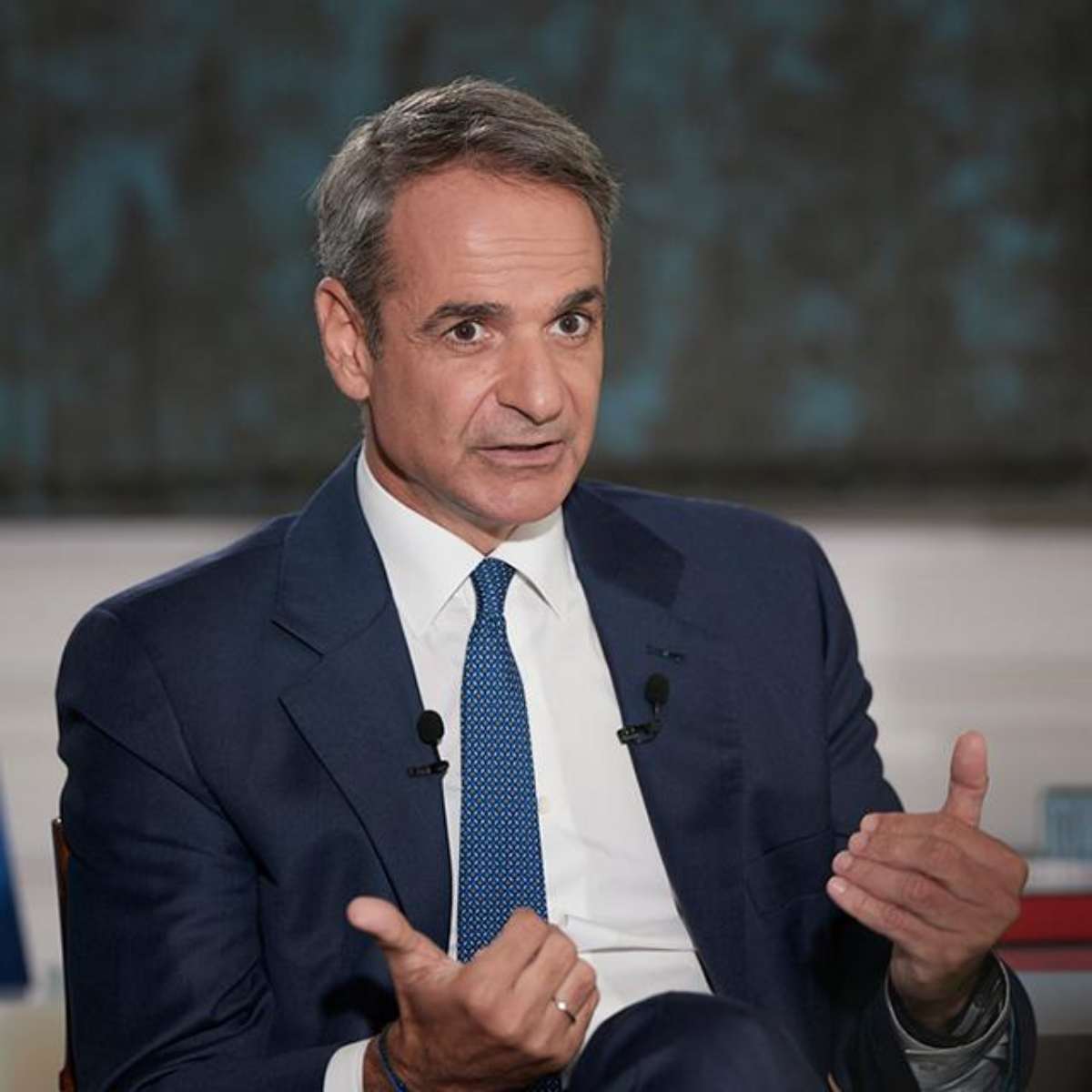
Prime Minister Kyriakos Mitsotakis used his latest weekly review to send one of his clearest messages yet to Turkey, linking energy infrastructure, foreign investment and sovereign rights.
The immediate backdrop is the renewed momentum behind the Great Sea Interconnector, the electricity link between Greece and Cyprus, as well as Ankara’s reaction to Greece’s new spatial-planning framework for renewable energy.
Mitsotakis’ message was blunt:
“Greece acts on the basis of international law, exercises its rights and will not allow threats or unlawful claims to determine its decisions.”
And then came the central political line:
“We consistently pursue dialogue and good-neighborly relations with Turkey. But dialogue does not mean retreat.”
France enters the GSI equation more deeply
A major development is the agreement for French infrastructure investor Meridiam to become majority shareholder in the Great Sea Interconnector company.
French cable giant Nexans is already a critical industrial partner in the project and is responsible for the difficult task of manufacturing and laying the subsea cable.
The French involvement gives the project a broader European and geopolitical dimension.
GSI — What changes
- Meridiam enters as majority investor
- Nexans remains the key cable contractor
- The project aims to end Cyprus’ electricity isolation
- Cyprus would connect directly to the European power system
- Greece strengthens its role as an Eastern Mediterranean energy hub
- The next critical phase is the resumption of seabed surveys and offshore works
Mitsotakis called the agreement “a strong vote of confidence in our energy infrastructure.”
He also argued that the project strengthens Greece strategically.
“It is another way in which Greece consolidates itself as the region’s main energy hub, gaining greater security and a stronger position, while opening the way for more clean energy from renewables.”
Energy is becoming geopolitics
The cable is no longer merely an energy project.
It is increasingly tied to Eastern Mediterranean power politics, especially after earlier Turkish objections to survey activity in maritime areas claimed by Greece under international law.
That makes the expanded French presence significant.
It internationalizes the commercial and political stakes of the project and adds another major European actor to an already sensitive maritime dispute.
Mitsotakis rejects Ankara’s “gray zones” rhetoric
The prime minister also addressed Turkey’s objections to Greece’s new spatial-planning framework for renewable energy.
Ankara has revived claims relating to so-called “gray zones” and the status of certain islands and maritime areas.
Mitsotakis rejected those claims categorically.
“Our position is clear and does not change: Greece acts on the basis of international law, exercises its rights and will not allow threats or illegal claims to determine its decisions.”


He then added:
“Dialogue does not mean retreat. And it certainly does not mean that we will stop doing what we consider right and necessary for our country.”
New planning rules add another layer
The new spatial frameworks for tourism and renewable energy, together with the forthcoming industrial framework, are designed to establish clearer national rules on where specific activities can and cannot develop.
For renewable energy, the new rules impose stricter limits in sensitive areas such as:
- small islands,
- Natura 2000 zones,
- forests,
- archaeological sites,
- and environmentally sensitive landscapes.
The government presents this as a domestic planning reform.
Turkey, however, has interpreted parts of the framework through the lens of longstanding maritime disputes.
That means a planning-policy issue is now also part of the broader Greek-Turkish geopolitical contest.
Athens’ new line: dialogue without immobilization
The message emerging from Mitsotakis is that Greece wants to preserve diplomatic channels with Ankara while refusing to freeze national projects because Turkey objects.
That applies to:
- energy interconnectors,
- maritime spatial planning,
- renewable-energy policy,
- and broader Eastern Mediterranean infrastructure.
The emerging doctrine is therefore straightforward:
dialogue remains open, but Greek policy does not require Turkish consent.
Source: pagenews.gr