Al-Monitor: Rubio Declares Iran Has ‘Lost’ Hormuz — But the Tankers Tell a Different Story
 ΧΡΟΝΟΣ ΑΝΑΓΝΩΣΗΣ 9 '
Πηγή Φωτογραφίας: AP Photo//Al-Monitor: Rubio Declares Iran Has 'Lost' Hormuz — But the Tankers Tell a Different Story



A statement from Athens, a strategic waterway in the Persian Gulf, and a question that goes to the heart of global energy security: Has Iran really lost its ability to influence what happens in the Strait of Hormuz?
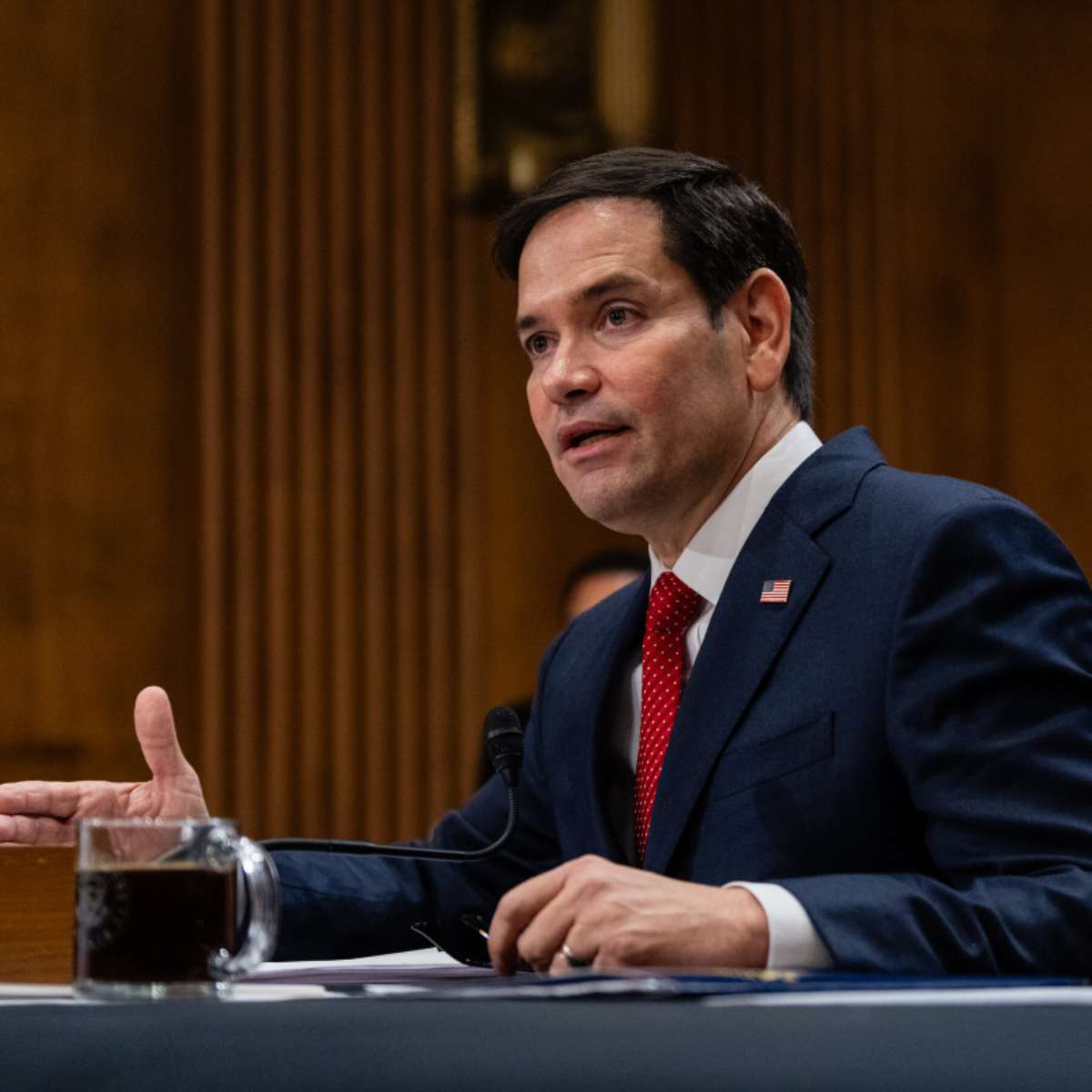
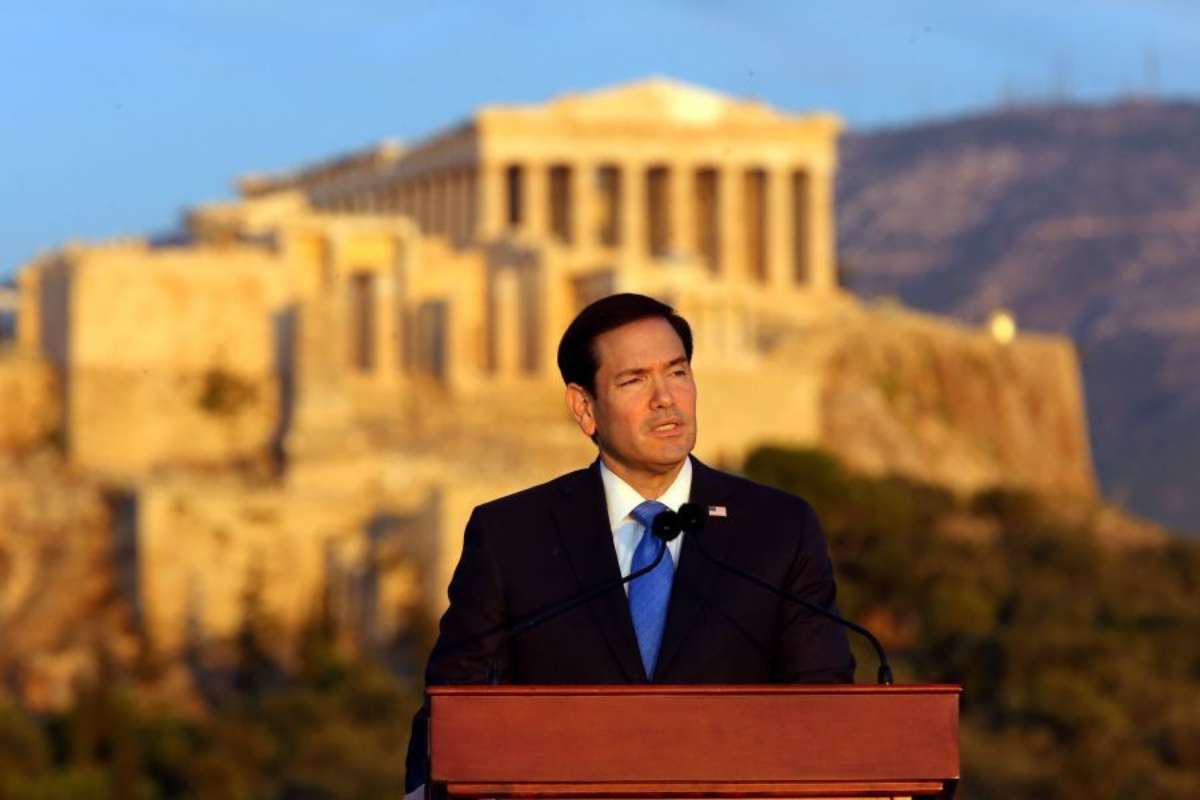
US Secretary of State Marco Rubio used his visit to the Greek capital on Wednesday, October 7, 2026, to deliver a striking assessment.
According to Al-Monitor, America’s top diplomat argued that Iran had lost complete control of the strategic waterway.
His main evidence was the recovery in oil exports from Gulf producers during September.
But the reality is considerably more complicated.
Tankers remain exposed to attacks. Energy markets are still nervous. And oil industry executives are warning that the recovery in shipments may not be sustainable.
The fact that oil is flowing again does not necessarily mean Tehran has lost the ability to trigger another crisis.
Rubio in Athens: Iran Has Lost Control of Hormuz
Speaking to reporters during his visit to Athens, Marco Rubio presented the rebound in Gulf oil exports as evidence of Iran’s declining influence.
He said that almost as much oil was now leaving the Gulf as before the US-Iran conflict began.
In Washington’s interpretation, the recovery demonstrates that Tehran can no longer restrict maritime traffic to the same extent.
Rubio also described Iran’s economy as being in “total and complete free fall.”
The two assessments are politically connected.
The first concerns Iran’s ability to disrupt one of the world’s most important energy corridors.
The second concerns the economic pressure Tehran faces as a consequence of the prolonged confrontation.
However, Al-Monitor points out that the situation in the Strait of Hormuz remains more complex than Rubio’s declaration suggests.
Oil Exports Have Recovered — So Why Aren’t Markets Celebrating?
The rebound in Gulf oil exports represents an important development for the global economy.
Energy flows disrupted by the conflict have moved closer to their prewar levels.
That reduces one of the most serious immediate risks to global oil supplies.
However, recovering export volumes is not the same as restoring maritime security.
A tanker can continue sailing through a dangerous region even when the threat of attack remains elevated.
Shipping companies may accept higher insurance premiums, additional security measures or operational complications to maintain commercial activity.
Similarly, oil markets can register stronger export volumes while continuing to price in substantial geopolitical risk.
This is the contradiction at the center of the debate.
The Strait of Hormuz is functioning, but it has not necessarily become safe.
Brent at $101: The Price That Challenges Washington’s Optimism
On Wednesday, October 7, when Rubio made his remarks, international benchmark Brent crude was trading around $101 per barrel.
Prices were approximately 1% higher on the day and broadly consistent with levels recorded during the opening days of October.
That matters.
If the recovery in exports had completely eliminated concerns about Gulf energy security, markets would have had a powerful reason to reassess the geopolitical risk premium embedded in oil prices.
Instead, Brent remained elevated.
This does not mean that Iran alone determines global oil prices.
Demand conditions, production decisions by major exporters and developments elsewhere in the energy market also influence crude prices.
Nevertheless, oil trading around $101 underscores the fact that energy uncertainty has not disappeared.
Iran Does Not Need to Stop Every Tanker to Remain Dangerous
The central geopolitical distinction is between controlling a maritime passage and retaining the capacity to disrupt it.
A country does not necessarily need to block every vessel to influence international trade.
Maintaining a credible threat may be enough.
The possibility of attacks, risks to crews and cargoes, and uncertainty over further military escalation can increase shipping costs and affect commercial decisions.
Even if Iran can no longer restrict exports as effectively as it once did, that does not automatically mean its ability to exert pressure has vanished.
This is the weakness in interpreting Rubio’s statement too literally.
A reduction in Iranian leverage is not necessarily equivalent to the complete elimination of the Iranian threat.
Tanker Attacks Continue Despite the Export Recovery
Al-Monitor emphasizes that attacks on tankers have continued even as oil flows have recovered.
That limits the scope for complacency.
International shipping depends on long-term planning, substantial capital investment and strict safety requirements.
Each new attack can influence decisions by shipowners, charterers and insurance companies.
The economic consequences of an escalation are not limited to damage sustained by an individual vessel.
They can spread throughout the transportation, refining and distribution chain.
That is why resilient export volumes should not be confused with a complete return to normal operating conditions.
The Risk of Another Strike Against Gulf Oil Infrastructure
Another major source of uncertainty is the possibility that Iran could escalate attacks against energy infrastructure belonging to Gulf exporters.
Markets remain concerned about that scenario despite the improvement in current export figures.
Regional energy security depends on more than freedom of navigation through a single strait.
It also requires the protection of production facilities, storage terminals, loading infrastructure and transportation networks.
A major disruption at any of these points could affect international markets.
Consequently, the recovery in exports provides no guarantee that the improvement will continue without further interruptions.
Saudi Arabia and Gulf Producers Face a Strategic Test
For the oil-producing countries of the Gulf, restoring export flows is economically essential.
Government revenues, investment programs and major economic diversification initiatives depend heavily on the ability to sell energy products in international markets.
Saudi Arabia, the United Arab Emirates and other regional exporters therefore have strong incentives to reduce their exposure to maritime disruptions.
Alternative export routes and land-based infrastructure can strengthen their resilience.
However, these alternatives do not automatically eliminate every vulnerability.
The ability to bypass some maritime bottlenecks may reduce the impact of a disruption, but it does not mean that a wider regional escalation would be economically painless.
Why Rubio’s Declaration Is Also a Political Message
The US secretary of state’s intervention was about more than oil market statistics.
It fits into Washington’s broader effort to present Iran’s declining ability to disrupt Gulf exports as evidence of the effectiveness of American strategy.
The recovery in shipments offers a concrete argument supporting that position.
At the same time, Rubio’s description of Iran’s economic condition reinforces Washington’s message that the confrontation is imposing serious costs on Tehran.
However, evaluating the claim that Iran has lost control requires more than one month’s export figures.
A fuller assessment would need to examine the durability of the recovery, the frequency of attacks, maritime security conditions and Iran’s remaining capacity to trigger new disruptions.
That distinction is essential to understanding the strategic situation.
The Greek Connection: Shipping, Energy and Maritime Security
Rubio’s remarks carry additional significance because they were delivered in Athens.
Greece is one of the world’s leading commercial shipping powers, with a particularly strong presence in energy transportation.
Changes in security conditions in the Persian Gulf can directly affect the operating environment for Greek-owned shipping.
The consequences extend to maritime routes, insurance costs, freight rates and crew protection.
At the same time, persistently high oil prices can increase energy costs across the European economy.
As a country with a major shipping industry and extensive energy connections, Greece has a direct interest in regional stability.
The US secretary of state’s statement from Greek territory therefore connects Washington’s broader geopolitical strategy with issues of immediate relevance to the Greek economy.
Has Iran Really Lost the Strait of Hormuz?
The answer depends on what is meant by control.
If the benchmark is Tehran’s ability to restrict oil exports on a large scale, September’s recovery provides evidence that this capability has weakened.
But if the benchmark is Iran’s ability to threaten vessels, raise transportation costs and generate fears of another energy disruption, the available evidence does not establish that the danger has been eliminated.
That is the essential distinction highlighted by Al-Monitor.
The recovery in exports is real and significant.
The full restoration of maritime security is a separate question.
Rubio sees evidence of declining Iranian power. Oil markets still see the possibility of another major shock.
And as long as tankers remain vulnerable to attack and oil prices remain exposed to geopolitical developments, the struggle over the Strait of Hormuz cannot be considered conclusively settled.
Text editing: pagenews.gr
Διαβάστε όλες τις τελευταίες Ειδήσεις από την Ελλάδα και τον Κόσμο