Adonis to Ankara: “You Would Like Our Islands Left Defenseless” — But Greece Has Changed
 ΧΡΟΝΟΣ ΑΝΑΓΝΩΣΗΣ 11 '
Πηγή Φωτογραφίας: eurokinissi//Adonis to Ankara: “You Would Like Our Islands Left Defenseless” — But Greece Has Changed



Greece is no longer the country Turkey remembers from the years of the financial crisis.
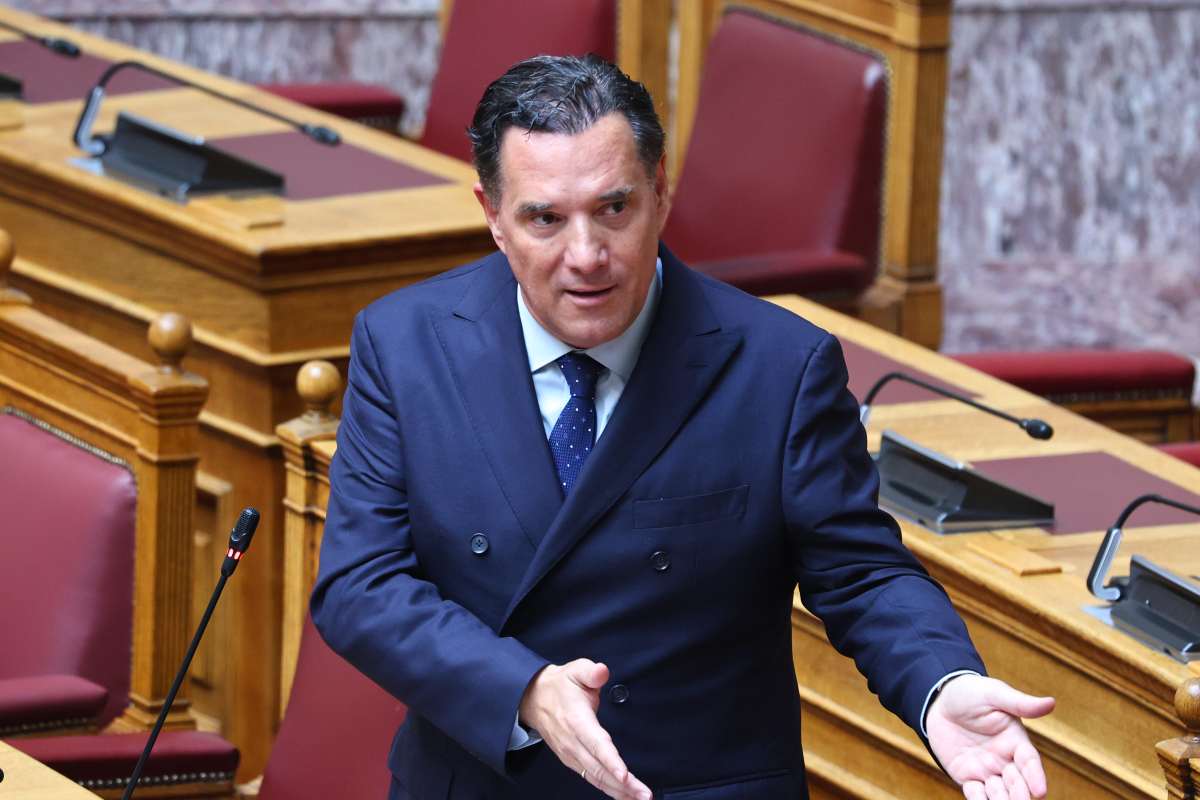
That was the unmistakable message sent by Health Minister Adonis Georgiadis in a radio interview on Alpha 98.9, as he responded to the growing attention his recent remarks on Greece’s strategic partnership with Israel have attracted in Turkey.
Georgiadis linked Greece’s military modernization directly to the strengthening of its deterrence posture, the country’s defense relationship with Israel and the new “Achilles Shield” integrated air and missile defense architecture.
And when told that his statements had made him a prominent topic in Turkish media and online networks, his reaction was characteristically sharp:
“It is a great honor for me.”
Asked why he was pleased by the Turkish reaction, Georgiadis replied:
“When the Turks are worried about you and think that what you are saying is wrong, it is an indication that what you are saying is right.”
Behind the political punchline, however, lies a much bigger geopolitical question:
How much has the military balance between Greece and Turkey actually changed — and what role does Israel now play in Greece’s deterrence strategy?
Georgiadis: I Am Defending the Decision Made by Mitsotakis and Dendias
Georgiadis made clear that his position on Israel is not simply a personal foreign-policy preference.
He explicitly linked it to the strategic decisions taken by Prime Minister Kyriakos Mitsotakis and Defense Minister Nikos Dendias.
“I defended the decision of the Minister of National Defense, Mr. Dendias, and of Prime Minister Kyriakos Mitsotakis to proceed with the acquisition of the weapons systems that make up what we call the ‘Achilles Shield.’ I believe that our strategic alliance with Israel is strengthened by this decision.”
The scale of the program explains why Athens views it as much more than another defense procurement.
The agreement with Israel is designed to create a multilayered Greek air and missile defense architecture capable of confronting a new generation of threats — from aircraft and drones to cruise and ballistic missiles.
At its core are Israeli systems including David’s Sling, BARAK MX and SPYDER, integrated through a common command-and-control architecture.
This is not simply about purchasing missiles.
It is about building a new defensive shield over Greek territory and critical infrastructure.
The 25% That Matters: Israeli Know-How Comes to Greece
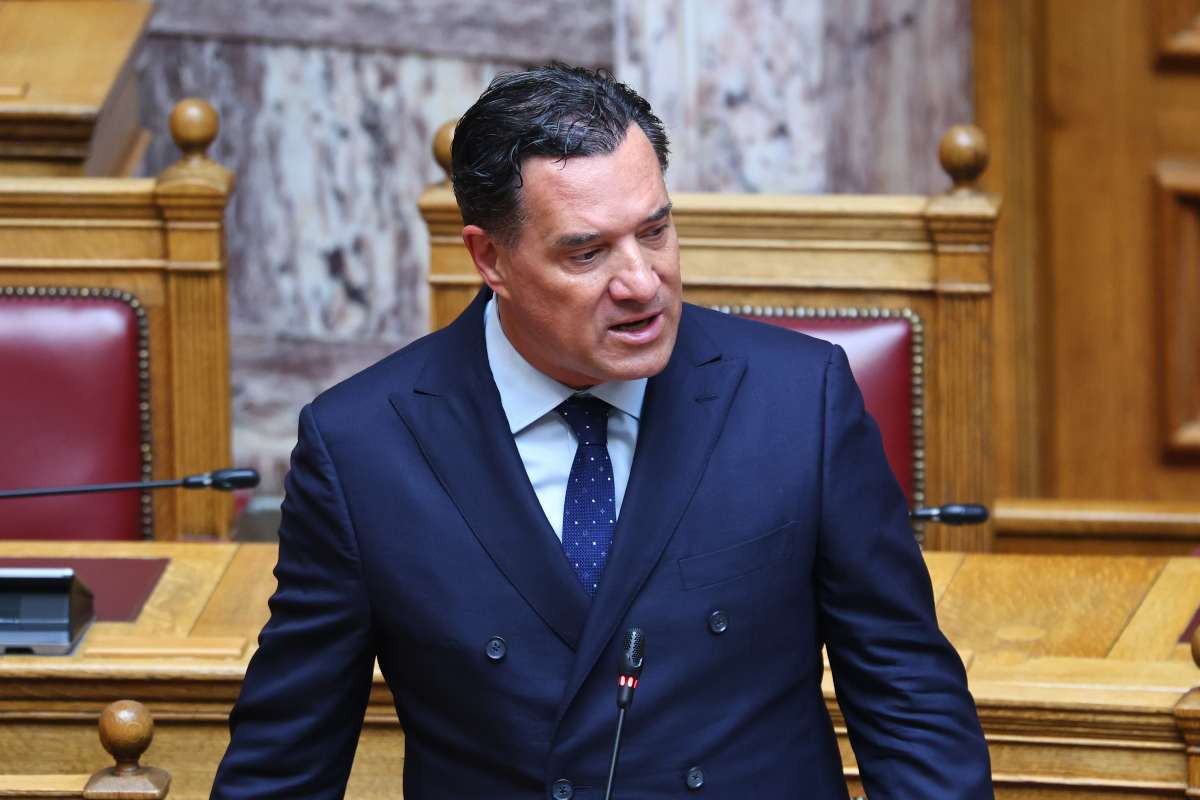
Georgiadis placed particular emphasis on an element of the agreement that carries both economic and strategic significance: Greek industrial participation.
“The transfer of Israeli technology and know-how to Greece is important, because the program provides for 25% production by Greek companies in Greece. Therefore, we are talking about the transfer of know-how to Greece.”
This changes the nature of the relationship.
For decades, one of the structural weaknesses of Greek defense procurement was that Athens often acted primarily as a customer of foreign defense industries.
The emerging model seeks something different:
procurement, technology transfer, domestic production and the gradual strengthening of Greece’s own defense-industrial ecosystem.
That matters because military autonomy in the 21st century is increasingly determined not only by how many weapons a country possesses, but also by how much of their technology it can understand, maintain, integrate and eventually produce.
Ukraine Changed Warfare — Greece Is Trying to Adapt
Georgiadis also connected the Achilles Shield to one of the defining military lessons of the war in Ukraine.
“I believe that the new form of warfare that emerged after Ukraine, mainly through drones and low-cost systems, is something against which this protects us.”
The point is strategically significant.
Modern warfare has demonstrated that relatively inexpensive unmanned systems can threaten equipment and infrastructure worth millions.
Mass drone attacks, loitering munitions, cruise missiles and ballistic weapons can overwhelm traditional air-defense systems unless a country possesses several defensive layers capable of engaging different threats at different ranges and costs.
This is precisely the logic behind a multilayered system such as Achilles Shield.
For Greece, the question is no longer simply how many fighter aircraft it can put into the air.
It is also whether it can protect air bases, ports, command centers, energy infrastructure and strategically sensitive areas from saturation attacks.
“The Turks Would Like Our Islands to Be Defenseless”
Then came Georgiadis’ most pointed message to Ankara.
“The Turks would like our islands to be defenseless. That is their problem.”
The statement goes directly to one of the most persistent disputes between Greece and Turkey.
Ankara has repeatedly raised questions concerning the militarization status of Greek islands in the Aegean, while Athens insists that Greece retains its inherent right to defend its territory.
For Georgiadis, the answer is therefore straightforward:
Greece will not weaken its defensive posture simply because Turkey objects to it.
And the broader Greek strategy of recent years points in precisely the opposite direction.
Deterrence is being reinforced, not dismantled.
Could Greece and Turkey Actually Go to War?
The discussion became even more significant when Georgiadis was asked about Turkish analysts increasingly discussing the possibility of a future military confrontation with Greece.
His answer was categorical:
“We have no such concern.”
He then explained the reasoning behind his confidence:
“During these eight years, Greece has become much stronger militarily.”
And he added:
“Turkey would never risk doing something against Greece and losing.”
This is perhaps the most strategically important part of his intervention.
Because, stripped of its political language, Georgiadis is describing the fundamental principle of deterrence.
The objective is not to convince an adversary that war is impossible.
It is to convince them that the potential cost, uncertainty and probability of failure are so high that military action ceases to be a rational option.
“Greece Now Has Air Superiority”
Georgiadis went further still.
“Turkey has suffered its major setback in aviation during these eight years. Consequently, Greece now has air superiority.”
This should be understood as Georgiadis’ political assessment, rather than an official operational assessment by the Hellenic Armed Forces.
But his confidence is grounded in a profound transformation of Greek air power.
Greece has acquired Rafale fighters.
It is upgrading its F-16 fleet to the advanced Viper configuration.
It has entered the F-35 program.
And it is now adding a new layer of integrated air and missile defense.
Turkey, of course, remains an extremely powerful military actor with a large armed force and an increasingly sophisticated domestic defense industry.
Underestimating Ankara would therefore be strategically dangerous.
But acknowledging Turkey’s capabilities does not require ignoring Greece’s own transformation.
The balance is no longer what it was a decade ago.
From Rafale and F-35 to Achilles Shield
This is where the broader Greek strategy becomes visible.
Athens is not betting on a single weapons platform.
It is building overlapping layers of capability.
Rafale strengthens air combat and long-range strike capabilities.
F-16 Viper modernizes the backbone of the Hellenic Air Force.
F-35 is intended to add fifth-generation stealth and network-centric capabilities.
The new frigates strengthen naval warfare and fleet air defense.
And Achilles Shield is designed to provide another critical layer: protection against aircraft, UAVs and missile threats.
The result, if all these programs are successfully integrated, will be far more important than the individual platforms themselves.
It will create a more connected and resilient Greek defense architecture.
Why Israel Matters
This brings the debate back to Georgiadis’ controversial defense of the Greek-Israeli strategic relationship.
Israel matters to Greece not because Athens must agree with every policy pursued by every Israeli government.
Nor does strategic cooperation mean that Greek foreign policy should become dependent on Jerusalem.
The argument is much more concrete.
Israel possesses some of the world’s most advanced operational experience in air defense, missile interception, drones, electronic warfare and battlefield integration.
Greece has its own strategic advantages: geography, membership in both NATO and the European Union, access to the European defense ecosystem and a pivotal position between Europe and the Eastern Mediterranean.
The two countries therefore possess interests and capabilities that can complement one another.
For Athens, Israeli defense technology can act as a force multiplier.
For Israel, Greece is a stable European partner in one of the world’s most strategically sensitive regions.
That is why the relationship has endured under successive Greek governments.
Not an Anti-Turkish Axis
There is, however, an important distinction.
The Greece-Israel partnership should not be reduced to an “anti-Turkey alliance.”
Athens has no strategic interest in turning every aspect of its relationship with Israel into a confrontation with Ankara.
What Greece does have an interest in doing is building enough military and diplomatic depth to ensure that no external actor can easily coerce it.
That means strong national Armed Forces combined with a wider network of partnerships:
the United States,
France,
Israel,
Cyprus,
the European Union,
and NATO.
The objective is not war.
The objective is to make war increasingly irrational for anyone considering it.
The Message to Ankara: Dialogue From a Position of Strength
This is ultimately the most important part of Georgiadis’ intervention.
Greece does not need to choose between dialogue with Turkey and military strength.
It can pursue both.
Indeed, meaningful dialogue is often easier when neither side believes that coercion offers an inexpensive alternative.
Athens can therefore support calmer Greek-Turkish relations while simultaneously acquiring Rafale fighters, F-35s and new frigates, modernizing its F-16s and constructing Achilles Shield.
There is no contradiction.
It is the logic of deterrence.
The Bigger Picture: Peace Requires Credible Power
Behind Georgiadis’ provocative language lies a conventional geopolitical principle:
a country is more likely to preserve peace when a potential adversary understands that aggression would carry an unacceptable risk.
Greece has spent the past several years attempting to rebuild precisely that credibility.
Its Armed Forces are undergoing one of their most important modernization cycles in decades.
Its defense partnerships have expanded.
Its air capabilities are being upgraded.
Its domestic defense industry is being brought back into major procurement programs.
And its strategic relationship with Israel is moving from political coordination toward deeper technological and military integration.
None of this makes conflict with Turkey desirable.
Quite the opposite.
The real strategic objective is to make conflict less likely.
That is why the sharpest line in Georgiadis’ interview may ultimately be the simplest one:
“The Turks would like our islands to be defenseless. That is their problem.”
Because Greece’s answer is not that it wants confrontation.
It is that it intends to remain capable of defending itself.
Source: pagenews.gr
Διαβάστε όλες τις τελευταίες Ειδήσεις από την Ελλάδα και τον Κόσμο