One of the most consequential geopolitical negotiations in post-war Syria is now under way, with Damascus and Tel Aviv discussing not simply de-escalation, but the future military map of the country itself.
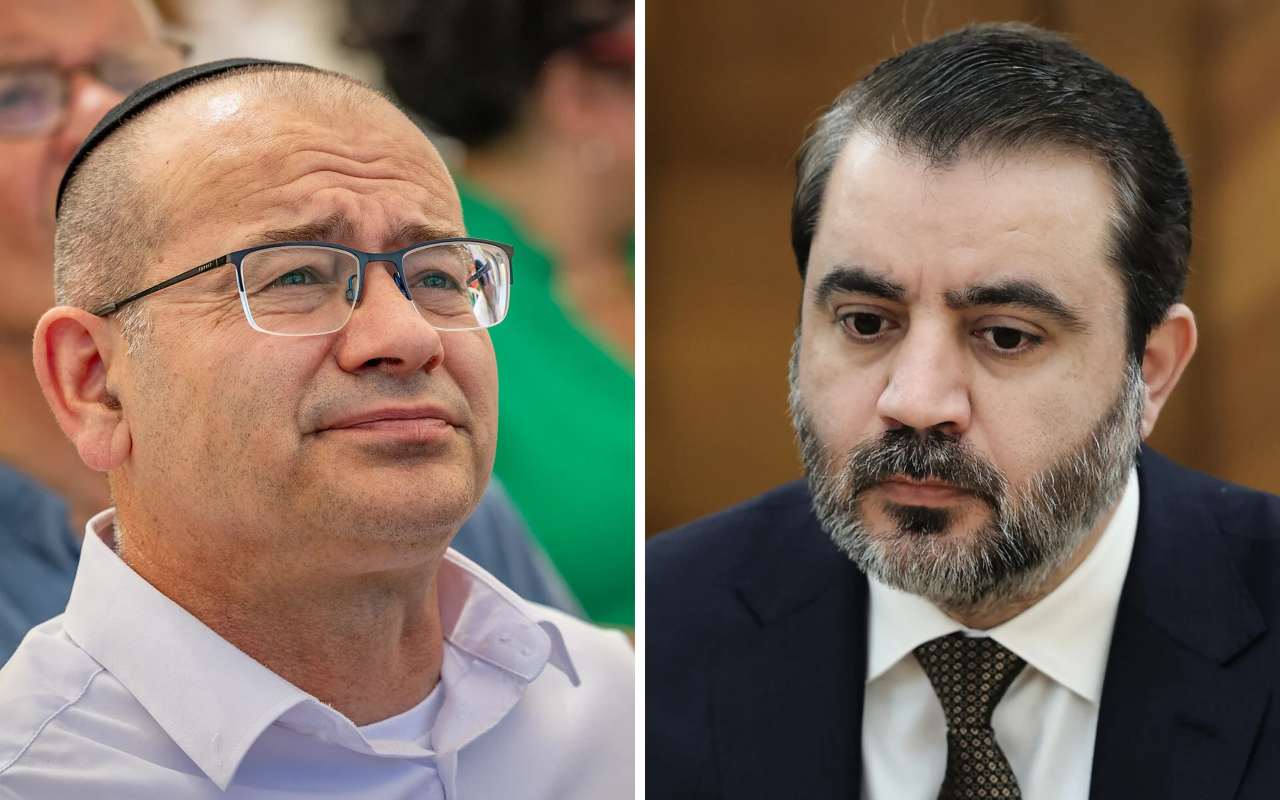
Syrian Foreign Minister Asaad al-Shaibani met an Israeli delegation in Jordan on Sunday, reportedly led by Mossad chief Roman Gofman.
The US-mediated talks came only days after an Israeli strike on the Abu al-Duhur airbase, roughly 70 kilometres from the Turkish border.
But the real stakes go far beyond that strike.
On the table are Turkey’s military presence in Syria, demilitarised zones in the south, limits on the rebuilding of Syria’s armed forces and the conditions under which Israel might withdraw from positions it seized after Bashar al-Assad’s fall.


Syria does not want to become an Israel–Turkey battlefield
The most urgent objective of the US mediation is to prevent the Israeli-Turkish rivalry from spilling directly into Syrian territory.
According to Syrian state media, the two sides explicitly discussed ways to reduce tensions between Israel and Turkey and prevent their confrontation from being transferred into Syria.
That is the genuinely new element.
For the first time since Assad’s fall, Syria’s security dilemma has taken on a clearly triangular form.
Israel wants to prevent Turkey from establishing permanent military infrastructure or deploying strategic weapons systems.
Turkey seeks to preserve and deepen its influence over Syria’s new security architecture.
And the government of Ahmed al-Sharaa wants Turkish backing without triggering another cycle of Israeli strikes.
The Abu al-Duhur strike reopened the bargaining
The immediate trigger was Israel’s strike on the Abu al-Duhur airbase.
According to reports, at least eight bombs hit runways and hangars at the facility as it was being brought back into operation.
Israel argued that the strike was intended to prevent Turkish military deployment and the transfer of advanced weapons systems.
Damascus and Ankara denied that a permanent Turkish base was being prepared there.
Shaibani said Syria had already told Israel that it was not concentrating Turkish forces at the site.
“We had made clear that we were not working with Turkey to establish a military presence at the base,” was the Syrian position.
Israel struck anyway.


Washington fears a direct Israel–Turkey incident
The US reaction was unusually sharp.
US envoy Tom Barrack argued that Washington had not been properly informed in advance and warned that such an operation could have triggered a much wider regional crisis.
The concern is obvious.
A future Israeli strike that killed Turkish personnel could create a direct confrontation between two key US partners.
That is precisely the scenario Washington is now trying to prevent through a formal security mechanism.
Damascus wants withdrawal and an end to Israeli attacks
According to Syrian state media, the Jordan talks focused on practical mechanisms to halt Israeli strikes, arrests and operations on Syrian territory.
Damascus has two immediate priorities:
the return of Israeli forces to positions held before Assad’s fall in December 2024, and the full restoration of the 1974 disengagement agreement.
Shaibani has also argued that there is still a diplomatic opening.
“There is a historic opportunity, and it should be used while the diplomatic door remains open,” he said, expressing hope that a security agreement could ultimately lead to Israeli withdrawal.


Israel’s red lines
Israel’s strategy is very different.
Tel Aviv wants a security architecture that sharply limits the new Syrian state’s ability to deploy strategic military capabilities near the Israeli frontier.
The Israeli demands reported around the negotiations include:
- restrictions on Turkish military activity in Syria
- strict demilitarisation near the Golan Heights
- special security guarantees for the Druze community
- limits on specific strategic weapons systems for the Syrian armed forces
The logic is clear: Israel wants to turn any withdrawal from Syrian positions into a bargaining chip for a broader security arrangement.
Syria’s answer: You do not get to choose our alliances
This is where the core dispute begins.
The al-Sharaa government does not want a security agreement that turns Israeli withdrawal into a permanent restriction on Syrian sovereignty.
Damascus insists that it must retain the right to rebuild its armed forces and choose its own defence partnerships.
That applies above all to Turkey.
For the new Syrian leadership, Ankara is a crucial political, military and economic partner.
Turkish support offers training, equipment and political backing to a government still trying to reunify a state shattered by more than a decade of war.
The key question: Turkish bases or Turkish influence without bases?
This may ultimately become the basis of a compromise.
Turkey could retain deep military cooperation with Syria without establishing permanent bases or deploying strategic systems in areas Israel considers a red line.
Israel, in turn, could accept some level of Turkish influence if clear geographic and military limits were established.
And Syria could gain fewer Israeli strikes and a gradual withdrawal from some occupied positions.
But none of that has yet been agreed.
The Golan remains outside the immediate deal
Damascus still considers the Golan Heights Syrian territory.
But that dispute does not appear to be at the centre of the immediate negotiations.
The priority is more practical: preventing fresh escalation and defining a security architecture for southern Syria before another unilateral strike creates a wider confrontation.
Washington wants rules before someone makes a fatal mistake
The United States has been trying for months to establish a joint mechanism that would prevent exactly this kind of crisis.
US proposals have reportedly included a coordination centre in Jordan to manage incidents, share warnings and reduce the risk of military escalation.
The Abu al-Duhur strike showed why such a mechanism is now urgent.
The next Israeli attack could hit Turkish personnel.
And if that happens, the Syrian conflict could rapidly become something much bigger.
The real bargain over post-war Syria
The Jordan talks are not yet a peace agreement.
But they are more important than a routine de-escalation meeting.
Israel and Syria are now bargaining over who can deploy forces where, what weapons Damascus may acquire and how far Turkish military influence can extend.
Israel wants strategic depth and control over the security environment in southern Syria.
Turkey wants a lasting role in rebuilding the Syrian state and its armed forces.
Damascus wants its territory back without surrendering to outsiders the right to decide whom it can work with.
And Washington wants to prevent an Israel–Turkey clash before it begins.
If a deal emerges, the contours of Syria’s new security map will start to become clear.
If it fails, Abu al-Duhur may prove to have been only the first warning of a much larger confrontation.
Source: pagenews.gr