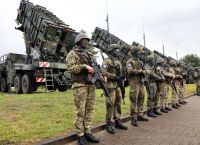
Barrack Warns of Israel–Turkey War Risk: The Secret Military Standoff in Syria That Alarmed Washington
 ΧΡΟΝΟΣ ΑΝΑΓΝΩΣΗΣ 15 '

Πηγή Φωτογραφίας: AP Photo//Barrack Warns of Israel–Turkey War Risk: The Secret Military Standoff in Syria That Alarmed Washington



A dangerous geopolitical confrontation is unfolding in Syria, where the competing military interests of Turkey and Israel are creating the risk of a direct clash between two of Washington’s most important regional partners.
Tom Barrack, the US ambassador to Ankara and President Donald Trump’s special envoy for Syria and Iraq, has warned that an unintended military incident could trigger a serious escalation, even though neither Israel nor Turkey appears to want an actual war.
Speaking at the Global Security Forum in Doha, Qatar, on October 20, 2026, Barrack sought to play down the prospect of a deliberate military confrontation while acknowledging the dangers posed by Israeli air operations and Turkey’s expanding strategic involvement in Syria.
His comments come against the backdrop of an Israeli airstrike on Syria’s Abu al-Duhur airbase on August 18, an operation that reportedly angered Turkish officials and raised concerns within the Trump administration.
The incident has become a revealing example of how competing security priorities in Syria could draw Turkey and Israel into a confrontation neither government intended.
Barrack: Israel Is Smart Enough Not to Enter a War With Turkey
Addressing the possibility of an Israeli–Turkish military conflict, Barrack expressed confidence that both governments understand the consequences of direct confrontation.
“I think Israel is smart enough not to get into a real conflict with Turkey,” he said, according to the remarks reported from the Doha forum.
Barrack added that he did not believe Israel wanted such a conflict and that he knew Turkey did not want one either.
He characterized much of the confrontation as an intense political dispute accompanied by aggressive rhetoric.
Nevertheless, his assessment was not an unconditional reassurance.
The American diplomat warned that military incidents could create situations in which political calculations are overtaken by events on the ground.
His central concern was the possibility of an accidental encounter between Israeli and Turkish forces operating in or around Syrian territory.
Such an incident could force both governments into rapid military decisions, creating pressure for retaliation before diplomatic channels have time to intervene.
The August 18 Airstrike That Raised Alarm in Washington
At the center of Barrack’s warning was Israel’s August 18 operation against the Abu al-Duhur military airbase in northwestern Syria.
Israeli aircraft reportedly struck the facility in a series of attacks targeting runways and storage infrastructure.
Reports at the time described eight strikes that caused material damage, with no casualties reported.
The airbase is strategically significant because of its location in northwestern Syria and its potential role in the country’s future military infrastructure.
Turkey has sought to deepen its security relationship with Syria’s new authorities, including through military cooperation and support for the reconstruction of state institutions.
Israel, meanwhile, remains determined to prevent the emergence of military capabilities in Syria that it considers a threat to its security.
These competing objectives have transformed military installations such as Abu al-Duhur into potential flashpoints.

“Turkey Did Not Know the Israeli Jets Were Coming”
Barrack’s most striking remarks concerned the absence of advance warning about the Israeli operation.
According to the account of his speech, he said that Turkey had not known Israeli fighter jets were approaching the area.
He also indicated that he had not been aware of the operation in advance.
Barrack described a scenario in which Turkish aircraft could have been scrambled in response, potentially bringing the two countries into a direct military encounter.
The significance of his warning extends beyond the August operation itself.
Modern air operations often involve decisions made within minutes, particularly when military aircraft enter areas considered strategically sensitive by another country.
Without effective communication, defensive actions by one side can be interpreted as hostile moves by the other.
The result can be an escalation neither government initially intended.
Barrack’s remarks also raise questions about coordination between Israel and the United States.
Earlier reporting by Axios indicated that Israeli officials had informed members of the White House about the planned operation.
That account differs from Barrack’s description of his own lack of advance knowledge.
The discrepancy may reflect different levels of communication within the US administration, but the publicly available accounts do not establish precisely who received which information and when.
Axios: Israeli Strikes Frustrated the Trump Administration
According to Axios, the Israeli operation caused frustration among senior Trump administration officials.
Washington had been attempting to support Syria’s stabilization while reducing the risk of renewed regional conflict.
The airstrike threatened to complicate those efforts.
From the American perspective, the situation presents an unusually difficult diplomatic challenge.
Turkey is a NATO ally with substantial military capabilities and a growing role in Syria.
Israel is one of Washington’s closest strategic partners in the Middle East.
A direct confrontation between them would place the United States in the position of managing a crisis involving two governments central to its regional strategy.
The Trump administration therefore has strong reasons to prevent military escalation, even when disagreements remain over Israel’s security concerns and Turkey’s ambitions in Syria.
Israel’s Explanation: Preventing a Turkish Military Deployment
Israeli officials presented the August operation as a preventive measure.
According to accounts published after the strike, Israel believed that Syria was preparing to facilitate a Turkish military presence at Abu al-Duhur.
Israeli officials reportedly argued that such a development could create new security risks.
The concern was not simply the presence of Turkish personnel.
It was the possibility that advanced military systems could be deployed at the airbase, potentially restricting Israeli aircraft operating over Syria.
From Israel’s perspective, preserving freedom of military action in Syrian airspace has long been a central security objective.
Turkey, however, sees military cooperation with Damascus as part of its legitimate regional security strategy.
The disagreement illustrates how the same military development can be interpreted very differently by the two governments.
Israeli Reports Point to Turkish Radar and Air-Defense Systems
The Jerusalem Post reported that Israeli intelligence had identified indications of a possible Turkish plan to deploy radar and air-defense equipment at Abu al-Duhur.
If such systems were installed and became operational, they could potentially affect surveillance and air-defense coverage in parts of Syria.
For Israel, that prospect would raise concerns about the operational freedom of its air force.
Advanced radar systems can improve the detection and tracking of aircraft, while integrated air-defense networks can complicate military operations.
However, the reported Turkish deployment plans have not been independently established as completed facts.
The claims originated from Israeli accounts, and Turkey disputed assertions concerning a Turkish military presence at the base at the time of the strike.
The distinction is important.
Intelligence assessments about a possible future deployment are not the same as verified evidence that those systems were already installed.
Ankara Condemns Israeli Strikes as a Violation of Syrian Sovereignty
Turkey strongly criticized the Israeli operation.
The Turkish Foreign Ministry condemned the airstrikes, arguing that they violated Syria’s sovereignty and territorial integrity.
Ankara also called for a stronger international response to Israeli military activity.
Turkey maintains that Syria’s authorities should be able to rebuild national institutions and restore security capabilities.
Its broader objective is to establish a stable neighboring state in which Ankara retains substantial political and security influence.
For the Erdoğan government, Syria is central to several strategic priorities, including border security, the future of Kurdish armed groups and regional influence.
Turkey’s expanding relationship with Damascus therefore goes beyond conventional diplomatic engagement.
It is connected to the security architecture Ankara hopes to establish along its southern frontier.
Barrack Calls for an End to Israeli Military Operations
Barrack went beyond discussing the possibility of an accidental confrontation.
He also questioned the continuation of Israeli military operations in Syria.
According to the remarks reported from Doha, the American envoy argued that the time had come for the operations to stop.
However, he acknowledged uncertainty over whether the United States should intervene directly to bring them to an end.
This reflects a broader dilemma within Washington.
The Trump administration wants to prevent another destabilizing conflict while maintaining its strategic partnership with Israel.
At the same time, it must manage relations with Turkey, whose military and diplomatic influence in Syria has become increasingly important.
The result is a delicate balancing act in which Washington seeks de-escalation without appearing to abandon either partner.
Efforts to Establish a Security Coordination Mechanism
The August airstrike also highlighted the importance of communication between Israel, Syria and the United States.
According to Axios, Syrian authorities had attempted to explain the reconstruction work at Abu al-Duhur, maintaining that the activity was not intended to threaten Israel.
American diplomatic efforts had also focused on developing mechanisms to reduce the likelihood of military incidents.
One proposal involved a coordination center in Jordan that could facilitate communication and help prevent dangerous encounters.
Such arrangements are particularly important in a region where several militaries operate in overlapping or neighboring areas.
Advance notification, direct communication channels and agreed procedures can reduce the risk of miscalculation.
However, the reported disagreements surrounding these efforts suggest that the region still lacks a sufficiently reliable framework for preventing escalation.
Syria Becomes a Strategic Battleground Between Netanyahu and Erdoğan
The confrontation reflects a deeper struggle over Syria’s future.
Turkey seeks to consolidate its influence through diplomatic engagement, security cooperation and participation in the reconstruction of Syrian institutions.
Israel approaches the situation primarily through the lens of military security.
Its leadership wants to prevent hostile forces or advanced weapons systems from emerging in positions that could threaten Israeli territory or constrain its military operations.
These objectives are not necessarily incompatible in every respect.
But they become difficult to reconcile when Turkey’s military involvement expands into areas Israel considers strategically sensitive.
The danger is that Ankara may regard its activities as defensive cooperation with Syria, while Israel interprets the same activities as a potential threat.
Such competing perceptions can generate confrontation even in the absence of a deliberate decision to go to war.
Trump Faces a Difficult Choice Between Two Strategic Partners
The United States occupies a particularly complicated position.
Turkey is a member of NATO, while Israel remains a central pillar of American security policy in the Middle East.
President Trump has cultivated a working relationship with Erdoğan while maintaining strong political and strategic ties with Netanyahu.
A military confrontation between Turkey and Israel would therefore represent a major challenge for American diplomacy.
It could also complicate NATO’s internal discussions, although a military incident involving Turkey would not automatically trigger the alliance’s collective-defense provisions.
Any such question would depend on the specific circumstances and the provisions of the North Atlantic Treaty.
For Washington, prevention is far preferable to having to manage the consequences of a direct clash.
The Wider American Strategy in the Middle East
Barrack’s comments also reflect a broader debate over the future of American involvement in the region.
At the Doha forum, he addressed other regional crises, including Yemen and Iran, while emphasizing the need for political solutions and questioning the effectiveness of prolonged US military intervention.
The Trump administration has sought to limit the risk of becoming entangled in additional large-scale conflicts.
In Syria, that objective requires balancing several competing priorities.
Washington wants to encourage stability, maintain its relationship with Turkey and preserve Israel’s security partnership.
Yet these goals become harder to reconcile when regional actors conduct military operations without effective coordination.
The August airstrike demonstrated how quickly a localized incident can become a problem for American foreign policy.
Why the Confrontation Matters to Greece and the Eastern Mediterranean
The tensions between Turkey and Israel also have implications for Greece, although the Syrian dispute is separate from Greek–Turkish maritime disagreements.
Athens has developed extensive strategic cooperation with Israel in defense, energy and technology.
At the same time, Greece closely monitors Turkey’s efforts to expand its military and diplomatic influence across the region.
A stronger Turkish security role in Syria could contribute to Ankara’s broader regional strategic position.
However, it would not automatically alter the balance of power in the Aegean or determine maritime rights in the Eastern Mediterranean.
For Greek diplomacy, the challenge is to assess the implications of Turkey’s expanding regional influence without treating separate geopolitical disputes as identical.
The relationship between Israel and Turkey is particularly important because both countries are significant actors in the wider Eastern Mediterranean security environment.
A serious deterioration in their relations could complicate regional cooperation and American diplomatic initiatives.
The Greatest Danger Is Not a Planned War but an Accidental One
The central message of Barrack’s intervention is that the absence of an intention to fight does not guarantee peace.
Israel and Turkey may both recognize the enormous political and military costs of direct confrontation.
Yet their forces operate in an environment shaped by competing security objectives, limited trust and incomplete coordination.
The August 18 attack on Abu al-Duhur exposed the dangers of that situation.
Israel viewed the base through the prism of potential military threats.
Turkey regarded Israeli operations as an infringement of Syrian sovereignty and a challenge to its regional role.
Washington was left attempting to prevent the disagreement from escalating into a wider crisis.
The question now is whether effective diplomatic and military communication mechanisms can be established before another incident occurs.
Barrack’s warning is therefore less about the likelihood of a deliberate Israeli–Turkish war than about the possibility of an uncontrolled chain of events.
In Syria, the most dangerous conflict may not be the one either government intends to start, but the one that begins before either side has time to stop it.
Source: pagenews.gr
Διαβάστε όλες τις τελευταίες Ειδήσεις από την Ελλάδα και τον Κόσμο