Global Cybersecurity Alarm: Websites Shut Down as Critical PHP Flaws Trigger Worldwide Emergency
 ΧΡΟΝΟΣ ΑΝΑΓΝΩΣΗΣ 10 '
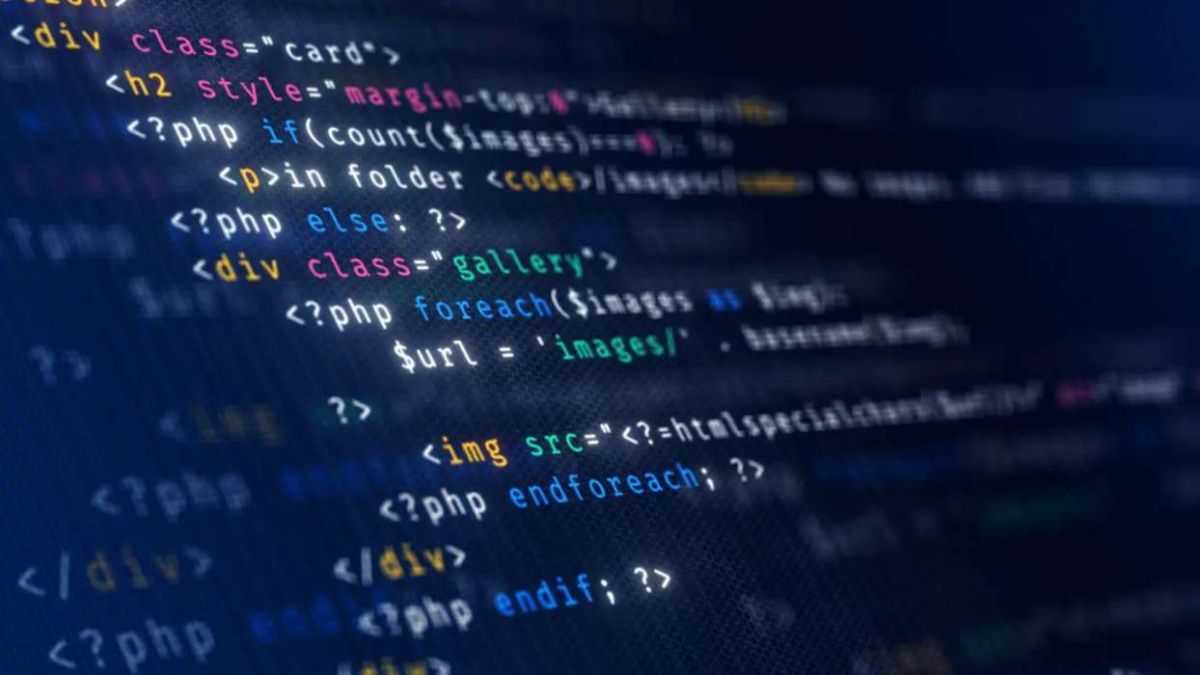
Πηγή Φωτογραφίας: pixabay//Global Cybersecurity Alarm: Websites Shut Down as Critical PHP Flaws Trigger Worldwide Emergency



A global cybersecurity emergency has forced governments, major corporations and digital service providers to temporarily shut down websites and online platforms as they race to address two critical vulnerabilities in PHP, one of the world’s most widely used web programming languages.
According to the Financial Times, the security flaws have triggered urgent warnings from intelligence agencies and cybersecurity authorities across Europe, Asia, Australia and the United States.
The vulnerabilities could allow attackers to execute malicious code on exposed servers without valid login credentials, potentially compromising sensitive information and disrupting essential digital services.
The crisis has become particularly serious because PHP is used extensively by websites, content management systems and online applications worldwide.
Cybersecurity researchers estimate that PHP underpins approximately 70% of websites, although this does not mean every PHP-powered website is vulnerable.

Two Critical Vulnerabilities Put the Internet on High Alert
The vulnerabilities, identified as CVE-2026-109618 and CVE-2026-109619, have received critical severity ratings of 9.2 on the CVSS 4.0 scale.
Both weaknesses could potentially enable remote code execution under affected configurations.
In practical terms, a successful attack could allow cybercriminals to run unauthorised commands on a server, access sensitive data or interfere with online services.
The risks are especially significant for organisations operating public-facing websites and applications that rely on vulnerable PHP installations.
Popular platforms such as WordPress, Drupal, Joomla and Magento rely on PHP, making the vulnerabilities a major concern for website administrators, hosting providers and digital businesses.
However, the presence of PHP or WordPress alone does not establish that a website has been compromised.
The actual exposure depends on the software version, server configuration and whether the necessary security updates have been installed.
Artificial Intelligence Helped Uncover Long-Hidden Weaknesses
One of the most striking aspects of the incident is the role of artificial intelligence in identifying the vulnerabilities.
According to the Financial Times, researchers at US cybersecurity companies Calif and Wiz discovered the flaws with assistance from AI models developed by OpenAI and Google.
The weaknesses had reportedly remained undetected for more than a decade.
Their discovery highlights the increasingly important role of artificial intelligence in cybersecurity research.
AI-assisted systems can help researchers analyse complex software, identify unusual behaviour and detect vulnerabilities that traditional methods may have overlooked.
But the same technological capabilities can also accelerate malicious activity.
Cybersecurity experts warn that attackers may use AI to analyse newly disclosed vulnerabilities, develop exploitation techniques and automate attacks against inadequately protected systems.
The incident therefore illustrates a growing technological confrontation between defenders using AI to discover weaknesses and attackers seeking to exploit them.
Japan Orders Emergency Action as Companies Suspend Services
Japan has emerged as one of the countries taking particularly visible precautionary measures.
Prime Minister Sanae Takaichi called on organisations to install the available security fixes as quickly as possible.
She also advised companies to consider temporarily suspending online services when immediate patching was not feasible.
Major Japanese businesses subsequently announced preventive shutdowns and emergency maintenance.
Airline All Nippon Airways (ANA) suspended website and application services, including some digital boarding-pass functions.
Financial institutions, including Mitsubishi UFJ Financial Group, temporarily restricted certain non-core services, although MUFG said payment operations were unaffected.
Japanese companies in other sectors also responded.
Brewer Asahi Group confirmed precautionary suspensions of selected websites and systems, while gaming companies Sega and Bandai Namco carried out emergency maintenance.
The disruption demonstrates how vulnerabilities in widely used software can affect industries far beyond the technology sector.
European Governments Take Websites Offline
European authorities have also responded with emergency measures.
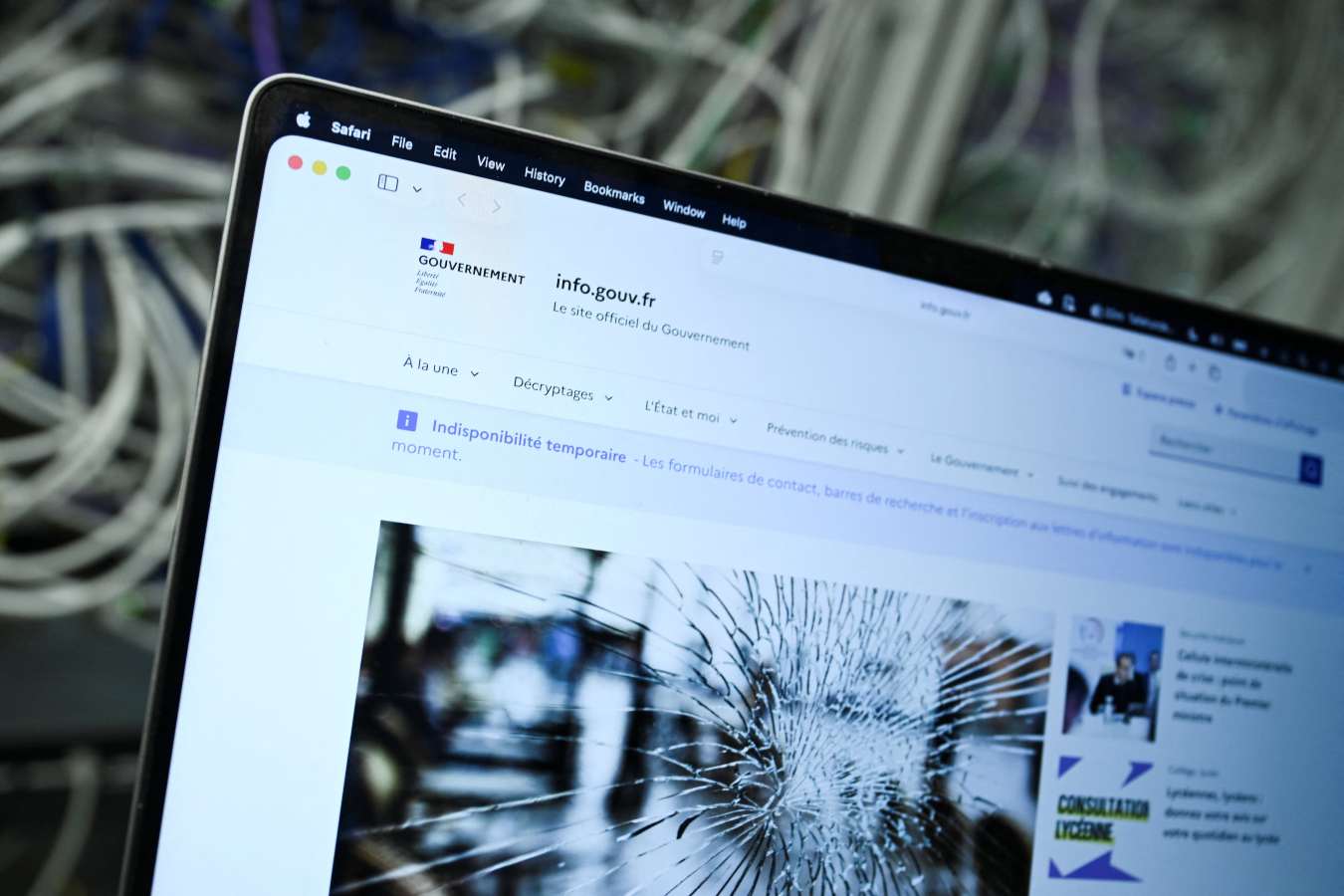
Government websites and public services in Finland, France, Germany, Belgium and the Netherlands were among those temporarily suspended as administrators assessed the risks.
In the Netherlands, precautionary shutdowns affected public-sector websites and services operated by various organisations.
Finland’s government IT service provider Valtori temporarily disabled public-facing government web services.
French authorities also suspended websites used by regional administrative offices while awaiting the necessary security fixes.
In several cases, officials emphasised that the shutdowns were preventive rather than evidence of successful cyberattacks.
The European response reflects the difficulty of securing large public-sector digital infrastructures, where numerous applications, third-party suppliers and legacy systems may depend on the same underlying programming language.
Millions of Exploitation Attempts Detected
The cybersecurity response has intensified following reports of attempts to exploit the newly disclosed vulnerabilities.
Amazon reported identifying an exploitation attempt before the weaknesses became public and subsequently warned of broader malicious activity.
Cloudflare, one of the world’s largest internet security and infrastructure providers, said it had detected millions of attempts to exploit the vulnerabilities following their disclosure.
These figures indicate the scale of malicious scanning and attempted exploitation, although they should not be interpreted as millions of confirmed successful intrusions.
The distinction is crucial.
A large volume of attempted attacks demonstrates heightened risk, but does not establish how many systems have actually been compromised.
Security specialists are nevertheless concerned that attackers may focus on websites that remain unpatched or use unsupported versions of PHP.
Wikipedia and Major Online Services Respond
The disruption has extended to some of the world’s most widely used digital platforms.
The Wikimedia Foundation, which operates Wikipedia, warned users that certain services could experience interruptions.
The organisation explained that supporting systems were being taken offline until the relevant security updates could be applied safely.
This illustrates the operational challenge confronting even major technology organisations.
Updating critical software across complex infrastructures requires identifying affected systems, testing compatibility, deploying patches and confirming that services can be restored securely.
For smaller companies with limited technical resources, the process may be considerably more difficult.
Why WordPress Websites Face Particular Scrutiny
The vulnerabilities have attracted special attention because of the enormous popularity of WordPress.
Millions of businesses, publishers, public institutions and independent websites rely on the platform.
WordPress itself is primarily written in PHP, meaning its operation depends on a PHP runtime installed on the hosting server.
Security experts stress that updating WordPress plugins and themes is not necessarily sufficient to address vulnerabilities in the underlying PHP environment.
Website operators must also ensure that the server’s PHP installation has received the appropriate security patches.
The PHP project has released corrected versions for supported branches, including PHP 8.5.12, 8.4.27, 8.3.36 and 8.2.35.
Older installations may require vendor-supported security backports or migration to supported software.
This is particularly important for websites operating on outdated hosting infrastructure.
Cybersecurity Agencies Urge Immediate Updates
Security agencies in the United States, Europe and Asia have issued urgent recommendations to organisations using PHP.
The principal measures include identifying affected installations, applying security patches, checking systems for suspicious activity and temporarily isolating exposed services when updates cannot be deployed promptly.
The US National Security Agency and FBI have emphasised the importance of rapid remediation and continued monitoring.
Cybersecurity authorities also warn that installing an update does not automatically remove an attacker who may already have compromised a server.
Organisations therefore need to examine relevant security logs and investigate potential signs of unauthorised access.
For businesses handling customer information, payment-related services or sensitive internal data, these precautions are especially important.
A New Era of Cyber Threats in the Age of AI
The PHP incident exposes a broader structural challenge facing the digital economy.
Modern websites depend on layers of software, open-source components, hosting infrastructure and third-party services.
A vulnerability in one widely deployed component can create simultaneous risks for organisations across multiple countries and industries.
Artificial intelligence is making the identification of such weaknesses faster and potentially more effective.
Yet it is also shortening the time available for defenders to respond before attackers attempt to exploit newly disclosed flaws.
This creates mounting pressure on governments and businesses to maintain accurate software inventories, invest in security monitoring and update vulnerable systems without delay.
The economic consequences of prolonged disruptions can extend beyond the affected websites, potentially interfering with customer services, commercial transactions and public administration.
The Global Internet Faces a Critical Security Test
The immediate priority is to deploy the available PHP security updates and verify that vulnerable systems are protected.
The broader lesson, however, concerns the resilience of the internet itself.
A pair of vulnerabilities in a widely used programming language has been sufficient to trigger emergency warnings, precautionary shutdowns and widespread defensive action across several continents.
The episode demonstrates how deeply interconnected the world’s digital infrastructure has become.
A security weakness buried within a common software component can rapidly become an international operational crisis.
As AI-assisted vulnerability research advances, organisations will face growing pressure to identify security weaknesses before malicious actors can exploit them.
For governments, financial institutions, technology companies and digital publishers, the PHP emergency is a reminder that cybersecurity is no longer simply an IT concern.
It is an essential requirement for economic continuity, institutional resilience and public trust in the digital world.
Source: pagenews.gr
Διαβάστε όλες τις τελευταίες Ειδήσεις από την Ελλάδα και τον Κόσμο