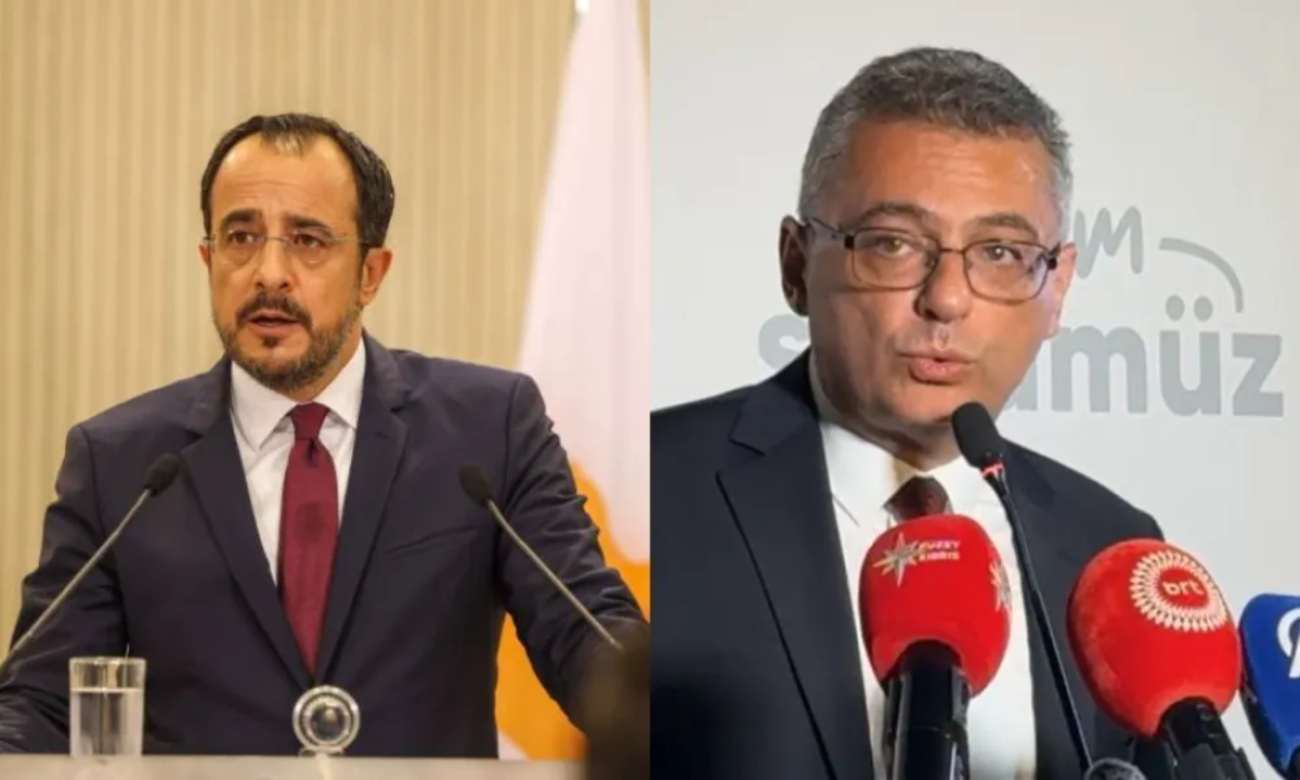
A new and potentially significant phase in efforts to revive the Cyprus peace process is taking shape after President of the Republic of Cyprus Nikos Christodoulides and Turkish Cypriot leader Tufan Erhürman agreed to intensify their direct contacts and meet at least once a week — or even more frequently when circumstances require.
The agreement emerged from their meeting on Wednesday afternoon at the offices of the United Nations Good Offices Mission in the buffer zone near the old Nicosia airport.
The talks lasted slightly more than two and a half hours, with both sides reviewing the next steps following UN Secretary-General António Guterres’ recent diplomatic initiative on the island.
Christodoulides struck a cautiously optimistic tone as he left the meeting.
“We are on the right track, based on what the Secretary-General said,” the Cypriot president said.
Weekly meetings signal a faster diplomatic track
The most concrete outcome was the decision to dramatically increase the frequency of direct political contacts.
According to the United Nations statement issued after the meeting, Christodoulides and Erhürman agreed “to intensify their meetings and meet once a week or more frequently, as circumstances require.”
That commitment is politically important.
It does not mean that the fundamental disagreements surrounding the Cyprus issue have been resolved, nor does it amount to the formal resumption of comprehensive negotiations.
But it establishes a regular political channel between the two leaders at a time when the United Nations is seeking to move the process beyond intermittent meetings and toward sustained diplomacy.
The shift from occasional encounters to weekly discussions could also allow disagreements to be addressed directly before they develop into larger obstacles.


Guterres remains at the center of the process
Both leaders reaffirmed their appreciation for UN Secretary-General António Guterres and his continued involvement in efforts to break the long-running deadlock.
According to the UN statement, they expressed their “full appreciation” for Guterres’ recent visit to Cyprus and for his continuing support and engagement in the search for a settlement.
The two leaders also reviewed progress on the way forward established during the Secretary-General’s visit.
That connection is crucial.
Guterres has been attempting to create the conditions for a more substantive diplomatic process, while avoiding another high-profile negotiating initiative without sufficient preparation.
The new weekly format therefore gives the UN a mechanism through which progress — or continued disagreement — can be tested on the ground.
Next step comes immediately on Thursday
Christodoulides and Erhürman also agreed to announce on Thursday, August 27, the members of the Steering Committee of the Civil Society Advisory Body.
The initiative is designed to widen participation around the peace process and create additional channels between the two communities beyond the formal political negotiations.
Bringing civil society into the process also carries symbolic importance after years in which frustration over the absence of a settlement has contributed to political fatigue on both sides of the divide.
Confidence-building measures remain critical
Attention will now turn to whether the new diplomatic momentum can produce concrete results.
Confidence-building measures remain one of the most immediate areas in which progress could demonstrate that the renewed contacts are delivering tangible outcomes.
Questions surrounding additional crossing points, cooperation between the two communities and other practical measures have repeatedly featured in discussions.
Progress on such issues could help create the political environment required for the next, more difficult stage: negotiations over the substance of a Cyprus settlement.
The challenge will be to prevent confidence-building measures from becoming a substitute for negotiations on the core political dispute.
The bigger prize: Preparing for another expanded meeting
The broader objective remains the creation of sufficient common ground for another expanded meeting under UN auspices, involving the two Cypriot sides as well as guarantor powers Greece, Turkey and the United Kingdom.
That is where the geopolitical significance of the latest meeting becomes clearer.
Any serious movement on Cyprus inevitably extends beyond Nicosia. Athens and Ankara remain critical players, while developments in the Eastern Mediterranean and the wider relationship between Greece, Turkey and the European Union form part of the strategic environment surrounding the negotiations.
For Guterres, therefore, the immediate task is to determine whether the improved atmosphere between Christodoulides and Erhürman can be converted into enough substantive progress to justify moving diplomacy to the next level.


Cautious optimism — but the hard questions remain
The agreement to meet weekly should not be confused with a breakthrough on the Cyprus problem itself.
Deep differences remain over the framework and ultimate shape of a settlement, security, governance, territory, property and the relationship between the two communities.
Those disagreements cannot be resolved simply through a denser calendar of meetings.
Yet regular dialogue matters.
After prolonged periods in which the Cyprus issue appeared trapped in diplomatic stagnation, the establishment of sustained leader-level contacts provides the UN with something it has often lacked: political momentum that can be tested and potentially built upon.
For Nicosia, Christodoulides’ message after Wednesday’s meeting was therefore deliberately measured rather than triumphant.
“We are on the right track.”
The next question is whether that track leads merely to more meetings — or eventually back to meaningful negotiations.
For the first time in this latest diplomatic cycle, there is now a clear timetable for sustained dialogue. The real test begins with what Christodoulides and Erhürman can put on the table when they meet again — and whether weekly diplomacy can finally turn momentum into substance.