Zelenskyy in Brussels: New F-16 Fighter Jets Expected as Ukraine Battles for Frozen Russian Billions
 ΧΡΟΝΟΣ ΑΝΑΓΝΩΣΗΣ 11 '
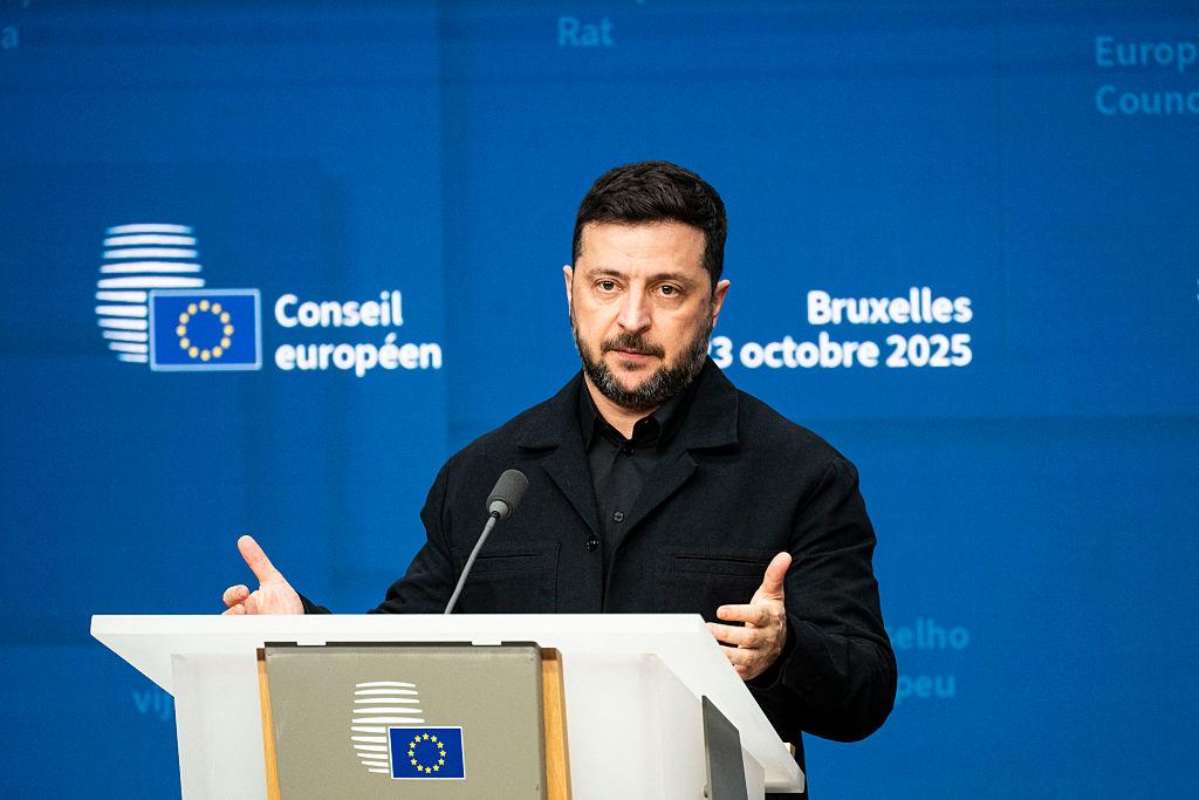
Πηγή Φωτογραφίας: AP Photo//Zelenskyy in Brussels: New F-16 Fighter Jets Expected as Ukraine Battles for Frozen Russian Billions



Ukrainian President Volodymyr Zelenskyy has emerged from crucial talks with European Union leaders in Brussels with two urgent priorities: securing additional military support and unlocking financial resources needed to sustain Ukraine’s defense against Russia.
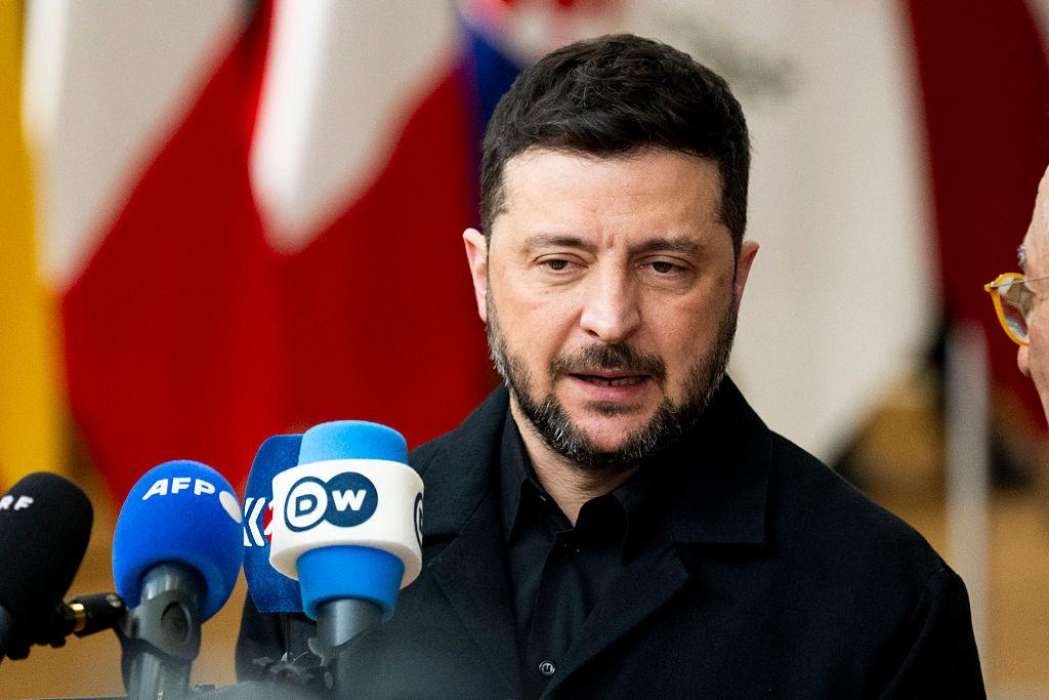
Speaking at a press conference on October 16, 2026, Zelenskyy confirmed that Ukraine expects to receive additional F-16 fighter jets from Belgium before the end of the year, while renewing calls for frozen Russian sovereign assets to be used in support of his country.
His remarks came amid growing uncertainty surrounding Ukraine’s relationship with the administration of U.S. President Donald Trump, whose approach to Russia has triggered increasingly public disagreements with European allies.
The Brussels summit has therefore become a critical test of Europe’s willingness to sustain Ukraine’s military and financial needs at a time when transatlantic coordination is under considerable strain.
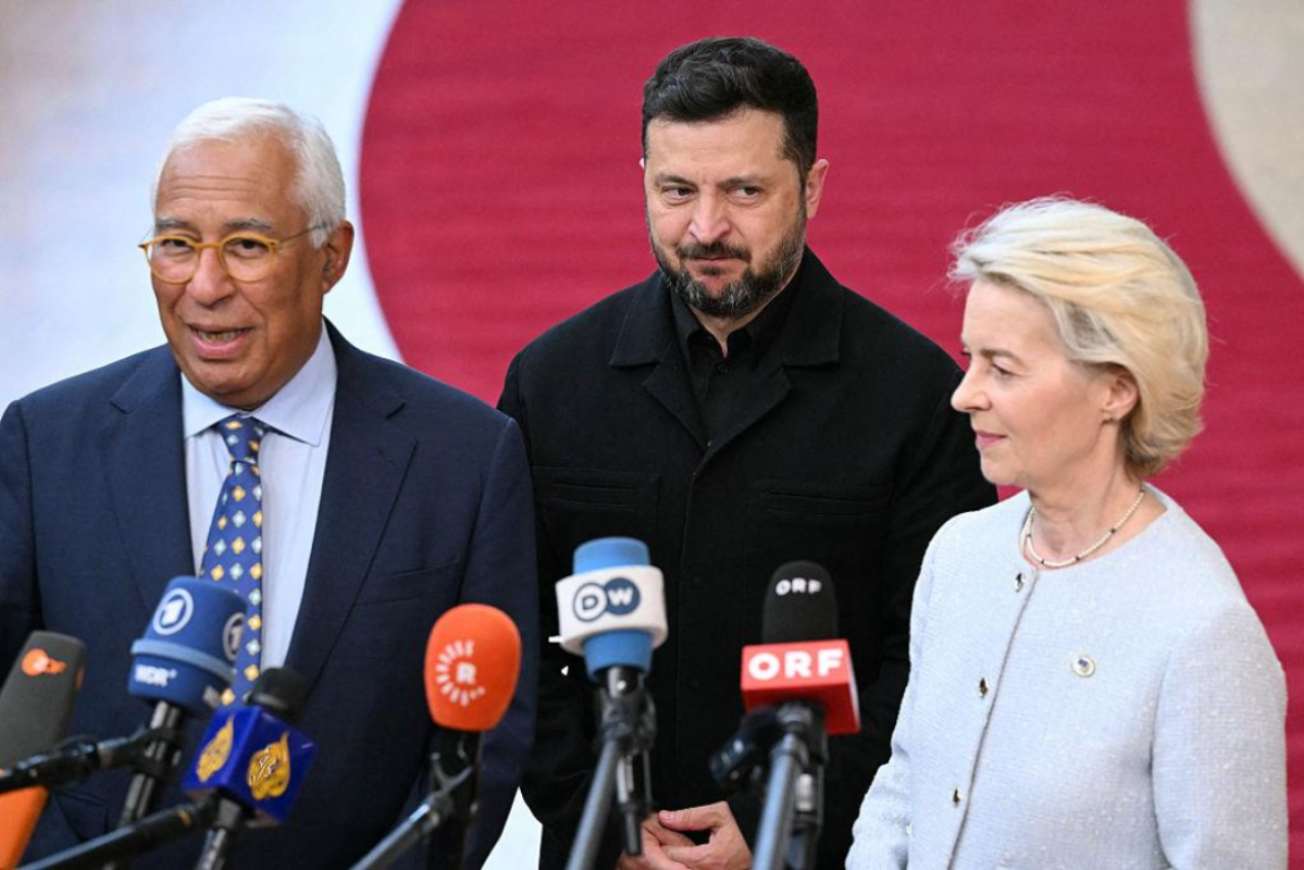
Zelenskyy: Russia Must Not Recover Its Frozen Assets
The Ukrainian president’s press conference opened with a question about frozen Russian assets and Belgium’s objections to proposals for their broader use.
Zelenskyy began by thanking Belgium for hosting the summit and referred to his meetings with Belgian Prime Minister Bart De Wever and King Philippe.
Turning to the question of Russian sovereign funds, he confirmed that he had raised the issue again with European leaders.
“Of course,” Zelenskyy replied when asked whether the matter remained on the negotiating agenda.
He explained that Ukraine wants access to the funds through an appropriate financial mechanism while ensuring that Russia cannot recover them.
“We know very clearly that they want to bring these assets back,” he said.
The remarks reflect Kyiv’s concern that future diplomatic negotiations could eventually reopen the question of whether frozen Russian state reserves should be returned to Moscow.
Ukraine argues that Russia should bear financial responsibility for the destruction caused by its invasion.
For Zelenskyy, the issue is not merely one of immediate funding. It is also about ensuring that Russian assets remain available to support Ukraine rather than returning to the government responsible for the war.
More F-16 Fighter Jets Expected From Belgium
One of the most significant announcements concerned Ukraine’s air-defense capabilities.
Zelenskyy said Kyiv expects additional Belgian F-16 fighter jets to arrive by the end of 2026.
The expected deliveries would contribute to Ukraine’s continuing effort to strengthen its air force as Russian missile and drone attacks place sustained pressure on the country’s infrastructure.
F-16 aircraft can perform air-defense and other combat missions, depending on their configuration, available weapons and operational support.
However, their effectiveness also depends on trained pilots, maintenance facilities, spare parts and the availability of appropriate munitions.
The Belgian contribution forms part of the wider European effort to help Ukraine modernize its combat aviation capabilities.
Zelenskyy’s statement concerned anticipated deliveries; it was not confirmation that the additional aircraft had already arrived.
Belgium Holds the Key to Russia’s Frozen Billions
Belgium occupies a central position in the debate over Russian sovereign assets because a substantial share of the reserves immobilized in Europe is held through Euroclear, the Brussels-based financial services institution.
The European Union has already established mechanisms to channel extraordinary revenues generated by immobilized Russian assets toward supporting Ukraine.
But proposals to make broader use of the underlying sovereign assets have raised complex legal and financial questions.
Belgian authorities have expressed concerns about potential litigation, financial liability and the consequences of any mechanism that could expose the country or Euroclear to legal claims.
For Kyiv, however, the urgency is growing.
Ukraine needs predictable financial resources to maintain public services, repair damaged infrastructure and support its defense capabilities.
Zelenskyy is pressing European governments to establish a framework that would make the funds available while preventing their return to Moscow.
Any such arrangement would require political agreement and sufficient legal safeguards.
A Diplomatic Breakthrough? Hungary’s Péter Magyar Meets Zelenskyy
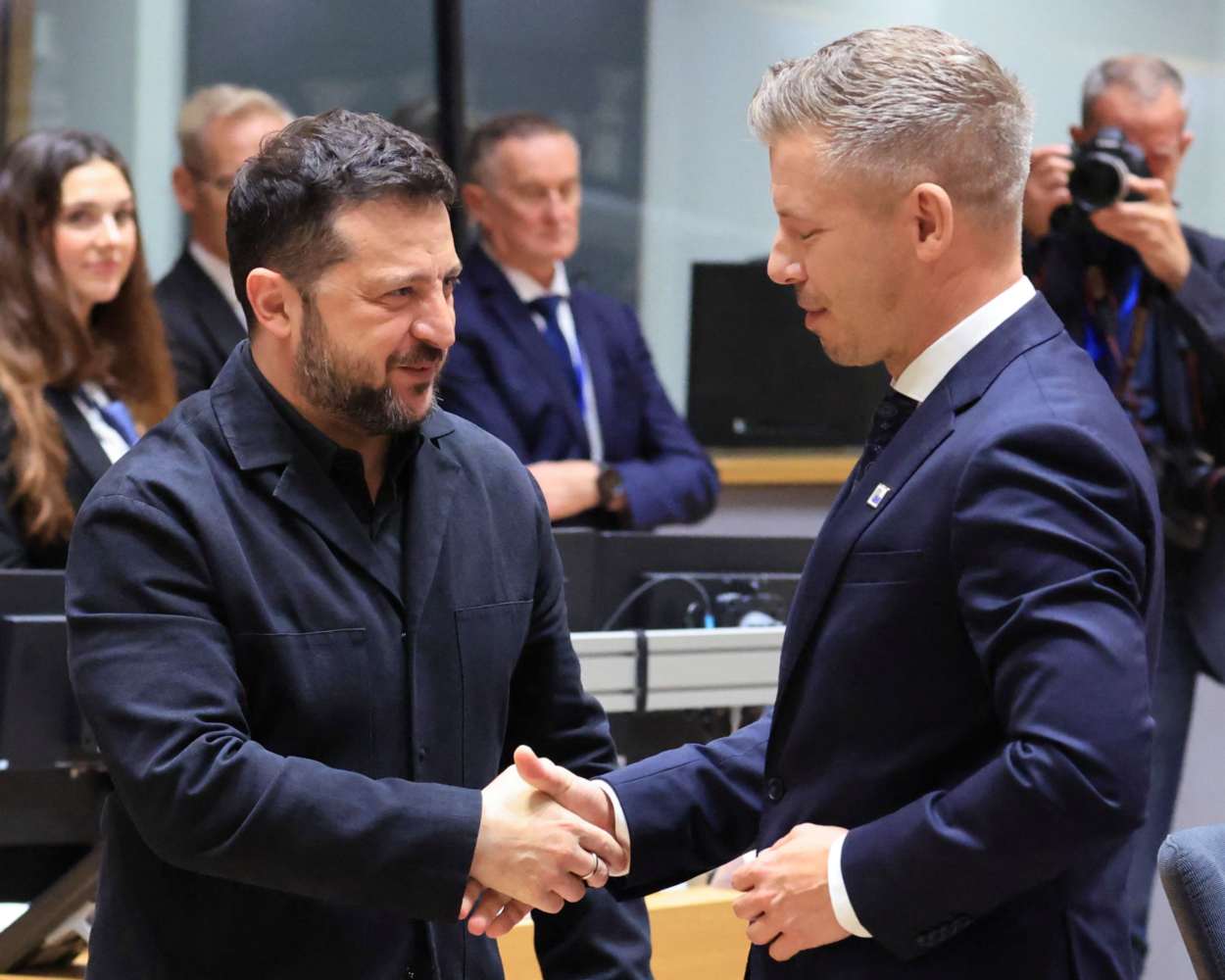
Another important development in Brussels came from the first meeting between Hungarian Prime Minister Péter Magyar and Zelenskyy.
Relations between Hungary and Ukraine were frequently strained under the previous government of Viktor Orbán, particularly over minority rights, Ukraine’s EU ambitions and Budapest’s approach to Russia.
Following the meeting, Magyar welcomed Ukraine’s adoption of new legislation on minority-language education.
He described the move as “a first step towards restoring mutual trust.”
The issue is especially sensitive because of the ethnic Hungarian community living in Ukraine.
Magyar said the two governments would continue consultations at ministerial level.
He also indicated that both countries had agreed on the importance of rebuilding their political and economic relationship.
In a notable departure from the tone associated with the previous Hungarian administration, Magyar expressed solidarity with Zelenskyy in the face of Russian aggression.
Hungary, he said, was prepared to contribute through diplomatic channels to efforts aimed at securing an immediate ceasefire and lasting peace.
The meeting does not mean that all outstanding disputes have been resolved.
Nevertheless, it suggests a potentially important shift in Budapest’s relationship with Kyiv, with implications for Ukraine’s European integration.
Von der Leyen: No Sanctions Relief Without an End to the War
European Commission President Ursula von der Leyen delivered a firm message on the EU’s sanctions policy toward Moscow.
She indicated that the European Union would not lift sanctions while Russia continued its war against Ukraine.
Her intervention comes amid disagreement over Washington’s energy-related dealings with Russia and the broader direction of U.S. policy.
Von der Leyen accused Moscow of escalating its attacks rather than respecting the energy ceasefire promoted by President Trump.
“We will not lift any sanctions if Russia does not stop the war,” she declared.
The Commission president also addressed Ukraine’s European integration process, pointing to the goal of advancing two additional negotiating clusters before the end of the year.
The EU’s position reflects an attempt to maintain economic pressure on Russia while preserving a credible long-term path toward Ukrainian membership.
Kaja Kallas: Talks With Washington Are Becoming Increasingly Difficult
EU foreign policy chief Kaja Kallas also acknowledged the seriousness of the diplomatic situation.
Speaking ahead of the summit, she emphasized that there were no convincing indications that Russia intended to end the war.
Kallas called for continued support for Ukraine as winter approaches, particularly in protecting civilians and maintaining the country’s defense capabilities.
She also reiterated the European position that frozen Russian assets should not simply be returned without Russia addressing its responsibility for the damage inflicted on Ukraine.
Asked about efforts to persuade Washington to increase pressure on Moscow, Kallas acknowledged that discussions with the United States were proving “very difficult.”
Her comments highlighted a widening divergence between European governments seeking sustained pressure on Russia and an American administration pursuing a different diplomatic and energy strategy.
Denmark Challenges Trump’s Assessment of Putin and Zelenskyy
Danish Prime Minister Mette Frederiksen publicly challenged Trump’s suggestion that Zelenskyy was a more difficult negotiating partner than Russian President Vladimir Putin.
Trump had repeated that assessment in an interview with Newsmax.
Frederiksen rejected the comparison, arguing that Putin was not a reliable negotiating partner and stressing the importance of stronger European defense capabilities.
She also warned that Ukraine faces significant financial requirements and that European governments must ensure adequate funding for 2027.
The Danish leader questioned reports suggesting that European officials had urged Zelenskyy to soften his public criticism of Trump.
Her intervention underscored the growing willingness of some European leaders to express disagreement with Washington openly while maintaining their commitment to NATO and transatlantic security.
Europe Confronts Its Dependence on Starlink
The summit also brought renewed attention to Ukraine’s reliance on the Starlink satellite communications network, operated by SpaceX.
Kallas acknowledged that Europe does not currently possess an immediately available equivalent capable of replacing the system across all its functions.
The issue has become increasingly important as European governments debate strategic autonomy in defense, technology and secure communications.
France and the Netherlands have discussed ways to strengthen European satellite capabilities and accelerate the development of alternative communications services.
For Ukraine, reliable satellite connectivity remains essential to military coordination and other critical operations.
The debate illustrates a broader challenge: Europe’s ability to support Ukraine independently depends not only on money and weapons but also on technological infrastructure.
Ukraine’s EU Membership Remains a Strategic Priority
Beyond immediate military and financial assistance, Zelenskyy continues to push for progress in Ukraine’s accession negotiations with the European Union.
The process remains complex, requiring reforms, negotiations and agreement among member states.
The new diplomatic atmosphere between Budapest and Kyiv could prove helpful, particularly given Hungary’s previous objections to aspects of Ukraine’s European integration.
However, improvements in bilateral relations do not automatically resolve all institutional and political obstacles.
European leaders must also balance Ukraine’s accession ambitions with wider debates over the EU budget, institutional reform and enlargement policy.
For Kyiv, maintaining momentum is politically important because it demonstrates that Ukraine’s European future remains a central objective despite the pressures of war.
What the Brussels Summit Means for Ukraine
The October 16 summit has highlighted three immediate priorities for Zelenskyy: securing additional air-defense capabilities, obtaining reliable financial support and advancing Ukraine’s relationship with the European Union.
The expected delivery of more Belgian F-16s would strengthen Ukraine’s military capabilities, while the debate over Russian sovereign assets could shape its medium-term financing.
Hungary’s diplomatic opening offers a potentially constructive development in a relationship that has long complicated European negotiations.
At the same time, the increasingly visible disagreements between Washington and European capitals raise difficult questions about the future of Western coordination.
Europe is being asked to assume greater responsibility for Ukraine’s security and financial stability, even as its governments remain divided over the legal and political mechanisms needed to deliver that support.
The central message from Brussels is that Ukraine’s European partners intend to sustain their support, but the coming months will test whether political commitments can be translated into fighter jets, financing and concrete diplomatic progress.
For Zelenskyy, the challenge is immediate: securing the resources Ukraine needs while ensuring that the changing relationship between Washington and Moscow does not weaken Kyiv’s position.
Source: pagenews.gr
Διαβάστε όλες τις τελευταίες Ειδήσεις από την Ελλάδα και τον Κόσμο